
Antibiotic-Dairy Timing Calculator
Check Your Antibiotic Timing
Enter your details above to see if your timing is safe.
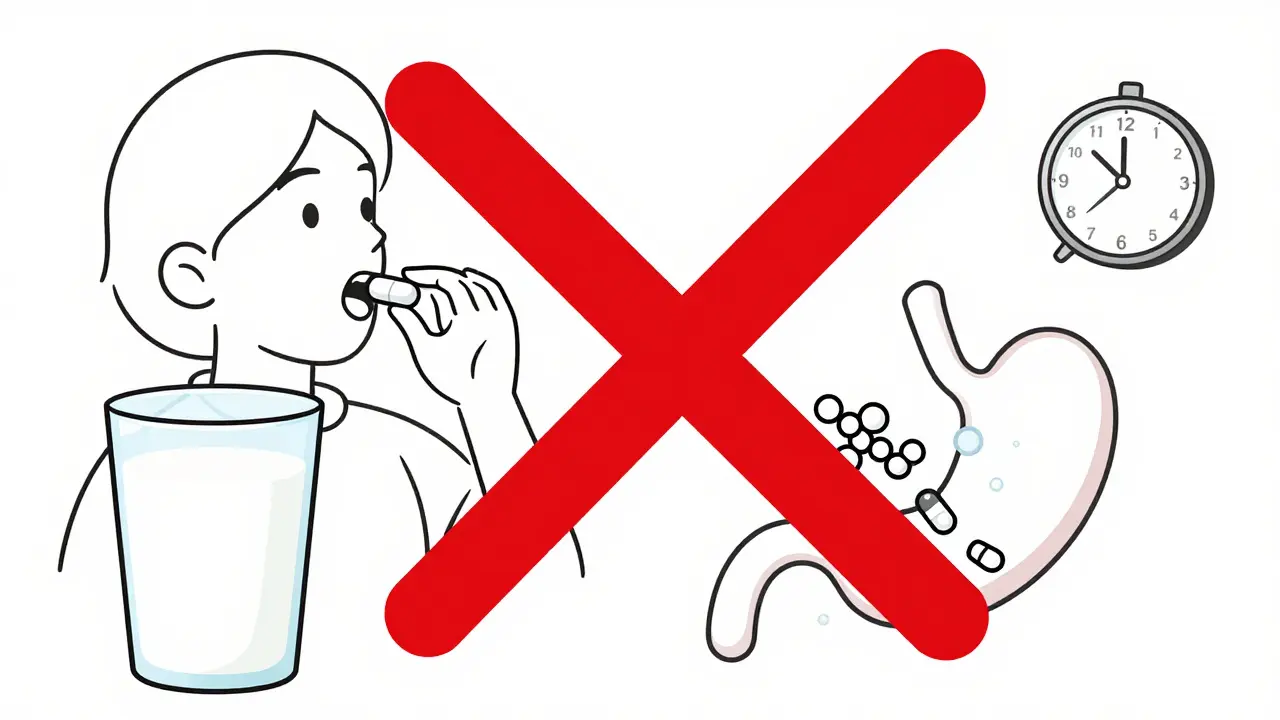
When you take an antibiotic, your body needs to absorb it properly to kill the infection. But if you swallow that pill with a glass of milk, a bowl of yogurt, or even coffee with cream, you might be making it harder for the medicine to work. This isn’t just a myth - it’s a well-documented drug interaction that can mean the difference between getting better and needing another round of treatment.
Why Dairy Stops Some Antibiotics from Working
The problem comes down to calcium. Dairy products like milk, cheese, yogurt, and ice cream are packed with calcium. When calcium meets certain antibiotics in your stomach and intestines, they bind together. This creates a chemical compound that your body can’t absorb. Instead of entering your bloodstream to fight infection, the antibiotic gets stuck in your gut and passes out of your body unused.
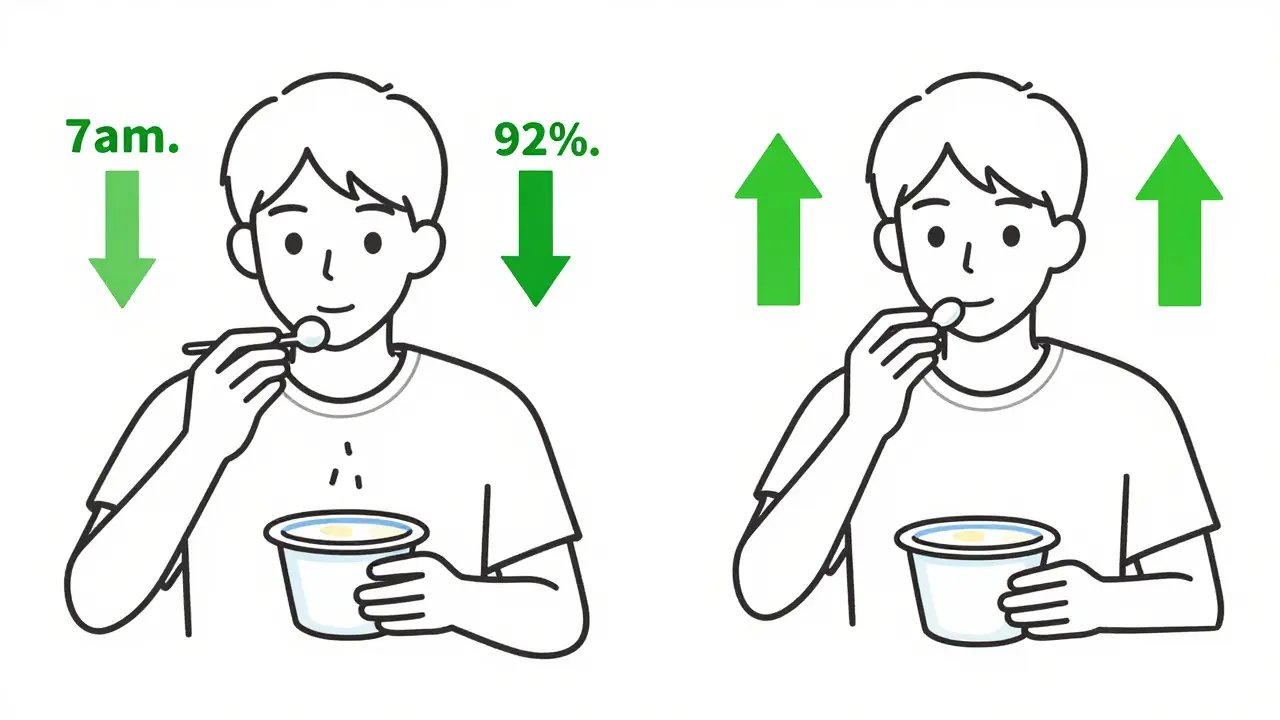
This isn’t true for all antibiotics. Only specific classes are affected. The biggest culprits are tetracyclines - including tetracycline, doxycycline, and minocycline - and fluoroquinolones like ciprofloxacin and levofloxacin. These antibiotics have chemical structures that latch onto calcium like magnets. Studies show that when taken with milk, doxycycline absorption can drop by 40-50%. With yogurt, the drop can hit 92%. That means you’re getting less than half the dose you think you are.
How Much Time Should You Wait?
It’s not enough to just avoid dairy at mealtime. You need to plan ahead. For tetracycline-class antibiotics, experts recommend waiting at least 2 hours before eating dairy and 4 hours after taking the pill. Fluoroquinolones need a minimum of 2 hours separation. These aren’t arbitrary numbers - they’re based on how long it takes for the antibiotic to be absorbed before calcium can interfere.
Here’s a simple breakdown:
- Tetracycline, doxycycline, minocycline: Take on an empty stomach, 2 hours before or 4 hours after dairy.
- Ciprofloxacin, levofloxacin: Take 2 hours before or after dairy.
- Amoxicillin, azithromycin, most cephalosporins: Safe to take with dairy. No timing needed.
Why the difference? Tetracyclines bind so tightly to calcium that even small amounts - like a splash of milk in coffee - can cut absorption by 20%. Fluoroquinolones are less sensitive but still significantly affected. Meanwhile, penicillins like amoxicillin barely interact with calcium at all. That’s why your doctor might switch your antibiotic if you’re a heavy dairy consumer.
It’s Not Just Milk - Dairy Includes Everything
Many people think they’re safe if they avoid milk. But dairy isn’t just milk. It includes:
- Yogurt (even probiotic types)
- Cheese (even hard cheeses like cheddar)
- Ice cream
- Cottage cheese
- Cream, butter, sour cream
- Whey protein powders
- Milk-based protein bars
Even foods you wouldn’t think of as dairy can be dangerous. Some breakfast cereals are fortified with calcium. So are orange juice, almond milk (if calcium-enriched), and nutritional shakes. If a product says “calcium added” on the label, treat it like milk. The same interaction happens.
What About Lactose Intolerance?
Interestingly, people with lactose intolerance may have an unexpected advantage. Since they naturally avoid dairy, they’re less likely to accidentally ruin their antibiotic dose. A study from Jundishapur University found that lactose-intolerant patients had 18% higher antibiotic absorption rates compared to those who consumed dairy regularly. That’s not because their bodies absorb better - it’s because they simply didn’t interfere with the drug in the first place.
But don’t assume you’re safe just because you avoid milk. Many people with lactose intolerance still eat yogurt or cheese because they tolerate them better. Those can still cause problems. Always check the ingredients.
Real-Life Consequences
This isn’t theoretical. In 2021, a study in the Journal of Antimicrobial Chemotherapy found that 15-20% of tetracycline treatment failures were directly linked to dairy consumption. That’s not just a missed dose - it’s a failed infection. For serious illnesses like Lyme disease, Rocky Mountain spotted fever, or pneumonia, that can mean hospitalization, longer recovery, or even antibiotic resistance.
One pharmacist in New Zealand shared a common scenario: a patient took doxycycline at 7 a.m., then had a bowl of cereal with milk at 7:30 a.m. They felt fine - no nausea, no side effects - but by day three, their symptoms didn’t improve. Blood tests later showed drug levels 60% below the therapeutic range. They needed a second course of antibiotics.
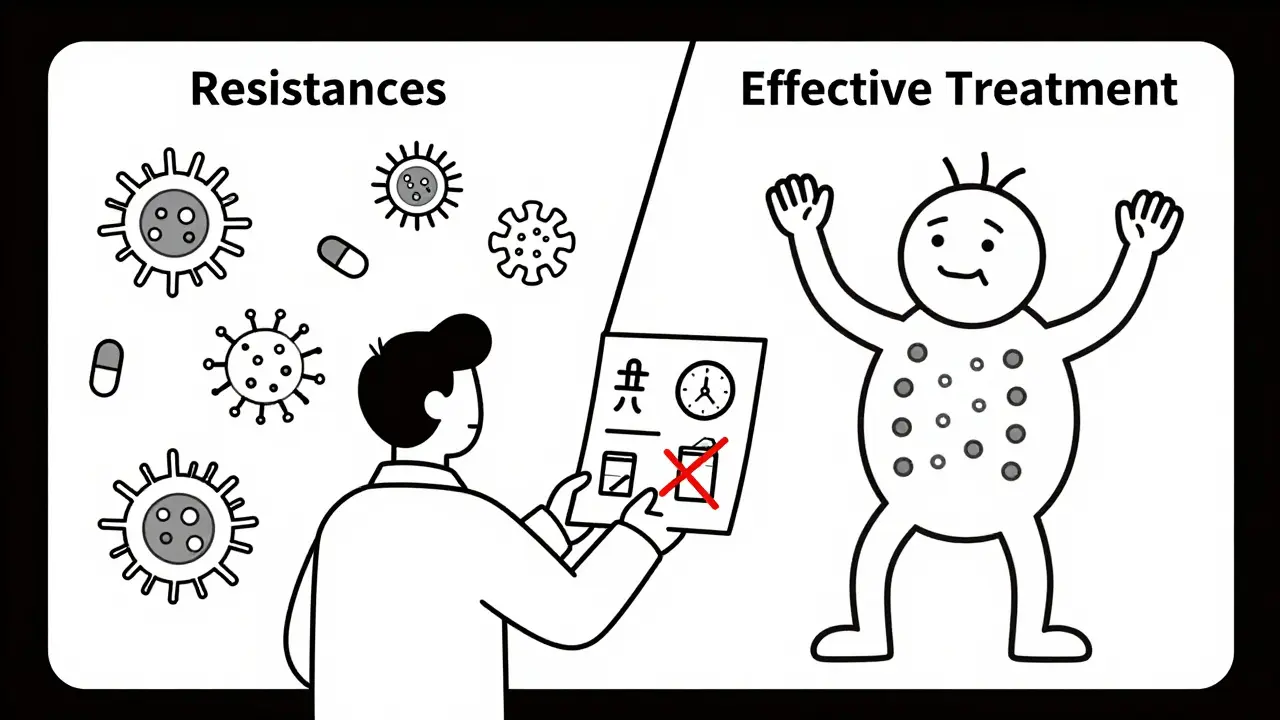
Even worse, when antibiotics don’t work properly, bacteria survive and adapt. This is one of the quiet drivers of antimicrobial resistance - a global crisis the WHO says already causes over 1.2 million deaths each year.
What You Can Do
Here’s how to make sure your antibiotic works:
- Read the label. Every prescription for tetracycline or fluoroquinolone should say “take on empty stomach” or “avoid dairy.”
- Plan your meals. If you take your antibiotic in the morning, have your coffee with milk after 11 a.m. If you take it at night, avoid cheese or yogurt after dinner until morning.
- Check your supplements. Calcium pills, multivitamins with calcium, and antacids (like Tums) also interfere. Take them separately.
- Ask your pharmacist. When you pick up your prescription, ask: “Is this affected by dairy?” Most pharmacies now give out visual timing charts.
- Don’t assume “dairy-free” means safe. Almond milk with added calcium? Still a problem.
Are There Exceptions?
Yes. Some newer versions of doxycycline - like the extended-release pill Oracea - are designed to be taken with food, including dairy. But this is an exception, not the rule. Always check the specific brand your doctor prescribed. If it’s not labeled for food use, assume it’s not safe.
Also, not all antibiotics are affected. Amoxicillin, azithromycin, penicillin, and most cephalosporins (like cephalexin) can be taken with meals. If you’re on one of these, you don’t need to change your routine.
Why This Still Matters in 2026
Even with advances in medicine, we haven’t solved this problem. New antibiotics are expensive, and most still bind to calcium. Pharmaceutical companies are testing calcium-resistant versions, but they’re years away from widespread use. For now, timing is your best defense.
And it’s not just about taking pills correctly - it’s about stopping the next wave of superbugs. When antibiotics fail because of a missed timing rule, bacteria survive. Those survivors multiply. They pass on their resistance. And one day, a simple infection could become untreatable.
It’s a small change - wait two hours. But it’s one that can save you from a second round of antibiotics, a hospital visit, or worse.
Can I drink coffee with milk while taking doxycycline?
No. Even a splash of milk in coffee can reduce doxycycline absorption by up to 40%. Wait at least 2 hours after taking the pill before drinking coffee with milk. Black coffee is fine, but avoid cream, half-and-half, or milk-based creamers.
Is almond milk safe with antibiotics?
Only if it’s not fortified with calcium. Many almond milks have added calcium to mimic dairy. Check the label - if it says “calcium carbonate” or “calcium phosphate,” treat it like cow’s milk. Stick to unsweetened, unfortified versions, or avoid it entirely during treatment.
What if I accidentally ate yogurt with my antibiotic?
If you ate yogurt within 2 hours of taking tetracycline or fluoroquinolone, the drug’s absorption was likely reduced. Don’t take another dose - that could cause side effects. Instead, finish the rest of your course as prescribed. If symptoms don’t improve in 2-3 days, contact your doctor. You may need a different antibiotic.
Do all antibiotics interact with dairy?
No. Only tetracyclines (like doxycycline) and fluoroquinolones (like ciprofloxacin) are strongly affected. Most penicillins (amoxicillin), macrolides (azithromycin), and cephalosporins (cephalexin) can be taken with food, including dairy. Always check the specific antibiotic you’ve been prescribed.
Why does yogurt cause worse interactions than milk?
Yogurt has more bioavailable calcium - meaning your body absorbs it more easily - and a lower pH, which helps the calcium bind more tightly to antibiotics. Studies show yogurt can reduce doxycycline absorption by up to 92%, compared to 70% with milk. The live cultures in yogurt don’t cause the issue; it’s all about the calcium content.
Final Thought
Antibiotics are powerful tools. But they’re not magic. If you take them with the wrong food, you’re not just wasting your dose - you’re risking your health and contributing to a larger public health crisis. Two hours of patience can mean the difference between recovery and relapse. Don’t underestimate the power of timing.


12 Comments
Just took doxycycline this morning and remembered this post. Made my coffee black and had my yogurt at noon. Small change, big difference. Glad I read this before messing up my treatment.
Also, my pharmacist gave me a little card with timing charts - super helpful. Maybe more pharmacies should do this.
so like... milk bad. got it.
AMERICA DOESNT NEED THIS INFO. WE DONT DO DOXCYCLINE. WE DO PENICILLIN. STOP SCARING PEOPLE.
also why are we even talking about yogurt? its just milk with bacteria. who cares?
As a prairie boy who grew up on sour cream and cheddar, this hit different. I once took cipro with a cheese sandwich and thought I was fine... turned out I was just waiting for the infection to come back with friends.
Now I treat my antibiotics like a sacred ritual: water, fasting, patience. No cheese until the course is done. Even if it’s cheddar from a 100-year-old wheel. No exceptions.
And yes, I’ve stared at almond milk labels like they’re ancient runes. Calcium carbonate? Nope. Not today, Satan.
i took my antibiotic with oat milk and now i feel weird. was that bad? i think it had calcium but i dont remember. help??
It’s funny how we treat medicine like a transaction. You take a pill. You eat food. You expect results. But the body doesn’t negotiate. It doesn’t care about your schedule, your coffee ritual, your love of yogurt.
There’s a silent war happening in your gut - between molecules, between biology and habit. And we, the distracted humans, are the ones losing it.
Maybe the real question isn’t ‘when to take it’... but ‘why do we keep ignoring the rules?’
So... the government doesn’t tell you this? The pharma companies don’t scream it from billboards? Hmm. So this is just... some pharmacist’s side note? I’m starting to think antibiotics are a scam. Or maybe it’s all a plot to make us drink black coffee. I’m onto you, Big Antibiotic.
Also, I read that calcium is a mineral. Minerals are good. So why is this bad? Are we being gaslit? I need a flowchart.
While the general sentiment of this post is scientifically sound, one must acknowledge the methodological limitations of the cited studies. The 92% reduction in doxycycline absorption with yogurt was derived from a single-blind, small-sample pharmacokinetic trial with n=18. Furthermore, the distinction between bioavailable and total calcium is rarely addressed in public discourse, leading to unnecessary dietary anxiety.
It is also worth noting that gastric pH modulation may mitigate binding in some individuals - a factor omitted from this otherwise reductive narrative.
Recommendation: Consult peer-reviewed pharmacokinetic data, not Reddit posts.
As a pharmacist in Lagos, I see this daily. People take doxycycline with garri (cassava flour) soaked in milk - and wonder why fever doesn’t go down.
We now hand out laminated cards in pidgin English: ‘No milk, no cheese, no yoghurt - 2 hours before, 4 hours after.’ Simple. Effective.
Also, calcium-fortified plant milk? Yes, still dangerous. Even if it says ‘organic’ or ‘fair trade.’ Calcium is calcium. Chemistry doesn’t care about your values.
This is why we can’t have nice things. You tell people to avoid dairy and they start obsessing over almond milk labels like it’s a national security threat. Meanwhile, people are still taking ibuprofen with alcohol and wondering why their liver is crying.
Why don’t we just ban all food? That’s the real solution. No eating. No drinking. Just pills. Pure. Efficient. Controlled.
Also, I heard the FDA is hiding the truth. They know about the calcium conspiracy. I’ve filed FOIA requests. You’re all part of the system.
I’m so glad I read this before starting my course - I’ve been drinking oat milk with calcium every morning for years and never thought twice. Now I’m checking every single label like a detective.
Also, I shared this with my mom, who’s on antibiotics right now, and she finally stopped putting cheese on her eggs. She’s 72 and didn’t even know this was a thing. It’s wild how much we assume we know about our own bodies.
Thank you for making this clear. I’m going to make a printable version for my book club. Maybe we can turn this into a ‘Medication Literacy’ event?
Okay, so I’ve been on azithromycin for my sinus infection - thank goodness it’s safe with dairy! - but I read this and it made me think about how much we overlook the little things that affect our health. I used to take my vitamins with milk because it felt ‘easier’ on my stomach... now I know better. I even went back and checked my old supplement bottles - two of them had added calcium. Ugh.
And the yogurt thing? I used to think probiotics would help the antibiotics, like a team-up. Turns out, nope. Calcium doesn’t care if it’s live cultures or not. It’s just a mineral magnet.
Now I’ve got a little sticky note on my fridge: ‘ANTIBIOTIC DAYS: NO DAIRY, NO FORTIFIED JUICE, NO ‘PLANT MILK’ WITH CALCIUM.’ I even told my partner. He laughed. But then he started checking labels too. So… progress?
Also, I made a chart. With colors. And arrows. And emojis. (No emoticons. I’m not that wild.)
If you’re reading this and you’re on antibiotics - please, just wait two hours. It’s not hard. It’s not a lifestyle. It’s just… being smart with your body. You’re worth it.