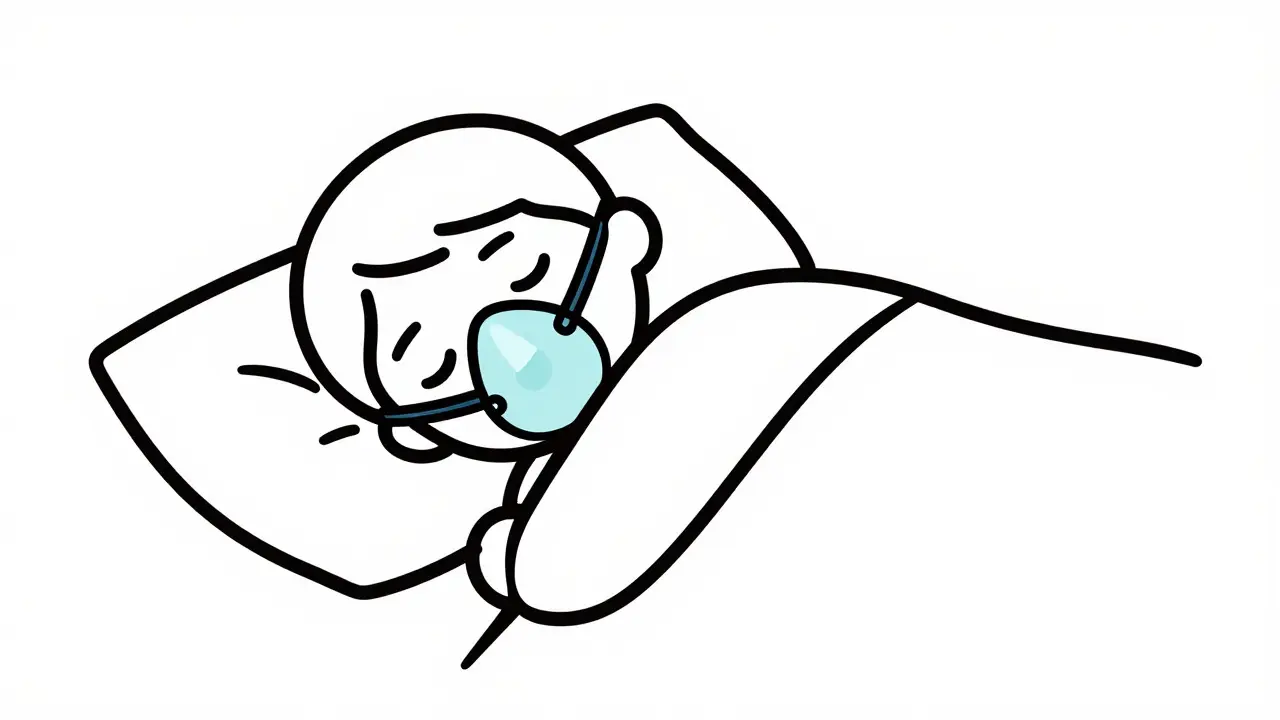
Waking up with a parched throat, hearing that annoying hiss of escaping air, or feeling like you are wrestling a jet engine against your face-these are the three biggest reasons people quit CPAP therapy, which is a treatment for obstructive sleep apnea that uses pressurized air to keep airways open during sleep.. It happens to more than half of new users. But here is the good news: most of these issues aren’t signs that the machine is broken or that you just can’t handle it. They are usually simple fixes involving settings, fit, or accessories.
If you have been struggling with your device, you are not alone. According to data from the American Thoracic Society, non-compliance rates hover between 29% and 45%, largely due to comfort issues rather than medical ones. The goal of this guide is to help you get past the initial frustration so you can actually get the restorative sleep you need. We will break down exactly why dry mouth happens, how to stop those frustrating leaks, and when (and how) to adjust your pressure safely.
Why Is My Mouth So Dry? (And How to Fix It)
Dry mouth is the number one complaint among CPAP users, affecting roughly 42% of them according to Dr. Raj Dasgupta’s research presented at the American Thoracic Society. If you wake up choking on saliva or with a cracked tongue, it is likely because you are breathing through your mouth while wearing a nasal mask.
Here is the mechanics behind it: your CPAP machine pushes air into your nose. If your mouth falls open, that air escapes out the front instead of going down into your lungs. This creates a vacuum effect that dries out your oral tissues rapidly. Many people think they just need more humidity, but if the air is leaking out your mouth, adding more water to the chamber won’t solve the root cause.
To fix this, try these steps in order:
- Check your mask type. If you are using a nasal pillow or nasal mask and you naturally breathe through your mouth, consider switching to a full-face mask. A user on Reddit’s r/CPAP community reported their dry mouth disappeared completely within three nights after making this switch.
- Use a chin strap. These elastic bands hold your jaw closed gently. About 38% of mouth breathers find success with this low-cost accessory. It doesn’t force your mouth shut; it just reminds your muscles to stay closed.
- Adjust your humidifier. While humidity alone won’t fix mouth breathing, it helps coat the airways. Aim for level 3 or 4 on a standard 0-6 scale. Too much humidity can lead to "rainout" (water condensing in the tube), which is equally uncomfortable.
- Get heated tubing. Heated tubes keep the air warm as it travels to your mask. Philips’ clinical trials showed this reduces dry mouth complaints by 32% because warm air holds more moisture than cold air.
Stopping the Hiss: Solving Mask Leaks
A small amount of leak is normal-it allows excess air to escape so your lungs don’t overinflate. However, significant leaks reduce the effectiveness of your therapy. Dr. David White, a pioneer in sleep medicine, notes that leaks greater than 24 liters per minute significantly drop treatment efficacy.
If you hear a loud hiss or see fogging around your eyes (with nasal masks), your seal is broken. Before you tighten the straps until your head hurts, check these common culprits:
- The cushion is worn out. Silicone cushions degrade over time. Most durable medical equipment (DME) providers recommend replacing them every three months. If yours looks yellowed, sticky, or has lost its shape, swap it out.
- You are tightening incorrectly. Here is a pro tip: put the mask on loosely first. Turn the machine on. Then, slowly tighten the straps while watching the airflow noise or leak indicator on your screen. Stop as soon as the hissing stops. Over-tightening pushes the mask away from your face, creating larger gaps.
- Your facial hair is interfering. Stubble and beards create micro-gaps that silicone cannot seal against. If you shave, you might find an immediate improvement in seal quality.
- You are moving too much. If you toss and turn, the mask shifts. Using a headgear stabilizer or a different strap configuration (like horizontal vs. vertical straps) can help keep the mask anchored during movement.
| Symptom | Likely Cause | Immediate Fix |
|---|---|---|
| Foggy glasses / Eyes watering | Upward leak from nasal mask | Tighten top strap slightly; check cushion alignment |
| Dry mouth + noisy hiss | Mouth leak with nasal mask | Try chin strap or switch to full-face mask |
| Random large spikes in leak rate | Mask shifting during sleep | Use headgear stabilizer or adjust strap tension |
| Constant low-level leak | Worn cushion or wrong size | Replace cushion or try different mask size |
Pressure Adjustments: Finding Your Sweet Spot
Pressure is the core of CPAP therapy. It acts as a pneumatic splint to hold your airway open. However, getting the pressure wrong causes major discomfort. If it is too high, you may experience aerophagia (swallowing air, leading to bloating) or chest tightness. If it is too low, your apneas continue, and you don’t get the health benefits.
Most modern machines, like the ResMed AirSense 11 or Philips DreamStation 2, are AutoSet (APAP) models. These devices automatically adjust pressure second-by-second based on your breathing patterns. You generally do not need to manually set a single number.
However, you can optimize comfort features:
- Ramp Time: This feature starts the pressure low and gradually increases it to your therapeutic level as you fall asleep. Setting this to 20-30 minutes can make falling asleep much easier.
- Expiratory Pressure Relief (EPR):** This lowers the pressure slightly when you breathe out. It makes exhaling against the airflow feel more natural. Many users find EPR setting 2 or 3 to be the most comfortable without losing efficacy.
- Minimum Pressure: Some users feel uncomfortable with the lowest pressure setting. If your minimum is set to 4 cm H2O and you feel nothing, ask your doctor if raising it to 5 or 6 cm H2O helps you feel the support earlier.
Dr. Nancy Collop from Johns Hopkins emphasizes that small adjustments below 5 cm H2O can dramatically improve comfort. Remember: do not change your prescribed maximum pressure limits without consulting your sleep specialist. Self-adjusting beyond manufacturer-set limits can void warranties and compromise treatment.
Maintenance Matters: Filters and Cleaning
A dirty machine contributes to respiratory irritation and poor performance. Neglecting maintenance is a silent killer of compliance.
Filters: Replace foam filters every 30 days and HEPA filters every 90 days. Clogged filters make the machine work harder, increasing noise and reducing airflow efficiency. ResMed’s 2023 manual specifies this strictly to maintain warranty validity.
Water Chambers: Empty and rinse daily to prevent bacterial growth. Use distilled water to minimize mineral buildup, especially if you live in an area with hard water. Mineral deposits can clog the heating element and alter humidity output.
Masks and Tubing: Wash your mask cushion with mild soap and water weekly. Inspect it monthly for cracks. Tubing should be washed every two weeks. If you notice a musty smell, replace the tube immediately.
When to Call Your Sleep Specialist
While most issues can be fixed at home, some require professional intervention. Contact your provider if:
- You consistently experience apneas despite proper mask fit (check your AHI score via your app).
- You have persistent skin breakdown or pressure sores from the mask.
- You suspect your pressure prescription is outdated (e.g., significant weight loss or gain).
- The machine displays error codes that persist after restarting.
Telehealth management for CPAP is now covered by Medicare as of January 2024, making it easier than ever to get remote adjustments. Don’t suffer in silence-your provider wants you to succeed.
How long does it take to get used to CPAP?
Most users master basic troubleshooting and adapt to the sensation within 2 to 4 weeks. Data from ResMed shows that 78% of users become comfortable within 14 days if they address fit and humidity issues early. Consistency is key-wear it every night, even if only for a few hours initially.
Can I adjust my CPAP pressure myself?
You can adjust comfort features like Ramp Time and Expiratory Pressure Relief (EPR) yourself. However, changing the minimum or maximum therapeutic pressure limits should be done under a doctor’s supervision. Self-adjusting beyond safe ranges can void your warranty and reduce treatment efficacy.
Why does my CPAP machine sound louder at night?
Modern machines like the ResMed AirSense 11 operate at 25-27 decibels, which is very quiet. If it sounds louder, check for clogged filters or a loose mask connection causing turbulence. Also, ensure the fan isn’t blocked by bedding. If the noise persists, contact technical support as the motor may need servicing.
Is distilled water necessary for my CPAP humidifier?
Distilled water is highly recommended to prevent mineral buildup inside the heating chamber and tubing. Tap water contains minerals that can accumulate over time, potentially clogging the system and altering humidity levels. If you use tap water, clean the chamber more frequently with vinegar solutions to dissolve deposits.
What should I do if I still have dry mouth with a full-face mask?
If you are using a full-face mask and still have dry mouth, your humidity setting might be too low. Increase the humidifier level gradually. Additionally, ensure your mask seal is tight; any leak can dry out your mouth. If problems persist, consult your doctor to rule out other causes like medication side effects or dehydration.