Did you know that while generic medications are drugs with the same active ingredients as brand-name drugs but often lower costs and different inactive components fill nearly 90% of prescriptions in the United States, they account for less than 20% of prescription spending? That’s a massive saving. But here is the catch: not every patient feels the exact same way on a generic as they did on the original brand. While the FDA ensures generics are "bioequivalent," meaning they deliver similar amounts of active ingredient into your bloodstream within a specific time frame, small variations exist. For most people, these differences are negligible. For others, especially those on sensitive medications, they can mean the difference between feeling stable and feeling sick.
This is where keeping a medication journal becomes your best defense. It is not about doubting science; it is about knowing your own body. By tracking your response to generics, you create a data trail that helps you and your doctor make smarter decisions. This guide will walk you through exactly how to set up this system, what to track, and why it matters more now than ever before.
Why Track Generic Substitutions?
You might be wondering if all this fuss is necessary. After all, generics are rigorously tested. They are. The FDA requires that a generic drug be bioequivalent to its brand-name counterpart. This means the rate and extent of absorption must fall within an 80-125% range compared to the brand. For most drugs like antibiotics or blood pressure meds, this variance is harmless. You take the pill, it works, life goes on.
However, research tells a different story for some patients. A study published in PMC (2017) surveyed over 1,000 patients and found that 8% reported perceived differences in effectiveness, while 15% experienced new or increased side effects after switching to a generic. These aren't just anecdotes; they represent real clinical impacts. When you switch manufacturers-even between two different generic versions-the inactive ingredients (fillers, dyes, binders) change. For some individuals, these excipients can affect how the drug dissolves or triggers allergic reactions.
The stakes get higher with Narrow Therapeutic Index (NTI) drugs are medications where small changes in dose or blood concentration can lead to serious adverse effects or loss of efficacy. NTI drugs include antiepileptics, warfarin (a blood thinner), and thyroid medications like levothyroxine. With these drugs, the margin for error is tiny. A slight shift in absorption due to a different generic manufacturer can push your blood levels out of the safe zone. That is why experts from Harvard Medical School and the American College of Physicians strongly recommend journaling for patients on these specific medications. It’s not paranoia; it’s precision medicine.
What Exactly Should You Write Down?
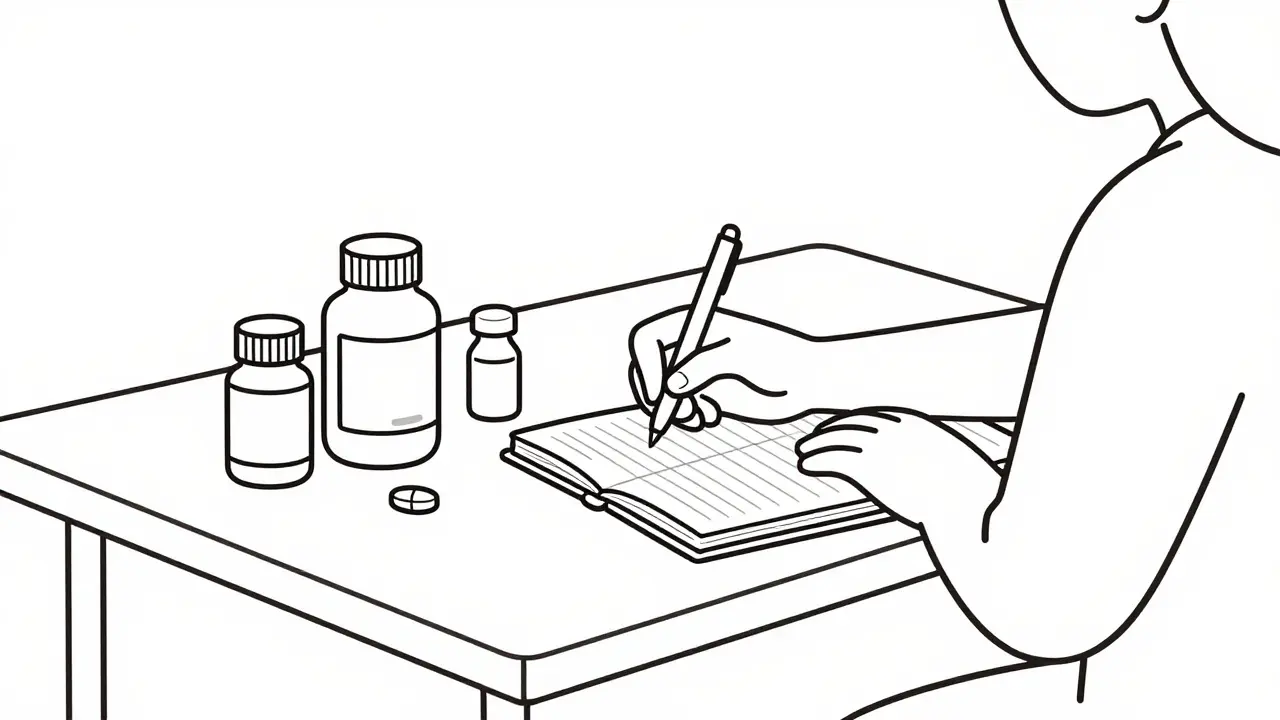
Most people think a medication journal is just a list of pills taken. If you want to track generic responses effectively, you need more detail. Vague notes like "felt tired" don’t help your doctor much. You need structured data. Here is what your journal should capture:
- Medication Identity: Record both the brand name (if known) and the generic name. Crucially, note the manufacturer. Different companies produce different generics. Check the imprint code on the tablet or the bottle label. If you see a lot number, write that down too-it helps trace quality issues back to a specific production batch.
- Date of Switch: Mark the exact day you started the new generic. This creates a clear timeline for any subsequent symptoms.
- Symptom Severity Scores: Use a standardized scale, such as 1 to 10. Did your pain go from a 4 to a 7? Did your anxiety spike from a 3 to an 8? Numbers remove ambiguity.
- Side Effects: Document any new physical sensations. Note the onset timing. Did the nausea start immediately after dosing or hours later?
- Objective Measurements: If applicable, record vital signs. Blood pressure readings, blood glucose levels, or INR values (for warfarin users) provide hard evidence of how your body is reacting chemically, not just subjectively.
- Physical Characteristics: Yes, really. Note the color, shape, and size of the pill. Thirty-three percent of patients report difficulty distinguishing between different generic versions because they look similar. If your new pill looks different from the old one, document it. It confirms you actually received a different formulation.
Don’t forget to check the FDA’s Orange Book equivalence codes. An "A" rating means the generic is considered therapeutically equivalent to the brand. A "B" rating suggests bioequivalence has not been fully established or there are differences in dosage form. Knowing this code adds context to your journal entries.

Paper vs. Digital: Choosing Your Tool
How you keep your journal depends on your lifestyle and tech comfort. There is no single right answer, but each method has pros and cons.
| Method | Pros | Cons | Best For |
|---|---|---|---|
| Paper Notebook | No battery needed; easy to tear off pages for doctors; tactile feedback aids memory. | Hard to search; risk of losing the book; manual calculations required. | Seniors; those who prefer writing; low-tech environments. |
| Digital Apps (e.g., Medisafe) | Reminders; data export; quick entry (30-60 seconds); cloud backup. | Requires smartphone access; potential privacy concerns; subscription fees for advanced features. | Tech-savvy users; busy professionals; multi-medication regimens. |
| Spreadsheet (Excel/Google Sheets) | Highly customizable; automatic charts/graphs; free. | Steep learning curve; easy to make formula errors; less portable on mobile. | Data enthusiasts; patients wanting detailed trend analysis. |
If you choose paper, consider using a template. The Cleveland Clinic offers an NTI medication tracking form that includes specific columns for manufacturer and symptom comparison. Users report this increases data usefulness by 63% compared to free-form notes. If you go digital, apps like Medisafe or MyTherapy are popular choices. MyTherapy alone is used by 8 million patients globally. These apps allow you to log symptoms quickly and even share reports directly with your healthcare provider. However, remember that 62% of patients over 65 still prefer paper. Choose what you will actually use consistently.
Interpreting Your Data: Spotting the Signals
Once you have weeks of data, what do you do with it? The goal is to identify patterns. Look for correlations between the date of the generic switch and changes in your health metrics. For example, if your blood pressure readings consistently rise two days after switching to a new generic lisinopril manufacturer, that is a signal worth discussing with your doctor.
Be cautious of misinterpreting minor fluctuations. A 2019 study in Annals of Internal Medicine found that 22% of patients misread normal bodily variations as therapeutic failure, leading to unnecessary doctor visits. Don’t panic over one bad day. Look for trends over at least two weeks. Also, consider the type of medication. Immediate-response drugs like painkillers or antihistamines show effects within hours, making correlation easier. Delayed-onset drugs like antidepressants take weeks to stabilize, so cause-and-effect relationships are harder to pinpoint. In these cases, standardized scales like the PHQ-9 for depression can help quantify subtle changes.
If you notice significant negative trends, bring your journal to your next appointment. Patients who present structured medication journals have 32% fewer unnecessary medication changes and 27% higher adherence rates. Your doctor can then decide whether to stick with the current generic, switch to another manufacturer, or return to the brand name if clinically justified and affordable.
Common Pitfalls and How to Avoid Them
Even with the best intentions, many people abandon their journals. Why? Mostly because it feels like extra work. To keep going, integrate journaling into your existing routine. Set a phone reminder for when you take your meds. Log your symptoms immediately after. Make it a habit, not a chore.
Another pitfall is inconsistency. Skipping days ruins the data continuity. If you miss a dose, note it and why. Was it forgetfulness? Nausea? This adherence data is just as valuable as symptom data. Finally, avoid comparing yourself to others. Someone else might thrive on Generic X while you struggle. Your body is unique. Trust your data, not internet forums.
Remember, the aim isn’t to reject generics entirely-they save billions annually and improve access to care. The aim is to ensure you get the right version for your biology. By keeping a detailed medication journal, you empower yourself to participate actively in your healthcare. You become a partner with your doctor, armed with facts rather than feelings. Start today. Pick a notebook or download an app. Write down your first entry. Your future self will thank you.
Is it legal to ask my doctor for a specific generic manufacturer?
Yes, you can request a specific manufacturer, but insurance plans may not cover it. Pharmacists usually substitute automatically based on formulary contracts. If you have a documented adverse reaction to a specific generic, your doctor can write "Dispense as Written" (DAW) on the prescription to prevent substitution, though this may increase your out-of-pocket cost.
How long should I keep my medication journal?
Keep your journal indefinitely, especially if you have chronic conditions. It serves as a historical record of how your body responds to different formulations over time. If you switch doctors or insurance providers, this history can speed up finding the right medication again without starting from scratch.
Can I trust online reviews about generic drug effectiveness?
Online reviews offer anecdotal evidence but lack scientific rigor. Individual experiences vary widely due to genetics, diet, and other medications. While platforms like PatientsLikeMe provide community support, always prioritize your own tracked data and professional medical advice over general internet consensus.
What if I experience severe side effects after switching to a generic?
Contact your healthcare provider immediately. Do not stop taking prescribed medication abruptly unless instructed. Bring your medication journal to show the timeline of symptoms. Your doctor may adjust the dose, switch manufacturers, or refer you for further testing to rule out other causes.
Are there any apps that integrate with electronic health records (EHR)?
Some systems like Epic Systems are developing integrations like 'MyJournal' to allow patients to upload tracking data directly to provider records. Currently, most apps require manual export or sharing via PDF. Check with your healthcare provider's portal to see if they support direct integration with third-party health apps.