

Swimmer’s ear isn’t just a nuisance after a long day at the pool-it’s a real infection that can turn a simple splash into days of pain, swelling, and muffled hearing. Unlike middle ear infections, which happen behind the eardrum, otitis externa attacks the skin lining your outer ear canal-the tube that runs from your eardrum to the outside of your head. It’s common, especially in warm, humid places like Auckland, where swimming and humidity create the perfect breeding ground. About 1 in 10 Americans get it each year, and it’s just as common here in New Zealand during summer months.
Why Your Ear Gets Infected
The ear canal is designed to protect itself. It produces earwax (cerumen), which keeps the skin moist and maintains a slightly acidic pH between 5.0 and 5.7. That acidity is like a natural antibiotic-it stops bacteria and fungi from taking over. But when that balance breaks down, trouble starts. Swimming is the classic trigger. Water trapped in the canal washes away protective wax and creates a damp, warm environment where germs thrive. But you don’t have to be a swimmer to get it. Showering, sweating, or even cleaning your ears with cotton swabs can do the same thing. Swabbing scrapes off the thin layer of skin and pushes wax deeper, creating tiny cuts where bacteria slip in. The main culprits? Pseudomonas aeruginosa, a water-loving bacteria found in pools, hot tubs, and even tap water, causes 35-54% of cases. Staphylococcus aureus is next, responsible for 20-30%. Fungi like Aspergillus show up in about 10% of cases, especially if you’ve used antibiotics before or have a weakened immune system.How Bad Is It? Recognizing the Stages
Not all swimmer’s ear is the same. It comes in three levels:- Mild (45% of cases): Itchy, slightly red ear. You might feel fullness or hear your own voice echo. Pain is minor and only when you tug on the earlobe.
- Moderate (35%): More swelling. The ear canal narrows. Pain gets worse, especially when chewing or moving your jaw. Hearing might be slightly muffled.
- Severe (20%): The canal is completely blocked by swelling. Pain is intense, radiating to your neck or face. Fever above 101°F (38.3°C) and swollen lymph nodes mean the infection is spreading. This is when you need to see a doctor immediately.
What Drops Actually Work? The Science Behind the Treatment
The right ear drop depends on what’s causing the infection-and how bad it is. Here’s what works, and what doesn’t.For Mild Cases: Acetic Acid + Hydrocortisone
If your ear is just itchy and slightly sore, start with an over-the-counter solution like Swim-Ear (2% acetic acid with hydrocortisone). It works in two ways: the acid restores the ear’s natural pH, killing bacteria and fungi, while the hydrocortisone reduces swelling and itching. Studies show it clears up mild cases in 85% of people within 7 days. It’s cheap-around $15 a bottle-and safe for regular use after swimming to prevent infections. But here’s the catch: if your ear is already swollen shut or you have pus, this won’t cut it. It’s a preventive and early-stage tool, not a cure for advanced infections.For Moderate to Severe Cases: Antibiotic-Steroid Drops
When the infection is deeper, you need something stronger. The gold standard is Ciprodex (ciprofloxacin 0.3% and dexamethasone 0.1%). This combo kills bacteria and shuts down inflammation at the same time. Clinical trials show 92% of patients are symptom-free in 7 days. It’s fast. It’s effective. And it’s the go-to for doctors. Generic versions like ofloxacin (OtiRx) are also effective and cost about $45-less than a third of Ciprodex’s $147.50 price tag. OtiRx, approved in March 2023, has extended-release tech, meaning you only need to use it twice a day instead of three. That’s a game-changer for compliance. Avoid older drops like neomycin-polymyxin. They’re cheaper but carry a risk: if you have a perforated eardrum (which you might not even know about), they can damage your hearing. The FDA warns about this. Stick to fluoroquinolones like ciprofloxacin or ofloxacin-they’re safer and just as strong.Fungal Infections? Don’t Use Antibiotics
If your ear feels itchy, flaky, and looks like it has white or black mold inside, you might have otomycosis. Antibiotic drops won’t help. You need antifungals. Clotrimazole 1% solution works in 93% of cases. It’s available by prescription or sometimes over-the-counter in some countries. If you’ve tried antibiotic drops and nothing changed after 3 days, this could be your issue.The Secret Weapon: Debridement
Most people skip this step-and that’s why treatment fails. Before you put in drops, the ear canal needs to be cleaned. Not with cotton swabs. That just pushes debris deeper. Doctors use suction or dry cotton swabs under a magnifying scope to remove wax, pus, and dead skin. This simple step improves drop effectiveness by 30-40%. Without it, the medication can’t reach the infected tissue. If your ear is too swollen to insert anything, your doctor might place an ear wick-a small, sponge-like strip that expands in your canal. It holds medicine and slowly releases it over days. It’s uncomfortable, but necessary. Patients report it’s the worst part of treatment, but also the most important.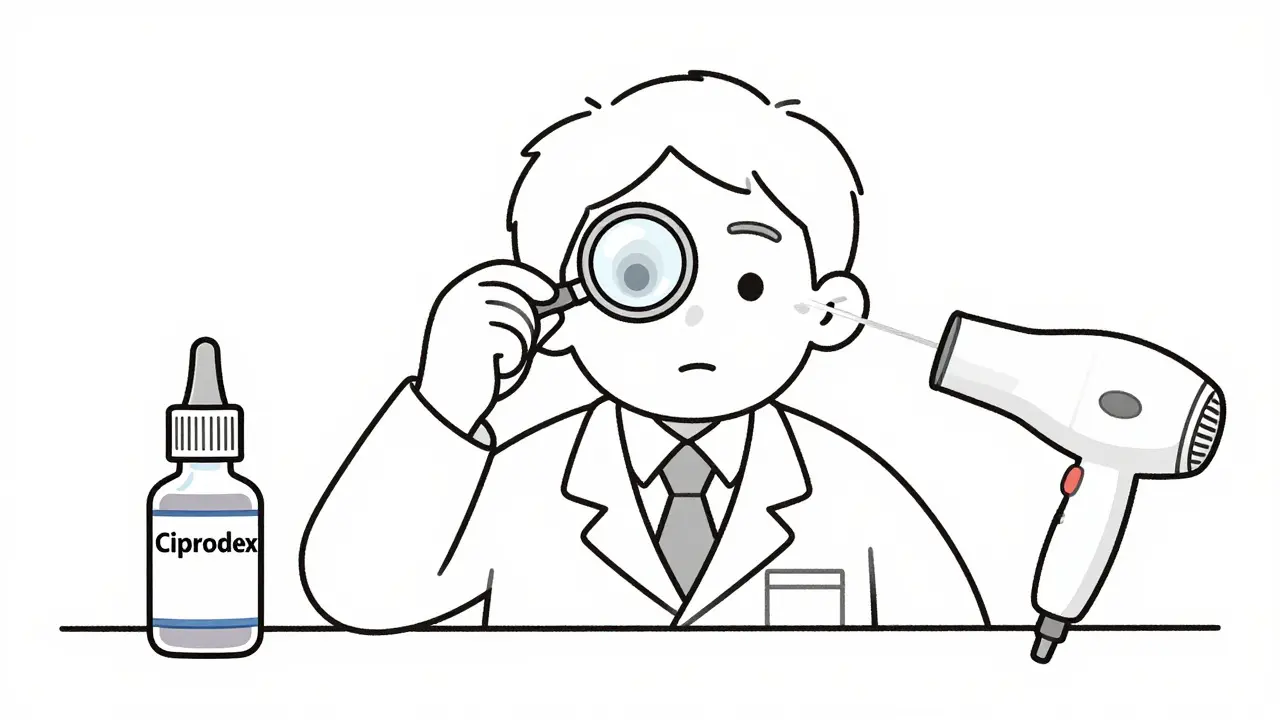
How to Use Ear Drops Right
Even the best drops won’t work if you use them wrong. Here’s how to do it:- Wash your hands.
- Warm the bottle in your hands for 1-2 minutes. Cold drops can make you dizzy.
- Lie on your side with the infected ear facing up.
- Pull your earlobe up and back (for adults) to straighten the canal.
- Put in the exact number of drops prescribed.
- Stay lying down for 5 minutes. Gently tug your earlobe to help the drops sink in.
- Don’t plug your ear with cotton. Let it drain naturally.
What Doesn’t Work-and What Could Make It Worse
Don’t use hydrogen peroxide or vinegar straight from the bottle. They’re too harsh and can burn your skin. Don’t stick anything into your ear-not even a Q-tip. Don’t use leftover antibiotic drops from a previous infection. That’s how resistance builds. And don’t assume it’s swimmer’s ear if you have fever, dizziness, or facial weakness. That could be something more serious, like a skull bone infection (malignant otitis externa), which is rare but dangerous-especially for diabetics or older adults. If you’re not improving after 3 days, or if symptoms get worse, see a doctor.Who’s at Risk?
Children aged 7-12 and adults 45-64 are most likely to get it. Men get it slightly more often than women. But the biggest risk factor? Diabetes. About 5-10% of severe cases happen in people with uncontrolled blood sugar. Their immune systems can’t fight off the infection as easily, and it can spread to bone. If you’re diabetic and suspect swimmer’s ear, don’t wait. Get treated fast. Also, if you wear hearing aids or earplugs often, you’re at higher risk. They trap moisture and irritate the skin.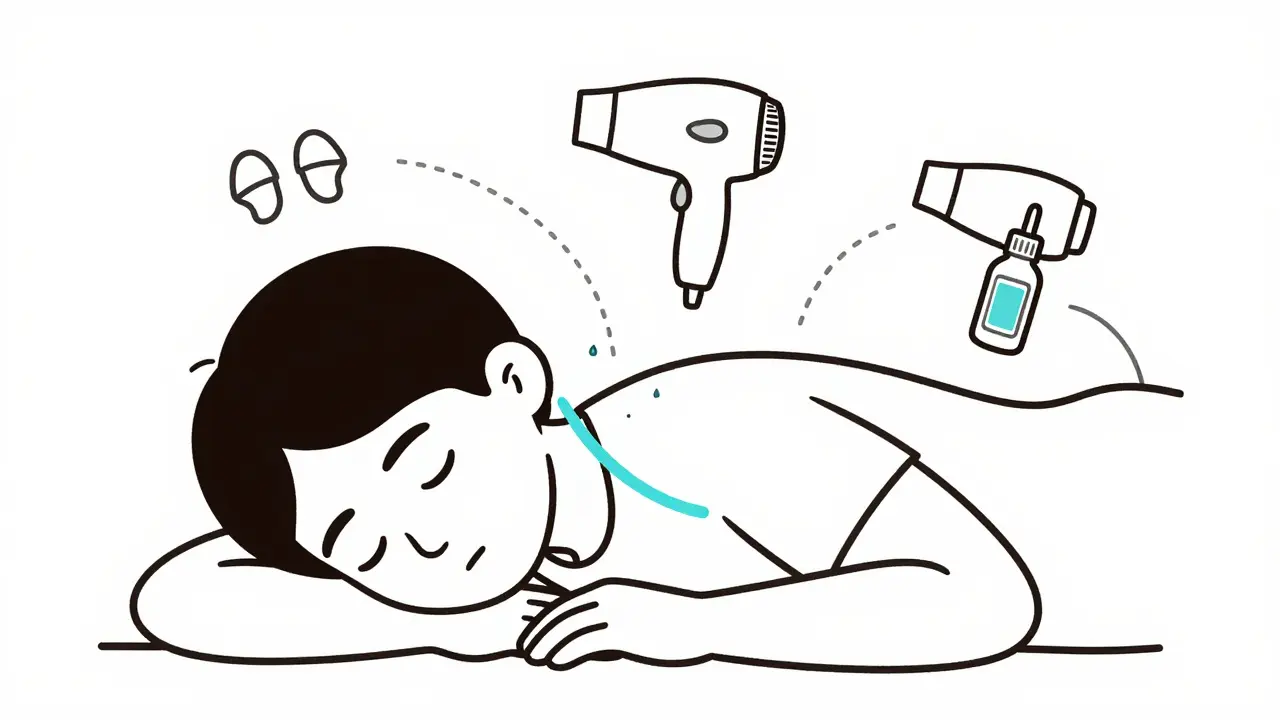
Prevention: Keep Your Ears Dry
The best treatment is avoiding the infection altogether:- After swimming or showering, tilt your head to drain water.
- Dry your ears gently with a hairdryer on low, from a distance.
- Use a few drops of over-the-counter acetic acid solution after swimming-it cuts recurrence by 65%.
- Never use cotton swabs inside the ear canal.
- If you swim often, consider custom-fitted earplugs.
What’s Next in Treatment?
Researchers are looking at new ways to treat swimmer’s ear. Stanford University is testing microbiome-based therapies-giving back the good bacteria that naturally protect the ear. It’s early, but promising. Telemedicine is also helping. Mayo Clinic found they can accurately diagnose swimmer’s ear over video calls 88% of the time. That means fewer unnecessary visits to the ER. But the biggest challenge? Overuse. Antibiotic resistance is rising. Between 2015 and 2020, fluoroquinolone-resistant Pseudomonas strains increased 12%. Doctors are now more careful about prescribing. You shouldn’t get antibiotics unless you need them.Final Takeaway
Swimmer’s ear is common, treatable, and usually doesn’t last long-if you treat it right. For mild cases, acetic acid drops are cheap, safe, and effective. For anything worse, see a doctor. Get the right drops. Get your ear cleaned. Use them properly. And above all-don’t stick anything in there.If you’ve had it before, you know how fast it can ruin your week. But with the right approach, you can be back to swimming, sleeping, and feeling normal in just a few days.
Can swimmer’s ear go away on its own?
Mild cases can sometimes clear up on their own in a few days, especially if you keep your ear dry and avoid further irritation. But waiting is risky. The infection can worsen quickly, leading to severe pain, hearing loss, or even spread to deeper tissues. It’s safer and faster to treat it early with the right drops.
Are antibiotic ear drops safe for children?
Yes, fluoroquinolone drops like ciprofloxacin and ofloxacin are approved for children as young as 6 months old. They’re preferred over older drops like neomycin because they’re safer if the eardrum is damaged. Always follow your doctor’s instructions for dosage and duration.
Can I use ear drops if I have ear tubes?
Yes-but only if your doctor says so. Some ear drops are safe with tubes, but others can cause irritation or hearing issues. Always check the label or ask your doctor before using any drops if you have ear tubes. Avoid anything with alcohol or harsh ingredients.
Why does my ear hurt more after putting in the drops?
It’s common to feel a brief stinging or burning sensation when you first apply drops, especially if your ear canal is inflamed. This usually lasts only a few seconds. If the pain lasts longer, gets worse, or you develop a rash, stop using the drops and contact your doctor. You might be allergic to one of the ingredients.
How do I know if it’s swimmer’s ear or a middle ear infection?
Swimmer’s ear causes pain when you tug on your earlobe or press on the bump in front of your ear. Middle ear infections usually cause pain deep inside, often with fever and trouble hearing, but not pain from touching the outer ear. If you’re unsure, see a doctor. They can look inside with an otoscope and tell you for sure.
Can I swim again after getting swimmer’s ear?
Wait until your symptoms are completely gone and your doctor says it’s okay. That usually means 7-10 days after starting treatment. When you do swim again, use earplugs and dry your ears right after. Consider using preventive drops to avoid a repeat infection.
Is it safe to use leftover ear drops from a previous infection?
No. Medications expire, and the cause of your new infection might be different. Using old drops can delay proper treatment and increase the risk of antibiotic resistance. Always get a new prescription or consult a pharmacist before reusing old medication.


9 Comments
Just had swimmer’s ear last month-used Ciprodex and it was a game-changer. The first day felt like my ear was on fire, but by day three the pain was gone. My doctor said most people skip the debridement and wonder why it’s not working. Trust me, get it cleaned out. It’s not fun, but it’s the only reason the drops actually penetrate.
Also, never use vinegar straight from the bottle. I tried it after reading some ‘natural remedy’ blog. Burned like hell. Don’t be me.
So glad someone finally explained why cotton swabs are evil. I used to clean my ears every night like it was a ritual. Then I got swimmer’s ear and my mom said ‘you’re lucky you didn’t rupture your eardrum’
Now I just shake my head after showers and call it good. Life is simpler now lol
Let’s be real-this whole ‘swimmer’s ear’ thing is overdiagnosed. Most people just have irritated skin from chlorine or sweat and panic because they heard it’s ‘dangerous.’
The real problem? Pharma companies pushing $150 ear drops when 90% of cases resolve with saltwater rinses and time. You don’t need dexamethasone for itching. You need to stop swimming for a week and stop poking your ear with Q-tips.
And don’t get me started on ‘ear wicks.’ That’s just a fancy way of saying ‘we couldn’t clean it properly so now we’re leaving a sponge in there.’
Fluoroquinolones? Sure, they work. But they’re overprescribed. Resistance is climbing because doctors treat every red ear like it’s a biohazard. It’s lazy medicine.
And yes, I’ve read the studies. All of them. You’re welcome.
Great breakdown. I’d add one thing: if you’re diabetic and your ear feels weird, don’t wait. I had a friend who ignored it for two weeks because ‘it’s just swimmer’s ear.’ Turned out he had malignant otitis externa. Lost part of his jawbone.
Also, warming the drops? Yes. I didn’t know that and got dizzy the first time I used them. Like a mini vertigo attack. Not fun.
And for the love of god, don’t reuse old drops. I did that once. Got a fungal infection. Clotrimazole saved me. But I still cringe thinking about it.
OMG I had this last summer and I thought I was dying my ear was so swollen and I cried so hard and I was scared to even touch it and I just wanted to sleep forever and I didn’t know what to do and I thought I was gonna go deaf and then I went to the doctor and they gave me the drops and I felt like a new person like literally new person
please if you feel even a little weird in your ear just go dont wait like I did please
Interesting read. In India, many people use warm mustard oil drops for ear discomfort. Not scientific, but culturally common. I’ve seen it work for mild cases, though not for infections.
Still, the advice about avoiding cotton swabs and keeping ears dry is universal. I’ve had this twice-once after monsoon swimming, once after a long shower. The debridement step was painful but necessary. Doctors here rarely explain it well. Glad someone did.
Yup. I’m the guy who used hydrogen peroxide because my cousin said it ‘fizzes out the gunk.’ Spoiler: it didn’t. It burned. I cried. I looked like a fool.
Now I use Swim-Ear after every swim. Costs a few bucks, stops 90% of problems. My mate says I’m obsessed. I say I’m smart.
And if you’re gonna use drops, lie down like they say. Don’t just squirt it in while standing. You’re wasting half of it. I learned that the hard way.
Clotrimazole for fungal? That’s outdated. Newer studies show nystatin is just as effective and less likely to cause irritation. Also, the ‘93% success rate’ claim is from a 2018 study with 47 patients. Don’t treat anecdote like data.
And ‘ear wicks’ aren’t necessary. Most ENTs skip them now and use microsuction instead. The article reads like a pharma brochure.
Also, why is no one talking about the fact that otitis externa is more common in people with eczema? That’s a bigger risk factor than diabetes in some populations. But sure, let’s blame swimmers.
Y’all are overthinking this. I used to be a swim coach. Every summer, half the team got swimmer’s ear. We fixed it with two things: vinegar-and-water rinse after practice (50/50, no burn) and NEVER letting them use Q-tips. No drops, no wicks, no drama.
Most kids were fine in 3 days. The ones who didn’t? They were the ones who kept swimming with earbuds or had moms who ‘cleaned’ their ears with tweezers. (Yes, that happened.)
Simple wins. Don’t let the fancy meds scare you. Keep it dry. Don’t poke. Done.