
Most of us have a "pill spot"-maybe it's a bathroom drawer, a bedside table, or a kitchen counter. But that convenience could be a disaster waiting to happen. With nearly 60,000 emergency room visits every year involving children under five who got into medications, the way you store your pills isn't just about organization; it's about survival. If you think a high shelf is enough to keep a curious toddler safe, think again. Data shows kids as young as two can climb to reach shelves 48 inches high. To truly protect your family, you need a strategy that moves beyond "out of sight, out of mind."
| Location | Safety Rating | Why? |
|---|---|---|
| Locked Safe/Cabinet | Gold Standard | Prevents unauthorized access and tampering. |
| High Shelf (Unlocked) | Risky | Toddlers can climb; teenagers can reach. |
| Bathroom Cabinet | Poor | High humidity ruins meds; easily accessed. |
| Purses/Coat Pockets | Dangerous | High risk for accidental ingestion by kids. |
The Myth of the Bathroom Cabinet
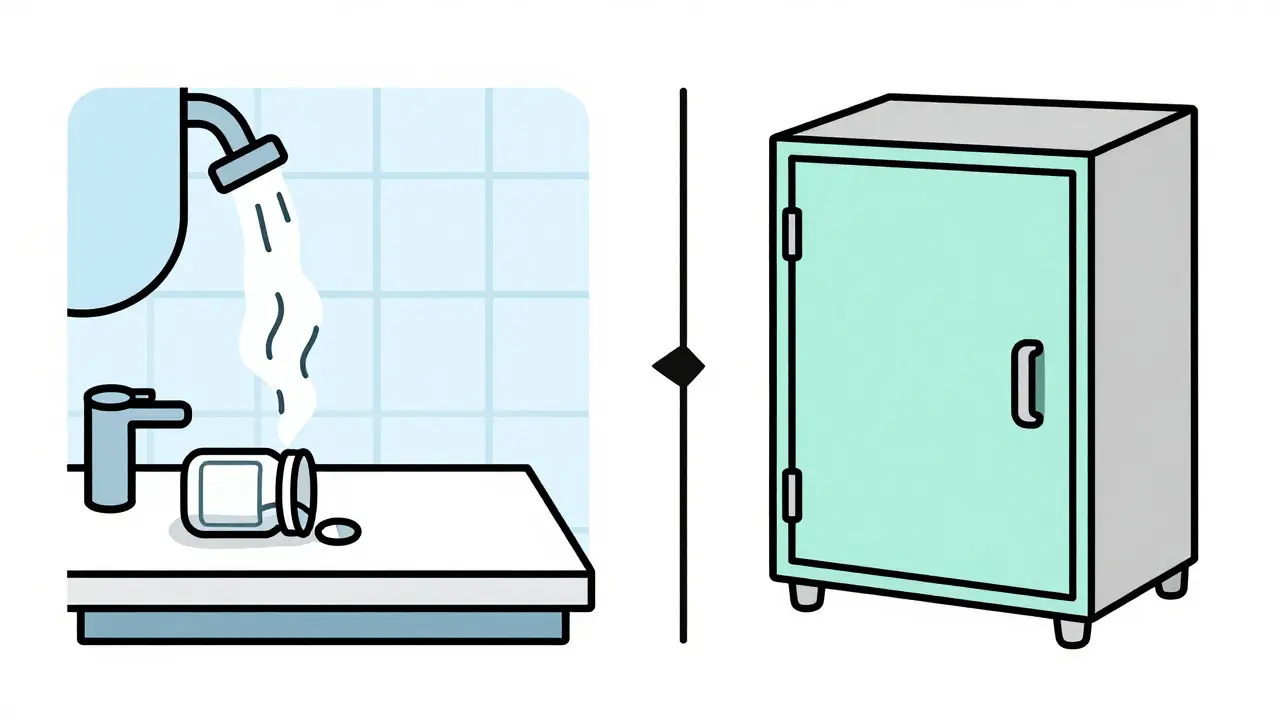
It seems natural to keep medicine in the bathroom, but it's actually one of the worst places for your prescriptions. When you take a hot shower, the humidity in the room can spike above 80%. This moisture seeps into your pill bottles, and according to FDA experts, this can degrade up to 67% of common medications within just 30 days. When a drug degrades, it might not work as well, or in some cases, it could become unstable.
Beyond the chemistry, the bathroom is often the most accessible room in the house. Safe medication storage is the practice of securing pharmaceuticals in residential environments to prevent accidental poisoning and misuse. By moving your meds to a cool, dry area, you ensure the chemicals stay potent and the bottles stay away from prying eyes.
Why Locked Storage is the Only Real Solution
If you have children or grandkids visiting, "child-resistant" caps are a helpful first layer, but they aren't a vault. The Poison Prevention Packaging Act is a federal law requiring child-resistant packaging on most prescription drugs sets a standard for how much force is needed to open a bottle, but by age five, half of all children can figure out how to open them.
Medical experts, including specialists from Columbia University, have noted that keeping medications in unlocked cabinets increases the risk of pediatric poisoning by a staggering 300%. The real danger often happens in a tiny window of time. About 42% of poisonings occur during those 5 to 10 minutes after an adult takes their medicine but hasn't yet put the bottle back in a secure spot. If you leave a bottle on the counter while you go grab a glass of water, that's all the time a toddler needs.
For a truly secure home, look into medicine safes dedicated locking containers designed to prevent unauthorized access to pharmaceuticals . You don't need to spend a fortune; basic models can be found for under $150. If you already have a heavy-duty document box or a fireproof safe, those work perfectly too.
Managing Temperature and Humidity
Not all medications are created equal. Some are hardy, while others are incredibly sensitive to their environment. For most pills, the sweet spot is a temperature between 68-77°F (20-25°C) with humidity levels below 60%. If you store your meds in a garage or a laundry room where the temperature swings wildly, you might be compromising the drug's effectiveness.
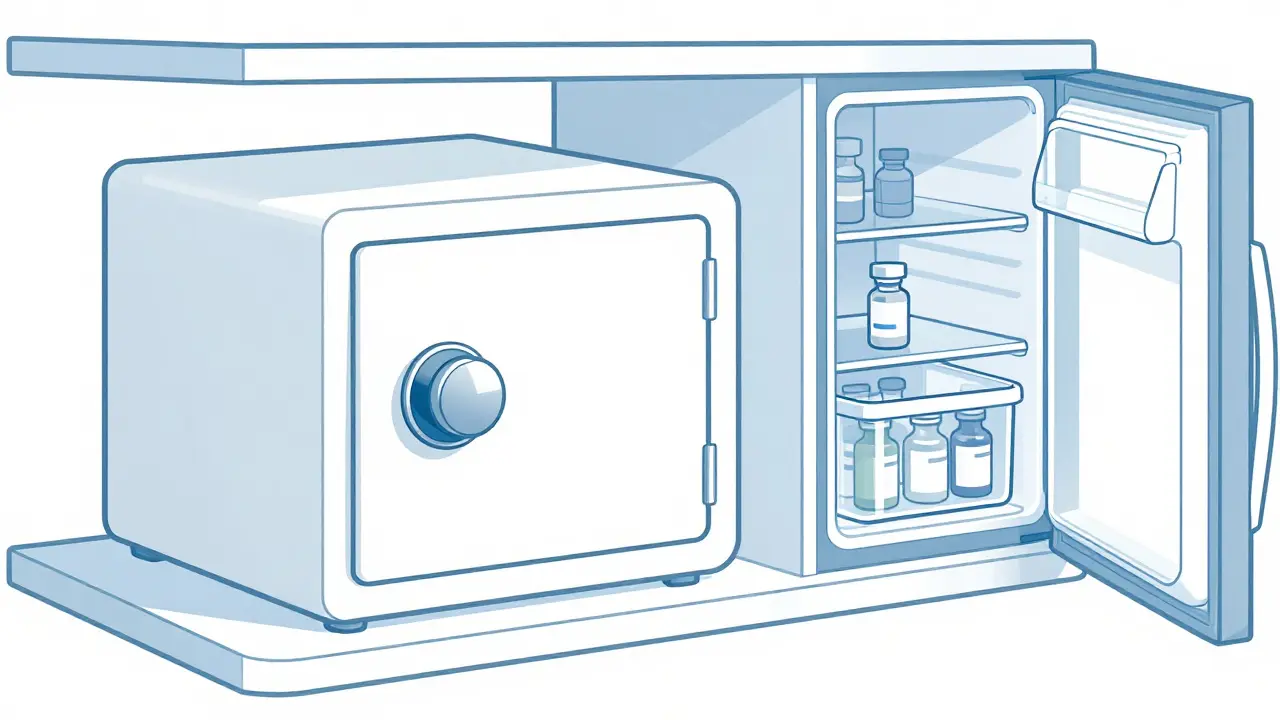
Then there are the high-maintenance meds. Insulin a hormone medication used to treat diabetes that requires strict temperature control must be refrigerated, typically between 36-46°F (2-8°C). However, the fridge is a high-traffic area. To keep insulin safe, use a locked refrigeration bin or a designated secure section of the fridge that is separate from food. This prevents accidental mix-ups or unauthorized use by others in the house.
The Danger Zones: Purses, Cars, and Guest Rooms
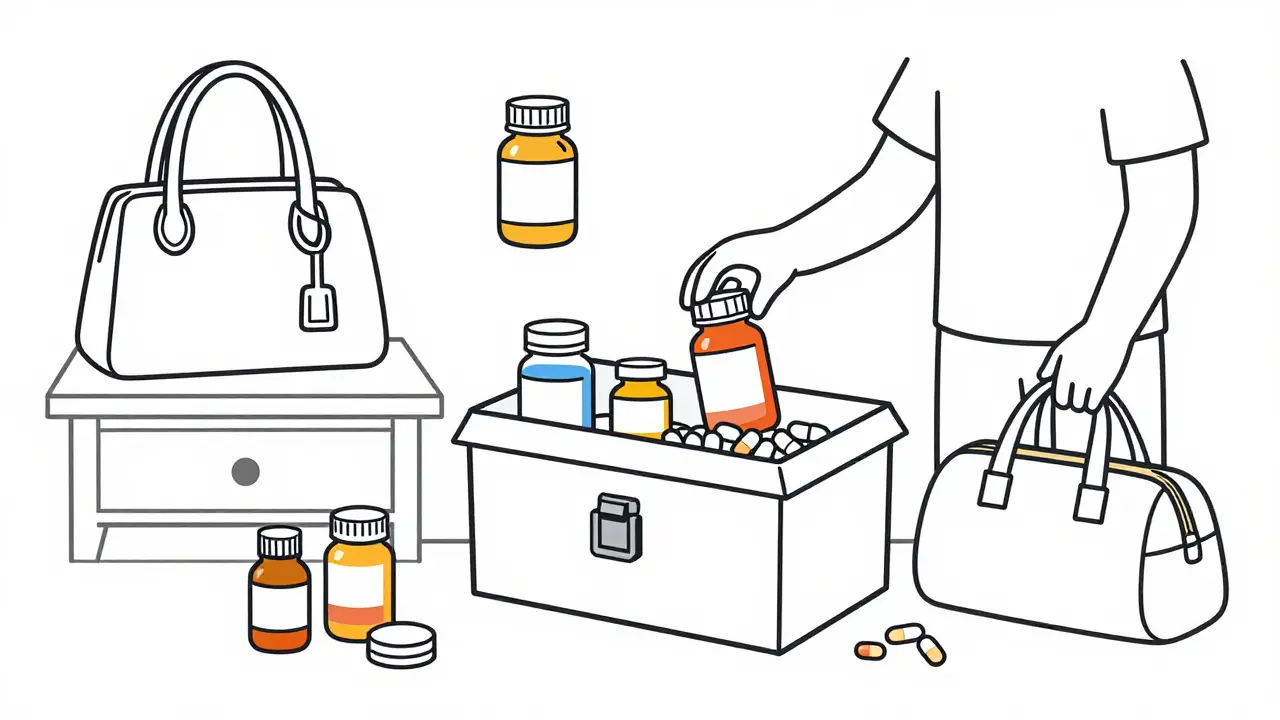
We often forget about the "mobile" medication. Many of us keep a few pills in a purse, a coat pocket, or a glove box for emergencies. These are high-risk zones. In multi-generational homes, about 31% of poisoning incidents happen because storage practices differ between the parents and the grandparents. A grandparent might leave a pill on a nightstand, thinking the child is too young to notice, only for the child to find it minutes later.
Vehicles are another major blind spot. A significant number of households store medications in their cars. Not only is this a theft risk, but the extreme heat of a parked car in the summer can destroy the chemical composition of your medication, rendering it useless or even dangerous. If you must carry medication with you, use a small, locked travel case rather than tossing it in a loose compartment.
Special Considerations for Seniors and Caregivers
While locking everything away is the gold standard for parents, it can be a hurdle for seniors with dementia or mobility issues. If a patient can't remember where the key is or can't physically operate a heavy lock, the safety measure becomes a health risk. In these cases, a balance is needed. This is where digital medication dispensers electronic devices that release the correct dose of medication at a scheduled time and lock the rest come in handy. Some of these use biometric locks (like fingerprints) to ensure only the patient or their caregiver can access the meds, providing a 78% increase in effectiveness against unauthorized access compared to traditional boxes.
How to Audit Your Home Pharmacy
Setting up a safe system doesn't have to happen all at once. You can start with a simple audit this weekend. First, gather every single medication in your house-including those hidden in purses, gym bags, and bedside drawers. Check the expiration dates; if it's old, don't just throw it in the trash, as pets or children can find it in the bin. Use a pharmacy take-back program instead.
Once you've cleared the clutter, choose one single, locked location for all non-refrigerated meds. Make it a habit: the moment the pill leaves the bottle, the bottle goes back into the lock. This eliminates that dangerous "5-minute window" where most accidents happen. If you're managing opioids, the risks are even higher. Many pharmacies now provide free lockable containers specifically for these high-risk prescriptions to prevent adolescent misuse.
Can I just store my medicine on a high shelf?
No. Many people assume high shelves are safe, but toddlers are surprisingly agile. Research shows children as young as 24 months can climb furniture to reach shelves as high as 48 inches. A locked cabinet or safe is the only way to ensure they can't get in.
Why is the bathroom a bad place for medicine?
Bathrooms are humid and subject to temperature swings. Humidity levels during a shower can exceed 80%, which can degrade a large percentage of medications within a month, making them less effective or unstable.
What should I do with expired medications?
Never flush them down the toilet or throw them directly in the trash where they can be found. Look for a local pharmacy or a community drug take-back program to dispose of them safely and legally.
Do child-resistant caps actually work?
They help, but they aren't foolproof. They are designed to slow down a child, not stop them entirely. By age five, roughly 50% of children can open these caps, which is why a locked secondary container is necessary.
Where should I store insulin safely?
Insulin should be kept in the refrigerator between 36-46°F (2-8°C). To keep it safe from others, use a locked medication box inside the fridge or a designated secure area away from food items.
Next Steps for Your Home
If you're just starting, don't overcomplicate it. Buy a simple lockbox or repurpose a sturdy file cabinet with a lock. If you have a multi-generational household, sit down with your parents or in-laws and agree on a single storage standard so there's no confusion when the grandkids visit. For those caring for seniors, consult with a doctor about a biometric dispenser to balance accessibility with security.
11 Comments
Please. The whole 'humidity' thing is way overblown. I've kept my stuff in the bathroom for ten years and I'm still kicking. People just love to panic over everything these days.
Um, excuse me? 🙄 The science is literally right there! If you're okay with your meds becoming useless, go ahead, but some of us actually prefer our treatment to work! 💅 It's honestly shocking that some people still think the bathroom is okay! 😱
It's just typical that we have to rely on some fancy 'gold standard' guide when common sense should be enough, but since we're living in a country where people can't even lock a door anymore, I guess we need to be told exactly how to keep our kids safe from their own curiosity while the government just watches from the sidelines and does nothing about the actual cost of these drugs in the first place!
It's interesting to think about how our environment shapes our habits, and most of us just follow the path of least resistance by putting things where they're convenient.
Oh sure, because a $150 lockbox is definitely the only way to save the world from the terrifying prospect of a toddler finding a Tylenol bottle. Truly a revolutionary discovery.
I really appreciate the tip about the pharmacy take-back programs. I always felt bad just tossing old meds in the trash.
Who actually believes these 'FDA experts' and 'Columbia University' stats? They probably just want us buying these specific 'safe' containers from companies they're paid by. Everything is a racket. Just hide your stuff in a sock and stop trusting the system.
THE HEART ATTACK I HAD reading about the 5-minute window! I can't even imagine the absolute terror of realizing a child got into a bottle while you were just grabbing a glass of water! This is an absolute nightmare scenario!
I think it's wonderful that we can share these safety tips to protect our families. It's all about creating a supportive environment where we look out for each other, regardless of our living situation or cultural background.
The philosophical implication of safety versus accessibility is quite profound, particularly when contemplating the needs of the elderly. It is a delicate balance between preserving autonomy and ensuring the physical well-being of the individual, which requires a deeply considered approach to home care management.
This guide is exceptionally detailed. It is truly encouraging to see such clear parameters for temperature and humidity, as it empowers the homeowner to make informed decisions. I believe following these structured steps will significantly reduce accidental poisonings in many households globally.