
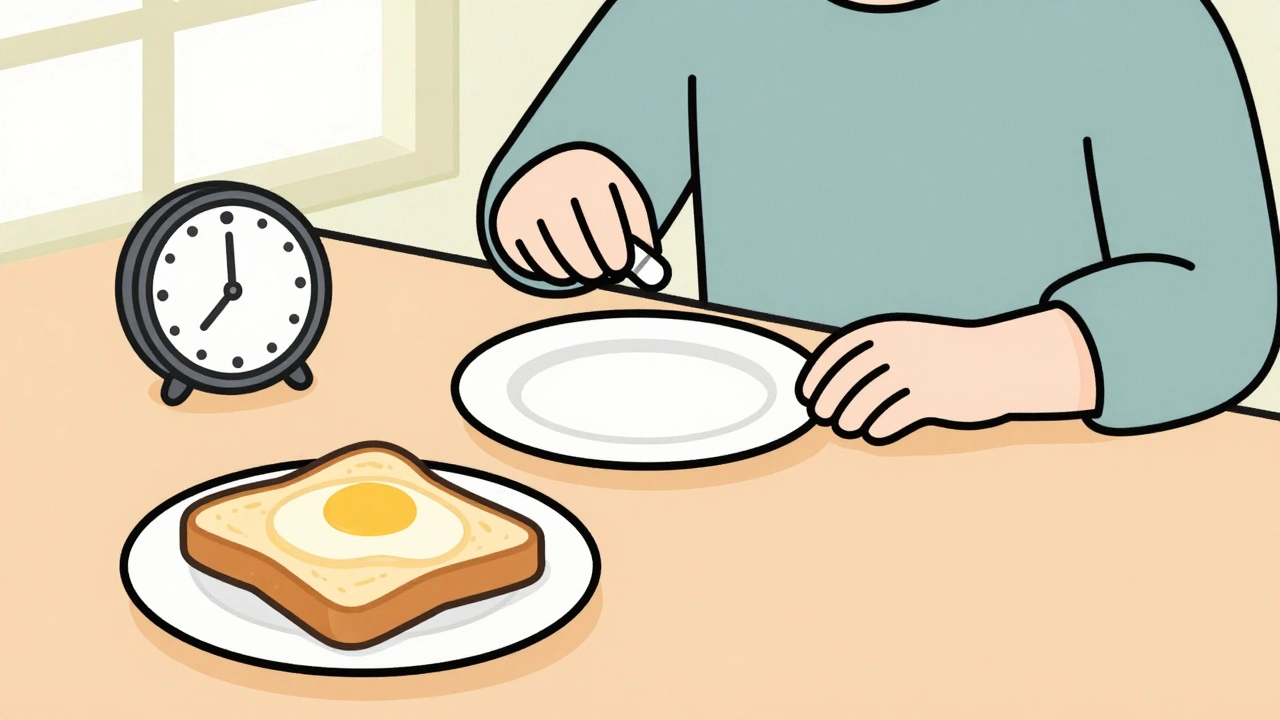
For millions of people taking extended-release medications, especially for ADHD, the simple act of eating breakfast can make a huge difference in how well their medicine works. It’s not about what you eat-it’s about when you eat it relative to your dose. Skipping breakfast before your pill? Eating a big meal right before? These small choices can lead to big changes in your focus, energy, and overall symptom control throughout the day.
Why Breakfast Timing Isn’t Just a Suggestion
Many people assume that as long as they take their medication every morning, it will work the same way every day. But that’s not true for all extended-release drugs. The science shows that food-especially a high-fat breakfast-can dramatically change how much medicine enters your bloodstream in the first few critical hours after taking it. This matters most for stimulants used to treat ADHD, like ADDERALL XR and CONCERTA, which are often taken first thing in the morning to help with school or work performance. A landmark 2002 study tested exactly this. Researchers gave 24 healthy adults either CONCERTA (methylphenidate) or ADDERALL XR (mixed amphetamine salts) under four different conditions: fasting, or with a high-fat breakfast taken 30 minutes before or after the pill. Blood samples were taken every hour for nearly a full day. The results were clear: ADDERALL XR’s early drug levels dropped by 30-40% when taken after breakfast. That means less medicine in your system during the peak hours you need it most-like 9 a.m. to noon, when you’re in class or in meetings. CONCERTA, on the other hand, showed almost no change. Its absorption stayed steady whether you ate or not. This isn’t a minor difference. For a child trying to focus on math or an adult preparing for a presentation, that drop in medication can mean the difference between staying on task and feeling scattered, restless, or overwhelmed.The Science Behind the Difference
What makes CONCERTA so different from ADDERALL XR? It comes down to how the medicine is built. CONCERTA uses an osmotic system called OROS. Think of it like a tiny water-powered pump inside a pill. Once it hits your stomach, it slowly pushes the drug out through a tiny hole, no matter what’s in your gut. It doesn’t care if you ate toast, cereal, or nothing at all. ADDERALL XR works differently. It’s made of tiny beads coated to release medicine over time. But those beads rely on your stomach and intestines being in a certain state to dissolve properly. A big, fatty meal slows down digestion, changes stomach acidity, and delays how quickly the beads reach the right spot for absorption. The result? Slower, weaker, and less predictable drug release. This isn’t unique to ADHD meds. Levothyroxine, used for thyroid conditions, absorbs 25-50% less when taken with food. GLP-1 drugs like semaglutide (Ozempic, Wegovy) must be taken at least 30 minutes before eating, or they won’t work as well. Even some statins-like simvastatin-work better at night because your body makes more cholesterol while you sleep. But for many medications, food timing doesn’t matter much. Blood pressure pills, for example, showed no difference in outcomes whether taken in the morning or evening in a major 2022 trial.Real People, Real Consequences
Behind the numbers are real stories. On Reddit’s r/ADHD, one user wrote: “I switched from ADDERALL XR to CONCERTA because my focus crashed every Monday morning after breakfast. On weekends, when I skipped breakfast until noon, I was fine. I thought I was losing my mind.” Another user, a teacher, said: “I need to be sharp from 8 a.m. to 3 p.m. Taking CONCERTA with my coffee and toast gives me steady focus. I don’t have to wonder if I’ll zone out by 10 a.m.” Review sites back this up. On Drugs.com, 62% of CONCERTA users report consistent effects all day. Only 48% of ADDERALL XR users say the same. The difference isn’t just in the drug-it’s in how reliably it works with your daily routine. Many patients never get told about this. A 2022 survey by CHADD found that 68% of people with ADHD had better symptom control when they stuck to a consistent routine around meals and meds. But 42% of those people said they only improved after learning the right timing rules-because no one had explained it to them before.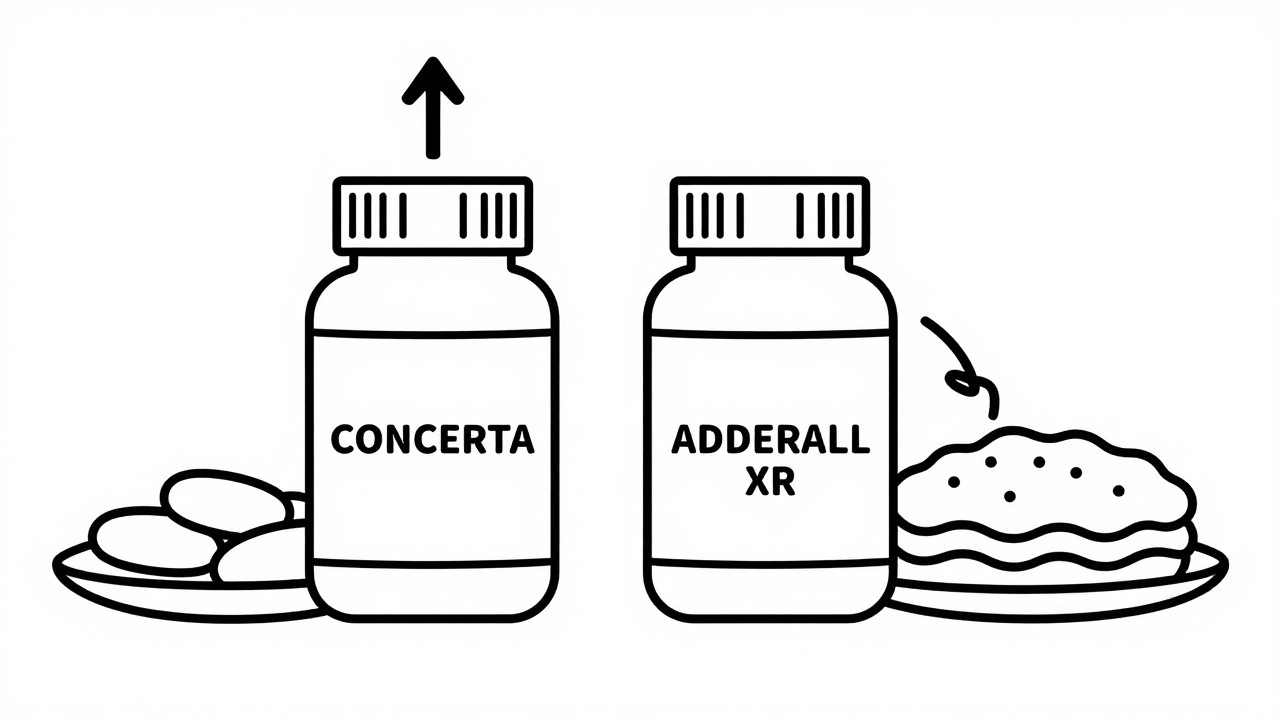
What Should You Do?
If you’re on an extended-release medication, here’s what matters most: consistency. It’s better to always take your pill with breakfast than to sometimes take it with food and sometimes without. Your body learns the pattern. Inconsistent timing creates inconsistent results-and that’s when side effects and poor control creep in. For ADDERALL XR users: Take your dose either 30 minutes before breakfast or 2 hours after. Pick one and stick to it. Don’t switch days based on whether you’re hungry or rushed. If you can’t take it before eating because it makes you nauseous, wait two full hours after breakfast. That’s long enough for your stomach to clear most of the food. For CONCERTA users: You can take it with or without food. But if you’re used to taking it with breakfast, don’t suddenly start taking it on an empty stomach. Your routine matters more than the food itself. If you’re unsure, track your symptoms. For one week, write down how you feel every two hours after taking your pill. Note what you ate and when. You might be surprised to see patterns you never noticed before.What Doctors Should Be Telling You
Many healthcare providers still don’t prioritize medication timing education. But it’s critical. The American Psychiatric Association says spending just 15-20 minutes at the start of treatment explaining food-drug interactions can reduce non-adherence by 37%. That’s huge. Doctors should ask: “Do you eat breakfast before or after your pill?” “Do you skip meals on weekends?” “Have you noticed your meds work better on some days?” These simple questions uncover problems most patients don’t even realize they have. For kids who hate taking pills before school, a small, low-fat snack-like a banana or a handful of crackers-can help with nausea without disrupting absorption. For adults who forget to eat, setting a phone alarm to take the pill first, then eat 30 minutes later, can make all the difference.
The Future Is Consistent
The pharmaceutical industry is catching on. Since 2018, 92% of new extended-release CNS drugs submitted to the FDA included food-effect studies. Companies know that patients and doctors prefer medications that work the same way no matter what you eat. That’s why CONCERTA has gained market share over ADDERALL XR in pediatric ADHD-it’s more reliable. New tools are emerging too. Apps like MedMinder now send personalized reminders that say, “Take your pill 30 minutes before breakfast,” based on your specific medication. Researchers are even testing wearable devices that track brain activity and blood sugar to predict the best time to take meds for each person. By 2028, experts predict that over two-thirds of extended-release CNS medications will be designed to work consistently with or without food. But until then, if you’re on a drug like ADDERALL XR, your breakfast timing isn’t just a habit-it’s part of your treatment plan.Quick Summary
- Food can drastically reduce how well some extended-release medications work-especially ADDERALL XR.
- CONCERTA works the same whether you eat or not; ADDERALL XR does not.
- Consistency matters more than perfect timing. Pick a routine and stick to it.
- Always take levothyroxine and semaglutide on an empty stomach.
- Track your symptoms for a week to see if food timing affects your focus or energy.
Does eating breakfast make ADDERALL XR less effective?
Yes. Taking ADDERALL XR after a high-fat breakfast can reduce early drug absorption by 30-40%, leading to weaker symptom control during the morning hours. This happens because food slows digestion and alters how the medication beads release their contents. To avoid this, take ADDERALL XR either 30 minutes before breakfast or 2 hours after.
Can I take CONCERTA with food?
Yes. CONCERTA uses an osmotic delivery system that releases medication consistently regardless of food intake. You can take it with or without breakfast, and it will work the same way. However, for best results, stick to one routine-don’t switch between taking it with food one day and on an empty stomach the next.
Why does my medication work better on weekends?
If you skip breakfast or eat much later on weekends, your body may absorb your medication more effectively-especially if you’re on ADDERALL XR. On school or work days, eating breakfast right before your dose can delay or reduce drug absorption. This inconsistency causes fluctuating symptom control. Tracking your meals and symptoms can help you identify this pattern.
What if I feel nauseous taking stimulants on an empty stomach?
Try a small, low-fat snack-like a banana, a few crackers, or a yogurt-about 10-15 minutes before your pill. Avoid fatty or heavy meals. This can ease nausea without significantly affecting absorption. If nausea persists, talk to your doctor about switching to a food-insensitive option like CONCERTA.
Do all extended-release medications work the same with food?
No. Each drug behaves differently. ADDERALL XR and levothyroxine are strongly affected by food. CONCERTA and atorvastatin are not. Always check the prescribing information for your specific medication. If you’re unsure, ask your pharmacist or doctor for the food-effect profile of your drug.
How long should I wait after eating before taking my medication?
For medications affected by food (like ADDERALL XR or levothyroxine), wait at least 2 hours after a full meal. For a light snack, 30 minutes may be enough. If your medication requires fasting, avoid even coffee with cream or juice until after you’ve taken it. Always follow the specific instructions for your drug.
12 Comments
i just took my adderall xr with my coffee and toast like always and i swear i felt like a zombie by 11am. never thought it was the food til i read this. mind blown.
It is scientifically documented that food-induced variability in pharmacokinetics significantly compromises therapeutic efficacy in extended-release stimulant formulations. The osmotic delivery system employed by Concerta mitigates this entirely, rendering it superior in clinical consistency. This is not anecdotal-it is evidence-based pharmacology.
THIS. THIS RIGHT HERE. I switched from Adderall XR to Concerta last year and my life changed. No more guessing if I’ll be able to finish a meeting. No more panic at 10 a.m. because I feel like I’m underwater. If you’re struggling, just switch. Your future self will hug you.
The distinction between osmotic pump systems and bead-based extended-release formulations reflects a fundamental divergence in pharmacokinetic design philosophy. The former decouples absorption from GI transit dynamics, while the latter remains vulnerable to food-induced alterations in gastric emptying, pH, and bile secretion. This is why bioequivalence studies for ADDERALL XR require fed/fasted conditions-Concerta does not.
my doc never told me any of this. i thought i was just bad at managing my meds. turns out i was just taking them wrong. took my pill 2 hours after breakfast this week and boom-whole day focused. why don’t more people know this?
Wow. Another post pretending that ADHD meds are magic pills that work the same for everyone. Newsflash: most people don’t even take them correctly. You’re not special. You’re just lazy and didn’t read the damn label. Also, why are you eating breakfast at all? Fasting would be better.
Concerta is basically the Tesla of ADHD meds-no maintenance, always on, zero drama. Adderall XR is like a 2008 Honda Civic that only runs if you park it in the exact spot and feed it organic kale. I’m not even mad. I’m just impressed I lived through the 2010s.
Consistency isn’t just a suggestion-it’s the only variable you can control. Your body doesn’t care about your schedule, your mood, or your coffee ritual. It cares about predictable pharmacokinetics. If you want stable dopamine modulation, you must eliminate stochastic inputs. That means the same time, same food state, every single day.
thank you for writing this 🙏 i’ve been taking my Concerta with my coffee and banana every morning for 3 years and never thought to question it. now i know it’s actually the *right* way. i feel so seen. also i cried a little. this stuff matters.
you guys are overcomplicating this. just take it when you’re hungry. if you feel bad, you’re doing it wrong. stop reading blogs and start living.
my 12yo just started Concerta and we do it with a banana before school. no drama, no nausea, full day of focus. i’m so glad we found this routine. to all the parents reading: you’re not alone 💛
Most of you are missing the point. The real issue isn’t food-it’s that pharmaceutical companies design drugs for the average patient, not the neurodivergent one. We need personalized release profiles, not one-size-fits-all beads. Until then, we’re just optimizing broken systems.