Heart Medication Interaction Checker
Add Item
Select a medication, food, or supplement to check for conflicts.
Your Current Regimen
Risk increases exponentially with each added medication.
No items added yet. Start building your regimen.
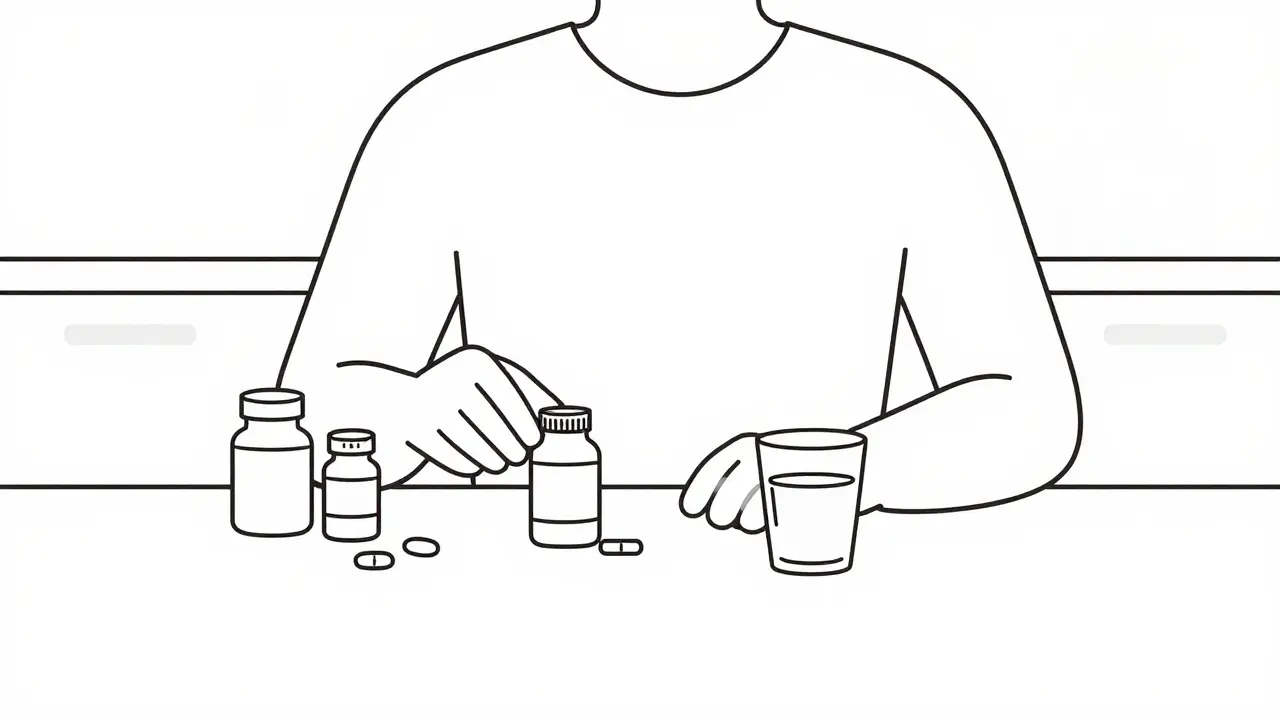
Imagine you’re managing high blood pressure and high cholesterol. You take your pills every morning like clockwork. But what if those pills are fighting each other in your body? It’s a scary thought, but it happens more often than you might think. When we combine multiple heart medications, we aren’t just adding benefits; we’re also stacking risks. The danger isn’t always in the drugs themselves, but in how they talk to each other.
The numbers don’t lie. Research shows that if you take two prescription medications, your risk of an adverse drug interaction sits at around 13%. Add a fourth medication, and that risk jumps to 38%. If you’re on seven or more meds-which is common for older adults with complex health needs-that risk skyrockets to 82%. This exponential increase is why understanding drug interactions is critical for anyone managing cardiovascular health.
The Hidden Danger of Polypharmacy
Polypharmacy is the medical term for taking multiple medications simultaneously. For many of us, especially as we age, this becomes the norm rather than the exception. A 2023 report from the University of Rochester Medical Center found that approximately 92% of older adults with cancer are dealing with polypharmacy. While the study focused on cancer patients, the principle applies broadly to chronic conditions like heart disease, diabetes, and hypertension.
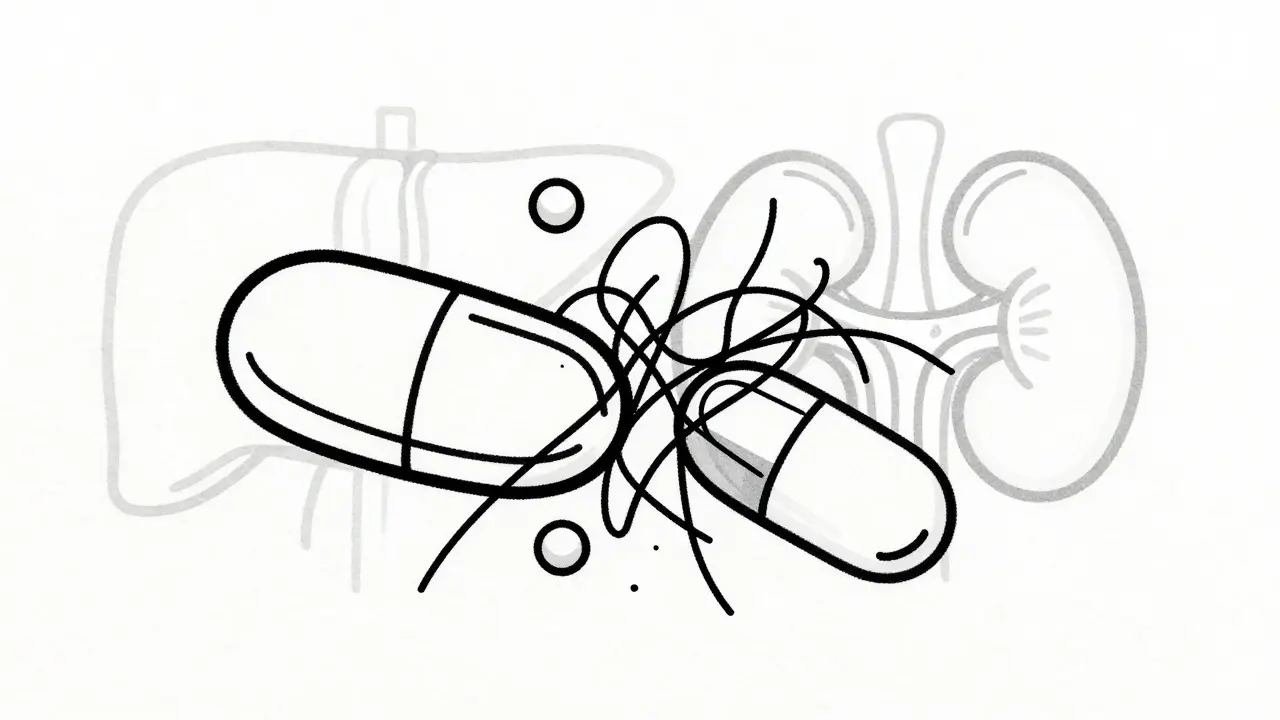
Why does this matter? Because your liver and kidneys have to process everything you swallow. When you overload them, things get messy. One drug might slow down the metabolism of another, causing it to build up to toxic levels. Or, one drug might speed up the breakdown of another, rendering it useless. According to a study published in the National Institutes of Health (NIH) database, potential drug-drug interactions were found in 77.41% of inpatients at one major medical center. That’s nearly four out of five patients.
The problem is compounded by supplements and over-the-counter remedies. Many people assume "natural" means "safe," but nature can be potent. St. John’s wort, a popular herbal supplement for mood, accelerates the metabolism of certain cardiac drugs. This means your heart medication gets flushed out of your system too quickly, leaving you unprotected against heart attacks or strokes. Turmeric, while anti-inflammatory, can also interfere with blood thinners. Always check with your doctor before adding anything new to your regimen.
Foods and Drinks That Sabotage Your Meds
You might be careful about mixing pills, but what about your breakfast juice? Grapefruit juice is perhaps the most famous culprit in the world of drug interactions. It contains compounds called furanocoumarins that inhibit an enzyme called CYP3A4. This enzyme is responsible for breaking down many statins, the drugs used to lower cholesterol.
When you block CYP3A4, statin levels in your blood rise dangerously high. This doesn’t mean better cholesterol control; it means a higher risk of severe side effects like rhabdomyolysis-a condition where muscle tissue breaks down and releases harmful proteins into the blood, potentially leading to kidney failure. Clinical pharmacology studies cited by the FDA indicate that consuming just one quart of grapefruit juice daily can inhibit intestinal CYP3A4 by 47%. For some statins, even small amounts can trigger this reaction.
Alcohol is another major player. The National Institute on Alcohol Abuse and Alcoholism notes that alcohol interacts adversely with more than 150 medications, including those for high blood pressure and heart disease. Mixing alcohol with beta-blockers or ACE inhibitors can cause your blood pressure to drop too low, leading to dizziness, fainting, and falls. Rush University Medical Center specifically warns that combining heart medications, antidepressants, and alcohol amplifies cardiovascular risks significantly.
Even something as innocent as black licorice can be trouble. Natural black licorice contains glycyrrhizin, which can raise blood pressure and deplete potassium. If you’re taking diuretics (water pills) or certain blood pressure meds, this combination can lead to dangerous electrolyte imbalances and arrhythmias.
Over-the-Counter Risks You Can’t Ignore
We often treat pharmacy aisles like candy stores, grabbing whatever seems to help a headache or cold. But for heart patients, these choices carry weight. Non-steroidal anti-inflammatory drugs (NSAIDs) like ibuprofen and naproxen are particularly risky. They can reduce the effectiveness of blood pressure medications and increase the risk of bleeding when combined with anticoagulants like warfarin or apixaban.
Decongestants containing pseudoephedrine are another red flag. These drugs constrict blood vessels to relieve nasal congestion, which effectively raises blood pressure. If you’re trying to keep your BP under control with medication, a simple cold remedy could undo weeks of progress. Antacids can also alter the absorption of cardiac medications, meaning your pill might not work as intended. Even first-generation antihistamines like diphenhydramine can prolong the QT interval-an electrical cycle in the heart-potentially leading to serious arrhythmias.
Understanding the Mechanisms: Why Interactions Happen
To truly grasp why these combinations are dangerous, it helps to understand the mechanics. Drug interactions generally fall into two categories: pharmacokinetic and pharmacodynamic.
Pharmacokinetic interactions involve changes in how the body absorbs, distributes, metabolizes, or excretes a drug. Think of it as traffic control. If Drug A blocks the exit ramp for Drug B, Drug B piles up on the highway (your bloodstream). This is what happens with grapefruit juice and statins. Conversely, if Drug A opens extra lanes, Drug B speeds through without doing its job. This is seen with St. John’s wort accelerating drug metabolism.
Pharmacodynamic interactions occur when two drugs act on the same physiological system, either enhancing or opposing each other's effects. For example, taking two different blood pressure medications that both lower heart rate might cause your pulse to drop too low, leading to fatigue or syncope. Similarly, combining MAOI antidepressants with foods high in tyramine (like aged cheeses or processed meats) can trigger a hypertensive crisis-a sudden, severe spike in blood pressure that can cause a stroke.
| Medication Class | Unsafe Companion | Potential Consequence |
|---|---|---|
| Statins (e.g., Atorvastatin) | Grapefruit Juice | Muscle damage (Rhabdomyolysis), Kidney failure |
| Blood Thinners (e.g., Warfarin) | Turmeric / Fish Oil (High Dose) | Increased bleeding risk |
| Beta Blockers | Black Licorice | Elevated Blood Pressure, Low Potassium |
| ACE Inhibitors | NSAIDs (Ibuprofen) | Reduced BP efficacy, Kidney strain |
| Digoxin | St. John's Wort | Reduced drug effectiveness, Heart rhythm issues |
Strategies to Stay Safe
So, how do you navigate this minefield? The first step is centralization. Use a single pharmacy for all your prescriptions. Pharmacists there will have a complete view of your medication profile and can screen for interactions automatically. Harvard Health Publishing emphasizes this as a primary defense against dangerous combos.
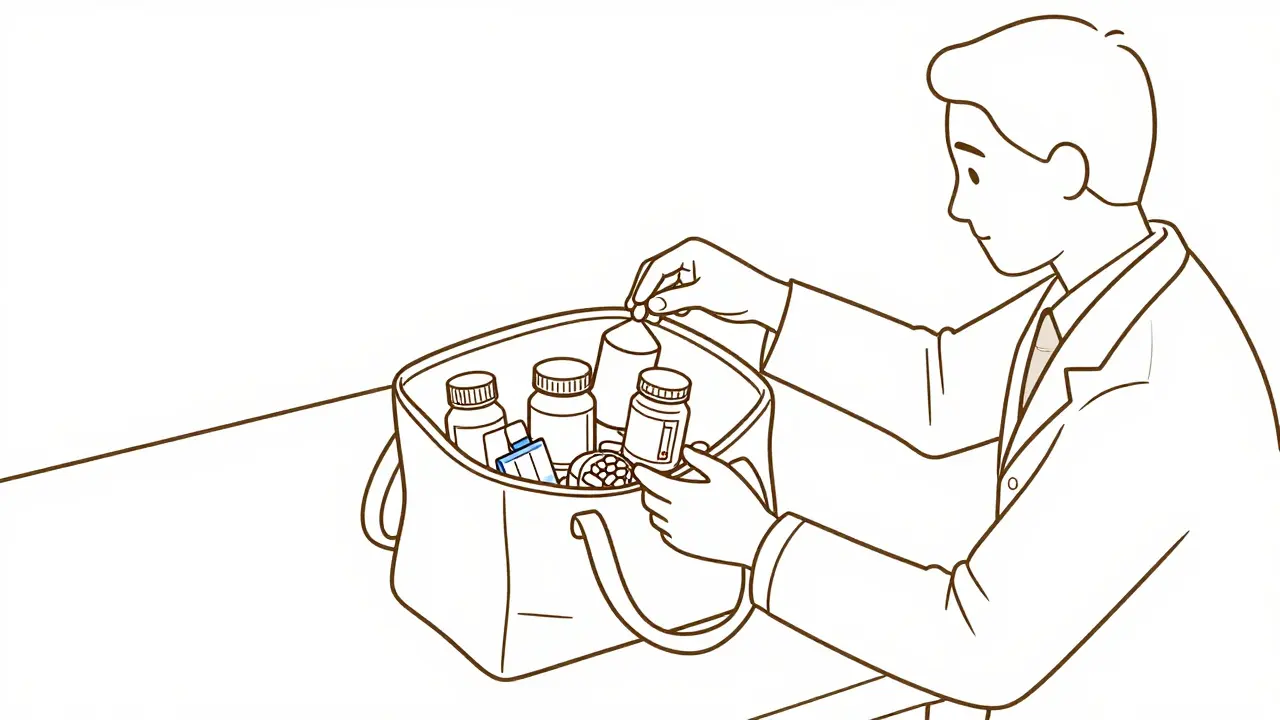
Next, adopt the "brown bag review" technique. Before every medical appointment, bring every single bottle, box, and container you use-including vitamins, herbs, and over-the-counter painkillers. Lay them out on the table. Ask your doctor or pharmacist to review them together. This visual audit often reveals duplicates or conflicts that slip through digital records.
Keep a updated medication list. Write down the name, dose, and frequency of every drug you take. Update it after every hospital visit or new prescription. Share this list with every healthcare provider you see, including dentists and specialists. Modern electronic health records are helpful, but studies show they still miss about 23% of significant interactions due to incomplete data or lack of individual patient context.
Finally, don’t be afraid to ask about deprescribing. This is the process of safely stopping or reducing medications that are no longer beneficial or are causing harm. A 2022 study in *The Oncologist* highlighted that patients often resist this due to fear, but doctors are increasingly recognizing that fewer, well-chosen drugs are often safer than many mediocre ones. If you’re struggling with side effects or complexity, ask your doctor: "Is there a simpler regimen that achieves the same goal?"
Looking Ahead: Personalized Medicine
The future of managing these interactions lies in pharmacogenomics-the study of how your genes affect your response to drugs. Current research priorities identified by the FDA include developing sophisticated screening tools to predict individual susceptibility to specific drug interactions. Genetic variations in enzymes like CYP450 can make one person highly sensitive to a drug that another person tolerates easily. As these tests become more accessible, we’ll move away from one-size-fits-all dosing toward tailored regimens that minimize interaction risks from the start.
Until then, vigilance is your best tool. Your heart is resilient, but it relies on a delicate chemical balance. By understanding the interplay between your medications, foods, and lifestyle choices, you take back control of your health. Don’t wait for a side effect to teach you a lesson. Proactive management saves lives.
How many medications is too many for a heart patient?
There is no fixed number, but risk increases exponentially. Taking 2 medications carries a 13% interaction risk, while 7 or more raises it to 82%. The goal is to maintain the lowest effective number of drugs necessary to manage conditions safely.
Can I take aspirin with my blood pressure medication?
Low-dose aspirin is often prescribed for heart protection, but it can interact with blood pressure meds. High doses may reduce their effectiveness. Always consult your doctor to determine the correct dosage and timing for your specific regimen.
Does grapefruit juice interact with all statins?
No, but it affects many common ones like atorvastatin (Lipitor) and simvastatin (Zocor). Pravastatin and rosuvastatin are less affected. Check with your pharmacist to see if your specific statin requires avoiding grapefruit.
What should I do if I suspect a drug interaction?
Stop any new supplements or OTC drugs immediately and contact your doctor or pharmacist. Do not stop prescribed heart medications abruptly without medical advice, as this can be dangerous. Seek emergency care if you experience severe symptoms like chest pain, extreme dizziness, or irregular heartbeat.
Are natural supplements safe with heart meds?
Not necessarily. Supplements like St. John’s wort, turmeric, and garlic can significantly alter how heart medications work. "Natural" does not mean inert. Always disclose all supplement use to your healthcare provider.