
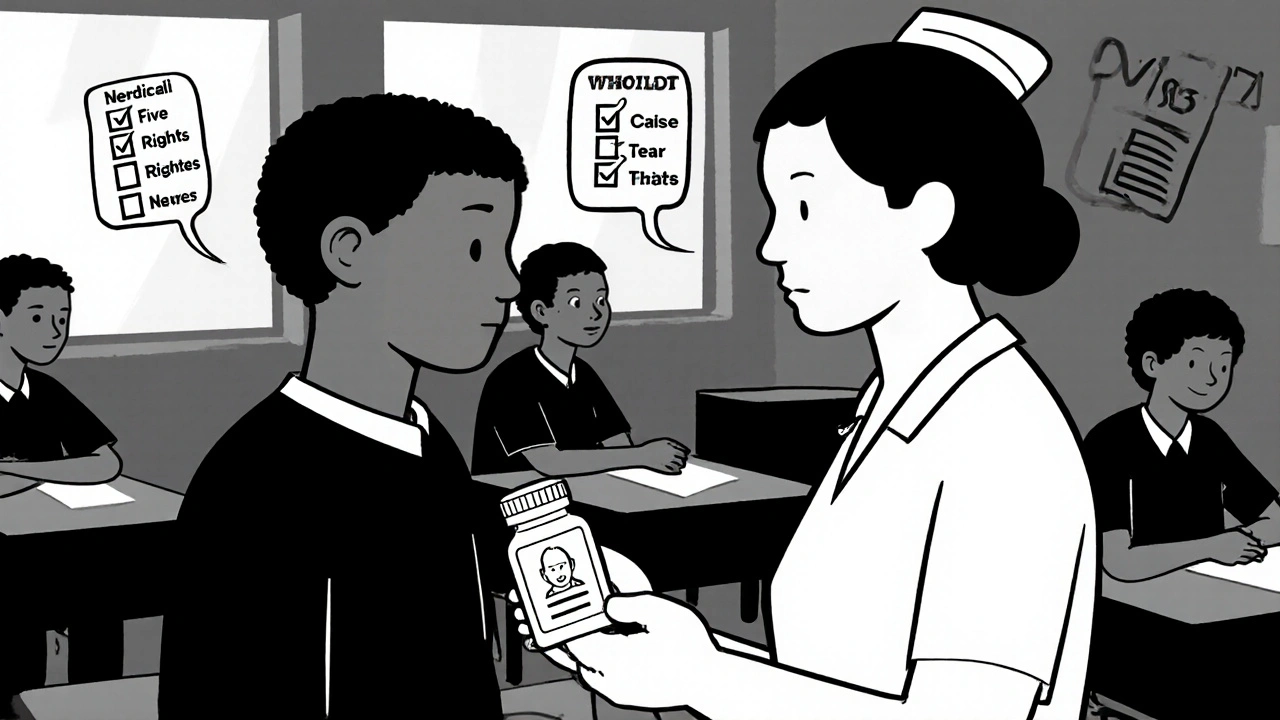
Every morning, hundreds of thousands of children across the U.S. take their asthma inhalers, insulin shots, or ADHD meds right before homeroom. But who makes sure it’s the right child, the right dose, at the right time? School nurses are the backbone of this system-and without clear coordination, mistakes happen. Medication errors in schools occur in about 1.2% of administrations, according to the National Association of School Nurses (NASN). That might sound small, but for a child with diabetes or severe allergies, one mistake can be life-threatening.
Why Coordination Matters More Than You Think
School nurses don’t just hand out pills. They’re responsible for managing complex medical needs in a chaotic environment. Think about it: one nurse might be caring for 1,100 students nationwide, while the recommended ratio is 1:750 for schools with high medical needs. That means nurses are stretched thin. If you don’t have a solid system in place, medications get missed, paperwork falls behind, and kids are put at risk. The American Academy of Pediatrics (AAP) and NASN agree: coordination isn’t optional. It’s a legal and medical requirement. Under Section 504 of the Rehabilitation Act and IDEA, schools must provide safe medication access for students with chronic conditions. Failure to comply can cost districts millions-like the $2.3 million fine Houston ISD received in 2022 for medication errors.The Five Rights: Your Non-Negotiable Foundation
Every time a medication is given in school, it must follow the Five Rights:- Right student - Double-check name, date of birth, photo ID if available.
- Right medication - Match the label to the prescription.
- Right dose - No guessing. Use the exact amount prescribed.
- Right route - Oral, inhaler, injection, patch? Confirm it’s correct.
- Right time - Administer within 30 minutes of the scheduled time unless the doctor says otherwise.
How to Build a Real-World Coordination System
There’s no one-size-fits-all solution, but the best districts follow a clear 7-step process:- Create a district-wide policy - Use NASN’s free sample templates. Don’t write your own from scratch. It takes 8-12 weeks to get board approval, but it’s worth it.
- Train your school nurses - All nurses must complete a 16-hour certification course on delegation and documentation. This isn’t optional. If your nurse hasn’t been trained, you’re operating illegally.
- Screen every student - Categorize students into three groups: Nurse Dependent (needs full help), Supervised (can self-administer with oversight), and Self-Administered (approved to carry their own meds). Use NYSED’s model as a starting point.
- Develop Individualized Healthcare Plans (IHPs) - Every student with a chronic condition needs an IHP. This document includes medication schedules, emergency steps, and contact info. It’s updated every year. Skipping this is like flying without a map.
- Train unlicensed staff - When nurses are overwhelmed, trained aides can help. But only after 4-16 hours of hands-on training, depending on the medication’s complexity. A simple oral pill? 4 hours. An insulin pump? 16 hours and a competency check.
- Choose your documentation system - Paper logs still exist in 42 states, but 98% of districts now use electronic health records. Fairfax County Public Schools cut documentation time by 45% and improved accuracy by 31% after switching to an electronic system.
- Review errors monthly - Use a ‘Just Culture’ approach. No blame. Just learning. When a mistake happens, ask: What broke? How do we fix it? This reduced errors by 37% in pilot districts.
What You Can’t Cut Corners On
Some rules are absolute. No exceptions.- Original labeled containers only - No pill organizers, no Ziploc bags. The medication must come in the pharmacy’s original bottle with federal-compliant labels (21 CFR § 1306.22). Texas Health Services says this isn’t just policy-it’s federal law. Violations can lead to criminal charges.
- Controlled substances need dual control - Adderall, Ritalin, or any Schedule II drug? Two adults must count, sign, and store it. One person alone can’t handle it.
- Emergency meds must be instantly accessible - Epinephrine auto-injectors for anaphylaxis must be available within 5 minutes of symptom onset. 87% of U.S. schools now keep stock epinephrine on hand, thanks to CDC guidelines.
Delegation: When You Can Trust Others
Nurses can’t be everywhere. That’s why delegation is critical. But it’s not a free pass. The nurse must personally assess:- Is the student stable enough for someone else to give the med?
- Is the staff member trained, calm, and reliable?
- Is the medication high-risk?
Parental Compliance: The Hidden Bottleneck
You can have the best system in the world, but if parents bring meds in unlabeled containers, it all falls apart. NASN’s 2023 survey found 38% of districts struggle with this. The fix? Mandatory parent education sessions. Montgomery County, Maryland, held 10-minute Zoom meetings before school started. Compliance jumped 52%. Don’t assume parents know the rules. Many think, “It’s just a pill. Why does it need a label?” They don’t realize they’re breaking federal law.Technology Is Changing the Game
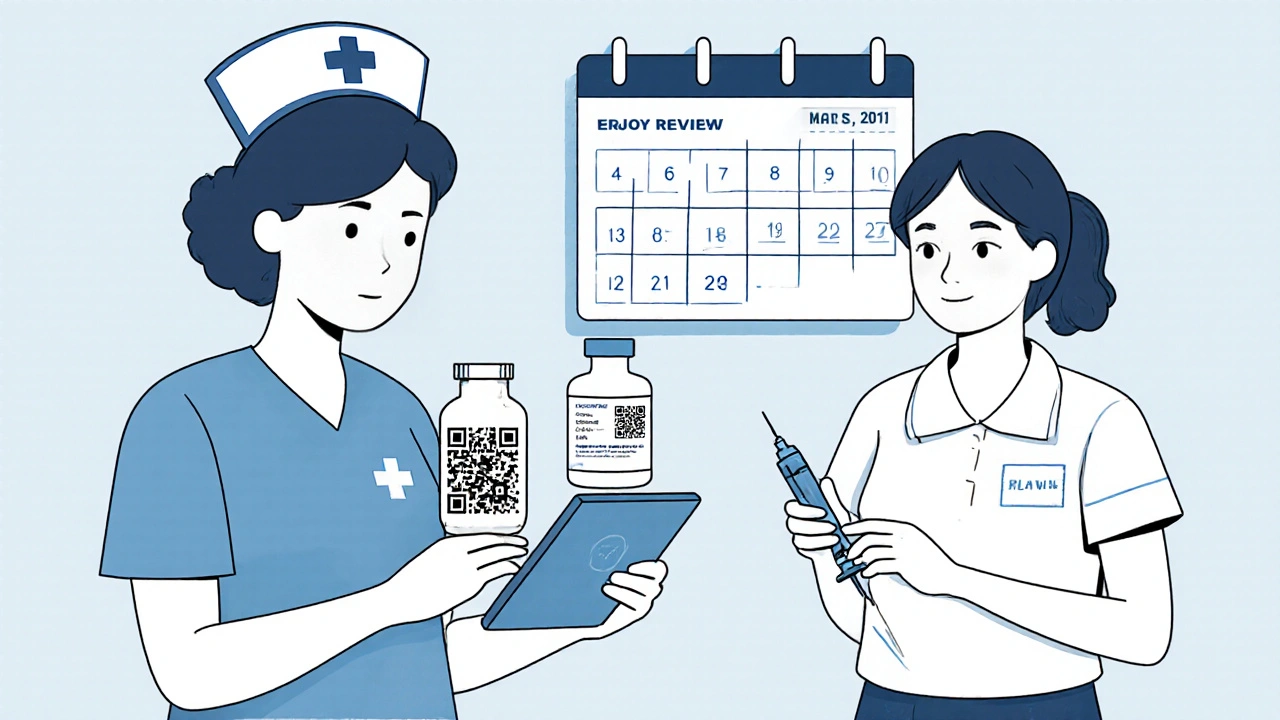
The future is digital. Schools piloting smartphone-based verification systems-where staff scan a QR code on the bottle and confirm the student’s identity-report 30% fewer errors. These systems auto-log administration, send reminders to nurses, and flag missed doses. In 2024, NASN updated its toolkit to include telehealth integration. Now, nurses can video-call parents to confirm meds were taken at home, or consult with pediatricians remotely during school hours. This is especially helpful for rural districts where specialists are hours away.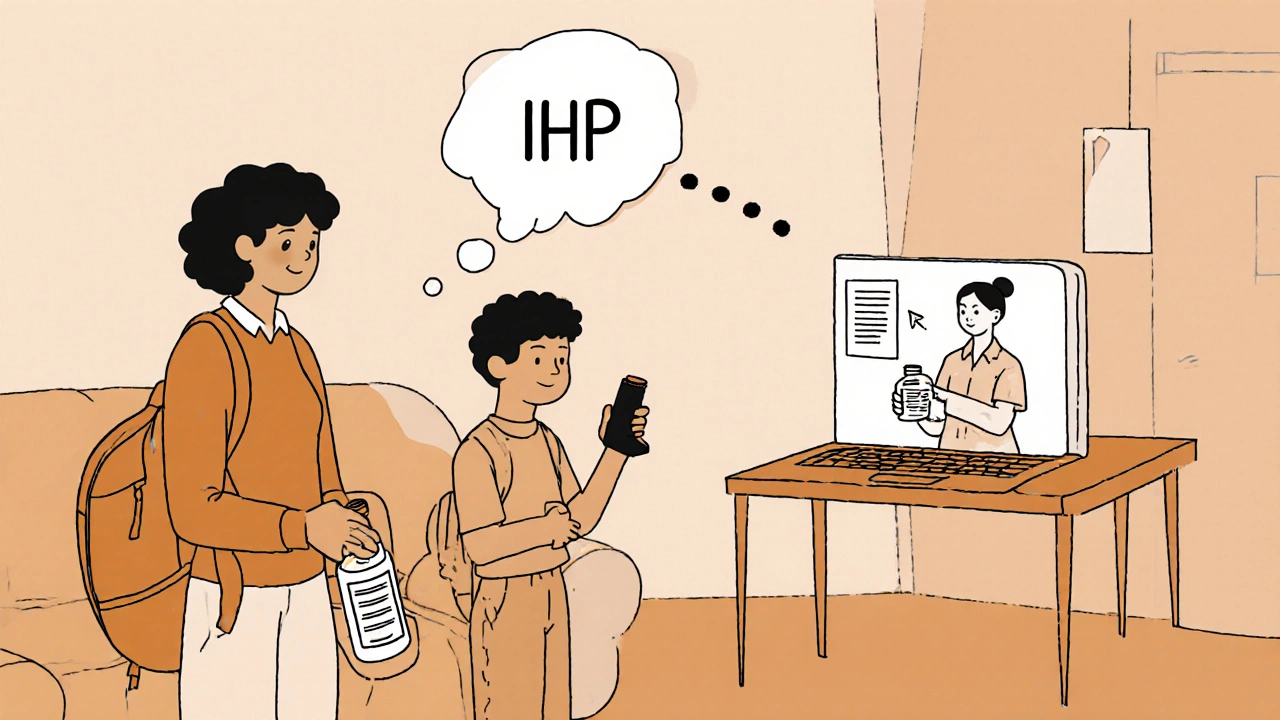
What Keeps Nurses Up at Night
School nurses say their biggest frustrations:- Too much paperwork - 64% spend over two hours a day just logging meds.
- Inconsistent state rules - One nurse in Texas told Reddit, “My principal overruled me three times this year because he didn’t understand nursing scope.”
- Not enough staff - With ratios this high, nurses are forced to delegate more than they’re comfortable with.
What Happens If You Do Nothing?
The numbers don’t lie. By 2030, school medication needs will grow by 22% due to rising rates of asthma, diabetes, and mental health conditions. Meanwhile, nursing shortages are projected to hit 15% by 2027. If you wait until a child has a seizure because their seizure med wasn’t given-or goes into anaphylactic shock because the EpiPen was locked away-you’re not just failing a student. You’re risking lawsuits, federal penalties, and public trust.Where to Start Today
You don’t need to fix everything tomorrow. Start here:- Download NASN’s free Medication Administration Implementation Toolkit.
- Hold a meeting with your principal, school counselor, and nurse to map out your current process.
- Identify the top three medications given in your school. Are they in original containers? Are they logged? Who gives them?
- Set a 30-day goal: Get one student’s IHP fully completed and documented.
Can a teacher give my child their medication?
Only if they’ve been trained and formally delegated by the school nurse. Teachers aren’t allowed to give meds unless the nurse has assessed the student’s needs, confirmed the staff member is competent, and documented the delegation. This is required by NASN and AAP guidelines. Never assume a teacher can help-always check with the school nurse first.
What if my child’s medication needs change during the school year?
Any change in dosage, frequency, or type of medication requires a new prescription from the doctor and an updated Individualized Healthcare Plan (IHP). The school nurse must review the new order, retrain staff if needed, and update all logs. Don’t just send a note home-follow the official change process. Skipping this step creates legal and medical risk.
Are school nurses required to give medications during field trips?
Yes-if the student’s IHP includes field trips, then medication must be available. The school must plan for this in advance: who will carry the meds, how will they be stored, and who is trained to administer them? Many districts assign a nurse or trained aide to accompany students on trips. If no one is available, the student may not be allowed to go. Safety comes before participation.
Can a student carry their own medication to school?
Yes, but only if the student is deemed self-administering by the school nurse and has written permission from their doctor and parent. Common examples include asthma inhalers or epinephrine auto-injectors. The student must know how to use it correctly, and the school must have a backup dose on file. Never let a child carry meds without this formal approval.
What happens if a nurse makes a medication error?
If the school follows a ‘Just Culture’ model, the focus is on learning-not punishment. The error is reviewed by a team to find what broke in the system: Was the label unclear? Was the nurse rushed? Was training outdated? The goal is to fix the process so it doesn’t happen again. Only in cases of gross negligence or intentional harm is disciplinary action taken. Most errors are system failures, not personal ones.
Is electronic documentation better than paper logs?
Yes. Electronic systems reduce errors by 31%, cut documentation time by 45%, and make it easier to track trends. Paper logs can be lost, misread, or forgotten. Digital logs auto-time-stamp entries, send alerts for missed doses, and can be accessed remotely by nurses or parents (with consent). While some states still allow paper, all top-performing districts have switched to digital.
How do I know if my school’s medication program is compliant?
Ask for these three things: 1) A copy of the district’s official medication policy, 2) Evidence that all staff giving meds have completed training, and 3) A sample IHP for a student with a chronic condition. If any of these are missing, the program isn’t compliant. You can also check if the school uses NASN’s toolkit or follows AAP’s 2024 guidelines. If they don’t, it’s time to push for change.
If you're a parent, ask questions. If you're a school staff member, speak up. If you're a nurse, use the tools available. Coordinating pediatric medications isn’t just about pills-it’s about protecting children every single day.

9 Comments
Man, I wish my kid’s school had even half this level of care. My daughter’s inhaler was once handed to her by the cafeteria lady because the nurse was ‘in a meeting.’ No joke. She had to remember how to use it herself. I’m just glad she didn’t choke.
But seriously-this guide? It’s the bare minimum. If your district isn’t doing this, you’re gambling with kids’ lives.
The structural inadequacies in American public school healthcare infrastructure are not merely administrative oversights-they represent a systemic dereliction of duty toward vulnerable pediatric populations. The 1.2% error rate, while statistically negligible in aggregate, constitutes an unacceptable moral calculus when applied to individual children with life-threatening conditions. The delegation of medication administration to unlicensed personnel without standardized, competency-based training protocols violates both the ethical tenets of nursing practice and the statutory obligations under Section 504 and IDEA. Furthermore, the persistence of paper-based documentation systems in 42 states is an archaic anachronism that directly impedes real-time error detection and accountability. The adoption of electronic health record systems, as demonstrated by Fairfax County’s 31% improvement in accuracy, is not merely preferable-it is a non-negotiable imperative for institutional liability mitigation and patient safety.
So let me get this straight-you want me to believe that a school with one nurse for 1,100 kids somehow has time to watch every single pill go down, but they don’t have time to hire one more person?
Wow. Just… wow. I’m sure the principal’s new leather chair was way more important.
As a school nurse with 18 years of experience, I can confirm every point in this guide. The Five Rights are not suggestions-they are the foundation of safe practice. I have seen children hospitalized because a parent brought medication in a Ziploc bag. I have seen aides give insulin without training because the nurse was in a meeting with an IEP team. I have watched documentation systems fail because districts refused to fund digital tools. This isn’t theoretical. This is daily reality. The cost of compliance is nothing compared to the cost of a single error. If your district isn’t following NASN’s toolkit, you are not protecting children-you are protecting budgets.
This makes sense. I’ve seen schools where kids just get their meds thrown at them. No checks, no forms, no nothing. It’s scary. I think the big thing is training. Even if you can’t hire more nurses, you can train the office staff. Just make sure they know what to do. And make sure parents know not to bring meds in plastic bags. Simple stuff, but it matters.
Start small. One kid at a time.
As someone from Nigeria, I’m amazed at how structured this system is. In my country, school nurses are a luxury. Many children with asthma or epilepsy get no support at all. The Five Rights model here is not just good practice-it’s a human rights framework. The emphasis on Just Culture is especially powerful. Blaming individuals doesn’t fix broken systems. Fixing the system saves lives. I hope this model spreads globally. Schools everywhere need this level of care. And yes-digital logs are non-negotiable. Paper is a relic. It’s 2024.
My son’s epinephrine was locked in the office for two years because the nurse was ‘too busy’ to train someone to carry it on field trips 😭
Then he had a reaction during a hike and we had to drive 45 minutes to the ER
Now I carry his meds in my purse to every school event
Why is this so hard
they have apps for everything else
but not this
please fix this
they’re kids not paperwork
Oh, so now we’re supposed to believe that a nurse can manage 1,100 kids and still have time to watch over every pill? Let me guess-the district also thinks ‘parent education’ means sending a PDF no one reads.
And let’s not forget the magical 30-day goal: ‘Get one IHP done.’
What about the other 99 kids whose IHPs are gathering dust in a drawer labeled ‘Maybe Next Year’?
Don’t give me this feel-good checklist. This is what happens when bureaucrats write safety manuals after the child is already in the ICU.
There’s something deeply human here beyond the policies and the checklists. Every child who takes a pill at school is trusting an adult they don’t know to do something life-saving. That’s not a task-it’s a covenant. And when we cut corners, we’re not just failing systems-we’re breaking trust. I think about the kid who hides their inhaler because they’re embarrassed. Or the one who doesn’t tell anyone they missed their dose because they’re afraid of being singled out. The real work isn’t in the digital logs or the training manuals. It’s in creating a culture where kids feel safe, seen, and supported. Where the nurse doesn’t just hand out meds, but asks, ‘How are you today?’ And actually waits for the answer. That’s the kind of care that doesn’t show up in statistics-but it’s the kind that saves lives anyway.