
How States Are Using Generic Drugs to Save Medicaid Money
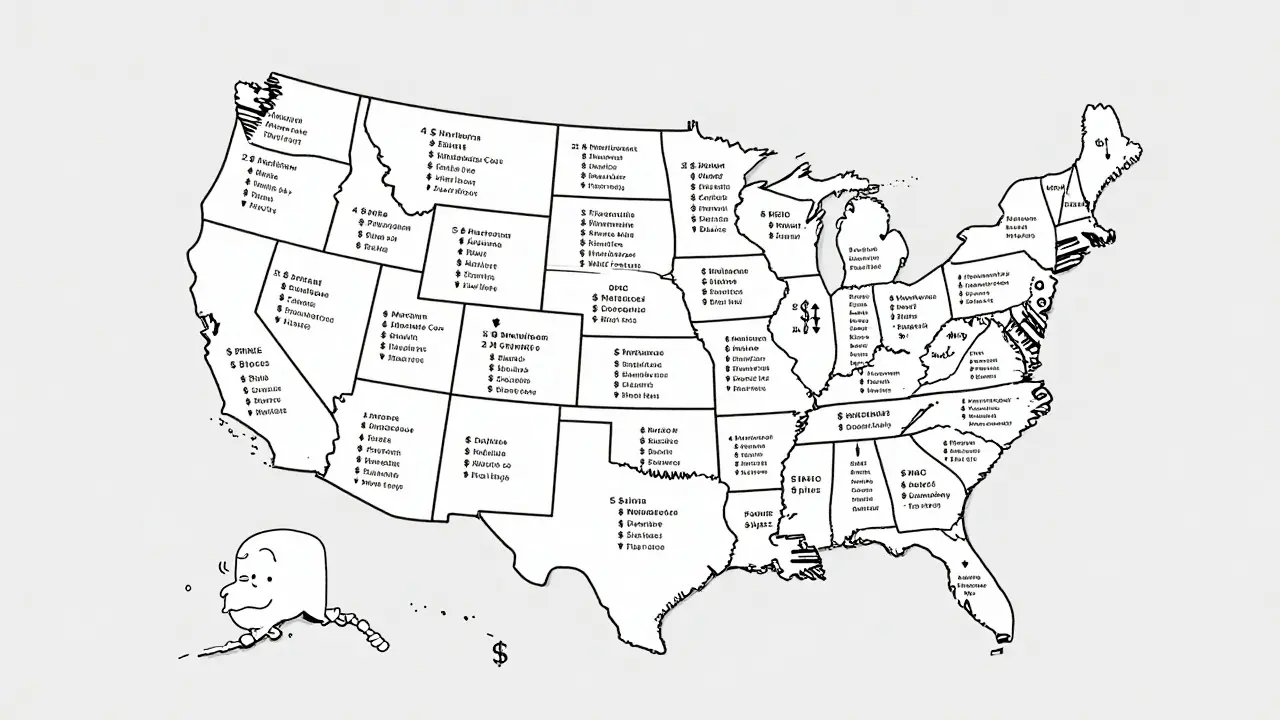
Medicaid spends billions on prescription drugs every year-but most of that money isn’t going to brand-name pills. It’s going to generics. In 2023, generic drugs made up 84.7% of all Medicaid prescriptions, yet only 15.9% of total drug spending. That’s the power of generics. But even with those big savings, states are still looking for ways to cut costs further. With drug prices rising and shortages becoming more common, state Medicaid programs are getting creative. They’re not just relying on federal rebates anymore. They’re building their own rules, setting price caps, and fighting back against shady pricing tactics.
The Federal Base: How the Medicaid Drug Rebate Program Works
Every state’s Medicaid program gets a baseline discount on drugs through the Medicaid Drug Rebate Program (MDRP), created in 1990. Under this system, drug makers have to pay rebates to states in exchange for having their drugs covered by Medicaid. For generic drugs, the minimum rebate is 13% of the Average Manufacturer Price (AMP), or the difference between AMP and the best price the company offers elsewhere, whichever is higher. It’s not a lot compared to brand-name drugs, which can have rebates over 25%. But it’s still a big chunk of savings.
Here’s the catch: states can’t negotiate extra rebates for generics the way they can for brand-name drugs. The rules are locked in by federal law. That means if a generic drug’s price spikes overnight, Medicaid has little power to push back-unless the state steps in on its own.
Maximum Allowable Cost Lists: The Most Common State Tool
Forty-two states use Maximum Allowable Cost (MAC) lists to control what they pay for generic drugs. These are price caps. If a pharmacy tries to bill Medicaid for a generic drug at $10, but the state’s MAC list says the max is $7, Medicaid only pays $7. Simple. Effective. And widely used.
But it’s not perfect. MAC lists are updated monthly or quarterly in most states. When drug prices drop suddenly, pharmacies can be stuck waiting for the list to catch up. And when prices jump-often because of shortages or manufacturer collusion-MAC lists can lag behind, leaving pharmacies with unpaid claims. A 2024 survey found that 74% of independent pharmacies had experienced delayed payments or claim rejections because their state’s MAC list didn’t match real-world prices.
Thirty-one states update their MAC lists at least quarterly. A few, like Minnesota and Oregon, update them weekly. Those states see fewer disruptions. The rest are playing catch-up.
Mandatory Generic Substitution: Making the Switch Automatic
Forty-nine states require pharmacies to substitute a generic version of a drug whenever it’s available and FDA-approved as equivalent. That’s not new. But what’s changing is how strictly states enforce it. Some states now require pharmacists to inform patients if a brand-name drug was dispensed without substitution-and why. Others have added penalties for pharmacies that skip generics without a valid medical reason.
This policy doesn’t just save money. It builds trust. Patients know they’re getting the same medicine at a lower price. And providers know the system isn’t gaming them.
Targeting Price Gouging: Laws Against Unjustified Generic Price Hikes
Some generic drug makers have taken advantage of market gaps. When a drug has few competitors, a manufacturer can hike prices by 500%, 1,000%, even 5,000%. That happened with doxycycline, a common antibiotic. One company raised the price from $20 to $1,800 for a 30-day supply. That’s not innovation. That’s exploitation.
Maryland passed a law in 2020 to stop this. It gives the state power to investigate and fine manufacturers who raise prices on generic drugs without new clinical data or legitimate cost increases. Other states-like California, Colorado, and Vermont-have followed. These laws don’t set fixed prices. They just say: if the price jump makes no sense, we’ll step in.
So far, only a handful of cases have been punished. But the threat alone has made manufacturers think twice.
Pharmacy Benefit Managers: The Middlemen States Are Trying to Control
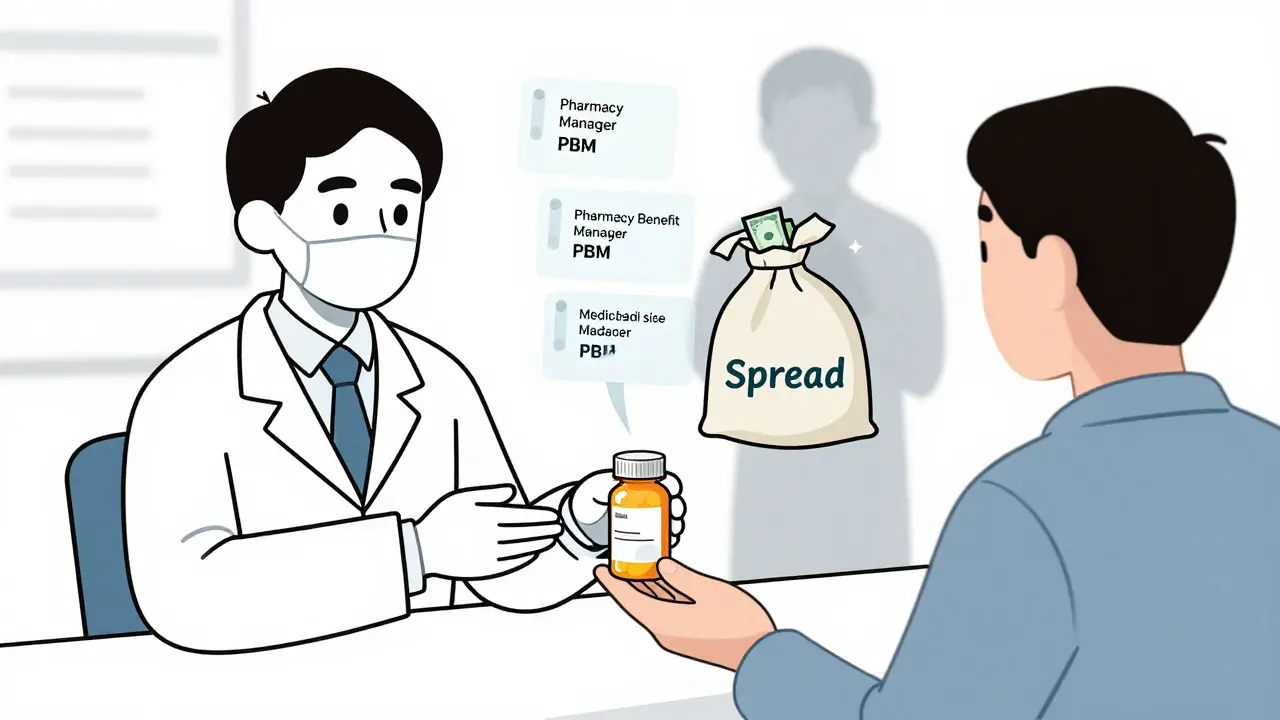
Most states don’t pay pharmacies directly. They hire Pharmacy Benefit Managers (PBMs)-companies like OptumRx, Magellan, and Conduent-to handle claims, negotiate prices, and manage drug lists. But PBMs don’t always pass savings along. They keep part of the discount as a “spread,” or charge pharmacies fees that make it harder to stay in business.
Twenty-seven states passed new rules in 2024 to force PBMs to be more transparent. Nineteen now require PBMs to disclose the actual price they pay for generic drugs. That’s huge. It means states can see if the PBM is inflating costs or hiding markups.
Some states, like Delaware and Missouri, are also changing how 340B program discounts are applied to avoid PBMs double-dipping. It’s a slow process, but it’s moving.
Supply Chain Problems: Why Generic Drugs Keep Disappearing
One of the biggest threats to Medicaid’s generic drug strategy? Shortages. In 2023, 23 states reported shortages of critical generic medications. Some lasted over 147 days. The drugs affected? Things like insulin, antibiotics, and heart medications. These aren’t luxury drugs. They’re life-saving.
Why do shortages happen? A few manufacturers control most of the market. Three companies now make 65% of generic injectables. If one shuts down a plant, dozens of drugs vanish. The FDA says consolidation is the root cause.
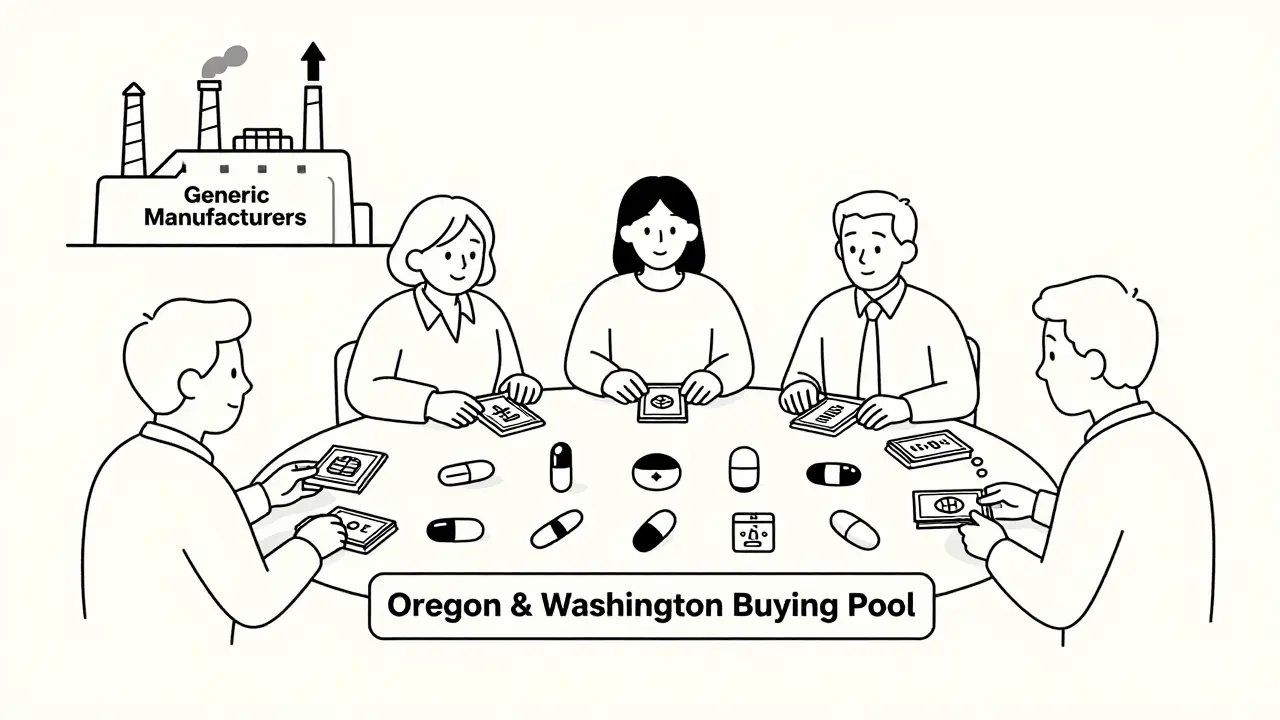
Twelve states introduced new laws in 2024 to fix this. They’re creating strategic stockpiles. They’re building backup suppliers. Oregon and Washington launched a multi-state buying pool to negotiate bulk discounts on 47 high-volume generics. It’s working. Prices are dropping. Supply is improving.
The Big Trade-Off: Saving Money vs. Keeping Drugs Available
There’s a tension in all this. States want to save money. But if they push too hard-cutting prices too low, updating MAC lists too slowly, or punishing manufacturers too harshly-they risk making it unprofitable to produce certain generics. Companies might quit the market entirely.
The Congressional Budget Office warns that overly aggressive state policies could reduce generic availability by 2.3%, forcing Medicaid to switch to more expensive brand-name drugs. That would cost more, not less.
Experts like Dr. Mark Duggan from Stanford say the solution isn’t to stop cost control. It’s to do it smarter. He recommends expanding rebate requirements during drug shortages. If a generic is in short supply, the federal rebate should go up to encourage production. That’s a win-win: more supply, more savings.
What’s Next? GLP-1 Drugs, Gene Therapies, and the Future of Medicaid Spending
While generics are the foundation, the next wave of spending is coming from new drugs. GLP-1 medications like Ozempic and Wegovy cost $12,000 a year. Thirteen state Medicaid programs cover them-for obesity treatment-but only with strict prior authorization. If a new federal rule forces all Medicaid and Medicare plans to cover them without restrictions, states could face an extra $1.2 billion in costs annually.
Gene therapies are another looming challenge. Texas and New Hampshire are already carving them out of regular drug budgets. That’s a sign of things to come.
By 2026, 22 states plan to have strategic stockpiles of critical generics. More will join. The focus is shifting from just lowering prices to making sure the drugs are actually there when patients need them.
Why This Matters to Everyone
Medicaid isn’t just for low-income families. It’s a safety net that affects every part of the healthcare system. When Medicaid pays less for a drug, pharmacies can stay open. Pharmacists can get paid. Doctors can prescribe without worrying about patient affordability. And taxpayers get more value for every dollar spent.
The real success story isn’t just about savings. It’s about stability. States that act quickly, transparently, and fairly are keeping essential drugs available-while keeping costs under control. The rest are still learning. And the clock is ticking.
How do Medicaid generic drug rebates work?
Under the federal Medicaid Drug Rebate Program, drug manufacturers must pay states a rebate for every generic drug sold to Medicaid. The minimum rebate is 13% of the Average Manufacturer Price (AMP), or the difference between AMP and the best price offered elsewhere, whichever is higher. States can’t negotiate extra rebates for generics like they can for brand-name drugs.
What is a Maximum Allowable Cost (MAC) list?
A MAC list is a state-set price cap for generic drugs. If a pharmacy tries to bill Medicaid for more than the MAC amount, Medicaid pays only the capped price. Forty-two states use MAC lists to control costs, but updates can be slow-leading to payment delays for pharmacies when prices drop.
Why do generic drug shortages happen?
Shortages occur because a small number of manufacturers control most of the generic drug market. Three companies make 65% of generic injectables. If one shuts down a production line, dozens of drugs vanish. Poor forecasting, low profit margins, and supply chain issues also contribute.
Can states stop drug companies from raising generic prices?
Yes. States like Maryland, California, and Colorado have passed laws allowing them to investigate and penalize manufacturers who raise prices on generic drugs without new clinical data or legitimate cost increases. These laws target price gouging, not fair market pricing.
How do Pharmacy Benefit Managers (PBMs) affect Medicaid drug costs?
PBMs manage drug benefits for Medicaid in 33 states, but they often keep part of the discount as a spread or charge hidden fees. Twenty-seven states passed new transparency rules in 2024, requiring PBMs to disclose the actual price they pay for generics. Nineteen states now require this disclosure to prevent overcharging.
Will state drug cost controls make generics harder to get?
Potentially. If states set price caps too low, manufacturers may stop making certain generics because they’re no longer profitable. The Congressional Budget Office warns that overly aggressive policies could reduce availability by 2.3%, forcing Medicaid to use more expensive alternatives. The goal is balance: savings without shortages.
Are states working together to lower generic drug prices?
Yes. Oregon and Washington lead a multi-state purchasing pool that negotiates bulk discounts on 47 high-volume generic drugs. Other states are joining. These collaborations help increase buying power and reduce prices faster than individual state efforts.


9 Comments
bro why do we even let pharma companies get away with this? 😒 $1800 for doxycycline??? that’s not capitalism, that’s robbery. we need to burn the whole system down 🔥💀
This is all performative. States don’t have the guts to nationalize generic production. You think MAC lists fix anything? Wake up. The entire supply chain is rigged by 3 oligarchs. Fix the root or shut up.
I work at a pharmacy and let me tell you - MAC lists are a joke. We get billed for $8, state says $6.50, we eat the difference. Then the PBM charges us $3 just to submit the claim. We’re not profit machines, we’re just trying to keep the lights on. 😤
If you can’t afford generics, you shouldn’t be on Medicaid. This isn’t a right. It’s a privilege. Stop demanding free stuff.
I’ve been thinking about this all night, like, deep existential stuff… you know? Like, when you realize that the entire healthcare system is just a simulation designed by corporate AIs to extract human suffering into profit margins… and then you see a 23-year-old with asthma trying to get albuterol because her MAC list hasn’t updated since 2021… and you just… *sigh*… it’s not even about money anymore, it’s about the soul of the country. We’re all just ghosts in the machine, man. 🌌💔
I really appreciate how Oregon and Washington are teaming up on bulk purchases. That’s the kind of smart, collaborative policy we need more of. It’s not about fighting - it’s about working together to make sure people get what they need. 💪❤️
The MAC framework is fundamentally flawed due to its static equilibrium assumptions in a dynamic oligopolistic market. The absence of real-time price elasticity modeling renders these interventions epistemologically inadequate. We require algorithmic, blockchain-verified price discovery mechanisms.
I think we need to be careful. Saving money is important, but if we drive manufacturers out of the market, we risk losing access entirely. Balance is key. Let’s incentivize production, not punish it.
yo, i just saw a guy in the pharmacy last week crying because his insulin was $1200. he had to choose between meds and rent. we’re all just trying to survive, man. this ain’t politics. this is life.