
Monoclonal antibody biosimilars aren’t just cheaper versions of expensive cancer and autoimmune drugs-they’re scientifically validated alternatives that work just as well. Unlike generic pills, which are exact chemical copies, these biosimilars are complex proteins made by living cells. They can’t be identical to the original, but they’re close enough that doctors can prescribe them with confidence. In fact, the U.S. Food and Drug Administration (FDA) and the European Medicines Agency (EMA) require proof of no clinically meaningful differences in safety, purity, or effectiveness before approval. This isn’t theoretical. Thousands of patients are already using them successfully, and healthcare systems are saving billions.
How biosimilars differ from generics
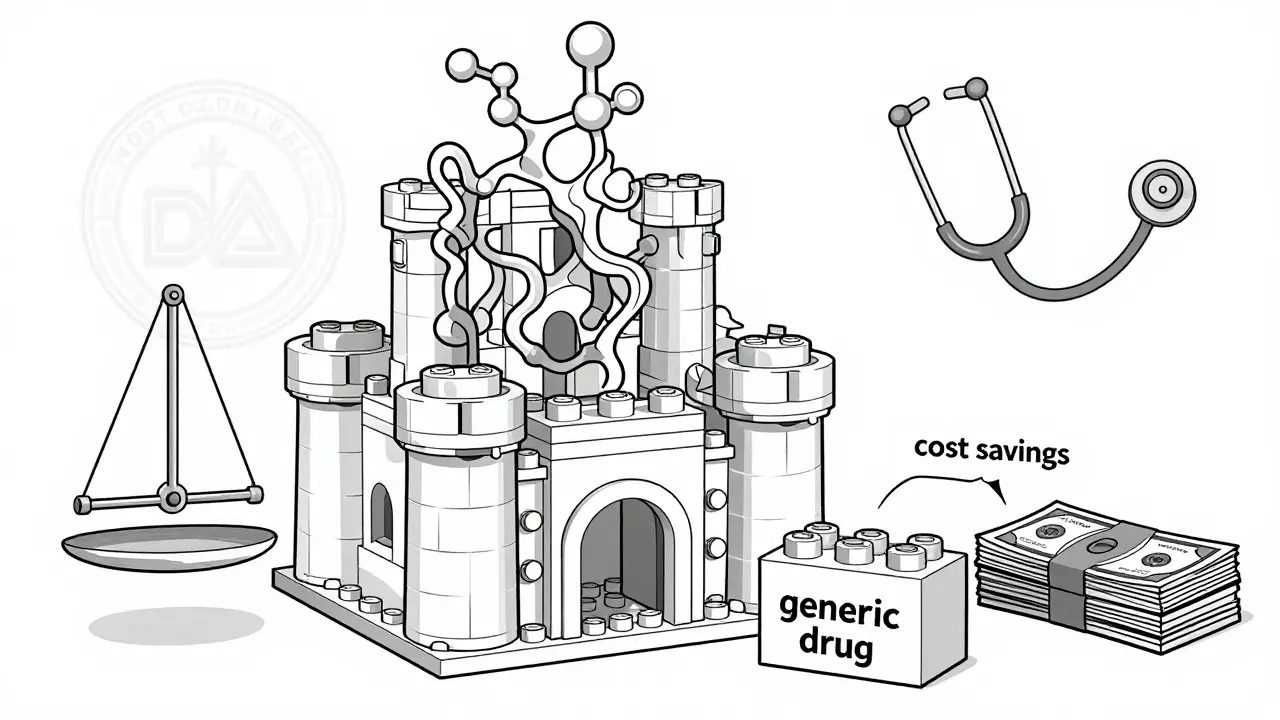
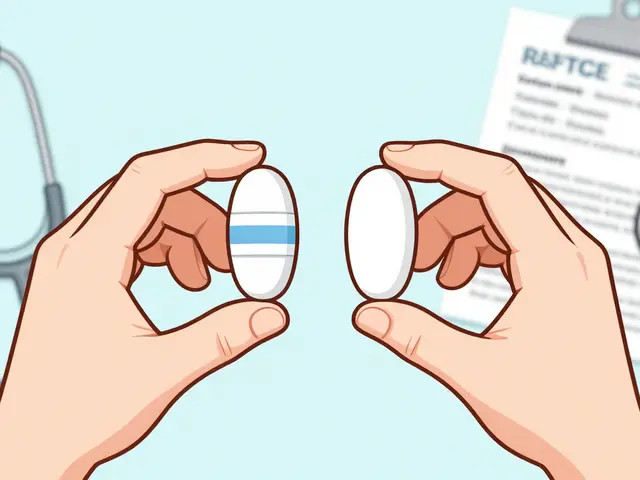
Think of a generic drug like copying a Lego brick. You take the same mold, same plastic, same color. It snaps together the same way. That’s how small-molecule generics work. But monoclonal antibodies? They’re more like building a full-scale Lego castle. The pieces are huge, intricate, and shaped by living cells. Even tiny changes in temperature, pH, or fermentation time can alter the final structure. That’s why biosimilars aren’t exact copies-they’re highly similar versions.
The molecular weight tells the story. A small-molecule drug like aspirin weighs about 180 daltons. Insulin? Around 5,808. Growth hormone? 22,000. Now consider trastuzumab or rituximab-each weighs about 150,000 daltons. That’s a protein with hundreds of amino acids, folded into a precise 3D shape, then decorated with sugar molecules (glycans). These sugars affect how the drug behaves in the body. A biosimilar manufacturer must replicate this entire process, not just the final chemical formula. That’s why it takes years of testing, not months.
Approved monoclonal antibody biosimilars and what they treat
As of 2023, the FDA has approved over 20 monoclonal antibody biosimilars. Here are the most common ones and the conditions they treat:
- Bevacizumab biosimilars (Avastin): Used for colorectal, lung, and brain cancers. Six approved versions: Mvasi, Zirabev, Alymsys, Vegzelma, Avzivi, and Jobevne.
- Rituximab biosimilars (Rituxan): Treats non-Hodgkin’s lymphoma, chronic lymphocytic leukemia, and rheumatoid arthritis. Three approved: Truxima, Ruxience, and Riabni.
- Trastuzumab biosimilars (Herceptin): Targets HER2-positive breast and stomach cancers. Six approved: Ogivri, Herzuma, Ontruzant, Trazimera, Kanjinti, and Hercessi.
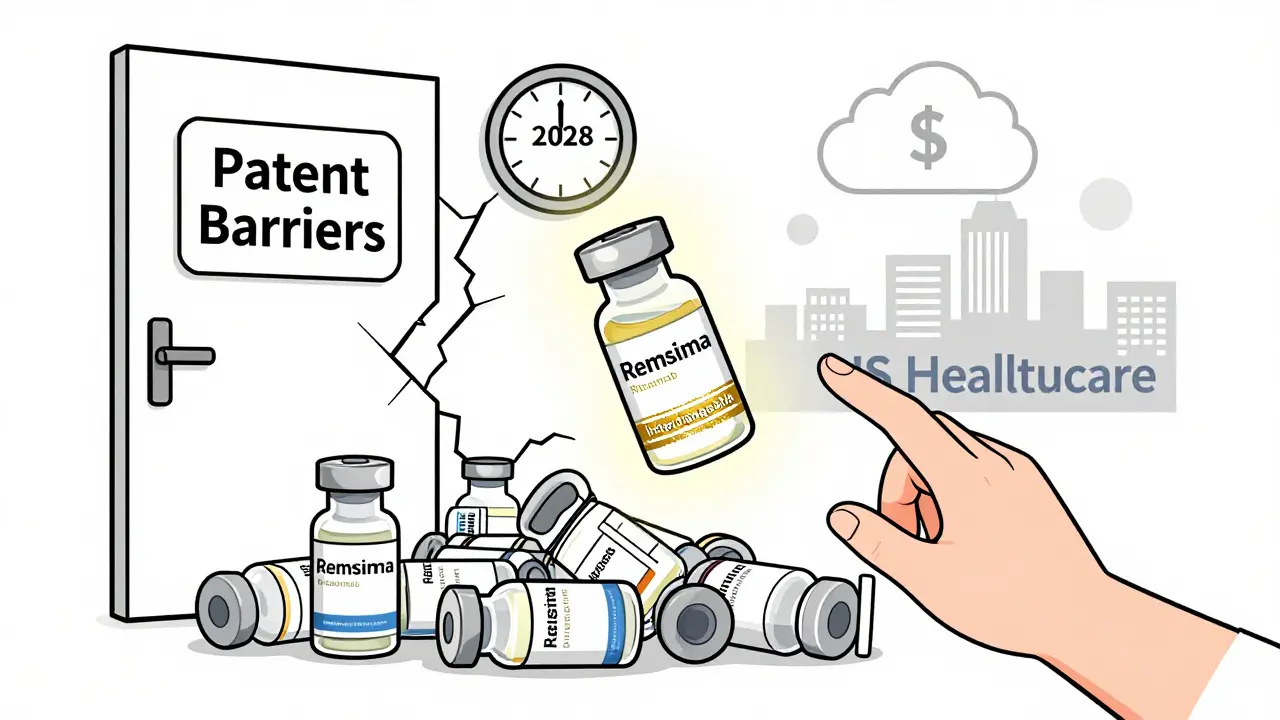
- Infliximab biosimilars (Remicade): Used for Crohn’s disease, ulcerative colitis, and rheumatoid arthritis. Five approved, with Remsima becoming the first interchangeable monoclonal antibody biosimilar in the U.S. in July 2023.
- Adalimumab biosimilars (Humira): The best-selling biologic of all time. At least 14 biosimilars are approved or in late-stage review, including Hyrimoz, approved in September 2023.
These aren’t just lab curiosities. In real-world use, they’re changing how care is delivered. A 2022 study in JAMA Oncology tracked 1,247 patients switching from Rituxan to Truxima. The cost per treatment cycle dropped by 28%. No increase in side effects. No drop in tumor control. Just savings-without compromise.
Why cost savings matter
Biologics used to cost $100,000 a year or more. A single course of Herceptin could run $70,000. When biosimilars hit the market, prices fell 15-35% immediately. But the real impact is cumulative. Evaluate Pharma projects biosimilar monoclonal antibodies will save the U.S. healthcare system $250 billion between 2023 and 2028. Bevacizumab, trastuzumab, and rituximab biosimilars will account for 78% of that.
That’s not just about hospitals cutting costs. It’s about patients getting access. In places like New Zealand, Australia, and parts of Europe, biosimilars are now the default option for new prescriptions. In the U.S., pharmacy benefit managers are starting to prioritize them in formularies. A patient who couldn’t afford Herceptin before might now get it without a co-pay. A clinic that couldn’t afford to treat 100 patients a month might now treat 130.
How we know they’re safe
One big fear: Could a biosimilar trigger an immune reaction the original doesn’t? It’s a valid concern. In rare cases, glycosylation differences-tiny sugar changes on the protein surface-have led to unexpected immune responses. One study found some patients with cetuximab-induced anaphylaxis had pre-existing antibodies to a sugar called alpha-gal. That’s why regulators require extensive testing.
Before approval, manufacturers must prove similarity across 127 analytical tests recommended by the FDA. These include mass spectrometry to map protein structure, glycan analysis to check sugar attachments, and binding assays to confirm the drug attaches to its target the same way. Then comes clinical testing: at least one study in a sensitive population-like rheumatoid arthritis or metastatic cancer-where any difference in effectiveness or safety would show up clearly.
The EMA’s safety report from 2021 reviewed 1.2 million patient-years of exposure to monoclonal antibody biosimilars. Only 12 cases of unexpected immune reactions were recorded. That’s 0.001%. The same rate was seen with the original drugs. No red flags.
What’s next? Pipeline and future challenges
The pipeline is packed. As of September 2023, 37 monoclonal antibody biosimilars are under FDA review. The biggest focus? Biosimilars for pembrolizumab (Keytruda), the leading immunotherapy for melanoma and lung cancer. Six candidates are in late-stage trials. If approved, they could cut costs by 50% or more.
But barriers remain. Patent lawsuits delay entry-on average, 14.7 patent challenges per biosimilar, according to UC Hastings. Many oncologists still feel unsure. A 2022 ASCO survey found only 58% felt “very confident” prescribing them. Pharmacy benefit managers sometimes restrict access, blocking biosimilars from formularies even when they’re cheaper.
And then there’s interchangeability. The FDA allows a biosimilar to be swapped for the original without a doctor’s permission-like switching between two brands of ibuprofen. Only Remsima (infliximab) has that status so far. More are coming. But it takes extra studies to prove that switching back and forth doesn’t increase risk. That’s the next frontier.
Real-world impact: A patient’s perspective
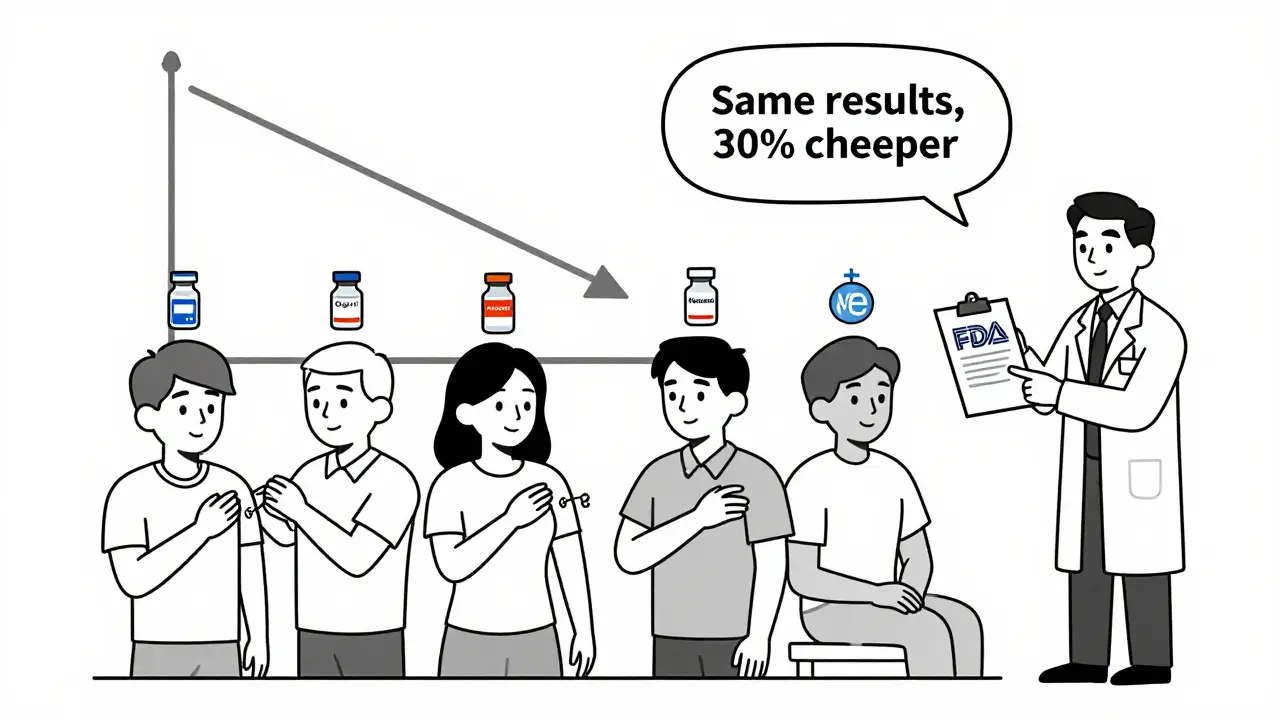
Imagine someone diagnosed with HER2-positive breast cancer. Her doctor offers Herceptin. The cost? $10,000 a month. Insurance covers 80%, but she still pays $2,000 out of pocket. Then her oncologist says, “We have a biosimilar. Same drug, same results, 30% cheaper.” She switches. Her monthly bill drops to $1,400. She can afford to keep treatment going. No delays. No rationing. Just the same life-saving therapy at a price she can manage.
That’s what biosimilars do. They don’t replace hope. They make it accessible.
Are monoclonal antibody biosimilars as effective as the original drugs?
Yes. Regulatory agencies like the FDA and EMA require biosimilars to demonstrate no clinically meaningful differences in safety, purity, and potency. Multiple large-scale studies-including one with over 1,200 patients switching from Rituxan to Truxima-show identical response rates, side effect profiles, and survival outcomes. The data consistently supports their effectiveness.
Can biosimilars be substituted for the original without a doctor’s approval?
Only if the biosimilar is designated as "interchangeable" by the FDA. As of 2026, only one monoclonal antibody biosimilar-Remsima (infliximab)-has this status. Most others require a prescriber to specifically order them. Pharmacists cannot automatically swap them unless the drug is labeled interchangeable and state laws allow it.
Why are biosimilars cheaper if they’re so complex to make?
Manufacturers don’t need to repeat the full clinical trials the original company did. They only need to prove similarity through analytical, non-clinical, and limited clinical studies. This cuts development costs dramatically. Plus, competition among multiple biosimilar makers drives prices down further. The original drug maker loses its monopoly, and prices fall.
Do biosimilars have different side effects than the original?
No significant differences have been found. Regulatory agencies require extensive safety monitoring. The EMA’s review of over a million patient-years showed the rate of immune reactions, infections, and serious adverse events was statistically identical to the reference products. Any minor variations are within normal biological variability.
What’s the difference between a biosimilar and a biobetter?
A biosimilar is designed to be as close as possible to the original biologic. A biobetter is a modified version meant to improve on the original-like longer-lasting effects, fewer side effects, or better delivery. Biobetters are considered new drugs, not biosimilars, and require full clinical trials. They’re not yet common for monoclonal antibodies.
Next steps for patients and providers
If you’re a patient: Ask your doctor if a biosimilar is an option. Don’t assume it’s inferior. Ask for the data. Most oncologists now use them routinely. If you’re on a high-cost biologic and your insurance denies coverage, ask if a biosimilar alternative exists-it’s often approved faster and cheaper.
If you’re a provider: Review your formulary. Many biosimilars are now preferred over originators. Stay updated on interchangeability status. Use resources from the FDA and EMA to educate your team. The science is solid. The savings are real. The choice isn’t between cost and care-it’s between access and delay.
9 Comments
Biosimilars are wild when you think about it. We're talking about proteins with sugar attachments that have to be replicated down to the angstrom level. No wonder it takes years to develop one. And yet here we are, with over 20 approved in the US alone. The science is nuts but the results? Rock solid. No fluff, no drama, just patients getting treated.
The regulatory rigor behind biosimilars is often underappreciated. The FDA and EMA don't just accept claims-they demand proof across 127 analytical tests, followed by clinical validation in sensitive populations. This isn't cutting corners. It's precision engineering with biological systems. The data speaks louder than fear.
India produces more biosimilars than any country on earth. We have been making these complex molecules for over a decade. The U.S. is just catching up. The real story is not how expensive the originals are but how long it took western regulators to accept what developing nations have been doing reliably. The patent system is broken, not the science.
They say biosimilars are safe but did you know the FDA approved one with a 0.001% immune reaction rate? That's 12 cases in a million. But what if you're that one? And who's tracking long-term effects over 10 years? Big Pharma doesn't want you to know they're just copying with a slightly different fermentation tank. The real savings? They're just shifting the cost to patients with hidden side effects.
America built these drugs. We funded the research. We did the clinical trials. And now we're letting foreign manufacturers undercut us with knockoffs that aren't even made in the same country? This isn't progress-it's economic surrender. If you want real savings, stop importing biosimilars from countries that don't follow our standards.
Let me tell you something nobody else will. Biosimilars are not just cheaper-they're a Trojan horse. The original manufacturers didn't just lose market share-they lost control over the entire supply chain. Now, when a biosimilar fails, the blame gets shifted. Who's responsible? The manufacturer? The pharmacist? The regulator? Nobody. And meanwhile, patients are being switched back and forth like lab rats. I've seen it. I know people. This isn't science. It's a corporate chess game with lives on the board.
I just switched from Humira to Hyrimoz last month. My rheumatoid pain is the same. My co-pay dropped from $800 to $500. My doctor didn't even flinch. No new side effects. No weird reactions. Just... cheaper. Why is this controversial? It's literally the same drug, just less expensive. I don't get the drama.
The structural heterogeneity inherent in monoclonal antibody biosimilars necessitates a multi-tiered analytical characterization framework. This includes high-resolution mass spectrometry for primary structure verification, capillary electrophoresis for charge variant profiling, and liquid chromatography-mass spectrometry for glycosylation pattern alignment. The clinical comparability studies, conducted under ICH guidelines, must demonstrate equivalence in pharmacokinetics and pharmacodynamics within predefined bioequivalence margins. Regulatory acceptance is predicated upon the totality of evidence, not isolated parameters.
You think biosimilars are safe? Try telling that to the guy in Dublin who got a serum sickness reaction after switching. The manufacturer changed the buffer. No one told him. No one told his doctor. The EMA approved it. The FDA approved it. But the sugar on the protein? Different. And now he's on disability. This isn't science. It's gambling with people's lives.