
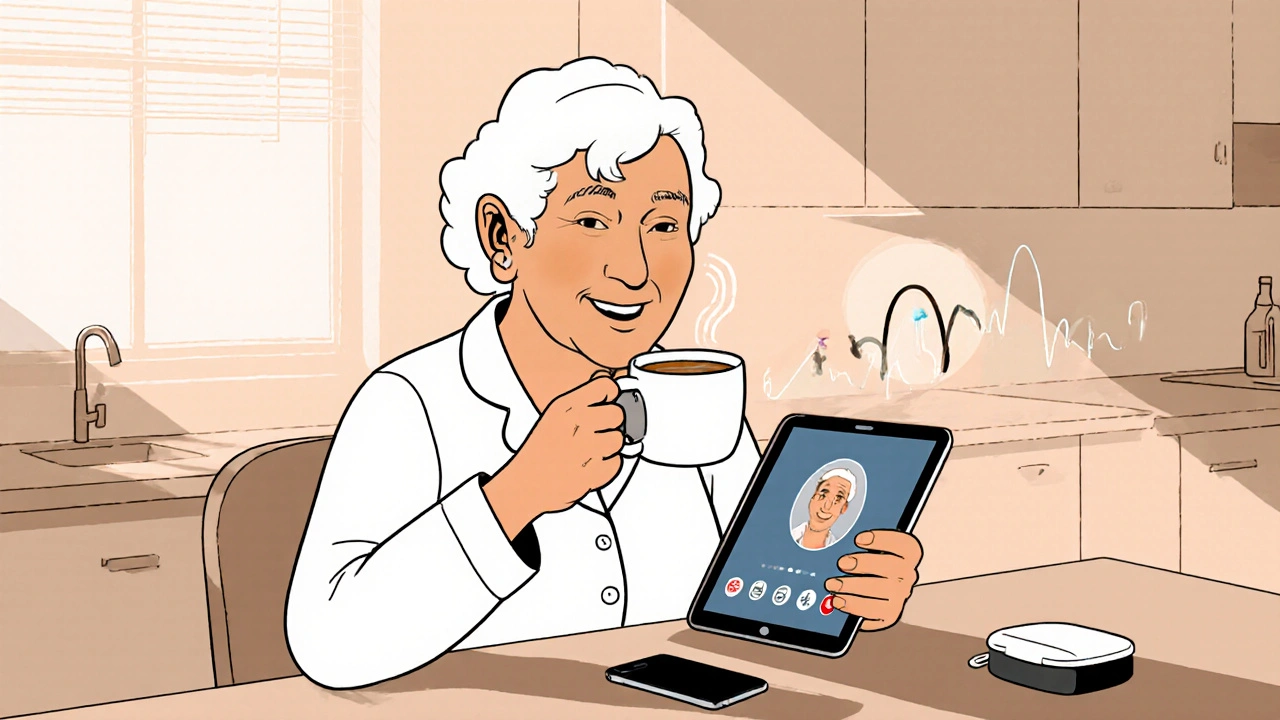
For years, getting your hearing aids adjusted meant driving to a clinic, waiting in a waiting room, and spending an hour for a 10-minute tweak. Now, with teleaudiology, you can do it from your kitchen chair - in pajamas - while your coffee is still warm. This isn’t science fiction. It’s real, and it’s changing how millions of people manage hearing loss.
What Exactly Is Teleaudiology?
Teleaudiology is the use of video calls, apps, and internet-connected devices to deliver hearing care without stepping into a clinic. Think of it like a virtual doctor’s visit - but for your ears and hearing aids. Audiologists can check your device settings, run hearing tests, adjust volume or noise filters, and even guide you through cleaning or troubleshooting - all remotely.
This isn’t just a pandemic-era shortcut. The roots go back to the 1950s, when doctors first tried sending medical data over phone lines to rural patients. But it wasn’t until Bluetooth hearing aids became common, and smartphones got fast enough to handle real-time video, that teleaudiology became practical. Today, companies like Phonak, ReSound, Oticon, and Starkey all have their own apps built into their hearing aids. You don’t need special hardware - just your device, a stable internet connection, and a smartphone or tablet.
How It Works: Two Ways to Connect
There are two main ways teleaudiology works: asynchronous and synchronous.
Asynchronous means you do something on your own, and the audiologist reviews it later. For example, you might use an app like SHOEBOX to take a hearing test at home. The app plays tones through headphones and records your responses. You send the results to your provider, who then sends back new settings via email or a secure portal. This works great for routine check-ins or if you’re not sure whether you need help yet.
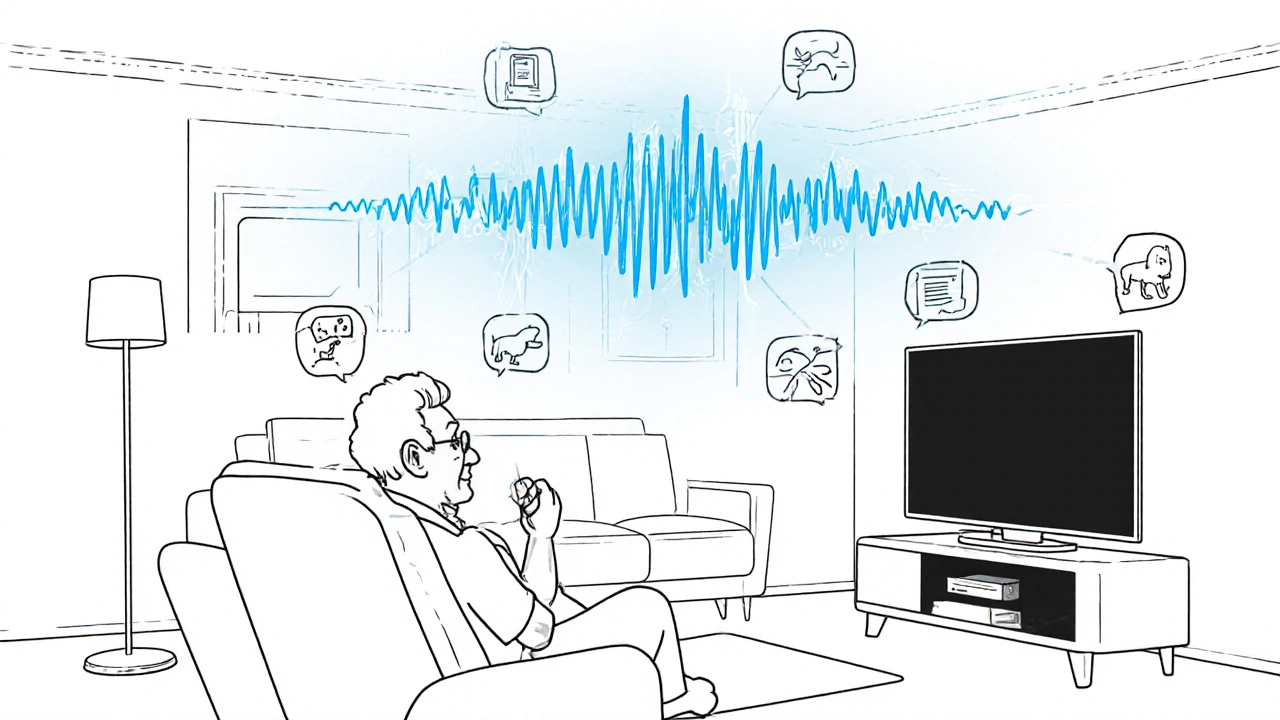
Synchronous is live video. You hop on a Zoom-style call with your audiologist, who can see you, hear your voice, and - if your hearing aids support it - control your device settings in real time. Some systems even let the audiologist trigger sounds through your hearing aids during the call to test how they respond in your living room, car, or noisy kitchen. That’s something you can’t do in a soundproof clinic.
Most people start with synchronous visits for their first adjustment. After that, many switch to asynchronous for minor tweaks. It’s flexible, and it saves time.
Who Benefits the Most?
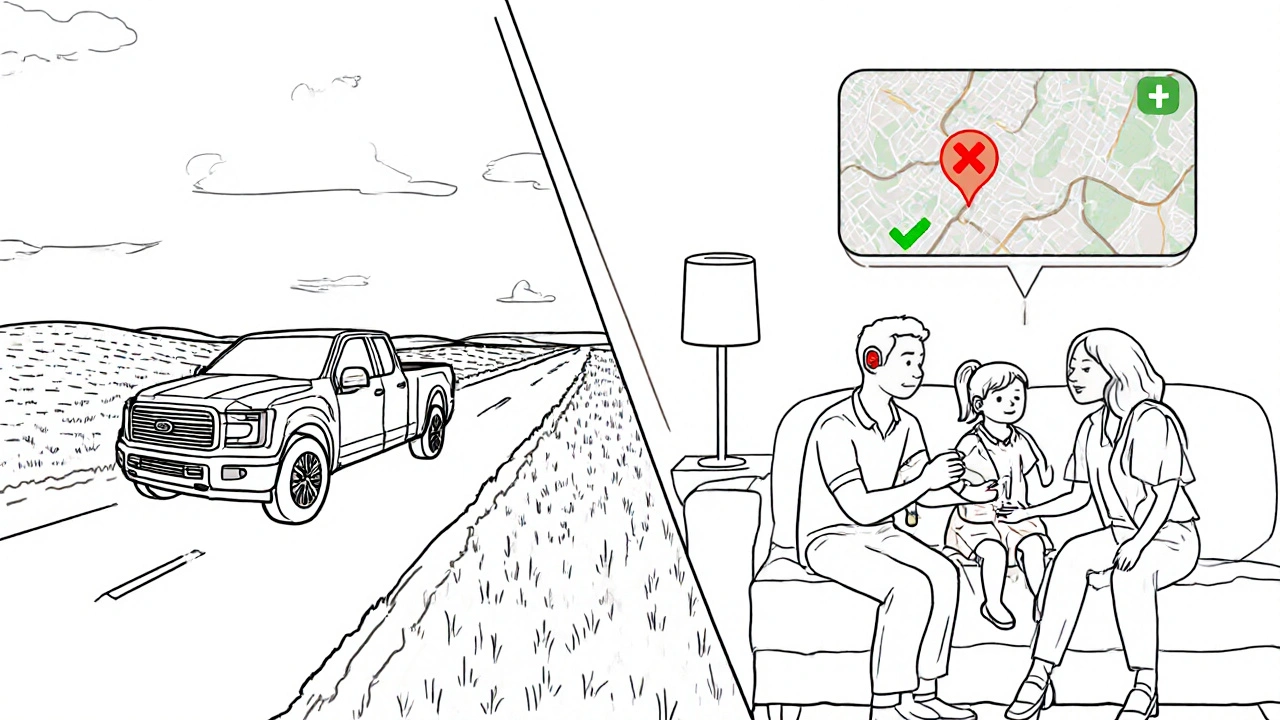
If you live in a rural area, teleaudiology isn’t just convenient - it’s life-changing. In the U.S., 78% of rural patients used to travel over 50 miles just to get their hearing aids checked. That’s a three-hour round trip, often on winding roads, with no public transport options. Now, that trip is zero miles. A 2024 study found patients saved $87 per visit on average - not just on gas, but also on time off work, childcare, and wear-and-tear on vehicles.
Older adults with mobility issues benefit too. One 72-year-old in Montana avoided four 4-hour round trips over six months by resolving feedback issues through three 15-minute remote sessions. People recovering from surgery, those with chronic pain, or caregivers juggling multiple responsibilities all find teleaudiology reduces stress.
Even urban users appreciate it. Instead of waiting weeks for an appointment, you can often get help within 24 hours. One user on Reddit said, “Saving 3-hour round trips to my audiologist for minor adjustments has been life-changing since my hip surgery.”
Accuracy: Can It Really Replace the Clinic?
Here’s the big question: Is remote testing accurate?
In controlled environments - quiet rooms, good headphones, stable Wi-Fi - remote pure-tone hearing tests match in-clinic results 92-95% of the time. That’s nearly perfect. But if you’re testing near a barking dog, a running dishwasher, or with noisy neighbors, accuracy drops to 78-85%. That’s why audiologists recommend you find a quiet spot, close windows, and use wired headphones if possible.
Important note: Teleaudiology can’t replace everything. Audiologists can’t look inside your ear canal remotely. That means they can’t see earwax blockages, infections, or structural issues. About 12-15% of patients who start remotely end up needing an in-person visit because of something physical - like a clogged ear canal. That’s why teleaudiology works best as part of a hybrid model, not a full replacement.
Cost and Insurance: What Does It Cost?
Teleaudiology appointments typically cost 15-20% less than in-person visits. On average, you’ll pay $120-$150 for a remote adjustment versus $140-$180 for a clinic visit. Some manufacturers, like Phonak, offer subscription plans - $29.99/month - that include unlimited remote support. That’s a good deal if you need frequent tweaks.
Insurance coverage is still patchy. Medicare only covers tele-audiology in 18 U.S. states. Private insurers vary widely. Some cover it fully, others require prior authorization, and some still don’t recognize it as a billable service. Always check with your provider before scheduling. The good news? More states are updating rules. As of 2024, 32 U.S. states have specific telehealth licensure laws for audiologists.
The Veterans Affairs system has seen big wins. After adopting teleaudiology, patient no-show rates dropped from 22% to 9%. That’s a huge win for efficiency and care continuity.
What You Need to Get Started
Getting set up is easier than you think. Here’s what you need:
- A Bluetooth-enabled prescription hearing aid (from Phonak, ReSound, Oticon, Starkey, Widex, or Signia)
- A smartphone or tablet (iOS or Android)
- A stable internet connection (5 Mbps minimum)
- The manufacturer’s app (myPhonak, ReSound Smart, etc.)
- Basic comfort using apps - like logging in, tapping buttons, and connecting Bluetooth
Most people need just one 30-minute tutorial to get comfortable. After that, 76% of users can handle routine adjustments on their own. The learning curve is low, especially for those already using smartphones for banking or video calls.
Here’s what to do next:
- Check if your hearing aids are Bluetooth-enabled. Look at the manual or call your provider.
- Download the app for your brand. It’s usually free.
- Create a secure patient portal account - you’ll need your hearing aid serial number and maybe a code from your audiologist.
- Schedule your first virtual appointment. Many providers offer a free 15-minute onboarding call.
Common Problems and How to Fix Them
Not everything goes smoothly. Here are the top issues and how to solve them:
- Bluetooth won’t pair: Restart your phone and hearing aids. Turn Bluetooth off and on again. Make sure your hearing aids are in pairing mode - some need you to hold a button for 5 seconds.
- Test results are noisy or inaccurate: Move to a quiet room. Close windows. Turn off TVs, dishwashers, or fans. Use wired headphones if your phone has a jack - they’re more reliable than Bluetooth ones.
- Internet drops during call: Switch from Wi-Fi to cellular data. If you’re in a weak signal area, try moving near a window.
- App is confusing: Call your provider. Most offer free tech support. Major brands have 24/7 help with average response times under 10 minutes.
Don’t give up if the first try fails. Many users report success after 2-3 attempts. The system gets easier with practice.
What’s Next? The Future of Remote Hearing Care
The field is moving fast. In October 2023, Widex launched an AI feature that automatically detects noisy environments - like restaurants - and adjusts your hearing aids during a remote call without you saying a word. In January 2024, Signia started offering tele-audiology for over-the-counter (OTC) hearing aids, which opens the door for millions more people who don’t need prescription devices.
The FDA updated its rules in April 2024 to support this expansion. Analysts predict that by 2027, over half of all hearing aid adjustments will be done remotely. AI will handle 30-40% of routine tweaks - like lowering volume in wind or boosting speech in crowds - without any human input.
But the biggest driver isn’t technology. It’s need. The World Health Organization estimates we’ll face a global shortage of 200,000 hearing care professionals by 2030. Teleaudiology is one of the few tools that can scale to meet that demand - especially in places like India, where government programs have already used it to reach 12 million rural residents.
Is It Right for You?
Teleaudiology isn’t perfect, but it’s better than it’s ever been. It’s ideal if you:
- Live far from an audiologist
- Have trouble traveling due to mobility, health, or time
- Need frequent, small adjustments to your hearing aids
- Want to test how your devices work in your real-life environment
- Are comfortable using apps and video calls
It’s not ideal if you:
- Have sudden hearing loss or ear pain (see a doctor in person)
- Think you have earwax buildup or infection
- Struggle with technology and have no one to help you
- Need a full diagnostic hearing evaluation for the first time
Most people benefit from a mix: one in-person visit to start, then remote follow-ups. That’s the sweet spot.
Real Stories, Real Results
A 72-year-old in rural Montana had constant feedback from her hearing aids - a high-pitched squeal - every time she talked to her grandkids. She tried three remote sessions. Each time, her audiologist adjusted the noise filter settings while she sat in her living room, watching TV. After the third call, the feedback was gone. She saved four 4-hour round trips.
Another user in California spent three weeks trying to fix a muffled sound issue remotely. Each adjustment made it worse. Finally, she went in person - and found a plug of earwax blocking her ear canal. That’s why teleaudiology works best with occasional in-person checkups.
Trustpilot reviews show 4.3 out of 5 stars for major tele-audiology platforms. The top reason for positive reviews? “I got my hearing aids fixed the same day - no waiting, no driving.”
Can I use teleaudiology if I have an over-the-counter hearing aid?
Yes - but only if your device supports it. As of early 2024, Signia became the first major brand to offer tele-audiology for OTC hearing aids. Other brands are expected to follow. Check your device manual or contact the manufacturer. Not all OTC models have Bluetooth or remote adjustment features.
Do I need a prescription to use teleaudiology?
Not always. If you already have prescription hearing aids, you can use teleaudiology for adjustments. If you’re buying new hearing aids, you’ll need a prescription from an audiologist - even if you plan to use tele-audiology later. The initial fitting and diagnosis still require an in-person evaluation in most cases.
Can children use teleaudiology?
Yes, but it’s more limited. Children often need specialized testing, like visual reinforcement audiometry, which can’t be done remotely. Teleaudiology works best for older children (ages 10+) with existing hearing aids who need minor adjustments. Younger kids still need in-person visits for accurate diagnosis.
What if my internet goes out during a session?
If your video call drops, your audiologist will usually call you back on your phone. Most providers also offer asynchronous options - you can send test results later and get feedback via email. Don’t panic. Just restart the app or switch to cellular data if possible.
Is teleaudiology covered by Medicare?
Medicare only covers tele-audiology services in 18 U.S. states as of 2024. Even then, it usually only applies to certain types of follow-up care - not initial evaluations. Always check with your local Medicare office or provider before scheduling. Private insurance coverage varies widely.
How often should I use teleaudiology for adjustments?
There’s no fixed rule. Most people use it every 3-6 months for minor tweaks. If you’re in a new environment - like moving to a noisier home or starting a new job - you might need more frequent checks. Your audiologist will recommend a schedule based on your needs. Don’t wait until your hearing feels worse - small adjustments early prevent bigger problems later.
If you’ve been putting off hearing aid adjustments because of travel, time, or cost - it’s time to try teleaudiology. It’s not magic, but it’s close. And for millions of people, it’s the only way they get the care they need.



14 Comments
This is just corporate surveillance wrapped in a hearing aid. They're not helping you-they're harvesting your auditory data. Bluetooth + AI + remote access? That's a backdoor into your private life. Don't be fooled by the convenience.
The technological advancement in teleaudiology is indeed commendable. However, one must consider the epistemological implications of remote diagnostics in auditory medicine. The absence of physical examination may compromise the integrity of clinical outcomes.
You think this is about hearing? Nah. This is Big Pharma + Google + Apple quietly mapping your speech patterns to predict cognitive decline. Next thing you know, your insurance hikes your rates because your ‘voice stress index’ says you’re ‘at risk.’ Wake up.
OMG THIS IS A GAME CHANGER!!! 🎉 I got my hearing aids tweaked at 2am in my PJs while eating cereal and it was SO EASY!! 🥳 No more driving in the rain!!! 🙌 #TeleaudiologySavesLives
I appreciate the effort to make hearing care more accessible. The data on rural access and cost savings is compelling. That said, we should not overlook the importance of maintaining human connection in healthcare, even if it's virtual.
Let me tell you something-this isn’t just about convenience. It’s about dignity. I used to spend half a day just to get my hearing aids adjusted, and by the time I got home, I was too exhausted to even talk to my wife. Now? I sit in my favorite chair, open the app, and five minutes later, it’s fixed. No traffic, no waiting, no shame. This is how healthcare should work-simple, fast, and respectful of people’s time. And yes, I’ve done it three times this month. I don’t need to fly across the state to fix a feedback issue. The tech works. The people behind it care. Stop overcomplicating it.
Oh wow, so now my hearing aids are also spying on me through my Wi-Fi? 🤔 And you’re telling me this is ‘life-changing’? I mean, sure, I don’t have to drive… but now my audiologist can hear me sneeze, cough, and argue with my cat? Thanks for the privacy invasion, I guess? 😒
I’ve been using my ReSound app for 8 months now and honestly it’s been a miracle 🙏 I had no idea how much noise I was missing until I adjusted the settings during a grocery trip-suddenly I heard a baby laughing two aisles over 😭 The app walks you through everything and the support team is literally angels. Just make sure you use wired headphones for tests! Bluetooth audio messes up the tones sometimes
I was skeptical at first but my dad tried it last year after his knee surgery and now he does all his adjustments remotely. He says it’s like Netflix for hearing aids-just press play and it fixes itself. Super easy. Only thing he hates is when the app updates and he has to re-pair everything. But yeah, 10/10 recommend.
Of course they’re pushing this. Who needs actual audiologists when you can outsource human empathy to an app? Next they’ll replace doctors with chatbots who say ‘I hear you’ while your ear bleeds. How convenient.
I’m from rural India. We don’t have audiologists within 200km. My mother used a tele-audiology app from a Canadian company. She got her settings adjusted. She cried. I cried. This isn’t tech-it’s hope.
Let me just say this: I had a 72-year-old neighbor who hadn’t left her house in 11 months because she was terrified of driving. She used teleaudiology. She got her hearing aids fixed. She started FaceTiming her grandkids every Sunday. Last week, she went to the farmers market. For the first time in over a year. She bought three watermelons. Three. And she brought one to me. That’s not a tech update. That’s a miracle. Don’t you dare reduce this to ‘convenience.’ This is about people getting their lives back.
I mean… like… this is sooo 2023?? Like why are we even talking about this?? Everyone knows you can just like… do stuff remotely now?? Also my hearing aids are from like 2019 and they still work?? So… what’s the big deal?? 😴
In India, we don’t have many audiologists, but we have many people with hearing loss. This tele thing? It’s not perfect. But it’s better than nothing. My uncle used it. He didn’t know how to use a smartphone, so his grandson helped him. Now he hears the birds outside. That’s enough. We don’t need fancy words. Just help.