
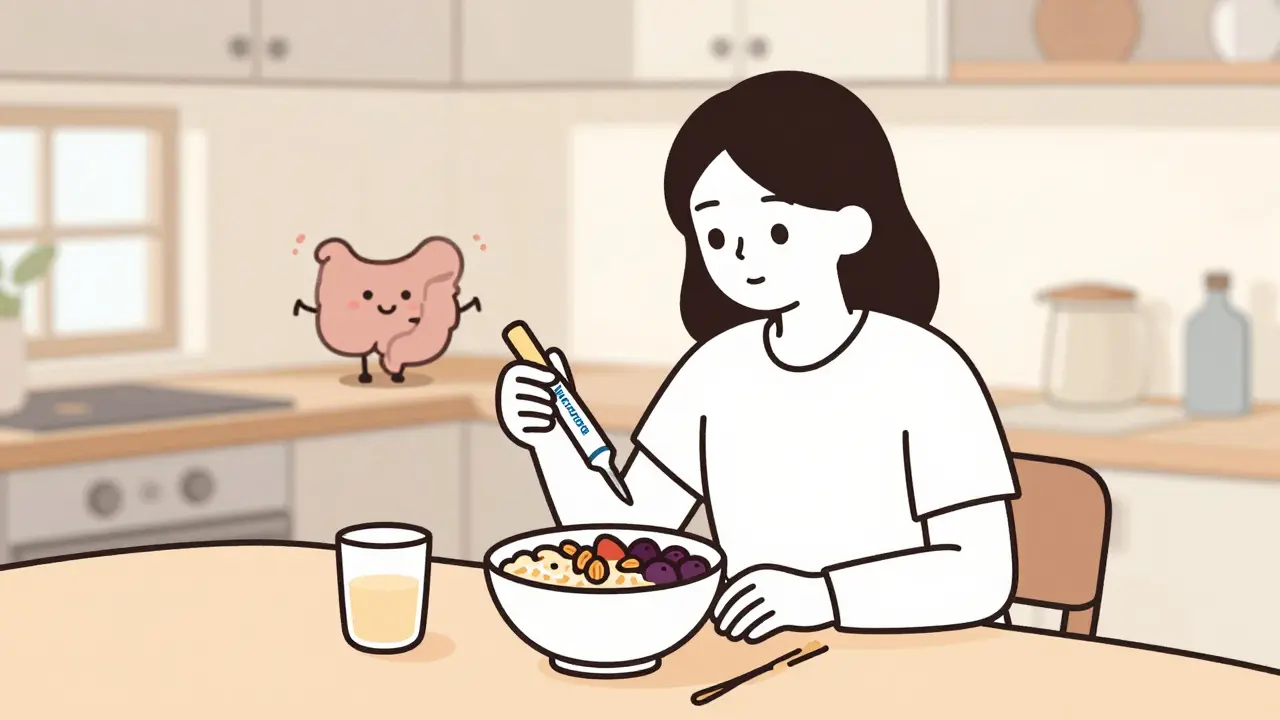
Vilazodone Diarrhea Management Tracker
Your Diarrhea Management Plan
Step 1: Take with food
Always take vilazodone with at least 500 calories of food. This reduces diarrhea by 35%.
Step 2: Dose adjustments
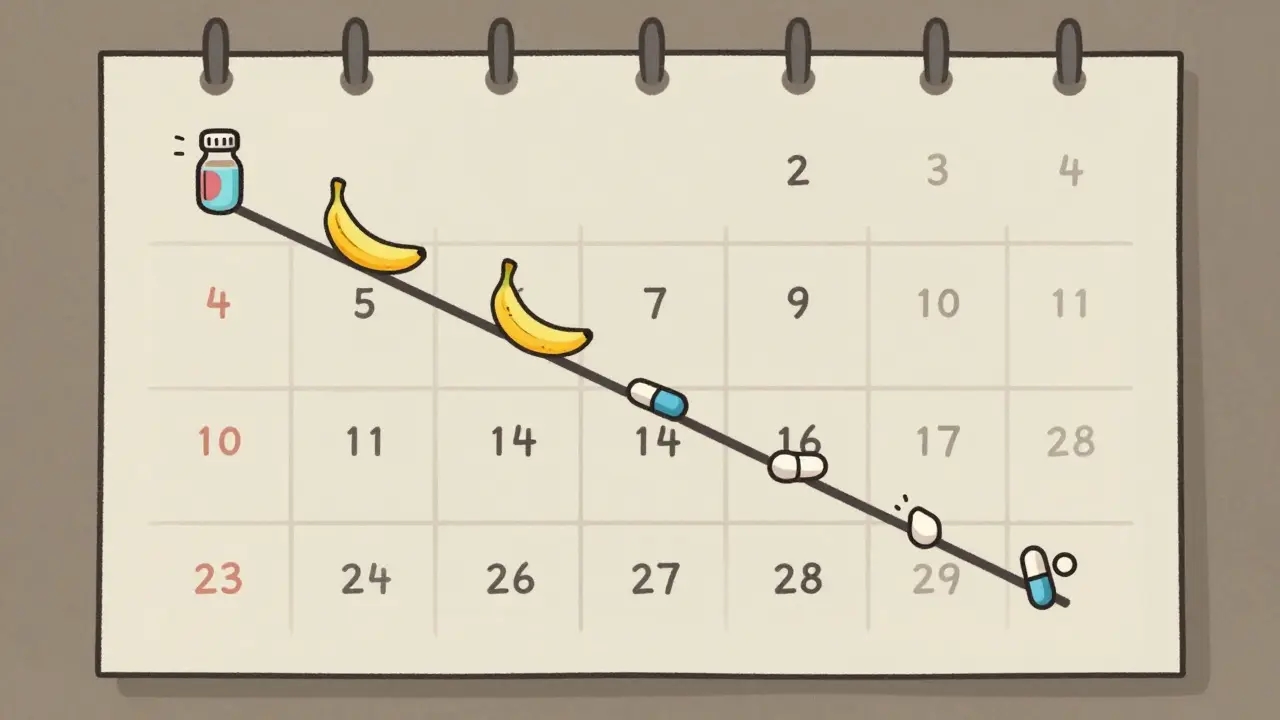
Follow the approved dosing schedule: Start at 10mg for 7 days, then 20mg for 7 days, then 40mg.
Step 3: Diet adjustments
Avoid caffeine, alcohol, spicy foods, fried meals, and artificial sweeteners. Add soluble fiber.
Step 4: Medication use
Use loperamide (Imodium) only temporarily: 2mg up to 4 times daily.
Your Progress
Starting vilazodone (brand name Viibryd) for depression can feel like a step forward - until the diarrhea hits. If you’re one of the 26 to 29% of people who get it, you’re not alone. It’s not rare. It’s not a sign you’re doing something wrong. It’s just how your body reacts to the way vilazodone works. And here’s the truth: for most people, it doesn’t last. But knowing what to do - and what not to do - can make those first few weeks bearable, or even easy.
Why Vilazodone Causes Diarrhea
Vilazodone is different from most antidepressants. It doesn’t just block serotonin reuptake like SSRIs do. It also gently activates serotonin receptors in your gut and brain. That dual action - called a SPARI - helps lift mood without always causing sexual side effects. But that same mechanism can overstimulate your digestive system. Serotonin is a key messenger in your intestines. Too much of it, especially when you first start the drug, and your bowels speed up. Result? Diarrhea.It’s not a sign of infection. It’s not food poisoning. It’s a pharmacological effect. And it’s not the same for everyone. Some people get it within 24 hours. Others don’t notice it until day 5 or 6. But almost all cases start within the first week.
How Long Does It Last?
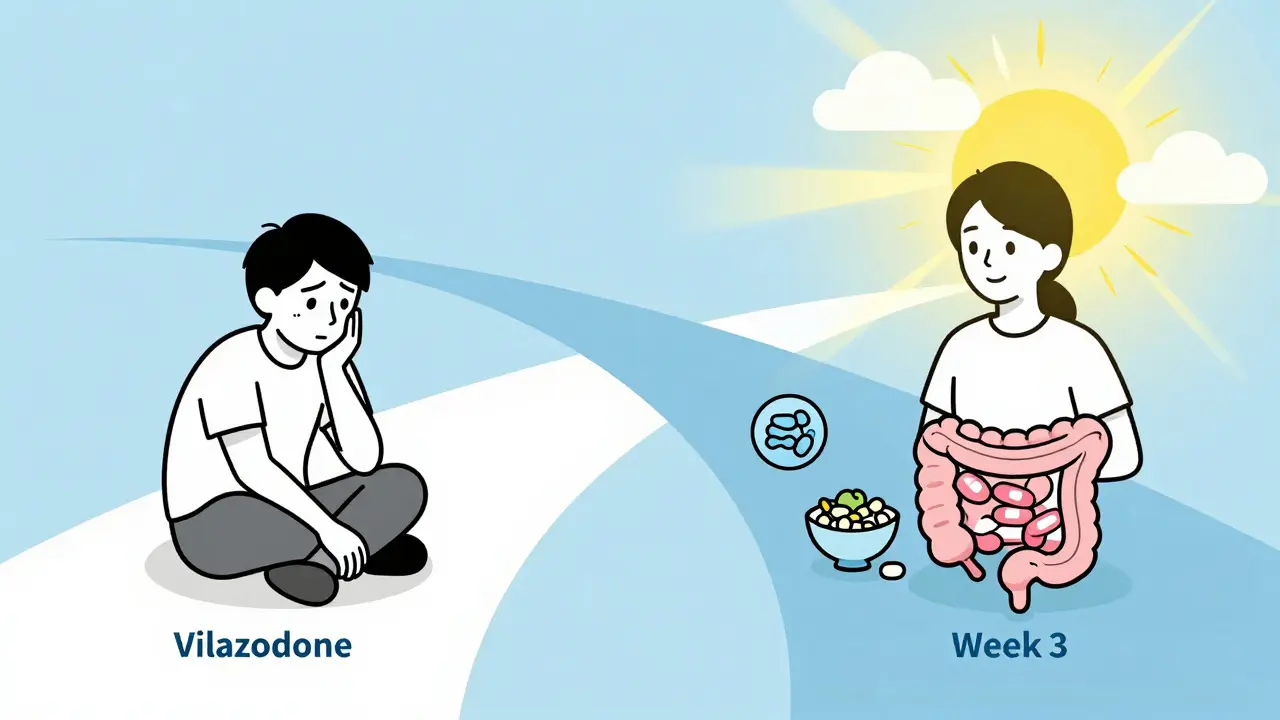
The good news? Most of the time, it fades. Clinical trials show that 94% of people who get diarrhea on vilazodone experience only mild to moderate symptoms. And over 80% of those cases resolve within 10 to 14 days. A 2023 review of patient reports found that 68% were symptom-free by week 3. That means if you stick it out, there’s a very high chance your gut will settle down.But here’s the catch: if diarrhea lasts longer than two weeks, or if it gets worse - more than six bowel movements a day, cramping, fever, or signs of dehydration - you need to call your doctor. That’s not normal adjustment. That’s a signal to reassess.
What You Can Do: The 4-Step Plan
You don’t have to suffer through this. There are proven, practical steps that work - backed by doctors, patient reviews, and clinical data.- Take it with food - always. This isn’t optional. Vilazodone needs at least 500 calories to be absorbed properly. Without food, you get higher peak levels of the drug in your blood, which makes diarrhea worse. Take it with a full meal - not a snack. A sandwich with turkey, cheese, and avocado. A bowl of oatmeal with nuts and fruit. A grilled chicken salad. Protein and healthy fats slow down digestion and blunt the drug’s gut impact. Studies show taking it with food reduces diarrhea by 35%.
- Start low and go slow. The approved dosing schedule isn’t a suggestion. It’s a safety net. Start at 10 mg for seven days. Then 20 mg for another seven. Then 40 mg. Jumping straight to 40 mg triples your risk of severe diarrhea. Slower titration gives your gut time to adapt. Many patients who struggled early on say switching to a slower ramp-up made all the difference.
- Adjust your diet. Avoid caffeine, alcohol, spicy foods, fried stuff, and artificial sweeteners like sorbitol or aspartame. These all irritate the gut and make diarrhea worse. Instead, add soluble fiber: oats, bananas, applesauce, psyllium husk. Aim for 10-15 grams a day. Soluble fiber soaks up excess water in your intestines and firms up stool. Probiotics help too - especially Lactobacillus rhamnosus GG and Bifidobacterium longum. The 2023 VIVALDI study showed probiotics cut diarrhea rates from 28% to 15%.
- Use loperamide (Imodium) temporarily. If diarrhea is disrupting your life - keeping you home from work, ruining sleep - talk to your doctor about using loperamide. Two milligrams up to four times a day can help control symptoms while your body adjusts. Don’t use it long-term. But for a few days? It’s safe and effective. About 32% of patients in reviews said it helped them stick with the medication.
What Doesn’t Work
Some things people try don’t help - and can make things worse.- Skipping doses. This messes with your serotonin levels and can trigger withdrawal symptoms or make depression worse. It won’t stop the diarrhea - it just makes you feel worse overall.
- Going on a juice cleanse or fasting. Your body needs fuel to adjust. Fasting increases drug concentration and worsens GI upset.
- Switching too fast. If you quit vilazodone after one week because of diarrhea, you’ll never know if it would’ve worked. Studies show most people who stick past week 2 see improvement. Quitting early means you’re giving up on a treatment that could’ve helped your mood - without ever giving your gut a real chance.
When to Consider Stopping
Most people can manage vilazodone’s diarrhea. But not everyone. If you’ve tried all the strategies - food, slow titration, fiber, probiotics, loperamide - and you’re still having severe diarrhea after three weeks, it might not be the right drug for you.That’s okay. Antidepressants aren’t one-size-fits-all. About 10% of patients discontinue vilazodone due to persistent GI issues. And switching to another medication like bupropion or escitalopram often leads to big improvements. One patient on Reddit said: “After three weeks of constant diarrhea, my doctor switched me to bupropion. Life-changing.”
Don’t feel like you’ve failed if vilazodone doesn’t work for you. It’s not about willpower. It’s about biology.
How Vilazodone Compares to Other Antidepressants
It’s useful to know where vilazodone stands next to other meds.| Medication | Diarrhea Incidence | Sexual Side Effects | Weight Gain Risk |
|---|---|---|---|
| Vilazodone | 26-29% | 2-3% | Low |
| Sertraline | 18% | 20-30% | Moderate |
| Escitalopram | 6% | 15-25% | Low |
| Paroxetine | 8% | 40-70% | High |
| Bupropion | 5% | Very low | Low |
So vilazodone has the highest diarrhea rate - but among the lowest sexual side effects. If you’re someone who’s struggled with low libido or erectile dysfunction on other antidepressants, vilazodone might still be worth the GI trade-off. Especially now that generics are available and cheaper.
Who Should Avoid Vilazodone
It’s not for everyone. Avoid vilazodone if you:- Have a history of inflammatory bowel disease (Crohn’s, ulcerative colitis)
- Are taking strong CYP3A4 inhibitors like ketoconazole or clarithromycin (they can spike vilazodone levels dangerously)
- Are under 25 - all antidepressants carry a boxed warning for increased suicidal thoughts in young adults
- Have had severe diarrhea with other SSRIs in the past
If you’re over 40, have no prior GI issues, and are mainly worried about sexual side effects or weight gain, vilazodone might be a smart choice - if you’re willing to manage the first few weeks.
The Bigger Picture
Vilazodone isn’t a first-line drug. It’s not prescribed as often as sertraline or escitalopram. In 2022, it made up just 1.2% of the U.S. antidepressant market. But its use is growing - up 37% since generics hit in late 2022. Why? Because doctors are learning how to help patients get through the initial GI phase.Future versions of the drug - like a delayed-release pill - are in trials. They aim to reduce peak concentrations and cut diarrhea rates even further. But for now, the key is timing, food, and patience.
Depression is hard. Medication side effects add another layer of stress. But vilazodone’s diarrhea isn’t a dealbreaker. It’s a temporary hurdle. And with the right approach, most people clear it - and find relief from depression they didn’t get with other meds.
How long does vilazodone diarrhea last?
For most people, diarrhea from vilazodone lasts 7 to 14 days. Around 68% of users report it resolving by week 3. If it lasts longer than two weeks, or gets worse, talk to your doctor - it may need a different approach.
Can I take Imodium with vilazodone?
Yes, loperamide (Imodium A-D) is generally safe to use short-term while adjusting to vilazodone. Take no more than 2 mg up to four times a day. But always check with your doctor first, especially if you’re on other medications or have a history of heart issues.
Should I take vilazodone with or without food?
Always take vilazodone with food - at least 500 calories. A full meal with protein and healthy fats improves absorption and reduces diarrhea by up to 35%. Skipping food can make side effects much worse.
Is vilazodone better than other antidepressants?
It’s not better for everyone. Vilazodone has the highest rate of diarrhea among common antidepressants, but among the lowest rates of sexual side effects. If you’ve had problems with low libido or weight gain on other meds, it might be worth trying - if you’re prepared to manage the first few weeks of GI issues.
What should I eat to reduce vilazodone diarrhea?
Focus on soluble fiber: oats, bananas, applesauce, psyllium husk. Add probiotics like Lactobacillus rhamnosus GG or Bifidobacterium longum. Avoid caffeine, alcohol, spicy foods, fried meals, and artificial sweeteners. A balanced meal with protein and healthy fats helps slow digestion and reduce gut irritation.
When should I stop vilazodone because of diarrhea?
Don’t quit after a few days. Give it at least two weeks with proper food and slow dosing. If diarrhea persists beyond three weeks despite dietary changes, probiotics, and loperamide - or if you have fever, blood in stool, or signs of dehydration - contact your doctor. You may need to switch to another antidepressant.
If you’re struggling with vilazodone’s side effects, you’re not alone. Many people have walked this path. And most of them found a way through - without giving up on treatment. The goal isn’t to avoid side effects entirely. It’s to manage them well enough so your mood can heal.

11 Comments
so i took vilazodone for 3 days and my butt was on fire. like, literally felt like i was sitting on a hot stove. i thought i had food poisoning. turned out it was just my brain and gut having a screaming match. then i started eating a full meal with it - turkey sandwich, avocado, the works - and boom. less drama. not gone, but bearable. life’s weird like that.
Thank you for this comprehensive and compassionate overview. The clinical data presented is both reassuring and practical. It is imperative that patients understand that gastrointestinal adaptation is not indicative of treatment failure, but rather a transient neurochemical recalibration. I commend the emphasis on dietary synergy and slow titration as evidence-based strategies.
i just wanna say… i cried in the bathroom for three days straight. not because i was sad. because my insides were rebelling. then i started taking it with a big breakfast - eggs, toast, peanut butter - and it got better. not perfect. but better. also, probiotics helped. not magic. just… less chaos. 🙏
people who say 'just take it with food' are ignoring the fact that some of us have zero appetite. you think i want to eat a sandwich when i feel like my stomach is trying to escape my body? that advice is for people who still have a functioning digestive system. for the rest of us? it's cruel.
i was scared to even try this med after hearing about the diarrhea. but i did it. took it with dinner every night. stuck to the slow ramp-up. 10 days in, it stopped. i’m not saying it’s easy, but it’s doable. and now my mood’s actually better than it’s been in years. worth it.
bro i took this in india and my gut just went full apocalypse. no food helped. no probiotics. i thought i was gonna die. then i found out the med was stored in a hot warehouse and the pills were degraded. switched to a new batch - zero issues. check your pills.
you people act like diarrhea is the end of the world. it’s just poop. you’re on an antidepressant - the thing that’s supposed to fix your brain - and you’re throwing a tantrum because your colon is being extra? grow up. maybe you need to stop being so delicate.
lol they say vilazodone has low sexual side effects. sure. but then you get diarrhea that makes you miss work for two weeks. i’d rather be horny and calm than constipated and crying in a bathroom stall. i switched to bupropion. best decision ever.
diarrhea for 2 weeks? congrats. you’re basically a human toilet. at least you’re not on paroxetine - where you can’t get hard AND you’re running to the bathroom every 10 minutes. pick your poison. i picked the one that doesn’t turn me into a limp noodle.
i took it with food but still got the runs… then i realized i was drinking coffee with it. oops. no more coffee. no more sugar free gum. no more spicy tacos. and guess what? it got better. not perfect. but better. also i spelled everything wrong here but you get the point lol
you’re not broken. you’re not weak. you’re not failing. your body is adjusting to something that’s changing the chemistry of your entire system. it’s okay to feel overwhelmed. it’s okay to need help. the fact that you’re reading this means you’re trying - and that’s courage. keep going. you’re not alone in this. and you deserve to feel better.