
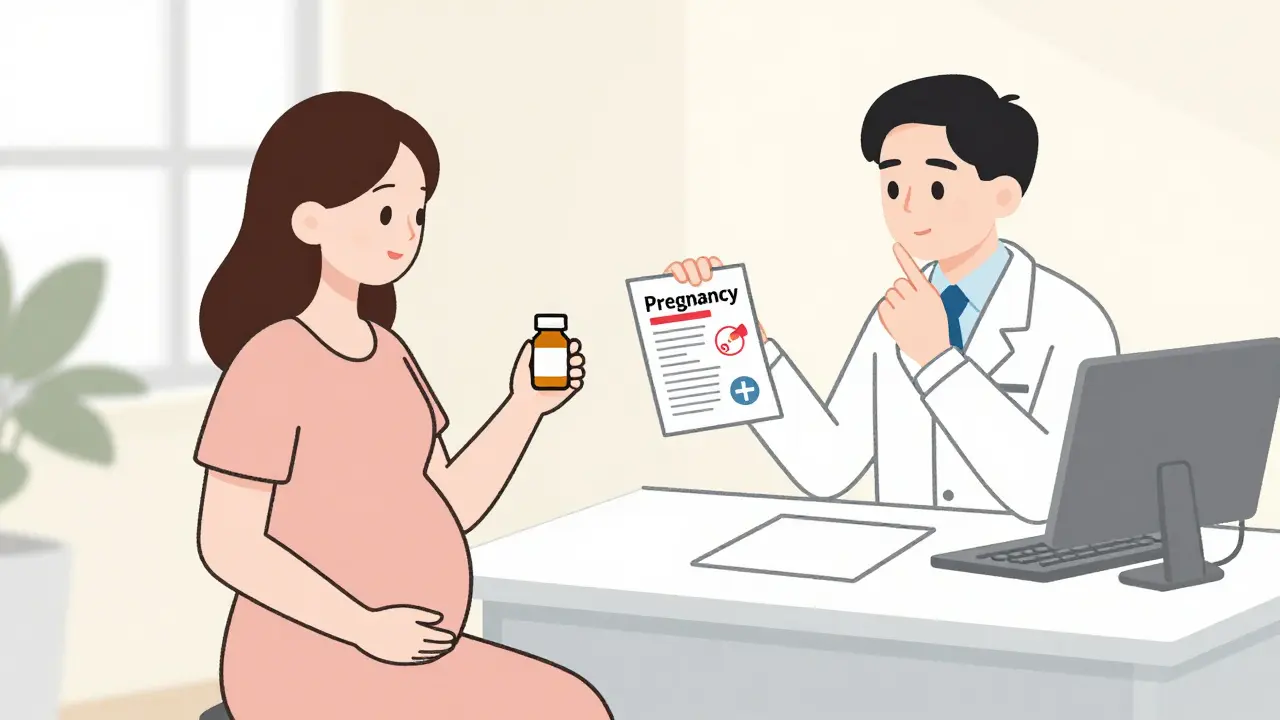
When you're pregnant, even something as simple as taking an over-the-counter painkiller can feel risky. You're not alone. Around 70 to 90% of pregnant women use at least one medication during pregnancy, and half of them take four or more. But here's the hard truth: for most of those medications, we simply don't have clear, reliable data on what they do to a developing baby. That's why safety alerts exist - not to scare you, but to help you make smarter, safer choices.
Why Medication Safety During Pregnancy Is So Complex
For decades, the U.S. FDA used a simple letter system - A, B, C, D, X - to tell doctors and patients if a drug was safe in pregnancy. But it backfired. People thought an X meant "totally dangerous," when really it just meant "there's strong evidence of harm, and the risks outweigh any benefits." A drug labeled B? Many assumed it was perfectly safe. It wasn't. The system didn't reflect how much or how little data existed - just whether harm was seen in animals or a handful of humans.
In 2015, the FDA scrapped the letter system. Now, drug labels have detailed narrative sections: Pregnancy, Lactation, and Females and Males of Reproductive Potential. Instead of a letter, you get real context. For example, a label might say: "In human studies, 2 out of 100 infants exposed to this drug had a heart defect. No clear pattern was found in animal studies." That’s more useful. But here’s the catch: only about 12% of medications have enough human data to make that kind of statement. The rest? We’re guessing.
How Safety Alerts Actually Work
Safety alerts aren’t just press releases. They’re built on data - or the lack of it. The FDA runs 38 active pregnancy exposure registries. These are voluntary programs where pregnant women who take certain medications can sign up and get followed up through delivery and beyond. The goal? Collect real-world data on outcomes. But here’s the problem: less than 1% of pregnant women taking these drugs ever enroll. That means for every 100 women who take a medication, only one helps build the evidence.
Some drugs have known, serious risks. Isotretinoin (Accutane), for example, causes severe birth defects in 20 to 35% of pregnancies. Valproate (used for epilepsy and bipolar disorder) increases the risk of neural tube defects from 0.1% to 1-2%. These aren’t theoretical risks - they’re real, and they’ve triggered formal FDA Class I alerts. But what about the hundreds of other drugs? Antidepressants? Blood pressure pills? Thyroid meds? For most, we have patchy data. Some studies show no harm. Others suggest possible links. And because pregnant women are almost never included in clinical trials, we’re always playing catch-up.
What’s Different Between the U.S. and Europe
The U.S. and Europe handle this differently. In the U.S., the focus is on clear labeling. In the EU, the European Medicines Agency (EMA) goes further. For high-risk drugs like lenalidomide (used in cancer treatment), they require strict pregnancy prevention programs. That means: mandatory pregnancy tests before each prescription, two forms of birth control, and even counseling on the risks. If you’re a woman of childbearing age and you’re prescribed this drug, you can’t just walk in and get it. You have to prove you understand the risk.
But even the EMA’s system has gaps. A 2022 audit found that 41% of drug companies in Europe didn’t meet minimum requirements for tracking pregnancy exposure. Meanwhile, the U.S. system is criticized for not giving clear numbers. A 2019 study found only 32% of FDA-labeled drugs included actual risk percentages. So you might read: "Potential risk to fetus." But is that 1 in 100? 1 in 1,000? You don’t know.
What You Should Do - Step by Step
Don’t panic. Don’t stop meds cold turkey. Here’s what actually works:
- Review all medications at your first prenatal visit. This includes prescriptions, OTC pain relievers, herbal teas, vitamins, and supplements. ACOG recommends a full "medication reconciliation" - which takes about 22 minutes. Don’t skip it.
- Check the label. Look for the "Pregnancy" section on the drug facts. It’s required by law. If it says "insufficient data," don’t assume it’s unsafe. Assume it’s unknown.
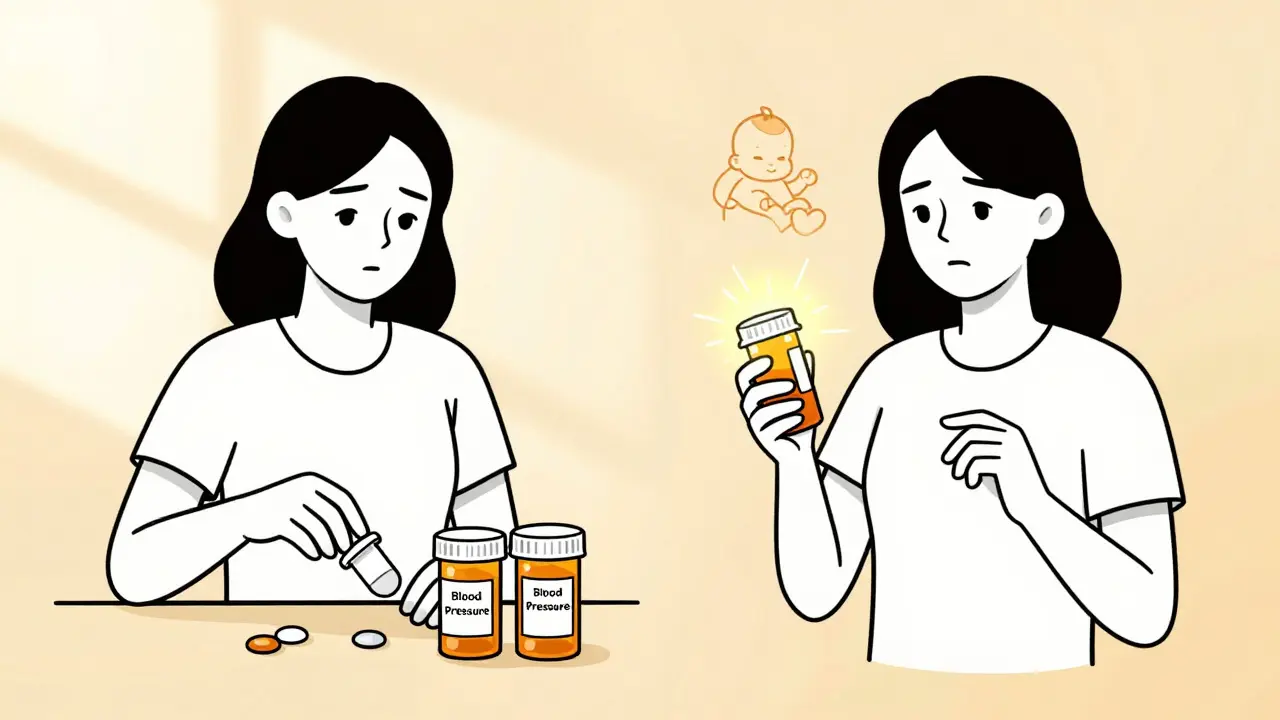
- Don’t stop essential meds without talking to your doctor. A 2021 survey found 29% of women with chronic conditions (like asthma, depression, or epilepsy) stopped their meds when pregnant. That led to worse outcomes than continuing treatment. Untreated depression, for example, increases the risk of preterm birth and low birth weight.
- Keep taking folic acid. 800 mcg daily, starting before conception if possible, and continuing through at least 12 weeks. This reduces neural tube defects by up to 70%. It’s one of the few things with rock-solid evidence.
- Avoid known teratogens. Isotretinoin (Accutane), thalidomide, methotrexate, and certain seizure meds like valproate are absolute no-gos unless there’s no alternative and you’re under strict supervision.
The Real Cost of Uncertainty
It’s not just about birth defects. The fear of medication use is causing real harm. A 2022 study from Massachusetts General Hospital found that when women got clear, personalized advice - not just a warning label - they were 18% less likely to stop necessary medications. And when they did, 78% of calls to their pregnancy medication hotline were about anxiety meds. Guess what? In 63% of those cases, doctors advised them to keep taking the medication. The risk of untreated anxiety was higher than the risk of the drug.
On Reddit, a top post from a pregnant woman said: "My doctor told me to stop my antidepressant immediately. Now I’m having panic attacks. Why isn’t there clearer guidance?" That’s the system failing. We have data. We just don’t make it easy to use.

What’s Changing - And What’s Coming
There’s progress. In 2023, the FDA started requiring weekly safety reports for high-risk drugs like mycophenolate - instead of waiting three months. That’s faster. The NIH launched PREGNET in January 2024 - a $25 million project connecting 45 hospitals to track 100,000 pregnancies. That’s a game-changer.
Pharmaceutical companies are also building pregnancy-specific apps. But only 12% have real user engagement. Why? Because most are just digital pamphlets. The future needs two things: real-time data sharing between pharmacies and OB-GYNs, and AI that can predict risks by analyzing millions of anonymized records. IBM Watson Health predicts 70% accuracy by 2027. That’s promising.
But there’s a looming crisis: funding. The March of Dimes estimates a $312 million annual funding gap through 2030. Without it, registries close, alerts get delayed, and women keep making decisions in the dark.
Bottom Line
You don’t need perfection. You need clarity. No medication is 100% safe - but no untreated condition is either. The goal isn’t to avoid all drugs. It’s to use the right ones, at the right time, with the right support. If you’re unsure, call your provider. Ask for the pregnancy section of the label. Ask what the data says - and what it doesn’t. And remember: folic acid, regular checkups, and open communication are your best tools. You’re not alone. The system is broken, but you still have power to make smart choices.
Are all medications dangerous during pregnancy?
No. Many medications are safe - or at least, the risks are very low. Folic acid, certain prenatal vitamins, insulin for diabetes, and many blood pressure medications are routinely used without harm. The key is knowing which ones are backed by data. For example, acetaminophen (Tylenol) is considered safe for occasional use, while ibuprofen should be avoided after 20 weeks. The danger isn’t in taking medication - it’s in taking the wrong one, or stopping a necessary one without guidance.
Why can’t we just test drugs on pregnant women?
Ethical and legal barriers make it nearly impossible. Clinical trials require informed consent, and the potential risk to the fetus creates huge liability. Even if a woman consents, regulators and pharmaceutical companies avoid including pregnant women because of fear of lawsuits and public backlash. As a result, we rely on accidental exposure data - like women who got pregnant while taking a drug before realizing they were pregnant. That’s why registries and real-world data are so important.
Can I trust online sources like Drugs.com or WebMD?
Use them cautiously. Many websites pull outdated or conflicting data. For example, one site might say a drug is Category B ("probably safe") while another says "not enough data." The most reliable source is the official FDA or EMA label, which you can find on the drug manufacturer’s website or through the FDA’s DailyMed database. If a site doesn’t cite its sources, don’t rely on it.
What should I do if my doctor tells me to stop a medication?
Ask why. Request the specific evidence behind the recommendation. If it’s based on animal studies or old data, ask if there’s newer human data. Consider getting a second opinion from a maternal-fetal medicine specialist. Many conditions - like depression, asthma, or thyroid disorders - are more dangerous if left untreated than if managed with medication. Never stop a chronic medication abruptly without medical supervision.
Is there a hotline or resource I can call for advice?
Yes. Many hospitals run pregnancy medication safety hotlines. For example, Mass General’s hotline handled over 12,000 calls in 2022 - and 63% of those cases led to recommendations to continue treatment. The Organization of Teratology Information Specialists (OTIS) also offers free, confidential counseling through MotherToBaby. You can call or chat online. These services are staffed by specialists who review the latest data and tailor advice to your situation.
8 Comments
Ugh, I just got off the phone with my OB who told me to stop my SSRI ‘just in case.’ I’ve been on it for 6 years. My anxiety was under control. Now I’m a wreck. Why do doctors treat pregnancy like a virus you have to purge? I called MotherToBaby and they said keep going. So I did. Fingers crossed.
Also, folic acid is my new best friend. Took it for 3 months before I even knew I was pregnant. Best decision ever.
The FDA’s narrative labeling system is a step forward, but it’s still fundamentally flawed. We’re operating on a data deficit that’s orders of magnitude worse than the pharmaceutical industry admits. The 12% figure for human data is a charitable estimate-most of it’s observational, confounded, and underpowered. We need prospective cohort studies with pharmacokinetic sampling, not passive registries. Until then, we’re just guessing with better formatting.
And let’s not pretend the EU’s pregnancy prevention programs are a panacea. They’re bureaucratic theater. 41% noncompliance? That’s not oversight failure-that’s systemic negligence masked as regulation.
It’s important to recognize that the current system, while imperfect, represents a significant evolution from the old letter categories. The narrative format, despite its gaps, allows for nuance that ‘B’ or ‘C’ never could.
The challenge lies in translation-between medical data, clinical practice, and patient understanding. Many providers still default to caution out of fear, not evidence. The solution isn’t more regulation, but better education-for clinicians, and for patients. Knowledge reduces fear. Fear drives poor decisions.
I’ve been thinking a lot about how we treat pregnancy as a medical emergency rather than a natural state that happens to involve medication use.
There’s a quiet violence in the way we frame this-as if every pill is a potential bomb. But what about the violence of untreated depression? Of uncontrolled hypertension? Of a mother’s terror because she was told to stop what kept her alive?
We need to stop pathologizing care. We need to trust women to weigh risks with compassion, not fear. And we need to fund the research that lets us do that.
💛
So let me get this straight… the government says ‘we don’t know’ but then tells us to keep taking meds? And the drug companies are like ‘lol we’re gonna wait 10 years to study this’? Meanwhile, I’m supposed to just trust a 22-minute review and hope for the best?
Who even benefits from this? Pharma? Doctors? Or just the lawyers who’ll sue when something goes wrong? I feel like I’m in a horror movie where the monster is bureaucracy.
Here’s the truth no one wants to say: pregnant women are being used as guinea pigs in a giant, unregulated experiment.
The FDA doesn’t have the data because they don’t want the data. Too many lawsuits. Too many headlines. So they push vague labels and ‘use caution’ nonsense. Meanwhile, Big Pharma is quietly funding ‘awareness’ campaigns that tell you to ‘consult your doctor’-as if your OB has access to a crystal ball.
And don’t even get me started on folic acid. It’s not a miracle. It’s a band-aid on a bullet wound. They’re just trying to make us feel better while the real risks are buried in 12% of labels.
The entire framework of pregnancy medication safety is a performative failure dressed in clinical language.
Let’s be honest: we don’t lack data-we lack will. The EU’s pregnancy prevention programs are not ‘better’-they’re coercive. The U.S. system is not ‘informative’-it’s negligent. Both systems reduce women to risk profiles, not human beings with agency.
And yet, we continue to treat this as a technical problem, not a moral one. We need structural change, not better labeling. We need to stop asking women to ‘make smarter choices’ when the choices were never real to begin with.
Let’s not romanticize ‘open communication.’ What does that even mean? My OB said, ‘It’s probably fine,’ and then handed me a pamphlet from the manufacturer.
That’s not communication. That’s deflection.
The system isn’t broken-it’s designed this way. Drug companies don’t want to fund pregnancy studies. Regulators don’t want the liability. Providers don’t want the time. And women? We’re the ones left holding the uncertainty.
So yes, take folic acid. Yes, avoid Accutane. But please stop pretending that ‘consult your doctor’ is a solution. It’s a cop-out. And I’m tired of being told to trust a system that doesn’t trust me.