
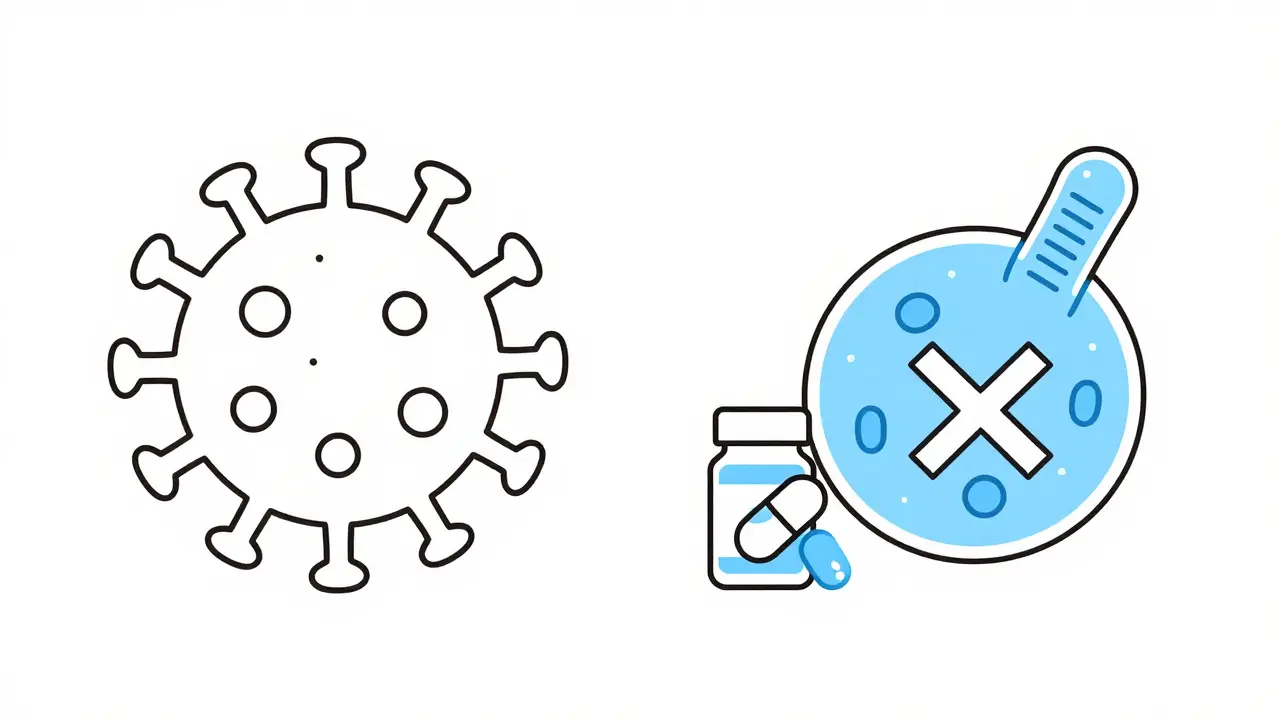
You’ve been coughing for a week, your chest feels tight, and you're exhausted. Naturally, you want a "magic pill" to make it stop. But if you have acute bronchitis is an acute inflammatory condition of the bronchial tubes, typically caused by viral infections, that magic pill-antibiotics-likely won't do a thing. In fact, for about 95% of people, they are completely useless against this specific illness.
It feels counterintuitive. We're taught that antibiotics fight infections, so why not here? The problem is that acute bronchitis is almost always caused by viruses like the rhinovirus or coronavirus. Antibiotics only kill bacteria. Using them on a virus is like trying to put out a grease fire with a blanket; not only does it not work, but it can actually make things worse by wiping out the good bacteria in your gut and fueling the global crisis of antibiotic resistance.
The Reality of the "Bronchitis Cough"
One of the hardest parts of dealing with this condition is the timeline. Most of us expect to feel better in a few days, but the biological reality is different. According to data from the Journal of the American Board of Family Medicine, the average cough lasts nearly 18 days. That's nearly three weeks of hacking and hacking.
If you're tracking your progress, don't panic if you aren't "cured" by day ten. About half of all patients are still coughing at the ten-day mark, and roughly 11% are still dealing with it after three full weeks. Understanding this natural history helps you realize that you aren't necessarily getting worse; you're just experiencing the standard course of the illness.
Is it Bronchitis or Pneumonia?
This is the question every patient (and many doctors) struggle with. While both involve the lungs, they are very different. Pneumonia is an infection of the lung tissue itself, whereas bronchitis is an inflammation of the tubes leading to those tissues.
Generally, if you have a high fever (above 38°C/100.4°F), a very fast heart rate, or shortness of breath even while resting, it's more likely to be pneumonia. In contrast, acute bronchitis typically presents as a persistent cough with or without mucus, but without those severe systemic red flags. Doctors often use a physical exam to check for "focal lung findings"-specific sounds in the lungs that suggest pneumonia rather than a general bronchial inflammation.
| Feature | Acute Bronchitis | Pneumonia |
|---|---|---|
| Primary Cause | Mostly Viral (90-95%) | Bacterial or Viral |
| Fever | Mild or absent | Often high (>38°C) |
| Lung Sounds | General wheezing/congestion | Localized "crackles" or dullness |
| Antibiotic Need | Rarely needed | Often required (if bacterial) |
Managing Your Symptoms Without a Prescription
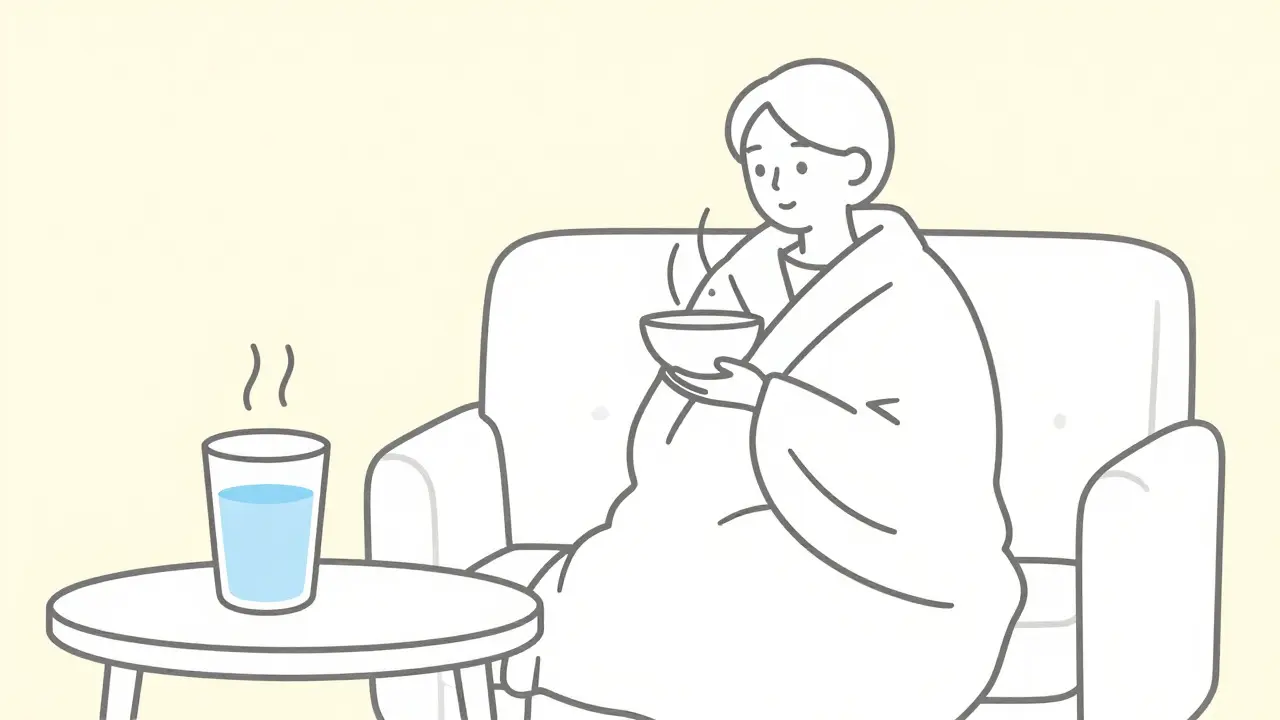
Since you can't "kill" the virus with medicine, the goal is to keep you comfortable while your immune system does the heavy lifting. Here is what actually works, based on clinical evidence.
Hydration and Humidity
Your mucus is your body's way of trapping the virus and getting it out. If you get dehydrated, that mucus becomes thick and sticky, making it harder to cough up. Drink 8 to 10 glasses of water a day. Using a cool-mist humidifier or breathing in steam from a bowl of hot water can help loosen those secretions and soothe your throat.
Over-the-Counter Options
When the cough keeps you awake at night, dextromethorphan is a reliable option for suppressing the urge to cough. For those with pain or a lingering mild fever, standard doses of ibuprofen or acetaminophen are the gold standard. However, be careful with multi-symptom cold medicines; they often contain ingredients you don't need and can lead to accidental overdosing.
The Honey Hack
It sounds like an old wives' tale, but honey is backed by science. A study in JAMA Pediatrics found that honey can be as effective as dextromethorphan for reducing cough frequency in children. For adults, 2.5 to 10 mL of honey can soothe the throat. Crucial Warning: Never give honey to babies under one year old due to the risk of botulism.

The Danger of the "Just in Case" Antibiotic
You might be tempted to ask your doctor for a "just in case" prescription. Some people even use "delayed prescriptions," where the doctor gives you a script but asks you to wait 48 to 72 hours before filling it. While this reduces anxiety, the medical reality remains: antibiotics provide a negligible reduction in cough duration-about 0.6 days on average. That's less than 15 hours of relief.
The cost of those 15 hours is high. For every 14 people who take an unnecessary antibiotic for bronchitis, one person will suffer a significant adverse effect. This doesn't even account the long-term damage. The CDC reports that millions of unnecessary antibiotic prescriptions every year contribute to the rise of "superbugs"-bacteria that have evolved to resist our best drugs. When we use antibiotics for viral bronchitis, we aren't helping the patient; we're helping the bacteria learn how to survive our medicine.
When to Actually Worry
While most cases are self-limiting, you shouldn't ignore everything. You should seek medical attention if you notice the following:
- Your fever spikes suddenly or refuses to come down with medication.
- You start coughing up blood or rust-colored sputum.
- You have a pre-existing condition like COPD or asthma and your rescue inhaler isn't working.
- You experience a sudden onset of shortness of breath or chest pain.
- The cough lasts longer than three weeks without any improvement.
Why won't my doctor give me antibiotics for my bronchitis?
Because 90-95% of acute bronchitis cases are caused by viruses. Antibiotics only work against bacteria. Taking them for a viral infection won't cure the illness, won't significantly shorten your cough, and can cause side effects or contribute to antibiotic resistance.
How long does a typical bronchitis cough last?
On average, the cough lasts about 17.8 days. It is common to still be coughing after two weeks; in fact, about 26% of people are still symptomatic at day 14.
Are cough suppressants safe for children?
You should be very cautious. The FDA has issued warnings against using codeine-containing cough medicines in children under 12. Additionally, over-the-counter cough and cold medications are generally not recommended for children under 4 years old.
Can honey really replace medicine for a cough?
For many, yes. Research indicates that honey can be as effective as dextromethorphan in reducing cough frequency. However, it must never be given to infants under 12 months old due to the risk of botulism.
What is the best way to clear mucus from my lungs?
The most effective methods are staying heavily hydrated (8-10 glasses of water daily) and using a cool-mist humidifier or steam. This thins the mucus, making it easier for your body to expel it through coughing.


9 Comments
the sheer audacity of the modrn medical establishment to expect the masses to endure an eighteen day cough without the placebo effect of a z-pak is truly a testament to the stoic nature of human suffering though perhaps we are merely pawns in a larger game of microbial evolution where our desire for instant gratificaton fuels the very apocalypse of the superbug era which is quite poetic if you think about the cyclic nature of biological dominance and failure
been there 🙄 honey actually works lol 🍯
It's so helpful to have the timeline laid out like this. I think a lot of us just get anxious when we don't feel better in three days, but knowing that 18 days is normal really takes the pressure off! Just keep breathing and stay positive everyone ✨
Keep pushing through guys! Just smash those water goals and keep the steam going! You got this! 🚀
Drinking warm water with honey and lemon is such a lifesaver!!! Please remember to take care of yourselves and rest well, my dear friends!! 🍋🍯✨
There is something fundamentally humbling about the way a simple virus can strip away our productivity and force us back into a state of primal vulnerability. We spend our lives trying to optimize every second, yet we are defeated by a microscopic entity that doesn't even have a brain. It's a reminder that our perceived control over nature is largely an illusion, and sometimes the only path to healing is the slow, quiet acceptance of time's passage.
Exactly! Just stay hydrated and let the body do its thing! We are stronger than this cough! 💪🔥
I find it quite fascinating that the distinction between bronchitis and pneumonia rests so heavily on those focal lung sounds, as it makes one wonder how many misdiagnoses occur simply because a practitioner might be rushed during a physical exam or if the patient's symptoms are atypical for their demographic, leading to the very antibiotic overuse the article warns against in such a detailed manner.
It is most prudent to follow the guidance of medical professionals regarding the avoidance of unnecessary medication; for the sake of global health, we must all exercise patience and discipline in our recovery processes!!