
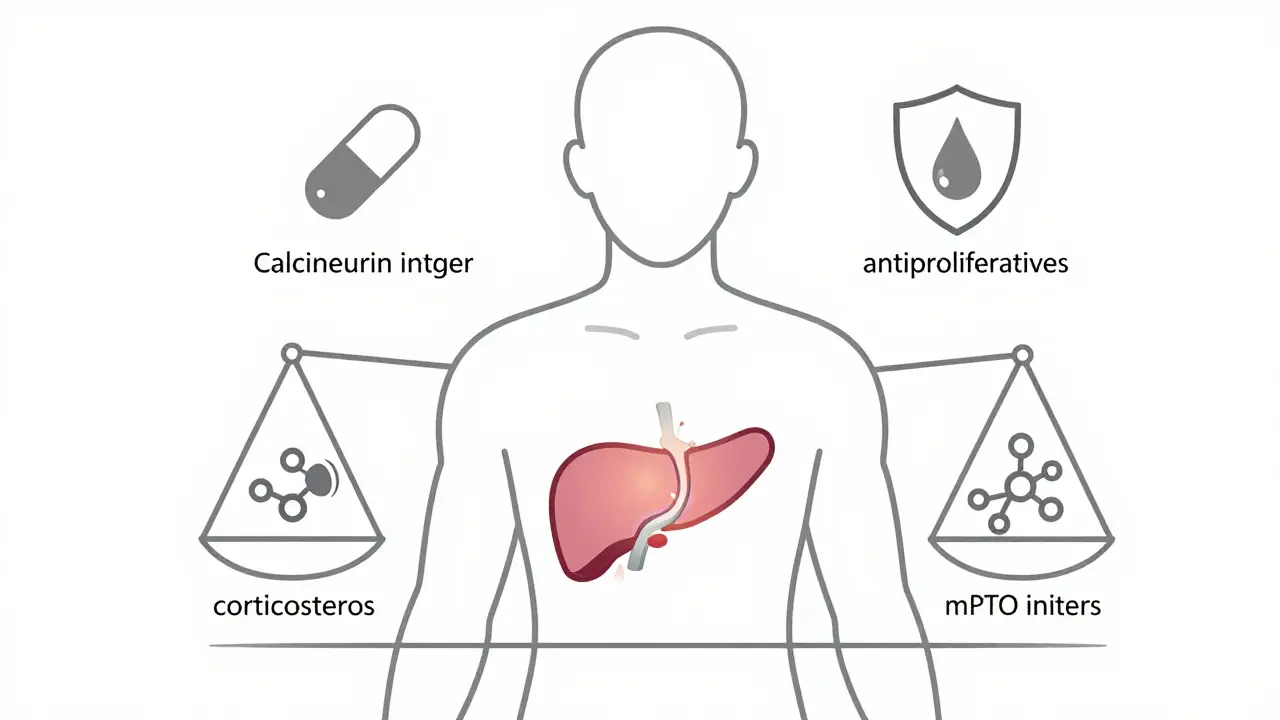
When someone gets a new organ - a kidney, heart, liver, or lung - their body doesn’t know it’s supposed to accept it. To the immune system, it’s an invader. That’s where immunosuppressants come in. These aren’t optional pills. They’re the difference between a functioning transplant and a failed one. But they come with serious trade-offs. Taking them means living with a weakened immune system, which opens the door to infections, cancers, and long-term organ damage. There’s no one-size-fits-all plan. Every patient’s regimen is a tightrope walk between rejection and toxicity.
Why You Can’t Skip These Pills
Without immunosuppressants, most transplanted organs would be rejected within days. Before the 1980s, rejection rates were as high as 80%. Today, thanks to modern drugs, that number has dropped below 15% for kidney transplants. But even with today’s meds, rejection doesn’t disappear. Chronic rejection - slow, silent damage over years - still leads to graft failure in many patients. That’s why these drugs aren’t taken for a year or two. For most people, they’re for life.
The goal isn’t to shut down the immune system completely. It’s to dial it back just enough. Too little, and the body attacks the new organ. Too much, and you’re vulnerable to pneumonia, sepsis, or even skin cancer. Doctors don’t guess at this balance. They use blood tests to measure drug levels, adjust doses, and monitor for signs of trouble.
The Main Drug Classes and Their Risks
There are four major types of immunosuppressants, each with different jobs and different dangers.
Calcineurin inhibitors - like cyclosporine and tacrolimus - are the backbone of most regimens. They block T-cells, the immune system’s frontline soldiers. But they’re hard on the kidneys. About 30-50% of long-term users develop chronic kidney damage from these drugs alone. They also raise blood pressure, spike potassium levels, and lower magnesium. And yes - they increase cancer risk by 2 to 4 times. Skin cancer is the most common, but lymphoma and other cancers are also more likely.
Corticosteroids - like prednisone - are powerful, fast-acting suppressors. They’re often used early after transplant to prevent sudden rejection. But long-term use? That’s where the real damage shows up. About 10-40% of patients develop steroid-induced diabetes. Half of those on long-term doses lose bone density fast, leading to fractures. Heart disease risk goes up too. Many centers now try to wean patients off steroids within months, if possible.
Antiproliferative agents - mycophenolate mofetil (MMF) and azathioprine - stop immune cells from multiplying. MMF is common because it’s effective and avoids some kidney damage. But it’s rough on the gut. Up to 50% of people on MMF get nausea, vomiting, or diarrhea. It can also lower white blood cell counts, making infections more likely. Azathioprine is older and cheaper but carries a higher risk of liver toxicity and bone marrow suppression.
mTOR inhibitors - sirolimus and everolimus - are newer. They’re less toxic to kidneys than calcineurin inhibitors, so they’re sometimes swapped in for patients with kidney damage. But they come with their own red flags. Everolimus has a black box warning: it can cause blood clots in the kidney’s main artery within the first 30 days after transplant - a disaster for the graft. Sirolimus is risky for liver and lung transplant patients, linked to higher death rates. Both can cause mouth sores, fluid retention, and a rare but deadly lung inflammation called pneumonitis. About 1-5% of users get this.
Adherence Is Everything
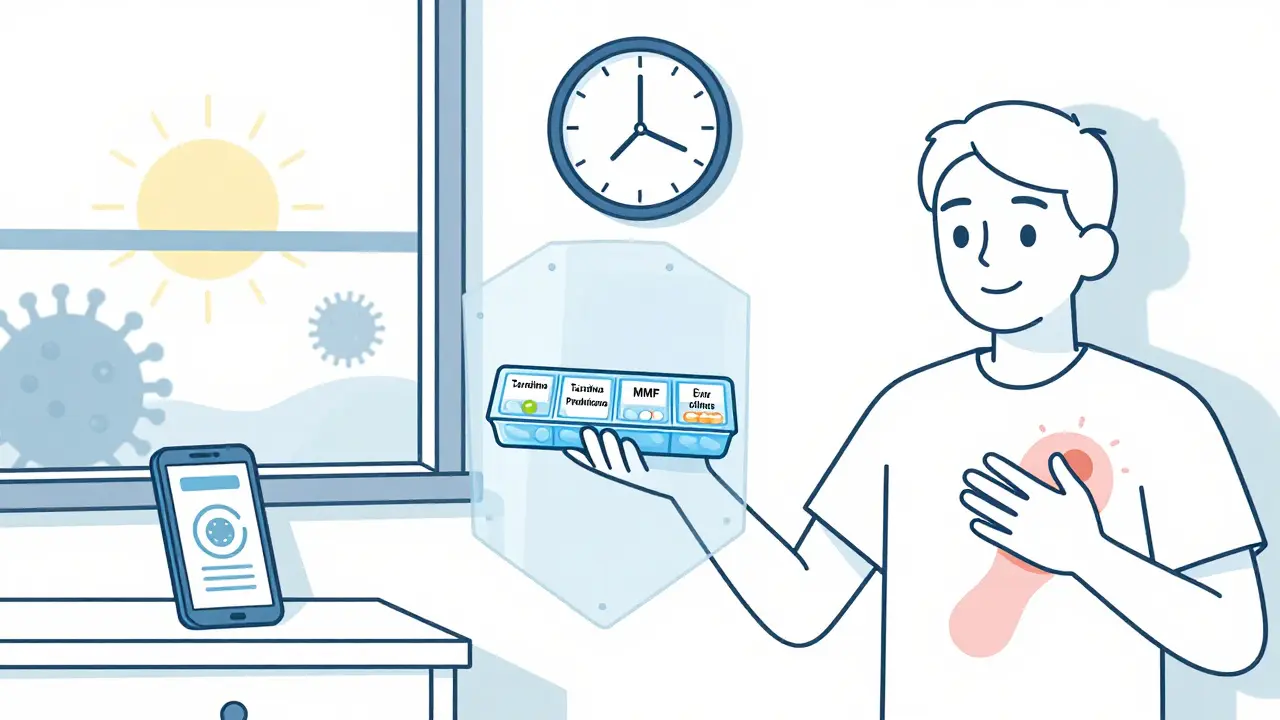
Here’s the hard truth: even the best drugs fail if you don’t take them. Studies show that 55% of kidney transplant patients miss or delay doses. For lung transplants, nonadherence ranges from 2% to over 70%. Why? Complex schedules. Cost. Forgetting. Side effects like nausea or fatigue make people want to quit.
Missing even one dose can trigger rejection. A single missed dose of tacrolimus can cause a spike in blood levels the next day - and then a crash the day after. That rollercoaster stresses the organ. Research shows nonadherence increases the risk of late rejection by 2.8 times and transplant coronary disease by 3.5 times in heart patients.
Simple fixes help. Switching to once-daily formulations. Using pill organizers. Setting phone alarms. Apps that send reminders. One study found these changes boosted adherence by 15-25%. It’s not fancy. It’s basic. But it saves lives.
Infection and Cancer: The Hidden Costs
Because these drugs dampen the immune system, everyday germs become threats. That’s why transplant patients get antibiotics, antivirals, and antifungals for the first 3-6 months after surgery. Cytomegalovirus (CMV) is the big one. If you get a kidney from a donor who had CMV and you didn’t, your risk of infection jumps to 70% without preventive meds. That’s why everyone gets antivirals like valganciclovir early on.
But it’s not just viruses. Fungal infections like candidiasis and aspergillosis can be deadly. Bacterial pneumonia is more common and more severe. That’s why handwashing, masks in crowds, and avoiding raw eggs or undercooked meat aren’t suggestions - they’re survival rules.
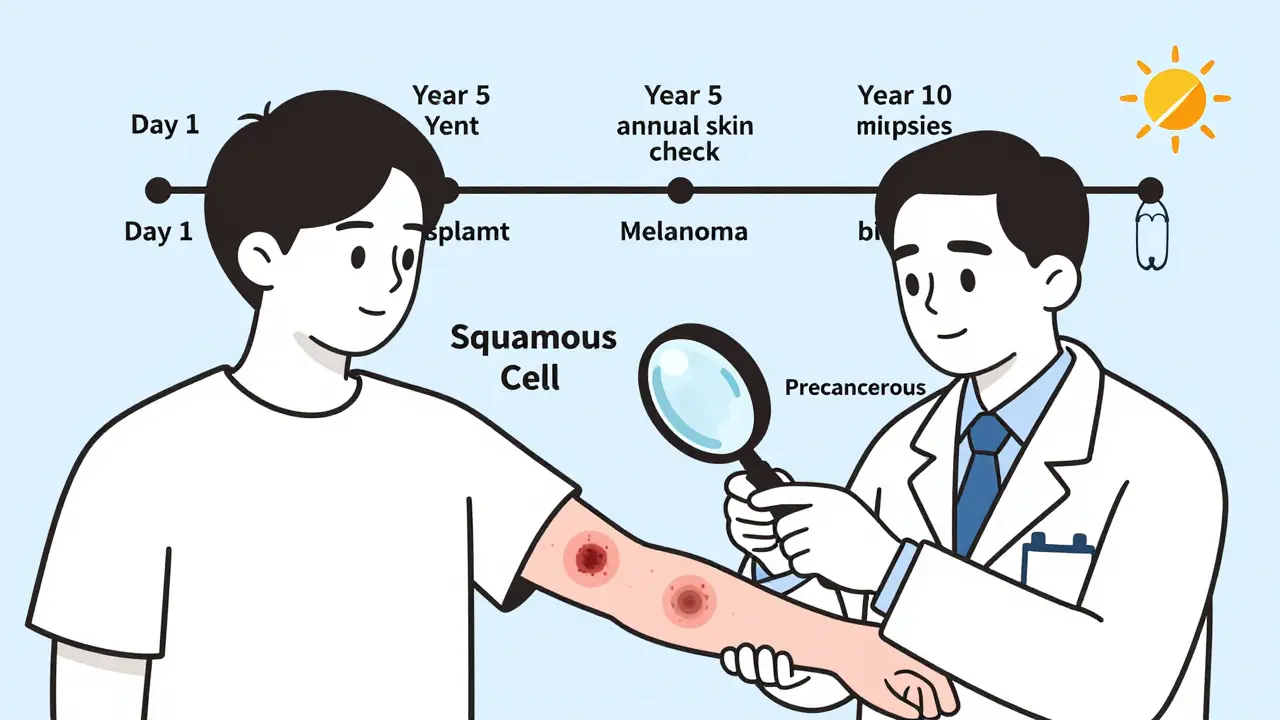
Cancer is the other silent killer. Skin cancers - especially squamous cell and melanoma - are 100 times more common in transplant patients than in the general population. Lymphoma risk goes up too. That’s why annual skin checks by a dermatologist are mandatory. Some patients get as many as 10-20 skin cancers over their lifetime. Early detection saves limbs and lives.
What Happens When You Stop
If a transplant fails - say, the kidney stops working - you might think, “I don’t need these pills anymore.” But stopping suddenly can be dangerous. Your immune system, suppressed for years, can react violently. The organ might not be functional, but your body still sees it as foreign. Abruptly stopping meds can cause inflammation, bleeding, or even shock. Symptoms like sudden swelling, pain, shortness of breath, or reduced urine output mean you need urgent care. Never stop on your own. Always talk to your transplant team.
On the flip side, some patients with stable grafts are slowly weaned off one drug - often steroids or an antiproliferative - to reduce side effects. This is done carefully, with close monitoring. No one just quits all meds. Not even after 10 years.
The Future: Smarter, Safer, Personalized
Doctors aren’t satisfied with today’s trade-offs. The next frontier is precision. Instead of giving everyone the same dose, some centers now use blood biomarkers to see how each person’s immune system responds. If a patient shows no signs of rejection over time, their calcineurin inhibitor dose might be cut by 40%. This reduces kidney damage without raising rejection risk.
Researchers are also testing drugs that teach the immune system to accept the transplant - not just suppress it. These are called tolerance-inducing therapies. Early trials look promising, especially in kidney transplants. If they work, future patients might need no lifelong meds at all.
For now, though, the rules are clear: take your pills. Get your blood tested. See your dermatologist. Watch for infections. Talk to your team. There’s no magic bullet - just careful, daily choices.
Can you ever stop taking immunosuppressants after a transplant?
For most people, no. Transplant recipients typically need lifelong immunosuppression because the immune system never fully accepts the new organ as "self." In rare cases, some patients with stable grafts may have one drug removed - like steroids - after years of no rejection. But stopping all meds is extremely risky and can cause sudden, severe rejection. Never stop without direct guidance from your transplant team.
What happens if you miss a dose of your transplant medication?
Missing even one dose can disrupt your drug levels, leading to either toxicity (if levels spike) or rejection (if levels drop too low). For drugs like tacrolimus, a single missed dose can cause dangerous fluctuations. If you miss a dose, take it as soon as you remember - unless it’s close to the next scheduled dose. Then skip it. Never double up. Always call your transplant center for advice.
Why do transplant patients get skin cancer so often?
Immunosuppressants weaken the body’s ability to detect and destroy abnormal skin cells. This allows precancerous and cancerous cells to grow unchecked. UV exposure makes it worse. Transplant patients are up to 100 times more likely to develop squamous cell skin cancer than the general population. Annual full-body skin checks with a dermatologist are critical for early detection.
Which transplant organs are most at risk for rejection?
Heart and lung transplants face the highest risk of early rejection - sometimes within days. Kidneys usually show rejection within weeks to months. Liver transplants are the most forgiving, often taking months to years before rejection becomes a concern. This affects how aggressively doctors adjust medication doses in the first year after surgery.
Are there safer alternatives to current immunosuppressants?
No completely safe alternative exists yet. But mTOR inhibitors like sirolimus and everolimus are less toxic to kidneys than calcineurin inhibitors, making them useful for patients with kidney damage. Some centers are testing reduced-dose regimens or switching to non-CNI therapies in low-risk patients. Research into tolerance-inducing drugs is ongoing, but none are widely available. The goal is to reduce side effects without increasing rejection risk.


10 Comments
Taking these pills is non-negotiable. Miss one and you're playing Russian roulette with your new organ. I've seen it happen. No excuses. Just take them.
Simple as that.
I really appreciate how detailed this is. I have a friend who got a kidney transplant last year, and I didn't realize how many moving parts there are. The part about skin cancer being 100x more common really hit me. I'm pushing her to get those annual checks now. Small things save lives.
The systemic failure of modern medicine is evident in the reliance on toxic pharmacological suppression rather than addressing root causes. The immune system does not malfunction due to organ presence but due to environmental degradation and metabolic dysregulation. Why not optimize diet and microbiome before resorting to life-long chemical imprisonment?
You people think this is about health? It's about profit. Pharma companies make billions off these drugs. They don't want you cured. They want you dependent. Look at the stats - 55% miss doses? That's because people are smart enough to see the trap. These drugs are poison. They're not saving you - they're milking you.
So basically you're saying I gotta take a bunch of pills that give me cancer, diabetes, and kidney damage just to keep a random organ alive? Sounds like a bad deal. I'd rather just die than live like this.
It is deeply concerning that the public discourse surrounding immunosuppressive regimens remains so reductive. The complexity of immune tolerance mechanisms - particularly the role of regulatory T-cell dynamics in graft acceptance - is entirely absent from this narrative. One cannot reduce life-saving pharmacotherapy to a binary of compliance versus noncompliance without profound epistemological oversight.
You're all missing the point. This isn't about drugs. It's about control. Who benefits from making transplant recipients dependent on lifelong medication? Hospitals? Pharma? The government? I've read studies - the real ones - that show some patients naturally develop tolerance. But they bury it because it breaks the profit model. Wake up. This is engineered.
Oh wow, so the solution to 'your body hates your new heart' is to poison your entire immune system for the rest of your life? Brilliant. Just brilliant. Next they'll tell us to cut off our hands so we don't get germs. At least the organ doesn't have to deal with the emotional trauma of being forced into a body that hates it.
I heard from a guy on a forum that the FDA knows these drugs cause cancer but they let it slide because they're paid off by big pharma. Also, I think the organ comes with a ghost that haunts you if you skip a dose. My cousin's transplant buddy swears he hears whispering at night. You think that's real? I mean... why else would they make you take pills every day?
You're all just making it worse. The meds aren't perfect. But they're the only thing keeping people alive. If you're gonna argue, at least do it with facts. Don't turn this into a conspiracy carnival. I lost my brother because he stopped taking his. Don't be him.