
What Is Allergic Asthma?
Allergic asthma is the most common form of asthma, affecting about 60% of people with asthma in the U.S. It happens when your immune system overreacts to harmless substances like pollen, dust mites, or pet dander. These substances - called allergens - trigger an IgE-mediated response that causes your airways to swell, tighten, and produce extra mucus. The result? Wheezing, coughing, shortness of breath, and chest tightness - especially during allergy season or after exposure to indoor triggers.
Unlike non-allergic asthma, which can be triggered by cold air, exercise, or stress, allergic asthma has clear, identifiable causes. That’s the good news: if you know your triggers, you can take real steps to control your symptoms - sometimes even reduce your reliance on inhalers.
Top Allergens That Trigger Allergic Asthma
Not all allergens are created equal. Some are seasonal, others live in your home year-round. Here are the biggest culprits based on real-world data:
- Tree pollen (February-April): Peaks in March. In temperate regions, counts can hit 10-20 grains per cubic meter. Birch, oak, and maple are the worst offenders.
- Grass pollen (May-July): The #1 trigger for kids. June is the worst month, with counts sometimes exceeding 100 grains/m³.
- Ragweed pollen (August-October): Causes the most severe flare-ups. Peak levels in September can surpass 100 grains/m³ - and thunderstorms can make it worse by breaking pollen into smaller, deeper-penetrating particles.
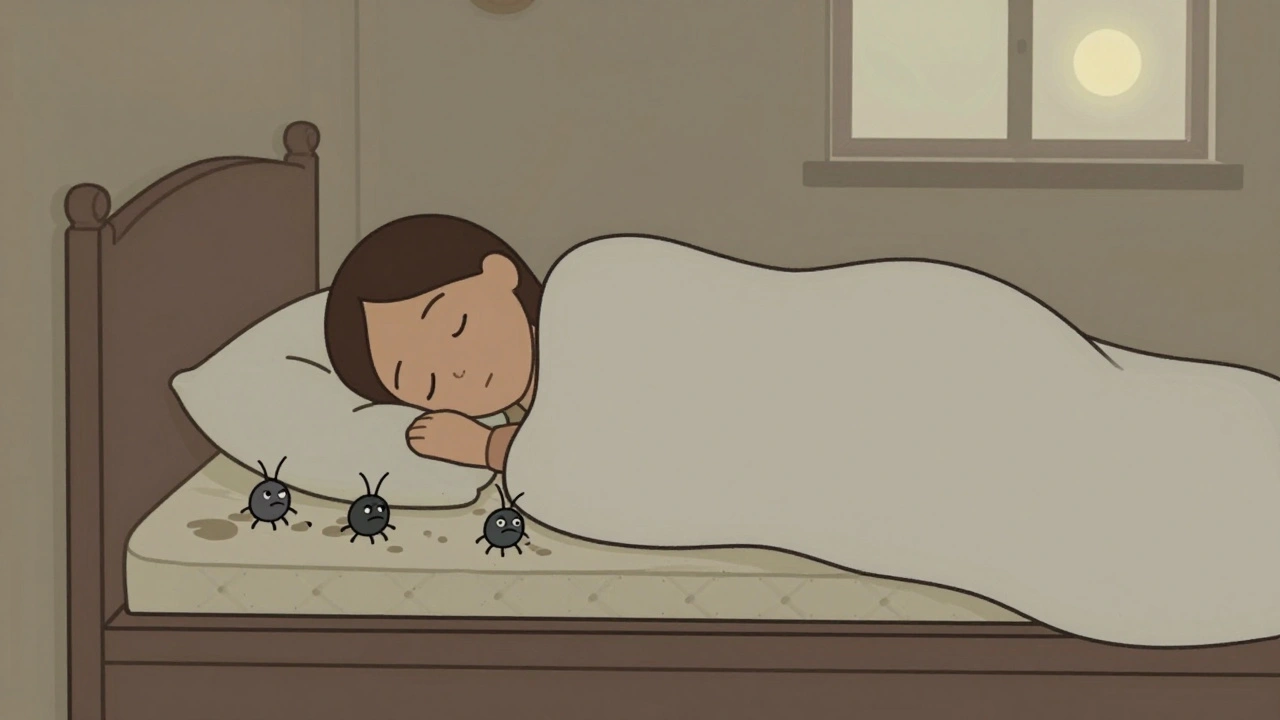
- Dust mites: These microscopic bugs live in bedding, carpets, and upholstered furniture. They thrive where humidity is above 50%. Homes with high dust mite levels contain over 2 micrograms of allergen per gram of dust - enough to sensitize 84% of people.
- Cat allergen (Fel d 1): Found in cat saliva, skin flakes, and urine. It’s sticky, airborne, and lingers for months. Even if you don’t own a cat, 79% of U.S. homes have detectable levels.
- Mold spores (Alternaria): Grows in damp areas like bathrooms, basements, and leaky windows. Spore counts above 500 per cubic meter can triple emergency visits during late summer storms.
One surprising fact: pet allergies aren’t caused by fur. It’s the proteins in saliva and skin. That’s why you can have a “hypoallergenic” dog and still react - all dogs produce Can f 1, just in different amounts.
How to Avoid Allergens - Real, Proven Strategies
Avoiding allergens isn’t about perfection. It’s about reducing exposure enough to make a measurable difference. Here’s what actually works, backed by studies:
- Use allergen-proof mattress and pillow covers: Look for covers labeled “allergen-impermeable” with a pore size under 10 microns. Brands like AllerZip Pro reduce dust mite exposure by up to 90%. Replace old bedding - even clean sheets can harbor allergens if the mattress underneath is contaminated.
- Vacuum twice a week with a HEPA filter: Regular vacuums just blow allergens back into the air. A HEPA vacuum (like Dyson V15) reduces cat allergen by 42% and dust mites by 60%. Don’t forget to clean the filter monthly.
- Keep indoor humidity at 45%: Dust mites die below 40% humidity. Use a hygrometer to monitor levels and a dehumidifier like the AprilAire 500M if needed. In humid climates like Auckland, this step alone can cut asthma attacks by nearly half.
- Wash bedding weekly in hot water (>130°F): Cold water won’t kill mites or remove allergens. Hot water removes 90% of Der p 1, the main dust mite protein.
- Keep windows closed during high pollen days: The National Allergy Bureau says pollen counts above 9.7 grains/m³ are enough to trigger symptoms. Check daily forecasts (many weather apps now label pollen levels).
- Shower and change clothes after being outside: Pollen sticks to hair, skin, and clothes. Showering reduces allergen transfer to your bed by 70%.
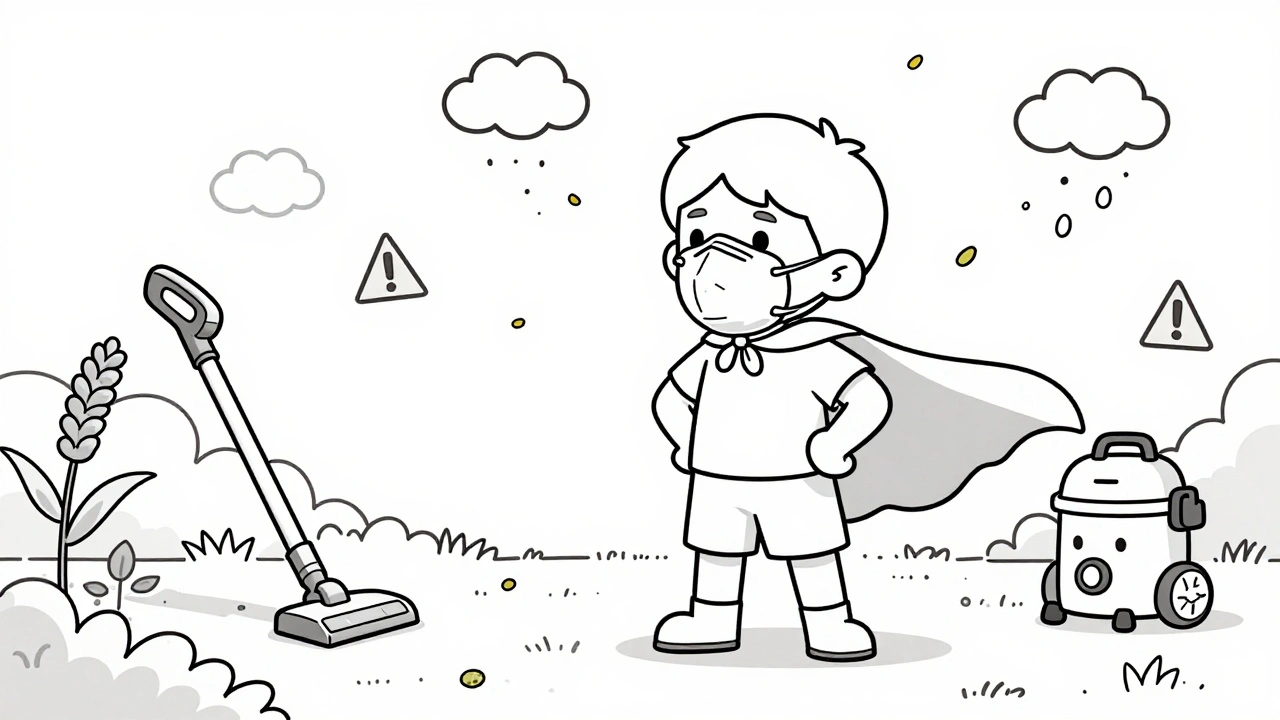
- Use an N95 mask outdoors during yard work: It blocks 95% of airborne allergens. You don’t need to avoid gardening - just protect yourself while doing it.
One real-world example: A Reddit user with severe dust mite asthma replaced bedding, bought a HEPA vacuum, and set their dehumidifier to 45%. Within six months, their peak flow improved from 380 to 470 L/min - a 24% gain.
Immunotherapy: The Only Treatment That Changes the Disease
Most asthma meds - inhalers, steroids, bronchodilators - treat symptoms. Immunotherapy is different. It’s the only treatment that can actually change how your immune system responds to allergens.
There are two types:
- Subcutaneous Immunotherapy (SCIT): Regular allergy shots. Starts with weekly injections of tiny allergen doses, building up over 4-6 months. Maintenance dose is given every 2-4 weeks for 3-5 years. Studies show 70-80% of patients see major improvement after 12-18 months. One 12-year-old with severe cat allergy reduced their IgE from 120 kU/L to 15 kU/L after three years of shots - and passed a challenge test with no reaction.
- Sublingual Immunotherapy (SLIT): Daily tablets or drops under the tongue. Common for grass and dust mite allergies. Grastek (for grass) and Odactra (for dust mites) are FDA-approved. No needles. Side effects? Mild oral itching in 78% of users during the first month - but it fades. Benefits match SCIT over time.
Why it works: Immunotherapy trains your immune system to stop seeing allergens as threats. Over time, IgE levels drop, inflammation decreases, and airways become less reactive. A 2021 Cochrane review of over 12,000 patients found immunotherapy reduces asthma symptoms by 30-50% more than medication alone.
It’s not magic. It takes patience. But for people who rely on daily inhalers, it’s life-changing. One study showed patients on immunotherapy reduced their steroid inhaler use by 40% after three years.
Who Benefits Most - And Who Might Not
Immunotherapy isn’t for everyone. Here’s who it works best for:
- Children and teens with clear allergic triggers (allergic asthma often starts early - average age 12.3 years)
- People with one or two major allergens (e.g., dust mites or grass pollen) - not 10+ sensitivities
- Those willing to stick with treatment for 3-5 years
- People whose asthma is poorly controlled despite inhalers
It’s less effective if:
- You have non-type 2 inflammation (about 30% of “allergic asthma” cases). Blood eosinophils below 300 cells/µL or FeNO under 25 ppb suggest this. Biologics and immunotherapy won’t help here.
- You’re exposed to multiple uncontrolled allergens (e.g., live in a dusty home with a cat and mold).
- You can’t commit to the schedule - missed doses reduce effectiveness.
Doctors now use biomarkers to predict response. A 2022 study found that high blood eosinophils and FeNO levels predict 83% of allergic asthma flare-ups. If your numbers are low, immunotherapy may not be worth the time or cost.

Cost, Coverage, and New Advances
Immunotherapy isn’t cheap, but it’s often covered.
- In the U.S., Medicare covers 80% of SCIT costs. You pay about $18.90 per shot in 2024.
- SLIT tablets cost $300-$500/month out-of-pocket, but insurance often covers them too.
- Europe has higher uptake (28% of patients) because universal healthcare makes it more accessible.
New tech is making it faster and smarter:
- CAT-PAD: A new cat dander immunotherapy that cuts the build-up phase from 6 months to just 8 weeks.
- Pollen-VLP vaccine: In trials, it cuts symptoms by 60% with only 4 doses per year.
- Allergen Insight sensor: A nasal device that detects airborne allergens as low as 0.1 µg/m³ and alerts your phone.
- AsthmaIQ AI platform: Uses your symptoms, weather, and pollen data to predict flare-ups with 92% accuracy.
By 2030, experts predict molecular diagnostics will reduce unnecessary immunotherapy by 30%. We’re moving toward personalized treatment - not one-size-fits-all.
What to Do Next
If you have allergic asthma:
- Get tested. Skin prick or blood tests can confirm which allergens trigger you.
- Track your symptoms. Use a journal or app to note when flare-ups happen - and what you were exposed to.
- Start with allergen avoidance. It’s free, safe, and works. Try the humidity control and HEPA vacuum steps first.
- Talk to an allergist about immunotherapy if your asthma isn’t under control. Don’t wait until you’re in the ER.
- Ask about biomarkers. Request blood eosinophil and FeNO tests - they’ll tell you if you’re a good candidate for biologics or immunotherapy.
Allergic asthma doesn’t have to control your life. You don’t have to just live with it. With the right triggers identified and the right steps taken, many people go from struggling to breathing easy - without daily inhalers.
Frequently Asked Questions
Can you outgrow allergic asthma?
Some children do outgrow allergic asthma, especially if their triggers are controlled early. But for many, it persists into adulthood. The key is not waiting to see if it goes away - managing it early with allergen avoidance and immunotherapy can prevent long-term airway damage and reduce the chance of it becoming chronic.
Is immunotherapy safe for kids?
Yes. Both subcutaneous and sublingual immunotherapy are approved for children as young as 5. SLIT is often preferred for kids because it’s needle-free and can be done at home. Studies show it reduces asthma attacks, improves school attendance, and decreases the need for rescue inhalers in children with dust mite or grass allergies.
Can I do allergen avoidance without spending a lot of money?
Absolutely. You don’t need expensive gadgets. Wash bedding weekly in hot water. Use a damp cloth to dust surfaces (dry dusting spreads allergens). Keep windows closed during high pollen days. Remove carpeting if possible - hard floors are easier to clean. A simple hygrometer costs under $20 and can guide humidity control. Small, consistent changes make a big difference.
Why do some people with allergies not have asthma?
Not everyone with allergies develops asthma. It depends on genetics, early-life exposures, and how the immune system responds. Some people’s immune systems react with sneezing and itchy eyes (allergic rhinitis), while others’ airways become inflamed and constricted (asthma). The same allergen can cause different symptoms in different people. Having one allergic condition increases your risk of developing another - but it’s not guaranteed.
Can pets be kept if someone has allergic asthma?
It’s possible, but hard. If you’re allergic to cats or dogs, keeping them indoors significantly increases exposure. The best option is to keep pets out of the bedroom and bathe them weekly. Use a HEPA air purifier in the main living areas. Still, many people find their symptoms improve dramatically after rehoming the pet. If you’re unwilling to give up your pet, immunotherapy may be the only way to safely keep them.
How long does it take for immunotherapy to work?
Most people start seeing improvement after 6-12 months. Full benefits usually take 12-18 months. It’s not a quick fix. But after 3-5 years of treatment, many patients experience long-term relief - even after stopping therapy. Some stay symptom-free for years. The goal isn’t just to feel better now - it’s to change how your body reacts forever.
15 Comments
I started using allergen-proof covers last winter and my peak flow jumped 30% in two months. No more midnight coughing fits. Also, washing sheets in hot water is a game-changer. I used to think it was overkill until my doctor showed me the mite counts under the microscope. 🙌
You people act like this is some kind of miracle cure. In my town, they’re forcing kids into immunotherapy just to cut Medicaid costs. No one tells you how long it takes or how many shots you need. It’s not freedom-it’s corporate medicine.
I mean… is it really about allergens? Or is it just that our immune systems are so starved of real pathogens that they latch onto dust mites like they’re the last slice of pizza at a party? We’ve sanitized ourselves into a state of chronic misfiring. The body doesn’t know what to do with peace. It needs chaos. Or at least… something to fight.
In India, we don’t have HEPA vacuums everywhere, but we do have neem leaves under the mattress and turmeric in the milk. My cousin’s asthma improved after switching to cotton sheets and avoiding AC for 2 weeks. Simple things matter. Not everything needs a $400 gadget.
I’ve been on SLIT for 14 months. Started with oral itching like crazy-felt like my tongue was holding a lemon. Now? I can walk through a field of ragweed and not wheeze. My doctor says I’m a textbook success story. Still takes patience. But it works. 🤝
i mean… pollen counts are just a suggestion right? i live in the uk and i’ve had asthma since i was 7 and i still go running in may. if you’re not outside you’re not living. also why are we so scared of dirt? my grandad never had a vacuum and he lived to 94
OMG YES. I did the humidity thing and it changed my life. I thought I needed a new inhaler, turns out I needed a dehumidifier. And yes, I cried when I saw my peak flow go up. You’re not broken-you’re just breathing in the wrong air. 💪
The data presented here is statistically significant but lacks longitudinal follow-up beyond five years. Moreover, the reliance on self-reported symptom logs introduces significant recall bias. One must also consider the placebo effect in immunotherapy trials, which have been shown to skew outcomes by up to 22% in double-blind studies.
In my village, we don’t have allergen covers. But we air out bedding every morning and keep the house clean. My daughter’s asthma improved after we stopped using fabric softener. Sometimes, the simplest things are the most powerful. Don’t overcomplicate it.
Why do people think this works? My neighbor did all this and still ended up in the hospital. You’re just wasting money on fancy vacuums and pills. The real problem is air pollution and big pharma pushing treatments to keep you hooked
Immunotherapy isn’t a magic bullet, but it’s the closest thing we have to a cure. It doesn’t just mask symptoms-it rewires your biology. That’s profound. Most people don’t realize that asthma isn’t just a lung issue-it’s an immune system identity crisis. You’re not allergic to pollen. You’re allergic to your own misfiring defense system. Fix that, and you fix everything.
I’ve been researching this for years, and what strikes me is how little we talk about the psychological component. People with allergic asthma often develop a hypervigilant relationship with their environment-constantly scanning for triggers, avoiding parks, fearing pets. That anxiety itself can worsen symptoms. So while allergen avoidance is crucial, so is learning to unlearn fear. It’s not just about cleaning your home-it’s about reclaiming your sense of safety.
I didn’t believe in SLIT until my kid started it. First month? She spit out the drops like they were poison. Second month? She asked for them. Third month? She forgot she had asthma. Now she plays soccer without her inhaler. And yes, I cried. Again. Not because it was easy-but because it was worth it. Thank you for writing this. Someone finally got it right.
You know what they’re not telling you? Allergen testing is a scam. The labs are owned by the same companies that sell the immunotherapy. They’re creating demand where none existed. And those sensors? They’re just glorified air quality monitors. The real goal is to make you dependent on tech and pills. Wake up. They’re monetizing your fear.
I just tried the damp cloth trick instead of vacuuming and my sneezing stopped. No fancy gear. Just water and a towel. I’m not rich but I’m breathing better. Thank you for reminding me that simple works.