
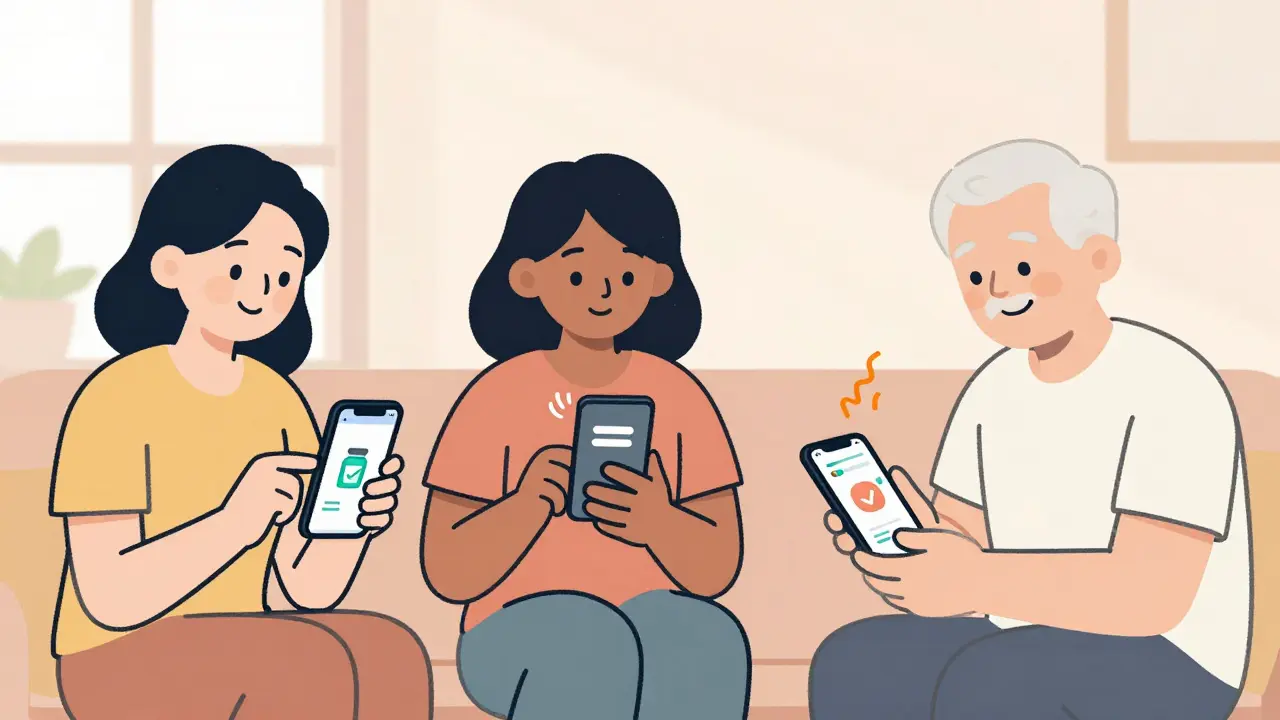
Did you know that nearly half of all people taking medication for chronic conditions like high blood pressure, diabetes, or cholesterol don’t take it as prescribed? It’s not because they don’t care. It’s because life gets busy. Pills get forgotten. Schedules change. And without a clear system, even the best intentions fall apart. That’s where medication reminder apps come in - simple, smart tools that help people stay on track, day after day.
These aren’t just fancy alarms. Modern medication reminder apps combine notifications, tracking, education, and even AI to help users actually stick to their regimen. And the data backs it up. A 2025 review of 14 clinical studies found that users of these apps were twice as likely to take their meds correctly compared to those using no digital tools. For someone managing heart disease or diabetes, that’s not just convenience - it’s life-changing.
How These Apps Actually Work
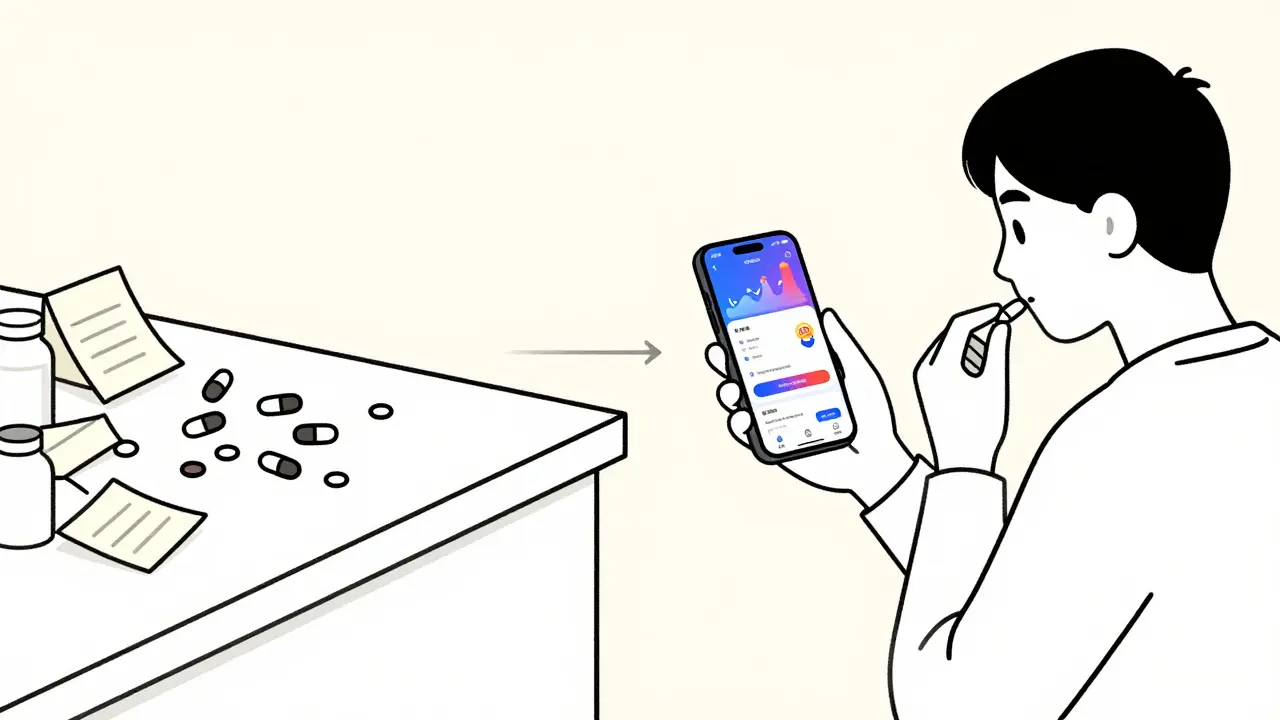
At their core, medication reminder apps do three things: remind you, track you, and inform you. You add your pills - name, dose, time, frequency - and the app sets up custom alerts. Some beep. Some vibrate. Others send push notifications with visuals showing your pill bottle. You mark each dose as taken, and the app logs it. No more scribbled lists on sticky notes.
But the best ones go further. Apps like Medisafe and a medication management app that syncs across iOS and Android devices, offers personalized reminders, medication interaction checks, and a visual history of adherence over weeks or months let you see patterns. Did you miss your evening dose every Friday? The app flags it. Did you take your morning pill 90% of the time last month? It shows you that progress. This feedback loop builds confidence.
Many apps now connect to your pharmacy or electronic health record through FHIR APIs. That means your doctor or pharmacist can see your adherence data - not to judge, but to adjust your plan. If you’re consistently missing doses, they might switch you to a once-daily pill or simplify your regimen. It turns a personal struggle into a collaborative fix.
Why Some Apps Work Better Than Others
Not all reminder apps are created equal. A 2025 study in JMIR found that apps designed for a specific condition - like hypertension or heart disease - performed significantly better than generic ones. Why? Because they speak your language. A hypertension app doesn’t just remind you to take your pill. It explains why high blood pressure is dangerous, how your meds lower it, and what happens if you skip doses. That context changes behavior.
Apps that let you customize are also more effective. Can you set a reminder for 7:30 AM instead of 7:00? Can you choose a different sound or vibration pattern for each pill? Can you add notes like “take with breakfast” or “avoid grapefruit”? Personalization matters. A 2023 NIH study showed patients who could tailor their app experience were 43% more likely to improve adherence than those using a one-size-fits-all tool.
Then there’s gamification. The Smart-Meds and a pilot app using narrative storytelling and reward systems to boost self-efficacy in cardiac patients app, for example, turns taking meds into a story. You’re a hero saving your own health. Each dose completed unlocks a new chapter. It sounds silly - until you realize that motivation isn’t just about logic. It’s about emotion, identity, and small wins.
On the flip side, apps that don’t update, lack help resources, or crash frequently fail fast. One analysis found that 7 out of 14 apps studied were no longer maintained by the time the research was published. If an app hasn’t been updated in over a year, it’s probably not worth your time.
Who Benefits the Most - And Who Struggles
The data shows clear patterns. Adults under 50 are the most likely to use these apps - 68% do. But the real need is among older adults. Nearly 30% of people over 65 still don’t take their meds correctly. That’s where apps could make the biggest difference.
Here’s the catch: many seniors don’t use smartphones regularly. Or they find the interface confusing. A 2024 study found that 47% of older users needed help setting up their first app. But here’s the surprising part: once they got past the initial setup, 87% could use the app independently after a single 15-minute training session. The barrier isn’t age - it’s access and instruction.
Low-income and medically underserved populations also benefit greatly. A 2023 NIH trial in federally qualified health centers showed a 43% adherence boost among users, even though many had limited tech experience. The key? Hands-on support. Community health workers helped set up the apps. They didn’t assume users knew how to tap a button. They showed them. And the users stayed engaged - with very low dropout rates.
But there’s a digital divide. If you don’t have a smartphone, reliable Wi-Fi, or enough battery life, these tools won’t help. Dr. Michael Johnson from the American Pharmacists Association puts it plainly: “The people who need these apps most are often the ones least able to use them.”
Top Apps in 2026 - What’s Actually Working
Out of over 1,200 medication apps available, just five dominate usage - and for good reason.
- Medisafe and a widely used app with AI-driven adherence predictions, customizable reminders, and integration with major EHR systems: Offers a clean interface, medication interaction alerts, and a “medication journal” to track how you feel. Used by over 10 million people globally. Rated 4.7/5 on iOS.
- MyTherapy and an app with mood tracking, symptom logging, and visual progress reports for chronic conditions: Great for people who want to connect how they feel with their medication. Syncs with Apple Health and Google Fit. Rated 4.6/5 on Android.
- Round Health and a pharmacy-integrated tool that lets users refill prescriptions, track refills, and get alerts when meds are due: Works directly with pharmacies. If your pharmacy uses it, refills auto-schedule. Ideal for people who forget to call in prescriptions.
- CareZone and a family-focused app that lets caregivers manage multiple people’s meds from one account: Perfect for adult children managing a parent’s regimen. Includes emergency contact alerts and pill photos.
- Mango Health and a gamified app offering rewards, points, and gift cards for consistent adherence: Turns taking meds into a game. Users earn points redeemable for gift cards. Effective for younger users and those motivated by incentives.
These five apps account for 63% of all downloads. They’re updated regularly, have solid help sections, and integrate with health systems. Avoid apps with no reviews, no updates in over a year, or no way to contact support.
What You Need to Know Before You Start
Setting up an app takes time. On average, users spend 22 minutes on initial setup. But once done, it becomes second nature. Most people master the basics in 3-5 uses. Advanced features - like checking for drug interactions or syncing with your doctor - take a little longer.
Here’s what to check before downloading:
- Does it work on your phone? (iOS 13+ or Android 8+)
- Can you customize reminder times and sounds?
- Does it allow you to log side effects or how you’re feeling?
- Is there a way to share data with your pharmacist or doctor?
- Is the app still being updated? Check the last update date in your app store.
Also, watch out for battery drain. Some users report apps killing their phone’s battery - especially if notifications are too frequent. Try turning off background refresh if it’s too much. And never rely on the app alone. Keep a backup pill organizer. Digital tools help - they don’t replace common sense.

The Bigger Picture: Why This Matters
Medication non-adherence isn’t just a personal problem. It’s a $300 billion problem in the U.S. alone. Missed doses lead to hospitalizations, emergency visits, and complications that could have been avoided. A 2020 meta-analysis found that medication reminder apps were more effective than counseling, education, or even motivational interviews.
And the market is growing fast. The global medication adherence tech sector is expected to hit $7.3 billion by 2029. Health systems are starting to pay for these tools - not just as nice-to-haves, but as part of care plans. Some insurers now offer free app subscriptions or rewards for consistent use.
What’s next? AI that predicts when you’re likely to miss a dose. Smart pill bottles that text your caregiver if you skip a pill. Integration with wearables that track your heart rate or blood sugar and adjust reminders based on your body’s signals. By 2027, experts predict one in three apps will connect to physical devices.
But the real win isn’t the tech. It’s the peace of mind. Knowing you’re doing everything you can. Seeing your progress. Feeling in control. That’s what keeps people coming back - not the bells and whistles.
Do medication reminder apps really work?
Yes - when used consistently. A 2025 review of 14 clinical studies found that users of these apps were twice as likely to take their medications as prescribed compared to those without digital tools. Apps with personalized reminders and condition-specific content showed the strongest results. Effectiveness varies, but overall, they outperform traditional methods like paper pill organizers or phone alarms.
Are these apps safe and private?
Most reputable apps follow HIPAA and use AES-256 encryption for data at rest and TLS 1.2+ for data in transit. Apps like Medisafe and MyTherapy are designed to protect health data. Always check the app’s privacy policy. Avoid apps that ask for unnecessary permissions like location or contacts. If an app doesn’t mention security, it’s not worth using.
Can older adults use these apps?
Absolutely - but they often need help getting started. A 2023 NIH study found that 87% of older adults could use the app independently after just one 15-minute training session. The challenge isn’t age - it’s access to support. Community health workers, family members, or pharmacists can guide setup. Once past the learning curve, older users often become the most consistent users.
Do I still need a pill organizer if I use an app?
Yes - as a backup. Apps can fail. Phones die. Notifications get silenced. A physical pill organizer gives you a visual, tactile cue that you can’t ignore. Use the app for reminders and tracking, but keep your pillbox for safety. Think of the app as your digital assistant - not your only safety net.
Can my doctor see what I’m taking?
Only if you share it. Most apps let you export your adherence data as a PDF or share it directly with your provider through secure portals. Some, like Medisafe, integrate directly with electronic health records via FHIR APIs. But you control who sees your data. Never share access unless you trust the recipient.
Are these apps free?
Most basic versions are free. Premium features - like advanced analytics, family sharing, or pharmacy integration - often require a subscription. Some health plans or insurers now cover app access at no cost. Check with your pharmacy or provider. You might already have access.
What if the app doesn’t remind me?
Check your phone’s notification settings. Many apps get blocked by battery-saving modes or do-not-disturb settings. Turn on “allow background activity” and disable “optimize battery usage” for the app. If notifications still fail, try switching to a different app. Reliability matters more than features.
Next Steps: What to Do Today
Start simple. Pick one app - Medisafe or MyTherapy are good choices. Download it. Add your three most important pills. Set reminders for the next morning. Try it for a week. Don’t aim for perfection. Aim for consistency. If it helps, keep it. If it doesn’t, try another. There’s no single right answer - only the one that works for you.
And if you’re helping someone else - a parent, a partner, a friend - offer to help set it up. Sit with them. Walk through it. Make it personal. That’s how real change happens.


14 Comments
I’ve been using Medisafe for my hypertension meds and it’s a game-changer. The AI predictions? 🔥 It flagged that I was missing my evening dose every Friday-turns out I was just too tired after work. Now I set it for 8 PM and it’s 100% adherence. Also, the visual journal? I feel like a health superhero. 🏆💊
It’s fascinating how these apps rely on behavioral economics frameworks, yet fail to account for structural determinants of non-adherence. The 2025 JMIR study you cited? It’s a classic case of technocratic optimism-ignoring that 47% of seniors lack digital literacy due to systemic underinvestment in public health infrastructure. The real solution isn’t an app. It’s universal healthcare access.
I’ve helped my mom set up MyTherapy. She was skeptical at first-said ‘I don’t need a phone to tell me when to take my pills.’ But after one 15-minute session? She’s been consistent for 6 months. The mood tracking feature actually helped her notice her anxiety spiked when she missed her beta-blocker. It’s not magic. It’s just good design.
Honestly, these apps are just glorified alarm clocks with a side of corporate wellness propaganda. The gamification? ‘Earn points for taking your lisinopril’? This is what happens when tech bros monetize chronic illness. Meanwhile, real healthcare systems are underfunded. Fix the system, not the symptom.
I’m a nurse. I’ve seen patients who forget meds because they’re choosing between food and refills. Apps help-but only if someone helps them set it up. One guy I worked with? I sat with him for 20 minutes. Showed him how to tap ‘take pill.’ Now he’s got 92% adherence. Tech doesn’t fix poverty. But human presence? That does.
I tried Round Health because my pharmacy uses it. The auto-refill thing saved me so much stress. I used to forget to call in refills and end up without my insulin for 3 days. Now it just happens. Also, the app sends me little ‘you got this’ messages. Not cheesy. Actually comforting. 🤍
I use CareZone for my dad. He’s 78. I set it up once. Now I get alerts if he misses a dose. He says it makes him feel less like a burden. The pill photos? Genius. He calls them ‘little medicine friends.’
I used Mango Health for 3 weeks. Got 3 gift cards. Then I stopped. Why? Because I realized I was taking my meds for the rewards, not because I cared about my health. And then I felt guilty. Like I was gaming the system. But the system was gaming me. I quit. Now I use a paper calendar. Simple. Real. No dopamine traps.
Mango Health is a scam.
I’m from Indonesia. We don’t have these apps here. But I’ve seen elderly relatives use basic phone alarms. It works. Not because of AI. Because someone reminded them. Tech helps. But human connection? That’s the real medicine.
The reliance on FHIR APIs presupposes a robust EHR infrastructure, which is non-existent in low-resource settings. The paper-based systems in rural India still outperform these apps in adherence metrics. This is a Western-centric solution to a global problem.
I’ve been using MyTherapy for diabetes and the symptom log changed everything. I noticed my blood sugar spiked every time I ate rice without my metformin. Now I just skip the rice. No app told me that. I did. And the app helped me see the pattern. 🌾🩸
i tried medisafe but my phone kept killing the notifications bc of battery saver. i turned it off and now my phone dies in 3 hours. so i just use my old pill organizer. it’s dumb but it works. also i like the smell of plastic pill containers. weird? maybe. but it’s my thing.
I’m from Ireland and we’ve got a national program where pharmacists help set up apps for seniors. One guy, 82, said he now feels ‘like a proper grown-up’ because he’s not forgetting. He even showed me his weekly report. It looked like a science project. But he was proud. That’s the win. Not the tech. The dignity.