
Medication Constipation Risk Calculator
Identify Your Constipation Risk
Select your primary medications to assess your risk of medication-induced constipation (MIC).
Your Constipation Risk Assessment
Medication:
Risk Level:
Recommended Management
Why This Matters
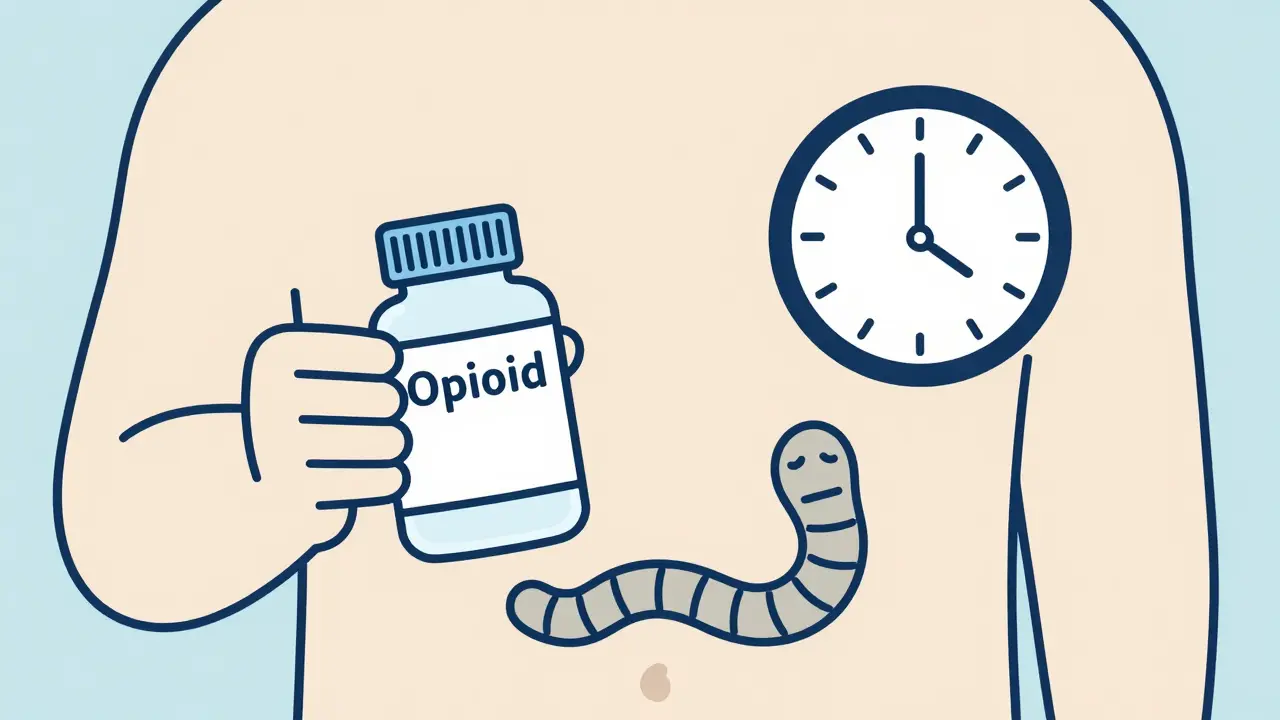
Many people don’t realize that the very drugs meant to help them can also make them feel worse in unexpected ways. One of the most common, yet often ignored, side effects is constipation caused by medications. It’s not just an inconvenience-it can be painful, embarrassing, and even lead people to stop taking essential medicines like painkillers or antidepressants. If you’re on opioids, antihistamines, calcium channel blockers, or iron supplements, you’re at high risk. But here’s the good news: this isn’t something you have to live with. There are proven, science-backed ways to manage it-without giving up your treatment.
Why Your Medication Is Slowing You Down
Not all constipation is the same. When it’s caused by drugs, it’s called medication-induced constipation (MIC). Unlike regular constipation, which might be from eating too little fiber or not drinking enough water, MIC happens because the drug directly interferes with how your gut moves and absorbs fluids. Opioids like oxycodone or morphine are the biggest culprits. They bind to receptors in your intestines, basically putting your gut to sleep. This slows down the natural wave-like contractions (called peristalsis) that push stool along. At the same time, your gut absorbs more water from the stool, turning it hard and dry. Studies show 40-60% of people on long-term opioids develop this problem. For some, it’s so bad they stop taking their pain medication altogether. Anticholinergic drugs-like diphenhydramine (Benadryl), some antidepressants, and antipsychotics like clozapine-block a chemical called acetylcholine that tells your gut to move. This cuts gut motility by 30-40%. Calcium channel blockers such as verapamil relax the smooth muscles in your intestines, slowing transit by 20-25%. Diuretics like furosemide make you lose fluids, leading to dehydration and dry stools. Iron pills? They cause inflammation in the gut lining and disrupt your microbiome, slowing things down by 25-30%. And here’s the kicker: these drugs don’t just affect your bowels. They can also tighten the anal sphincter and dull the reflex that tells you it’s time to go. So even if stool reaches the rectum, your body might not signal you to push.What Doesn’t Work (And Why)
A lot of people try the same fix they’d use for occasional constipation: fiber. But for MIC, that often backfires. Bulk-forming laxatives like psyllium (Metamucil) add volume to stool-but if your gut isn’t moving, that extra bulk just sits there. In fact, 20-30% of opioid users say fiber makes their constipation worse. It can cause bloating, cramping, and even bowel obstruction in severe cases. Over-the-counter stimulant laxatives like senna or bisacodyl are better, but they’re not a magic fix. If you wait until you’re already backed up to start them, you’re playing catch-up. And using them long-term can lead to electrolyte imbalances, dependency, or even nerve damage in the colon. The biggest mistake? Waiting. Many patients don’t get any advice about constipation when they start a new medication. One study found 65-75% of people on opioids were never told to prevent constipation upfront. By the time they feel the effects, it’s already advanced-and harder to treat.What Actually Works: Evidence-Based Solutions
The key to managing MIC is matching the treatment to the drug’s mechanism. One-size-fits-all doesn’t work here. For opioid-induced constipation, the gold standard is a class of drugs called PAMORAs-peripheral μ-opioid receptor antagonists. These include methylnaltrexone (Relistor), naloxegol (Movantik), and naldemedine (Symproic). Unlike regular laxatives, they block the opioid effect in the gut without touching the pain relief in the brain. In clinical trials, Relistor increased spontaneous bowel movements by 30-40% within just 4 hours. That’s faster than most people can get to the bathroom. If PAMORAs aren’t available or too expensive (they can cost over $1,200 a month without insurance), the next best options are osmotic laxatives like polyethylene glycol (PEG 3350, or Miralax) and stimulant laxatives like sennosides. PEG draws water into the colon to soften stool, while sennosides gently stimulate contractions. Used together, they’re effective in 60-70% of cases. BC Cancer guidelines recommend starting with 17-34mg of sennosides daily and 17g of PEG when beginning opioid therapy. For anticholinergic drugs, the best fix is often switching. Diphenhydramine causes constipation in 15-20% of users, while loratadine (Claritin) does so in only 2-3%. If you’re taking Benadryl for sleep or allergies, ask your doctor about alternatives. For calcium channel blockers, amlodipine is less likely to cause constipation than verapamil.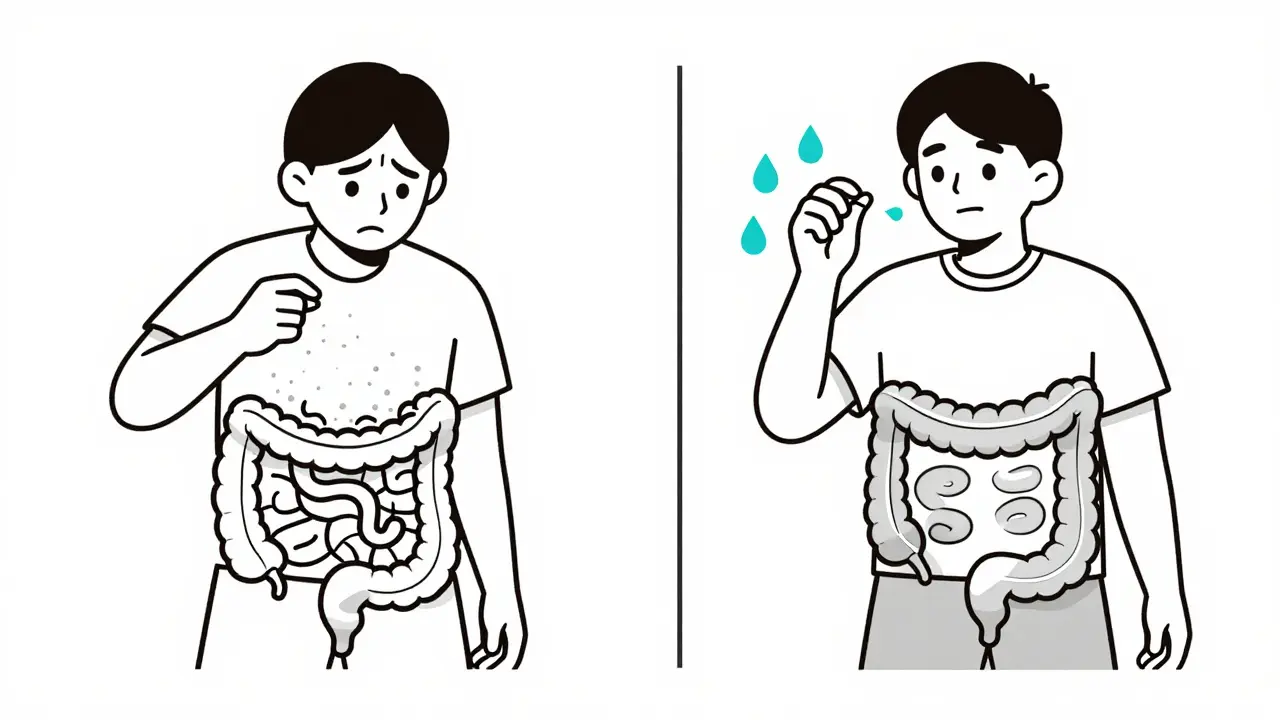
What You Can Do Right Now
You don’t need to wait for a prescription to start feeling better. Here’s what to do immediately:- Start laxatives the same day you start the medication. Don’t wait for symptoms. Prophylaxis works better than treatment.
- Drink 2-3 liters of water daily. Fluids are critical, especially with diuretics or iron supplements.
- Move your body. Even a 15-minute walk after meals helps trigger peristalsis.
- Avoid fiber supplements unless advised. If you eat fiber naturally (fruits, vegetables, oats), that’s fine. But don’t add psyllium or bran unless your doctor says so.
- Track your bowel movements. Keep a simple log: date, time, stool consistency (use the Bristol Stool Scale), and whether you felt complete relief.
When to See a Doctor
If you’ve been taking laxatives for more than a week with no improvement, or if you’re experiencing severe bloating, vomiting, or abdominal pain, see your doctor. These could be signs of a bowel obstruction-a rare but serious complication. Also, if you’re on long-term opioids or antipsychotics and haven’t been offered a constipation plan, speak up. You have the right to manage side effects. Many providers still don’t know the latest guidelines. A 2022 audit found only 35-40% of primary care doctors follow evidence-based protocols for MIC. Specialty clinics-like pain management or oncology centers-do better, with adherence rates of 75-85%. If you’re in one of these settings, ask: “What’s my constipation prevention plan?” If they say, “Just eat more fiber,” push back.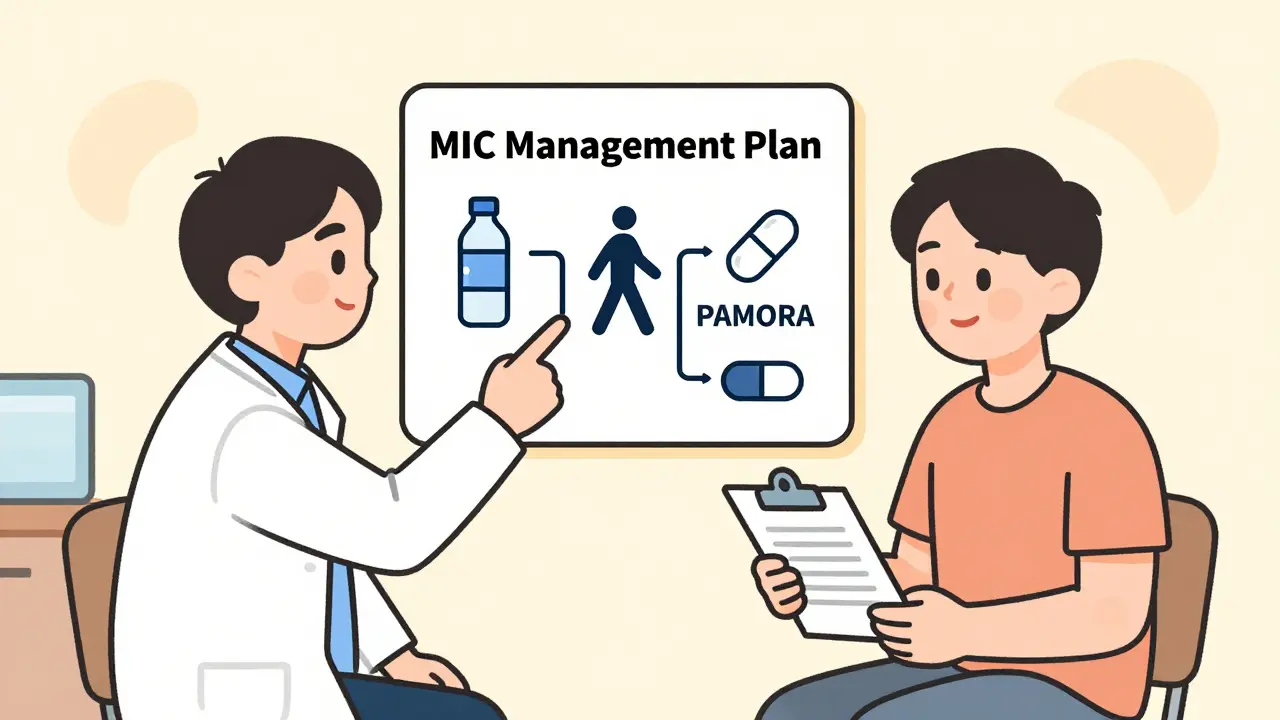
The Bigger Picture
Medication-induced constipation is no longer just a side note. It’s a recognized clinical problem with its own treatment guidelines. The PAMORA market is growing fast-projected to hit $2.1 billion by 2027. The FDA now requires opioid labels to include constipation warnings. Kaiser Permanente cut emergency visits for MIC by 22% by automating alerts in their electronic records. But progress is slow. Only 45% of medical residents can correctly name the first-line treatment for opioid constipation. Patients are still suffering in silence because they think it’s normal. It’s not. You’re not weak. You’re not failing. You’re just on a drug that affects your gut-and there’s a better way.Real Stories, Real Relief
On patient forums, the stories are powerful. One woman on Reddit’s r/ChronicPain said she quit opioids for six months because of constipation-until her pain specialist prescribed Relistor. “I had my first normal bowel movement in over a year,” she wrote. “I didn’t know I could feel like that again.” In cancer care, patients on clozapine often need daily laxatives. But a BC Cancer survey found that 72% of those using sennosides plus PEG reported complete prevention of constipation. They stayed on their meds. They kept their mental health stable. And they didn’t suffer needlessly. These aren’t outliers. They’re the result of knowing what works.Final Thoughts
Constipation from medication isn’t something you have to accept. It’s not a sign you’re doing something wrong. It’s a predictable, treatable side effect-and you deserve to feel better while staying on your treatment. Start by identifying your medication. Is it an opioid? An anticholinergic? A calcium channel blocker? Then match your solution to the cause. Don’t rely on fiber. Don’t wait until you’re stuck. Talk to your doctor about PAMORAs, PEG, or sennosides. Ask for a prevention plan-not just a reaction. Your gut matters. Your health matters. And you don’t have to choose between pain relief and comfort. With the right approach, you can have both.Can fiber help with constipation caused by medications?
Generally, no-and it can make things worse. Bulk-forming fibers like psyllium add volume to stool, but if your gut isn’t moving due to medication, that extra bulk can cause bloating, cramping, or even blockages. Studies show 20-30% of opioid users report increased symptoms after taking fiber supplements. Natural fiber from fruits and vegetables is usually fine, but avoid added powders or bran unless your doctor recommends it.
How long does it take for laxatives to work with medication-induced constipation?
It depends on the type. Osmotic laxatives like PEG (Miralax) usually take 1-3 days. Stimulant laxatives like sennosides can work in 6-12 hours. But for opioid-induced constipation, the fastest relief comes from PAMORAs like Relistor, which can trigger a bowel movement in as little as 4 hours. Waiting for traditional laxatives to work is common-but not always effective.
Are there any natural remedies that work for medication-induced constipation?
Hydration and movement are the only natural approaches with strong evidence. Drink 2-3 liters of water daily and take a 10-15 minute walk after meals to stimulate gut contractions. Probiotics may help slightly, especially if you’re on antibiotics or iron, but they’re not a primary treatment. Avoid herbal laxatives like senna or cascara without medical advice-they can cause dependency or electrolyte loss.
Why don’t doctors always talk about constipation when prescribing opioids?
It’s a gap in education and practice. Many providers still think constipation is a normal, unavoidable side effect. But guidelines from the American Gastroenterological Association and BC Cancer have recommended proactive laxative prescribing since 2014. A 2022 study found 65-75% of patients on opioids received no constipation advice at all. You have the right to ask: “What’s my plan to prevent this?”
Is Relistor covered by insurance?
It often is, but not always. Relistor (methylnaltrexone) is expensive-around $1,200 per month without insurance. Many insurers require you to try and fail on PEG and sennosides first. Medicare Part D and some private plans cover it for opioid-induced constipation, especially in cancer or chronic pain patients. Always ask your pharmacy to check prior authorization requirements.
Can I take laxatives long-term for medication-induced constipation?
Yes, if they’re the right kind. Osmotic laxatives like PEG are safe for long-term use and don’t cause dependency. Stimulant laxatives like sennosides can be used daily for months under medical supervision. But avoid daily use of stimulants if possible-they can lead to nerve damage over time. PAMORAs are designed for ongoing use and are often the best long-term solution for opioid users.
What should I do if my constipation gets worse even with treatment?
If you’re on a proper laxative regimen and still have no bowel movement for 3-4 days, or if you develop nausea, vomiting, bloating, or sharp pain, contact your doctor immediately. These could be signs of a bowel obstruction, which is rare but serious. Don’t wait. Bring your medication list and laxative log to your appointment.

14 Comments
Just started opioids for back pain and was terrified of constipation-this guide saved my life. Started Miralax Day 1 and took walks after dinner. No more nightmares about being stuck. You’re not broken-you’re just on meds.
Thanks for the real talk.
Ugh. So this is what happens when Big Pharma doesn’t want you to feel good-just alive enough to keep buying pills. Fiber? Pfft. Like that’s gonna fix a drug that turns your guts to concrete. PAMORAs? Yeah, right. Cost more than my rent. They don’t care if you’re constipated-they care if you’re still paying.
Thank you for this meticulously researched, compassionate guide. It is rare to encounter such clarity in medical communication. The distinction between medication-induced constipation and dietary constipation is profoundly important-and often overlooked by practitioners. I hope this reaches every clinician who prescribes opioids.
...And yet... you didn’t mention the *real* culprit: the gut-brain axis disruption caused by chronic stress + pharmaceuticals + modern diets... I mean, have you even read Dr. Gundry’s latest paper on zonulin? No? Then how can you claim to understand MIC? This is surface-level tripe wrapped in clinical jargon.
My cousin took oxycodone and started eating prunes and drinking kombucha and now she's fine. You're overcomplicating this. It's just a gut thing. Drink water. Move. Stop being a baby. Also I think Miralax is made from antifreeze so don't use it.
Actually in Nigeria we use papaya seeds and bitter leaf tea for opioid constipation. It’s cheaper than PAMORAs and works better than Miralax. Your Western medicine is too expensive and ignores traditional pharmacology. We’ve known this for centuries. You just didn’t listen.
I’ve been on verapamil for 8 years. Took me 5 years to figure out it was the cause. Started PEG daily. No more pain. No more shame. I wish I’d known this sooner. Thank you for writing this.
Let’s be clear: PAMORAs are the gold standard. Anything else is just band-aiding a bullet wound. If your provider doesn’t know methylnaltrexone, they’re not up to date. Period. No more ‘just eat fiber’ nonsense. This isn’t 2005.
As someone from India, I’ve seen patients on long-term antipsychotics suffer silently for years. We don’t talk about bowel health. This guide is a gift. I’m sharing it with my community clinic tomorrow. Thank you for naming the problem-and giving real solutions.
Wait-so you’re telling me the government and Big Pharma are *deliberately* hiding the truth about constipation because they want us dependent on laxatives and painkillers? And Miralax is just a gateway drug to get us hooked on the real solution? What if Relistor is a Trojan horse for microchips? I’ve been tracking my bowel movements since 2019 and the data doesn’t lie-there’s a pattern. They’re watching. They’re controlling. And they’re using your colon to do it.
It’s funny how we treat the body like a machine you can fix with pills-but forget it’s alive. Your gut has memory. It remembers trauma. It remembers silence. Maybe the real fix isn’t just laxatives… but being heard. Maybe that’s why so many feel relief when they finally talk about it.
While the clinical recommendations are sound, I would like to emphasize that the Bristol Stool Scale should be used consistently in all patient logs. The scale’s inter-rater reliability is well-documented in the Journal of Clinical Gastroenterology (2021), and its application improves diagnostic accuracy by 37%. Please ensure patients are educated on its proper use.
Oh wow. You actually wrote a whole article about poop and didn’t say ‘just drink more water’? Shocking. I’m so proud. Next you’ll tell us exercise helps. Maybe next week you’ll reveal that sunlight is good for you. Groundbreaking. I’m crying.
I appreciate the thoroughness of this guide. As a nurse practitioner, I have witnessed the profound impact of untreated medication-induced constipation on patient quality of life. I intend to incorporate these protocols into our standard care pathways. Thank you for elevating this critical issue.