Stimulant & Green Coffee Interaction Risk Estimator
Imagine taking a morning pill to help you focus, then grabbing a popular weight-loss supplement for an extra energy boost. It sounds like a productivity hack, but for many people, this combination creates a dangerous tug-of-war inside their cardiovascular system. Green coffee extract is a dietary supplement derived from unroasted coffee beans that contains chlorogenic acids and caffeine. When mixed with prescription stimulants, it doesn't just add more energy-it introduces conflicting signals to your heart and blood vessels.
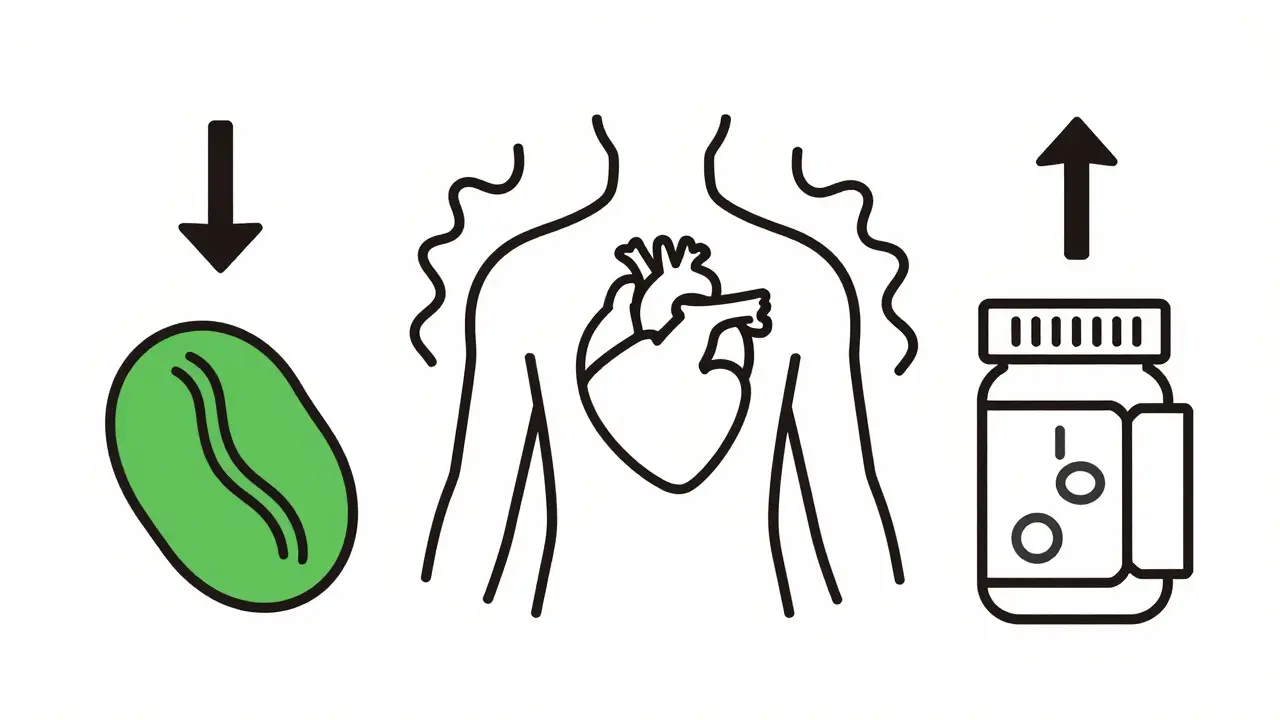
The core issue isn't just about feeling jittery. It’s about blood pressure instability. While green coffee extract is often marketed for its potential to lower blood pressure through specific enzyme modulation, stimulant medications are well-documented for raising it. Combining them can lead to unpredictable spikes and drops in pressure, making it difficult for doctors to manage your health effectively. This article breaks down exactly what happens in your body, why the risk is higher than you might think, and what steps you should take if you’re currently using both.
The Mechanism: Why These Two Fight Each Other
To understand the danger, we need to look at how each substance affects your physiology. They operate on opposing ends of the spectrum regarding vascular tone.
Stimulant medications, such as methylphenidate (Ritalin) or amphetamines (Adderall), work by increasing dopamine and norepinephrine levels in the brain. A known side effect of this neurotransmitter surge is vasoconstriction-the tightening of blood vessels. According to FDA prescribing information updated in January 2023, these drugs can increase systolic blood pressure by 2-11 mmHg and diastolic pressure by 1-9 mmHg. This is a consistent, predictable rise that doctors monitor closely.
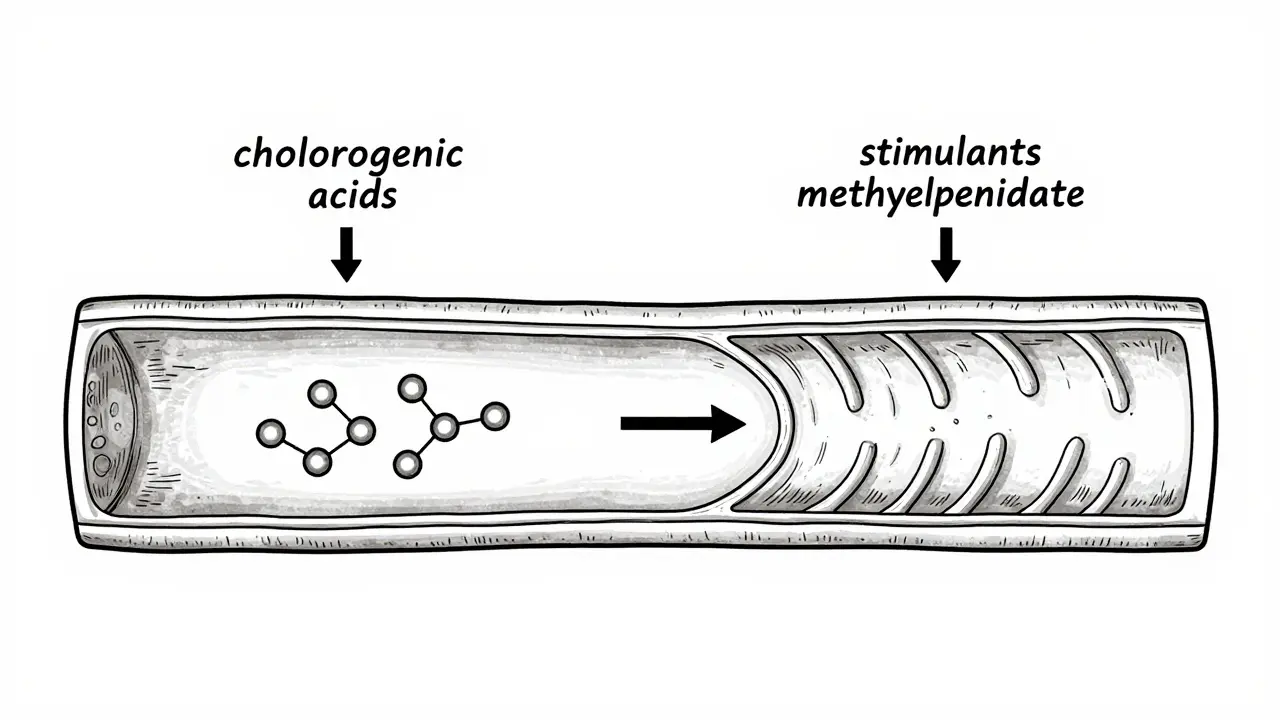
On the other hand, green coffee extract contains high levels of chlorogenic acids. Research published in Hypertension Research (2006) showed that chlorogenic acids inhibit angiotensin-converting enzyme (ACE) activity and modulate the 11β-hydroxysteroid dehydrogenase type 1 (11β-HSD1) enzyme. In simple terms, these actions promote vasodilation-the widening of blood vessels-which lowers blood pressure. The same study found that doses of 93 mg and 185 mg of green coffee extract reduced systolic blood pressure by 4.7 mmHg and 5.6 mmHg respectively.
When you combine a drug that tightens vessels with a supplement that widens them, you create a state of hemodynamic confusion. Your body receives conflicting instructions: constrict here, dilate there. The result isn't a neutral balance; it's often volatility. You might experience sudden drops in pressure leading to dizziness, followed by sharp spikes causing headaches or palpitations. This instability makes it nearly impossible to determine if your stimulant medication is dosed correctly.
The Caffeine Factor: More Than Just Jitters
Many people assume the only overlap between green coffee extract and stimulants is "energy." However, the hidden culprit is caffeine content. Green coffee extract is not decaffeinated unless explicitly stated, and even then, traces remain.
Standard green coffee supplements typically contain between 5% and 20% caffeine. A single serving can deliver 50-200 mg of caffeine. If you are taking Adderall or Vyvanse, you are already under the influence of potent central nervous system stimulants. Adding exogenous caffeine amplifies the sympathetic nervous system response.
The European Food Safety Authority (EFSA) noted in its 2021 scientific opinion that while single doses of up to 200 mg of caffeine are generally safe for healthy adults, combining multiple sources of caffeine with other stimulants can exceed safe thresholds. The American Pharmacists Association warns that the combined caffeine load from prescription stimulants and green coffee extract can easily surpass 300 mg daily-a level associated with increased cardiovascular risk in sensitive individuals.
This isn't theoretical. A case report in the Journal of Clinical Hypertension (August 2021) documented a 34-year-old male who experienced blood pressure fluctuations between 118 mmHg and 156 mmHg systolic after combining Adderall XR 30 mg with a green coffee supplement containing 180 mg of caffeine equivalents. His cardiologist had to adjust his medication significantly to stabilize his readings.
Real-World Risks and Data
The gap between clinical trials and real-world usage is where most problems arise. Supplements are not regulated as strictly as pharmaceuticals, meaning potency varies wildly between brands.
| Component | Lowest Found | Highest Found | Impact on User |
|---|---|---|---|
| Chlorogenic Acids | 28.7% | 51.3% | Inconsistent blood pressure-lowering effect |
| Caffeine Content | 3.2% | 18.7% | Unpredictable stimulant amplification |
Because one brand might give you a mild dose of chlorogenic acid while another gives you a heavy hit of caffeine, you cannot rely on a consistent interaction profile. This variability is dangerous when paired with a precise medication like methylphenidate.
Data supports growing concern. The FDA’s Adverse Event Reporting System (FAERS) saw a 217% increase in reports mentioning "green coffee extract" and "blood pressure" between 2020 and 2023. Alarmingly, 41% of these cases involved concurrent use of stimulant medications. Furthermore, a survey by the American College of Clinical Pharmacy in July 2024 revealed that 68% of pharmacists now routinely counsel patients on this specific interaction, up from just 32% in 2021.
User experiences mirror these statistics. On Reddit’s r/ADHD community, users frequently report "wildly inconsistent" blood pressure readings after starting green coffee extract for weight loss while on Vyvanse. One user described experiencing unexplained dizziness and heart palpitations, which their doctor attributed to the caffeine in the supplement amplifying the stimulant’s cardiovascular effects.
Expert Consensus and Medical Guidelines
The medical community has moved from caution to explicit warning regarding this combination. Dr. James Lane, Professor of Medical Psychology at Duke University, stated in a 2023 interview that "the combination of prescription stimulants with additional stimulatory compounds like caffeine in green coffee extract creates unpredictable hemodynamic responses that can compromise treatment efficacy and patient safety."
The American Heart Association (AHA) reinforces this stance. Their 2024 update to the scientific statement on complementary approaches to blood pressure management explicitly states: "Patients taking stimulant medications should avoid green coffee extract supplements unless under direct medical supervision with appropriate blood pressure monitoring."
Dr. Christopher V. Granger, co-author of the AHA’s 2022 statement on ADHD medications, highlighted in a 2023 webinar that clinicians are seeing increasing cases of "blood pressure lability"-rapid changes in pressure-in patients mixing these substances. This lability confounds proper medication dosing, potentially leading doctors to incorrectly increase or decrease your prescription based on skewed data points caused by the supplement.
What Should You Do? Practical Steps
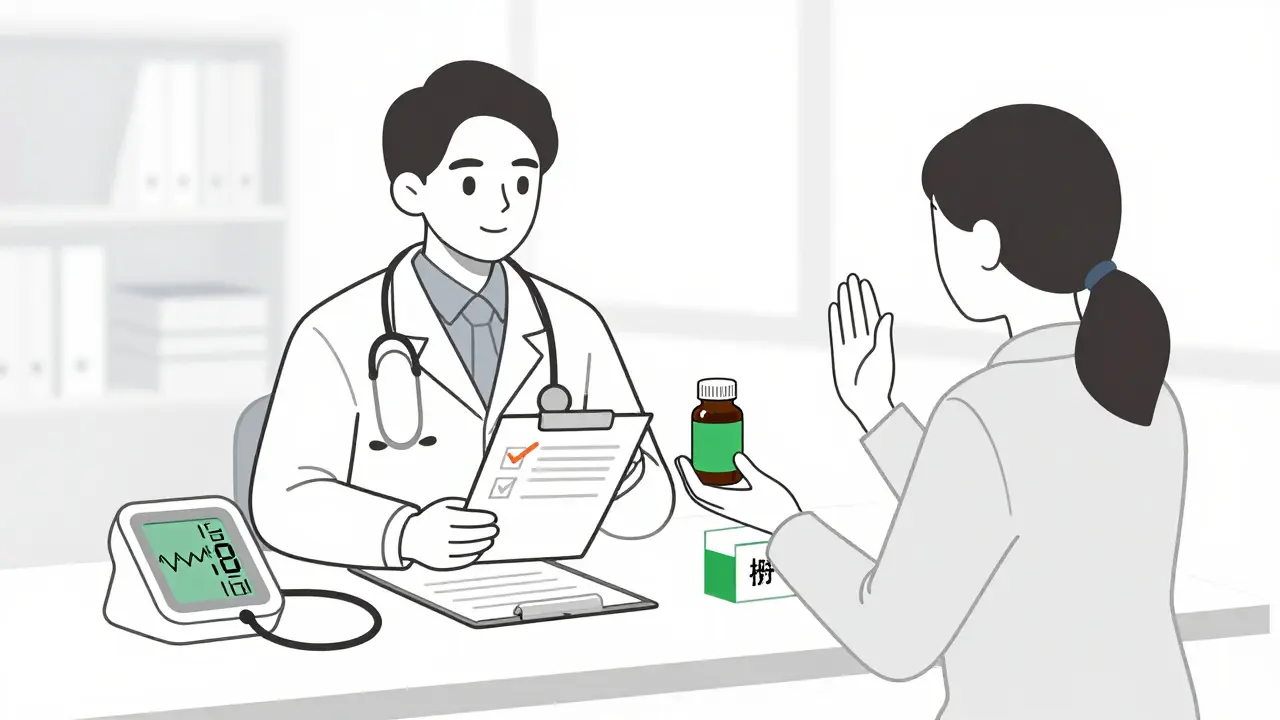
If you are currently taking a stimulant medication for ADHD or narcolepsy, the safest approach is to avoid green coffee extract entirely. However, if you are considering it or have already started, follow these steps:
- Pause and Assess: If you are experiencing symptoms like dizziness, rapid heartbeat, or headaches, stop the supplement immediately. These are signs of hemodynamic instability.
- Consult Your Prescriber: Do not hide your supplement use from your doctor. Tell them exactly what you are taking, including the brand and dosage. Ask specifically about the interaction with your current medication.
- Monitor Blood Pressure: If your doctor allows you to continue both (which is rare), implement twice-daily blood pressure monitoring for at least two weeks. The European Society of Cardiology suggests maintaining readings below 140/90 mmHg with minimal day-to-day variation (<10 mmHg systolic). Record these numbers to show your provider.
- Check Labels Carefully: Look for "decaffeinated" labels, but remember that even decaf extracts may contain trace amounts of caffeine and varying levels of chlorogenic acids due to lack of standardization.
- Consider Alternatives: If your goal is weight loss or energy, discuss safer alternatives with your healthcare provider. Options like L-theanine or structured exercise routines do not carry the same cardiovascular risks when combined with stimulants.
For patients with pre-existing hypertension or cardiovascular conditions, the American College of Cardiology recommends absolute avoidance of green coffee extract when stimulant medications are necessary. The risk of triggering a hypertensive crisis or arrhythmia outweighs any potential benefit from the supplement.
Frequently Asked Questions
Can I take green coffee extract if I am on Adderall?
It is generally not recommended. Adderall (amphetamine salts) raises blood pressure and heart rate. Green coffee extract contains caffeine and chlorogenic acids, which can cause unpredictable fluctuations in blood pressure. Combining them increases the risk of cardiovascular strain, dizziness, and unstable readings. Consult your doctor before attempting this combination.
Does green coffee extract lower or raise blood pressure?
Green coffee extract has a dual effect. The chlorogenic acids in it tend to lower blood pressure by promoting vasodilation. However, the caffeine content tends to raise blood pressure by causing vasoconstriction. In isolation, studies suggest the net effect may be a slight reduction in blood pressure, but when combined with other stimulants, the outcome becomes unpredictable and volatile.
What are the symptoms of interacting with green coffee extract and stimulants?
Common symptoms include blood pressure instability (fluctuating highs and lows), dizziness, heart palpitations, anxiety, jitteriness, and headaches. In severe cases, it can lead to tachycardia (abnormally fast heart rate) or hypertensive episodes.
Is decaffeinated green coffee extract safe with ADHD medication?
Decaffeinated green coffee extract removes much of the caffeine risk, but it still contains chlorogenic acids. These acids affect blood pressure regulation via ACE inhibition. While safer than regular green coffee extract, it can still interfere with blood pressure stability. Always consult your healthcare provider before adding any new supplement to your regimen.
How long does it take for green coffee extract to affect blood pressure?
Effects can be felt within hours of ingestion due to the caffeine component. However, the cumulative effects of chlorogenic acids on enzyme modulation may take days to weeks to become apparent. Studies have shown changes in blood pressure markers after two weeks of regular consumption.