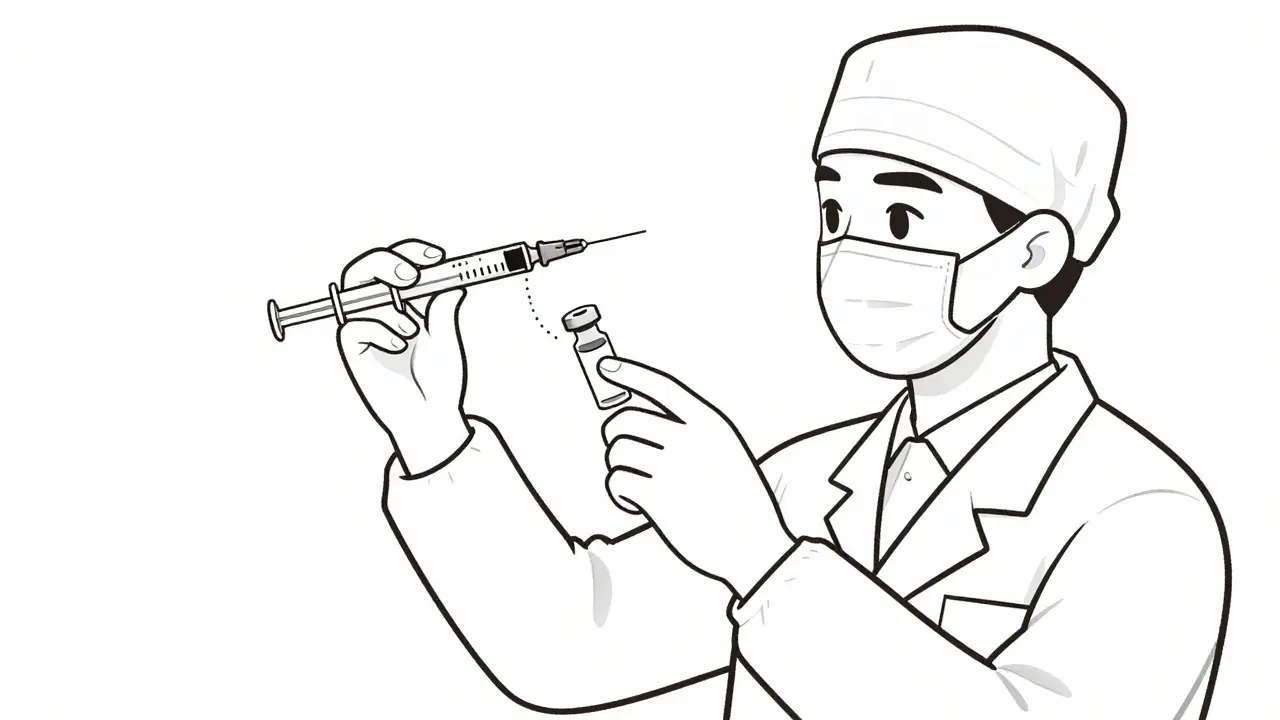
Imagine a scenario where a decimal point is misplaced on an insulin order. The patient receives ten times the intended dose. Blood sugar crashes. Seizures follow. This isn't just a hypothetical nightmare; it is a preventable tragedy that happens because high-alert medications carry a heightened risk of causing significant patient harm when used in error. In healthcare, we call these high-risk medications, and they demand a level of scrutiny that goes far beyond standard dispensing protocols.
The core problem isn't usually malice or incompetence. It's human fallibility combined with complex workflows. When you are managing dozens of patients, fatigue sets in. Look-alike sound-alike (LASA) drugs confuse even experienced pharmacists. That is why extra verification procedures exist. They act as a hard stop, forcing a moment of pause before a potentially catastrophic mistake reaches the patient.
Defining High-Alert Medications
To understand the verification process, we first need to define what makes a medication "high-alert." The Institute for Safe Medication Practices (ISMP) defines these as drugs that bear a heightened risk of causing significant patient harm when used in error. This definition is crucial because it shifts the focus from the drug's toxicity alone to the potential consequence of an error. A small dose of warfarin might not seem dangerous in isolation, but a dosing error can lead to life-threatening bleeding. Conversely, some toxic chemotherapy agents have such narrow therapeutic windows that any deviation is immediately critical.
The Joint Commission mandates that organizations identify these medications in writing and follow a specific process for managing them. This isn't optional bureaucracy; it is a regulatory requirement designed to save lives. Your facility’s list should be tailored to your specific environment. A pediatric ward will have different high-alert priorities than an oncology unit, though there is significant overlap. Common categories include:
- Insulin products (all routes of administration)
- Intravenous opioids (including epidural and intrathecal)
- Heparin and other anticoagulants (IV and subcutaneous)
- Chemotherapy agents (antineoplastic drugs)
- Potassium chloride concentrate
- Concentrated electrolytes
The Independent Double Check (IDC): More Than Just a Signature
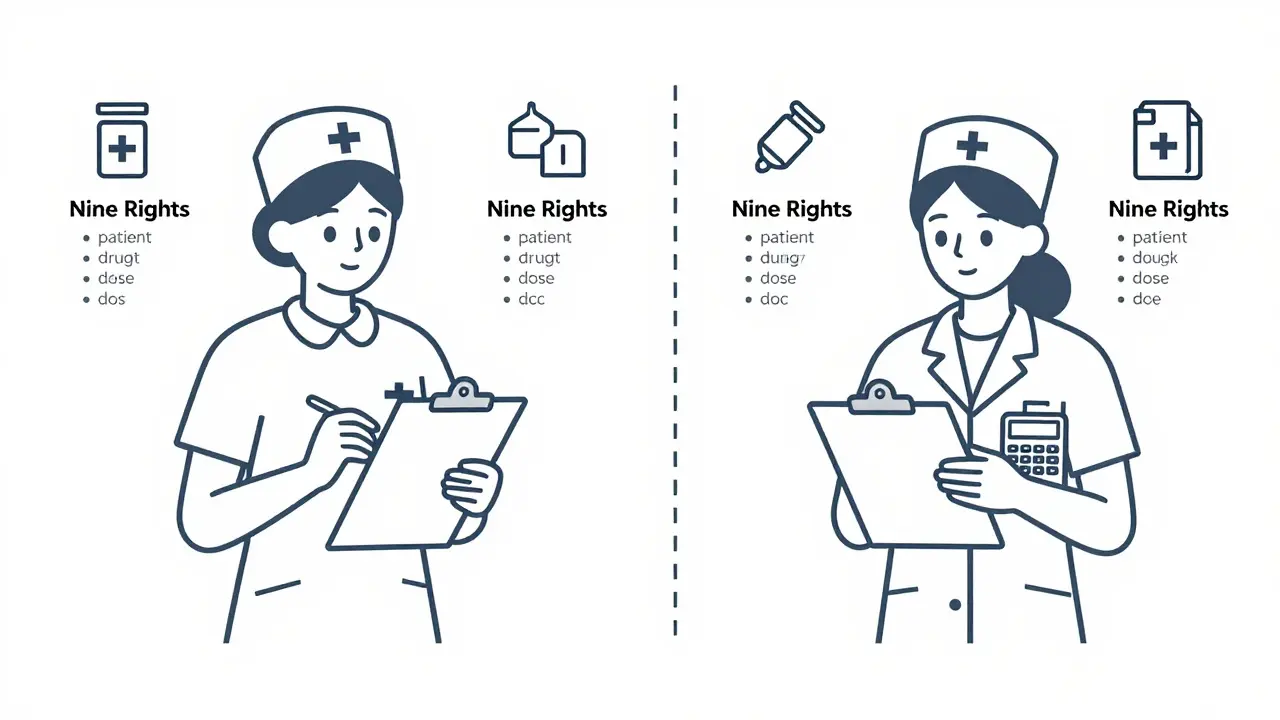
When we talk about verification, the gold standard is the Independent Double Check (IDC). But let’s be clear: having two people look at the same bag of IV fluid does not constitute an IDC. True independence means the second person performs their own calculation and verification without seeing the first person’s work. If Nurse A calculates the drip rate and tells Nurse B, "It’s 40 mL/hr," and Nurse B just nods, you haven’t added safety; you’ve added paperwork.
The IDC must verify the "Nine Rights" of medication administration:
- Right patient
- Right drug
- Right dose
- Right route
- Right time
- Right documentation
- Right reason
- Right response
- Right to refuse
In practice, this often looks like two qualified professionals-usually nurses, pharmacists, or prescribers-independently calculating the dose of heparin or verifying the concentration of potassium chloride. They must then document this verification on the Medication Administration Record (MAR) immediately. The key here is simultaneous presence and independent action. The goal is to catch the error before the needle touches the vein.
Why Manual Checks Are Failing Us
Here is the uncomfortable truth: manual independent double checks are flawed. Research consistently shows that while well-intentioned, they are prone to failure due to cognitive biases and workflow pressures. Confirmation bias is the biggest enemy. If the first checker says, "This looks right," the second checker’s brain wants to agree. We are wired for social harmony, not rigorous skepticism.
Furthermore, staffing shortages make true IDCs difficult. A 2022 survey by ISMP found that 68% of nurses reported skipping required double checks during high-workload periods. Why? Because finding a second qualified person who has five minutes to spare is nearly impossible on a busy shift. When staff resort to "shoulder checking"-where one person watches the other rather than independently verifying-the safety net tears. This creates a false sense of security. You think you’re safe because you followed protocol, but the protocol was executed poorly.
Technology as the New Safety Net
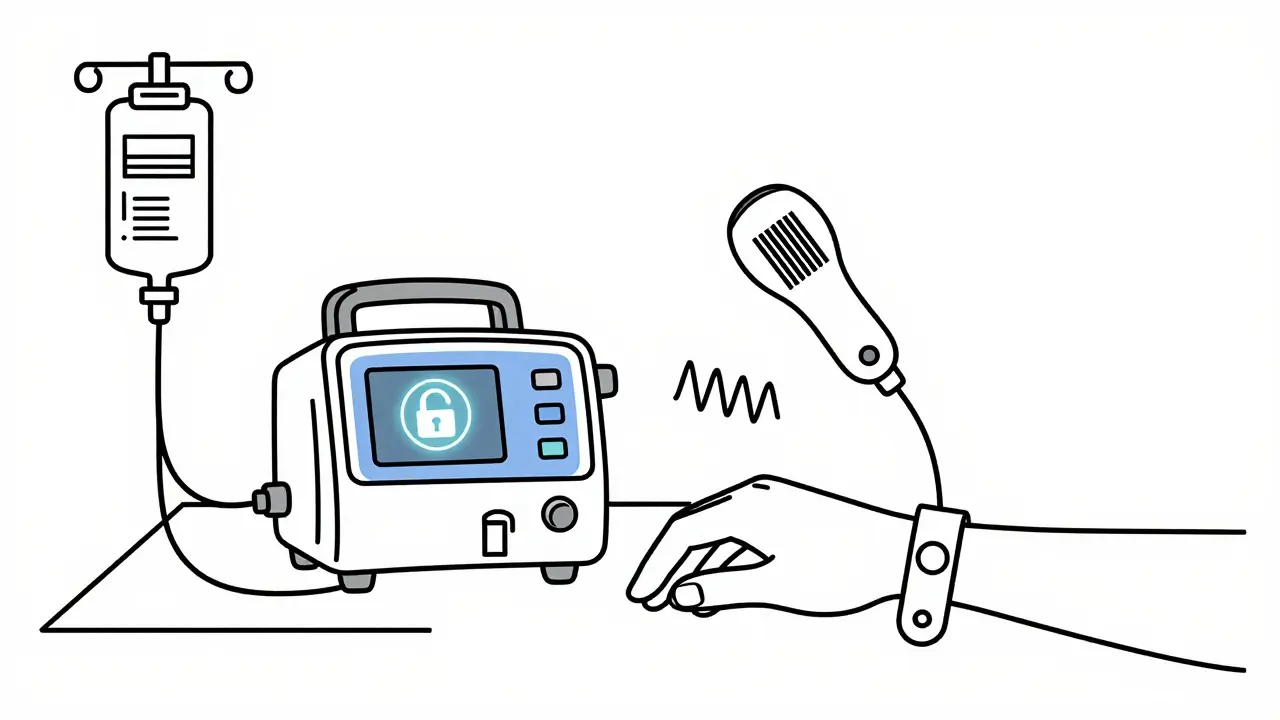
If manual checks are unreliable, what’s the alternative? Technology. Specifically, Barcode Medication Administration (BCMA) and smart infusion pumps. These tools offer a more reliable verification strategy than a tired nurse trying to do mental math at 3 AM. BCMA systems force a scan of the patient’s wristband and the medication barcode. If they don’t match, the system locks out the administration. It doesn’t get tired. It doesn’t suffer from confirmation bias.
Smart infusion pumps go a step further. They come with Drug Libraries containing hard limits for doses. If you program a pump for a lethal dose of morphine, the pump alarms and refuses to run. This is known as a "hard stop." However, technology is not a silver bullet. Pumps can be overridden. Barcodes can be scanned incorrectly if the label is damaged. Therefore, the current best practice is a hybrid approach: use technology for the heavy lifting of verification, and reserve manual IDCs for the most vulnerable points where technology falls short, such as complex compounding or off-label uses.
| Method | Reliability | Primary Risk | Best Use Case |
|---|---|---|---|
| Manual IDC | Moderate | Confirmation bias, fatigue, time pressure | Complex calculations, lack of tech support |
| Barcode Scanning (BCMA) | High | Label damage, wrong barcode scanned | Standard administration, patient identification |
| Smart Infusion Pumps | Very High | Override abuse, outdated drug libraries | IV infusions, rate control |
| Hybrid Approach | Highest | Workflow complexity | Critical care, oncology, pediatrics |
Implementing Effective Verification Protocols
So, how do you build a system that actually works? Start by being selective. ISMP explicitly advises against using IDCs for all high-alert medications. Instead, place fewer checks strategically at the most vulnerable points. For example, require IDCs for IV insulin and IV heparin, but rely on BCMA for oral antibiotics, even if they are high-alert in certain contexts.
Training is non-negotiable. Staff must understand *why* they are doing the check, not just *how*. If a nurse knows that a heparin overdose can cause fatal hemorrhage, they are more likely to resist the urge to rush the process. Facilities should also create a culture where stopping the line is encouraged. If a second checker feels unsure, they should be empowered to say, "I’m not comfortable with this dose," without fear of reprimand.
Documentation must be immediate and clear. Both providers should sign the MAR after verification. This creates accountability. If an error occurs later, the record shows exactly who verified the dose and when. It also serves as a legal safeguard for both the institution and the individual practitioners.
Special Considerations: Pediatrics and Oncology
Some populations require even stricter controls. In pediatric settings, weight-based dosing adds another layer of complexity. A milligram difference can mean the difference between therapeutic effect and toxicity. Consequently, many hospitals mandate dual verification for all cardiac medications administered to patients under 18. Neonatal Intensive Care Units (NICUs) often require IDCs for all high-alert medications due to the fragility of the patients.
Oncology presents unique challenges. Chemotherapy agents are highly toxic, and the preparation process is complex. Standards from the American Society of Clinical Oncology (ASCO) and Oncology Nursing Society (ONS) mandate that before chemotherapy administration, at least two practitioners must verify patient identification, confirm the treatment plan with the patient, and verify drug name, dose, volume, rate, route, expiration dates, and physical integrity. This is not just a signature; it is a comprehensive review involving direct communication with the patient.
Overcoming Workflow Barriers
The biggest barrier to effective verification is time. Nurses are stretched thin. Pharmacists are overwhelmed. To combat this, facilities must align staffing levels with acuity. If you expect rigorous IDCs, you cannot understaff the unit. Additionally, streamline the process. Use pre-mixed bags where possible to eliminate calculation errors. Ensure that high-alert medications are stored separately and clearly labeled to reduce selection errors at the source.
Leadership plays a critical role. Chiefs of Staff and Pharmacy Directors must champion safety over speed. Regular audits of verification practices can help identify gaps. Are nurses truly performing independent calculations, or are they rubber-stamping? Data-driven feedback loops allow teams to correct behaviors before an adverse event occurs.
The Future of Medication Safety
We are moving toward integrated safety systems. The future isn't just about better humans; it's about smarter environments. Electronic Health Records (EHRs) are becoming more sophisticated, offering clinical decision support that flags potential interactions or dosing errors in real-time. Autoverification systems, which bypass the pharmacist verification step through EHR integration, are emerging but require careful implementation to maintain safety standards.
However, technology will never fully replace human judgment. There will always be edge cases, unusual patient factors, and complex clinical scenarios that algorithms cannot fully grasp. The goal is to use technology to handle the routine, repetitive tasks, freeing up human experts to focus on the complex, high-stakes decisions. This synergy between human expertise and technological precision is the key to eliminating dispensing errors.
What is the difference between a witness check and an independent double check?
A witness check involves one person performing the task while another observes. An independent double check (IDC) requires two qualified individuals to independently perform the entire verification process, including calculations, without seeing each other's work until the final comparison. IDCs are significantly more effective at catching errors because they avoid confirmation bias.
Which medications absolutely require an independent double check?
While policies vary by facility, the ISMP recommends IDCs primarily for intravenous insulin, intravenous heparin, intravenous opioids, chemotherapy agents, and concentrated electrolytes like potassium chloride. Pediatric and neonatal units often expand this list to include all cardiac medications and high-alert drugs due to patient vulnerability.
Can barcode scanning replace manual double checks?
Barcode scanning (BCMA) is generally more reliable than manual checks for verifying the right patient, drug, and dose. However, it cannot replace human judgment for complex calculations, infusion rate programming, or assessing patient-specific factors. Best practice is a hybrid model where BCMA handles routine verification, and manual IDCs are reserved for high-risk, complex scenarios.
Why do nurses sometimes skip required double checks?
The primary reasons are time pressure and staffing shortages. Finding a second qualified person who has the time to perform a thorough, independent check is difficult during busy shifts. Additionally, if the culture prioritizes speed over safety, or if staff feel that the check is merely bureaucratic, compliance drops. Fatigue and desensitization to frequent alerts also contribute to skipped steps.
How can hospitals reduce the risk of dispensing errors without adding more staff?
Hospitals can implement technology solutions like smart infusion pumps and automated dispensing cabinets. Standardizing orders (e.g., using pre-mixed IV bags) reduces calculation errors. Creating a culture of psychological safety where staff feel empowered to stop unsafe practices is also critical. Finally, focusing IDCs only on the highest-risk medications prevents alert fatigue and ensures resources are used effectively.