The Science of Why You Stop Losing Weight
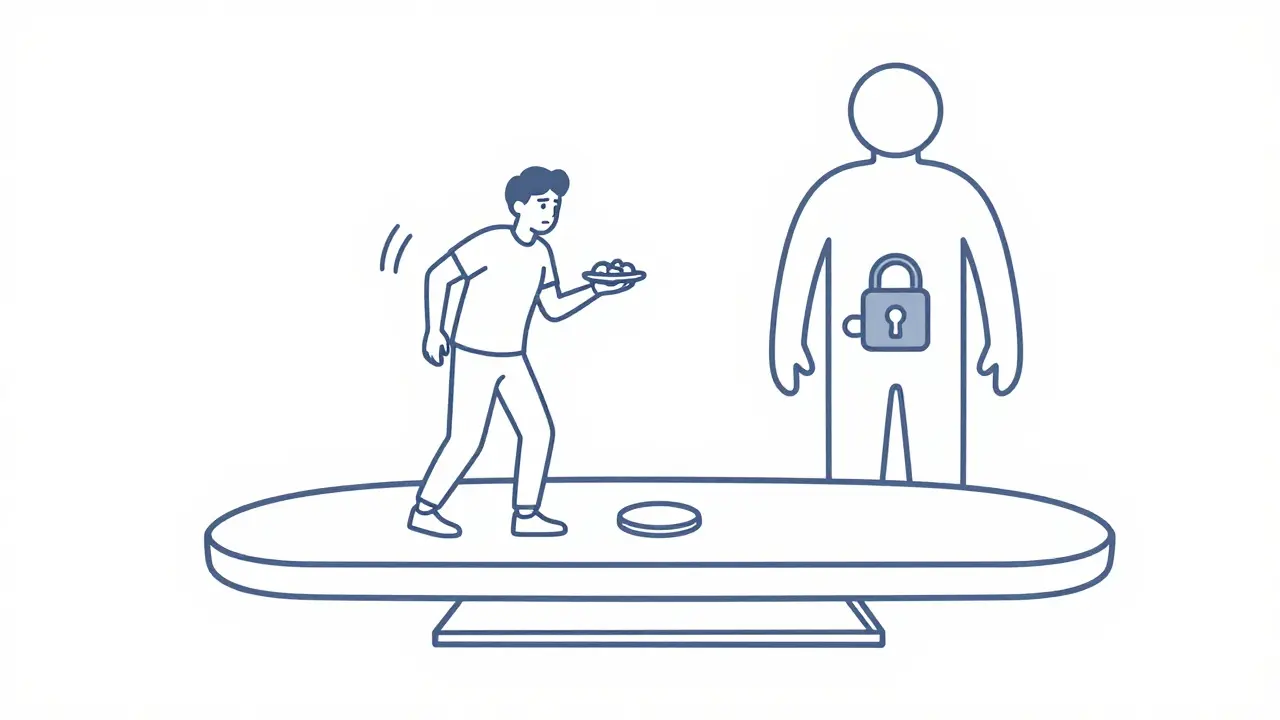
To understand the plateau, we have to look at Adaptive Thermogenesis. This is the formal term for your metabolism slowing down more than it should. Normally, as you get smaller, you need fewer calories because there is less of "you" to move around. However, your body often overcorrects. Research from the Minnesota Starvation Experiment showed that metabolic rates can drop by about 40% beyond what weight loss alone would explain. Your body isn't just burning fewer calories because you're lighter; it's actively becoming more efficient with the energy it has. This happens through several pathways:- Hormonal Shifts: Your levels of Leptin (the satiety hormone) can plummet by up to 70%, making you feel hungry even when you've eaten enough.
- Thyroid Function: Your thyroid hormone production drops, which acts like a dimmer switch on your overall energy use.
- Brown Adipose Tissue (BAT): Your body reduces the activity of "brown fat," which is responsible for generating heat. When UCP-1 (uncoupling protein 1) expression drops in these cells, your cellular heat production falls, meaning you burn fewer calories just existing.
Spotting the Difference: Real Plateau vs. Temporary Stall
Not every single day of no movement on the scale is a metabolic plateau. In the first few weeks of a diet, many people see a massive drop of 5 to 10 pounds. The Mayo Clinic points out that this is mostly water weight coming from glycogen depletion. When that initial flush ends, it can feel like a plateau, but it's actually just your weight loss normalizing.A true metabolic plateau usually happens after you've lost a significant amount of weight and your progress stalls for 4 to 8 weeks despite strict adherence. If you're cutting calories down to 1,200 per day and still aren't losing, you're likely dealing with a biological adaptation rather than a lack of discipline.
| Phase | Primary Driver | Typical Scale Movement | Metabolic State |
|---|---|---|---|
| Initial Phase | Glycogen/Water Loss | Rapid (5-10 lbs/week) | High/Baseline |
| Steady Loss | Fat Oxidation | Consistent (1-2 lbs/week) | Gradual decline |
| Plateau | Metabolic Adaptation | Zero/Stagnant | Significant Reduction |
Strategies to Break the Metabolic Stall
Since your body is trying to defend its previous weight, you can't just "push through" with more restriction. That often just deepens the adaptation. Instead, you need to signal to your brain that the famine is over.The Power of Diet Breaks
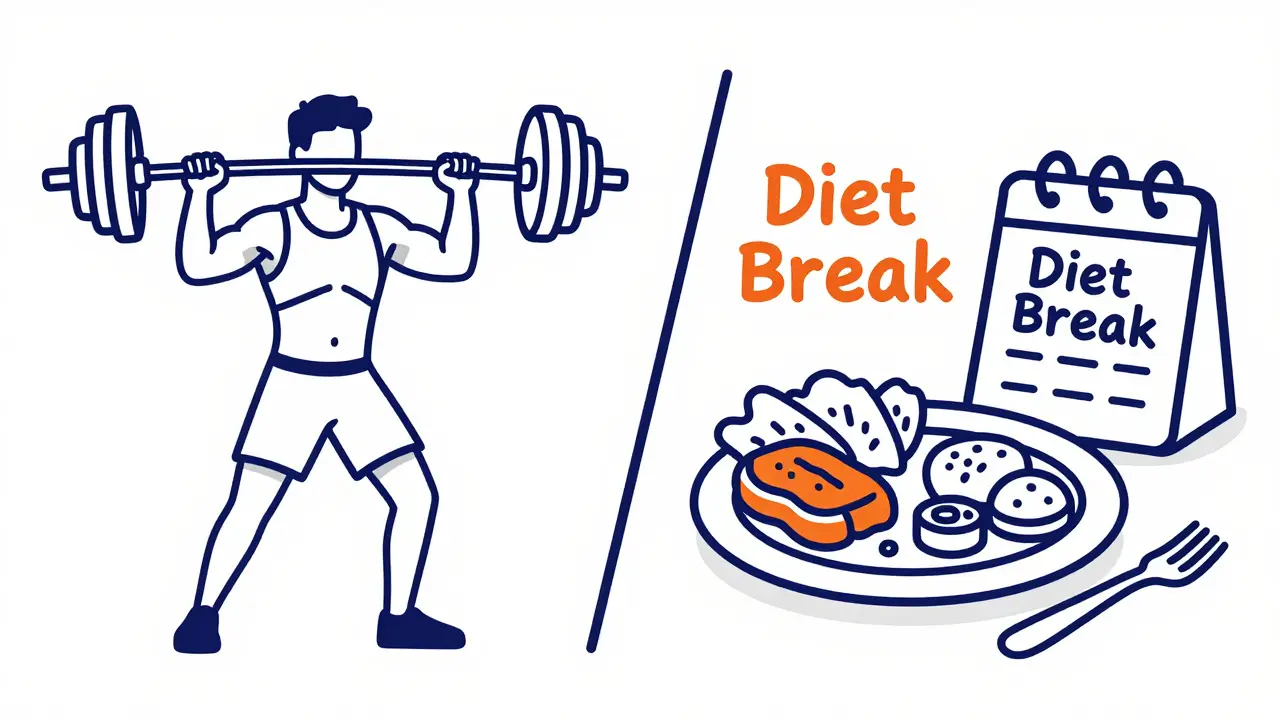
One of the most effective ways to reset your metabolism is through strategic diet breaks. This isn't a "cheat weekend," but a planned 1 to 2 week period where you return to maintenance calories every 8 to 12 weeks. Research suggests this can reduce metabolic adaptation by up to 50%. By eating at maintenance, you temporarily boost leptin levels and tell your thyroid that it's safe to speed things up again.Prioritizing Lean Mass
Your muscles are metabolically expensive-they burn calories even when you're sleeping. When you lose weight, your body often burns muscle alongside fat, which tanks your RMR. To stop this, you need two things:- High Protein Intake: Aim for 1.6 to 2.2g of protein per kilogram of body weight. This preserves lean mass and keeps the metabolic fire burning.
- Resistance Training: Lifting weights 3 to 4 times a week is non-negotiable. People who incorporate strength training see 8-10% smaller drops in their RMR compared to those who only do cardio.
Reverse Dieting
If you've been on a very low-calorie diet (VLCD) for months, jumping straight back to maintenance can cause rapid fat regain. Instead, try "reverse dieting." This involves adding 50 to 100 calories back into your daily intake every week. This gradual increase allows your metabolism to "catch up" to your food intake without spilling over into fat storage.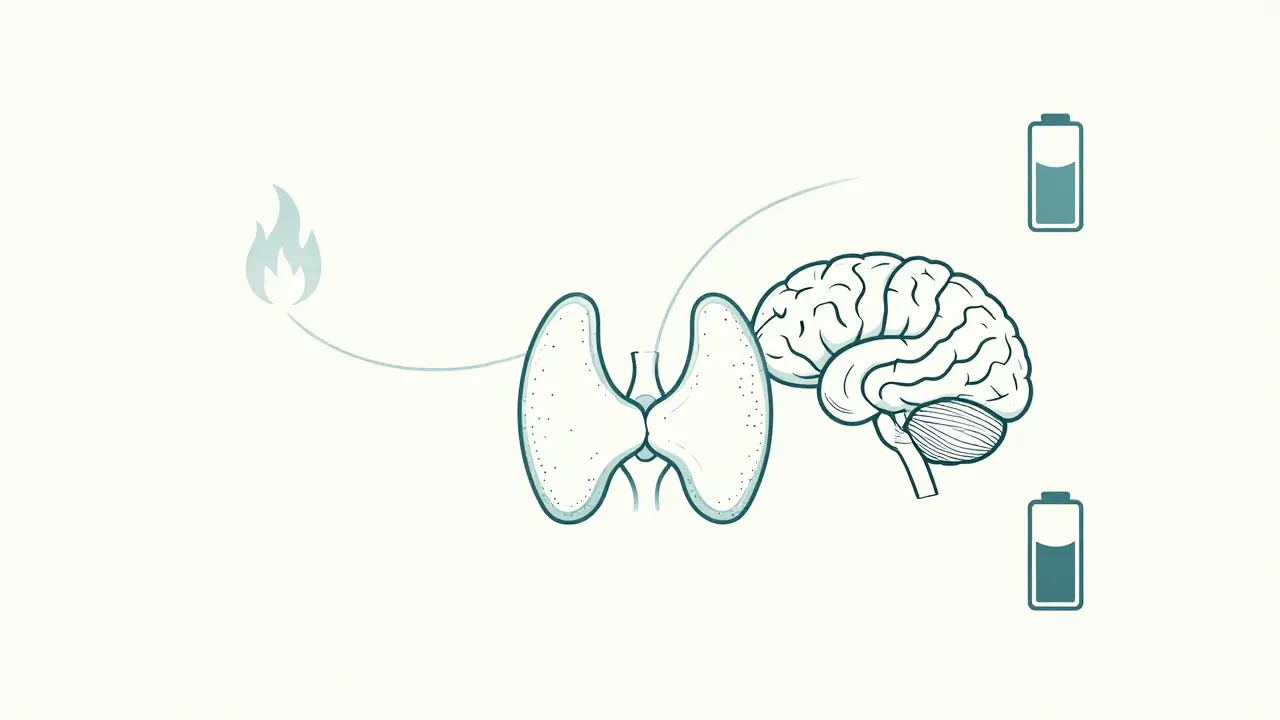
The Role of Modern Interventions
For some, the metabolic adaptation is so aggressive that lifestyle changes alone aren't enough. This is where pharmaceutical and surgical options come in. GLP-1 Agonists, such as semaglutide, have changed the game by targeting the brain's hunger signals. They effectively counteract the hunger spikes caused by the drop in leptin and the rise in cortisol during a plateau. While not a "cure" for metabolism, they lower the psychological and physiological barrier to maintaining a deficit. For those with severe obesity, bariatric surgery is the most potent tool because it reduces the effects of metabolic adaptation by about 60% compared to diet-induced loss. It fundamentally alters the hormonal signaling between the gut and the brain, making the body less likely to fight the weight loss.Practical Checklist for Overcoming a Plateau
If you've been stuck for more than three weeks, run through this checklist to decide your next move:- Check your protein: Are you hitting at least 1.6g/kg? If not, increase protein first.
- Evaluate your training: Have you lifted weights this week? If you're only doing walking or elliptical, add two strength sessions.
- Assess your duration: Have you been in a deficit for more than 12 weeks? If yes, schedule a 14-day maintenance break.
- Monitor non-scale victories: Are your clothes fitting differently? Sometimes muscle gain masks fat loss on the scale.
- Audit your sleep: Poor sleep spikes cortisol, which encourages fat retention and increases hunger.
Common Misconceptions About Plateaus
Many people believe that a plateau is a sign they are "cheating" on their diet. While adherence is important, the medical community-including experts from the University of Alabama at Birmingham-emphasizes that the delay in reaching goals is often a direct result of the body's internal chemistry. Another myth is that you can "trick" your metabolism with supplements or "metabolism boosters." Most of these have negligible effects. The only real way to increase your metabolic rate is to increase your lean muscle mass or utilize high-intensity interval training (HIIT) to create an afterburn effect (EPOC), though the latter is less sustainable than consistent strength training.How long does a weight loss plateau usually last?
Plateaus typically last between 4 to 8 weeks. This is the timeframe where your body's hormonal and metabolic shifts-like lower leptin and thyroid levels-stabilize at a new, lower energy expenditure. Breaking them usually requires a change in stimulus, such as a diet break or a shift in exercise intensity.
Can I just eat even fewer calories to break a plateau?
In most cases, no. This is often a mistake called "aggressive restriction." If you are already at a low calorie count (e.g., 1,200 calories), cutting further can actually worsen metabolic adaptation, increase cortisol, and lead to muscle loss, which further lowers your resting metabolic rate.
What is a "diet break" and does it actually work?
A diet break is a planned 1-2 week period where you increase your calories to your current maintenance level. It works by temporarily boosting hormones like leptin and decreasing stress hormones, which can reduce the magnitude of metabolic adaptation by up to 50% and make the next phase of weight loss more effective.
Why does muscle mass matter for weight loss plateaus?
Muscle is metabolically active tissue. Every pound of muscle you preserve or gain increases the number of calories your body burns at rest. Since metabolic adaptation lowers your Resting Metabolic Rate (RMR), keeping your muscle mass prevents that drop from being as severe as it would be with cardio alone.
Does cold exposure really help burn more calories?
There is evidence that chronic cold exposure can activate brown adipose tissue (BAT), which burns calories to generate heat. Some studies show a 5-7% increase in energy expenditure. While not a primary solution for most, it can be a helpful supplementary tool to counteract reduced thermogenesis.
Next Steps for Different Scenarios
Depending on where you are in your journey, your approach should differ:- If you're a beginner: Focus on a moderate deficit. Avoid the temptation of "crash diets," as they trigger the most aggressive metabolic adaptation.
- If you're an experienced gym-goer: If you've hit a wall, try a 2-week "maintenance phase" where you focus on hitting new personal bests in the gym while eating at maintenance calories.
- If you have significant health barriers: Consult a doctor about GLP-1 medications or metabolic testing to see exactly where your RMR stands.