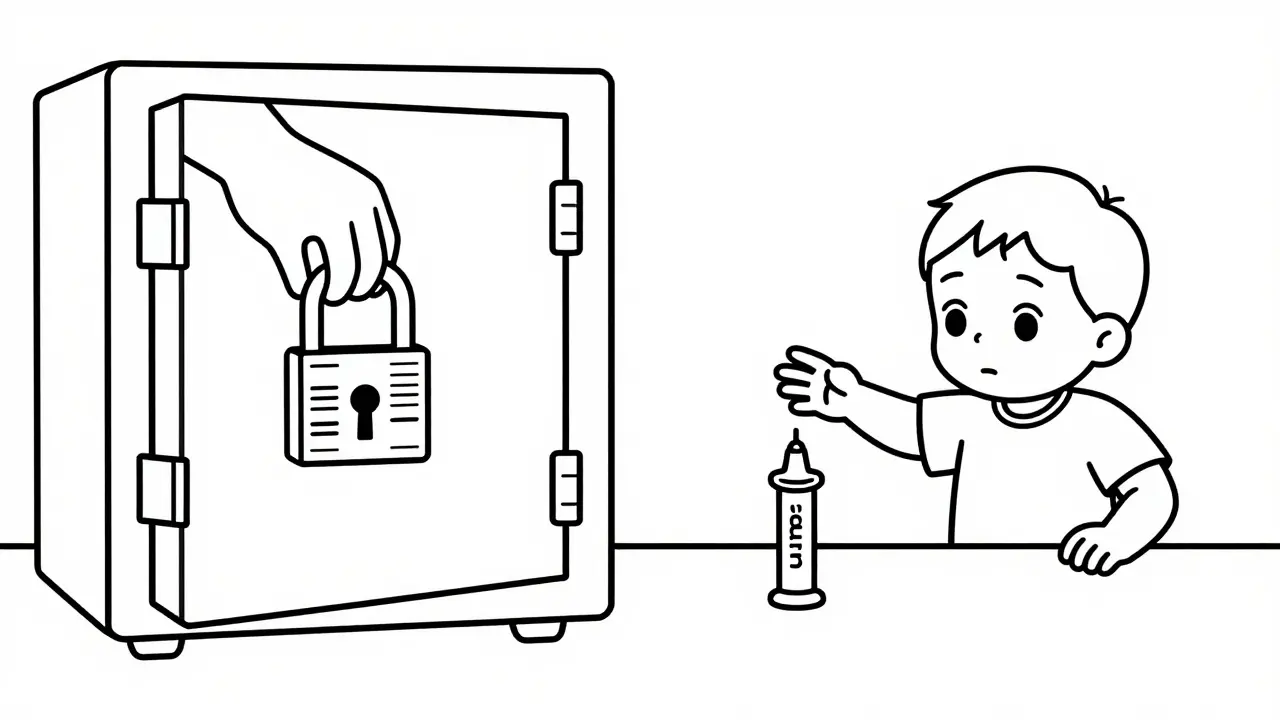
Imagine the panic of realizing your child’s life-saving epinephrine auto-injector is locked away in a safe you can’t open fast enough. Now imagine the opposite nightmare: that same injector sitting on the kitchen counter, within easy reach of a curious toddler or an unauthorized visitor. This is the tightrope walk every household and healthcare facility faces with emergency medications, which are critical pharmaceuticals designed for immediate use during medical crises but requiring strict security to prevent misuse or diversion. The goal isn't just locking things up; it's creating a system where speed and safety coexist without compromising either.
The stakes are higher than you might think. In 2022 alone, the Drug Enforcement Administration (DEA) reported over 5,200 incidents involving the theft or significant loss of controlled substances. These aren't just statistics; they represent real risks of overdose, accidental ingestion by children, and dangerous gaps in care when those meds are needed most. Whether you’re managing home supplies for severe allergies or overseeing an entire hospital’s code cart, getting this balance right saves lives.
The Core Challenge: Speed vs. Security
The central tension in storing emergency drugs is simple but difficult to solve: accessibility versus security. You need these medications to be available instantly during a crisis-think seconds, not minutes-but you also need them protected from tampering, theft, or accidental exposure. According to guidelines updated in May 2024 by the Nevada EMS Controlled Substance Registered and Designated Locations (NVERS), storage must ensure rapid access while maintaining robust physical security. This means no more hiding pills in random drawers or leaving boxes on nightstands.
For homes, this often means moving away from vanity tables and toward dedicated, lockable compartments. For institutions, it involves sophisticated systems like tamper-evident locks and electronic monitoring. The key insight here is that "secure" doesn't always mean "impenetrable." In many cases, it means "controlled access"-where authorized users can get in quickly, but others cannot.
Temperature Matters More Than You Think
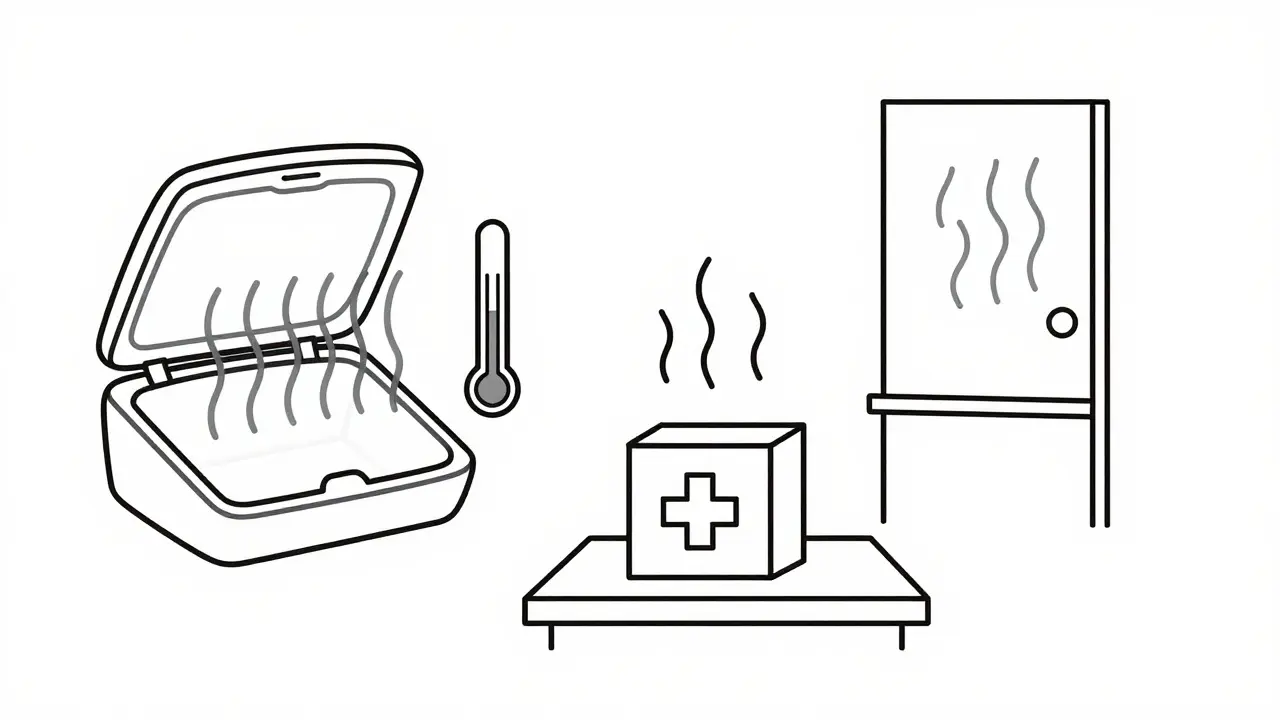
Security isn't just about locks; it's also about environment. Many people forget that heat and cold can destroy a medication's efficacy before anyone even touches it. If your emergency med loses its potency due to poor storage conditions, having it accessible is useless.
Here are the critical temperature ranges you need to know:
- Refrigerated Storage: Must maintain between 2°C and 8°C (36°F-46°F). This applies to certain insulin types and some biologics.
- Controlled Room Temperature: Requires 20°C to 25°C (68°F-77°F), with allowable excursions between 15°C and 30°C (59°F-86°F).
- Excessive Heat Threshold: Any temperature above 40°C (104°F) can compromise many drugs.
In extreme weather, especially during summer months in places like Auckland or Phoenix, keeping cars cool enough for medication storage is nearly impossible. That’s why portable temperature monitors, such as the FDA-approved TempTraq system, have become essential tools. Field tests by the University of Michigan showed these devices achieve 99.2% accuracy, alerting staff if temperatures drift out of spec. For home users, simply avoiding glove compartments and bathrooms (which fluctuate wildly) is a good start.
| Medication Type | Ideal Temperature Range | Security Level Required | Common Pitfalls |
|---|---|---|---|
| Epinephrine Auto-Injectors | Room Temp (20°C-25°C) | High (Child-resistant) | Leaving in car vents |
| Naloxone Kits | Room Temp (up to 30°C) | Medium (Accessible but hidden) | Storing near alcohol sources |
| Certain Insulins | Refrigerated (2°C-8°C) | High (Locked fridge) | Freezing during power outages |
| Antihistamines | Room Temp (15°C-30°C) | Low-Medium | Mixing with expired meds |
Different Settings, Different Rules
One size does not fit all. The way you store emergency meds depends heavily on where they are kept. Let’s break down the protocols for three common environments: homes, childcare facilities, and healthcare institutions.
In Homes: The Environmental Protection Agency (EPA) recommends storing medicines in locked cabinets, closets, or safes. Commercially available medicine safes are great, but any robust locking compartment works. The trick is consistency. Never leave meds out on counters "just for a minute." The CDC’s PROTECT Initiative emphasizes putting medicines away every single time. For parents, this means training yourself to double-check that the EpiPen is back in its secure spot after each use or check-up.
In Childcare Facilities: Protocols here are nuanced. Severe allergy care plans often include epinephrine and antihistamines that do not need to be locked away, provided they are easily accessible to staff but out of children’s reach. However, routine medications must remain in locked areas. This distinction is crucial because delaying access to an EpiPen during anaphylaxis can be fatal, whereas routine antibiotics don’t carry that immediate risk.
In Hospitals and EMS: The rules tighten significantly. The Joint Commission’s standard MM.03.01.03 mandates that emergency carts be secured in locked locations unless in departments staffed 24/7 where licensed personnel have direct line-of-sight. In operating rooms, the American Society of Anesthesiologists (ASA) requires tamper-evident devices that authorized persons can break open quickly-a unique balance of security and speed. Meanwhile, DEA regulations demand that Schedule II controlled substances be stored in substantially constructed, locked cabinets separate from other meds.
Technology Is Changing the Game
We’re seeing a shift from mechanical locks to smart technology. By 2027, analysts predict that 65% of healthcare facilities will use AI-powered medication security systems. These systems dynamically adjust access protocols based on real-time risk assessments. Imagine a cabinet that unlocks automatically for a nurse approaching a cardiac arrest patient but triggers an alarm if someone tries to force entry at 3 AM.
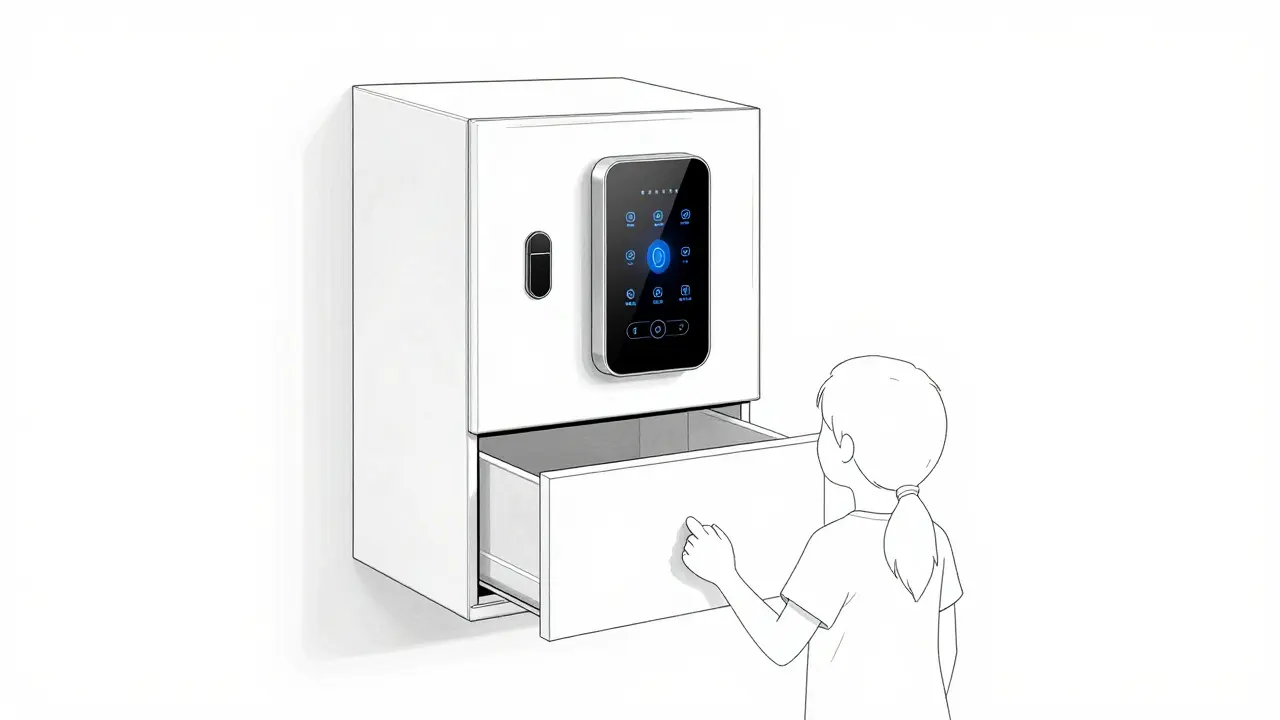
For consumers, this tech is trickling down too. Smart safes with fingerprint or app-based access are becoming popular. They offer the benefit of quick access for authorized users while keeping kids and intruders out. However, remember that batteries die and apps glitch. Always have a backup manual override method.
Disposal: The Final Step in Security
Keeping meds secure isn't just about storage; it's also about disposal. Expired or unused emergency medications pose a significant risk if left lying around. The DEA periodically hosts National Prescription Drug Take Back Days, but if you can’t wait for those events, you have options.
You can drop off unused meds at designated collection sites, often found in pharmacies or law enforcement offices. If that’s not possible, the EPA advises mixing medications with an unpalatable substance like dirt, cat litter, or used coffee grounds, placing the mixture in a sealed container, and throwing it in the trash. Remove or obscure personal information from the packaging first. Never flush medications unless the label specifically instructs you to do so, as this can contaminate water supplies.
Building Your Own Safety Protocol
Whether you’re a parent, a caregiver, or a facility manager, creating a protocol starts with a risk assessment. Ask yourself: Who needs access? How quickly do they need it? What are the biggest threats (children, theft, environmental damage)?
Dr. Jane Smith, Chief Medical Officer at Johns Hopkins Hospital, noted in a 2023 commentary that optimal storage requires context-specific solutions. There is no universal answer. For a family with a history of opioid addiction in the home, high-security locks are non-negotiable. For a daycare center, visibility and staff training matter more than complex locking mechanisms.
Training is vital. Studies show that 85% of healthcare staff achieve proficiency in proper storage protocols after just two training sessions. At home, this translates to teaching every adult in the household where the meds are, how to access them in an emergency, and the importance of returning them to their secure location immediately afterward.
Where should I keep my epinephrine auto-injector at home?
Store your epinephrine auto-injector in a cool, dry place at room temperature (20°C-25°C). It should be in a location that is easily accessible to adults but out of reach of children. Avoid bathrooms and cars due to temperature fluctuations. A dedicated medicine cabinet with a child-proof lock is ideal, ensuring you can open it quickly in an emergency.
Is it safe to store emergency medications in my car?
Generally, no. Cars can exceed 40°C (104°F) in summer and drop below freezing in winter, both of which can degrade medications. If you must transport meds, keep them with you inside the cabin rather than in the trunk or glove box, and limit the time they spend in the vehicle. Use insulated bags if necessary, but avoid long-term storage in vehicles.
How do I dispose of expired emergency medications safely?
The safest method is using a designated drug take-back program at a pharmacy or law enforcement agency. If unavailable, mix the meds with an unpalatable substance like coffee grounds or cat litter, seal them in a container, and throw them in the trash. Do not flush them unless explicitly instructed by the manufacturer, as this harms the environment.
What is the difference between secure storage and locked storage?
Secure storage implies a broader approach including temperature control, tamper evidence, and restricted access. Locked storage specifically refers to physical barriers like keys or combinations. While all locked storage is secure, not all secure storage needs to be locked (e.g., visible but supervised meds in a hospital ER). The goal is preventing unauthorized access while allowing rapid authorized access.
Do I need a special safe for naloxone?
No, you do not need a specialized safe for naloxone. It should be stored at room temperature and kept in a place that is accessible to those who might need to administer it during an overdose but not easily accessible to children. A small lockbox or a high shelf is often sufficient. The priority is speed of access in an emergency.