
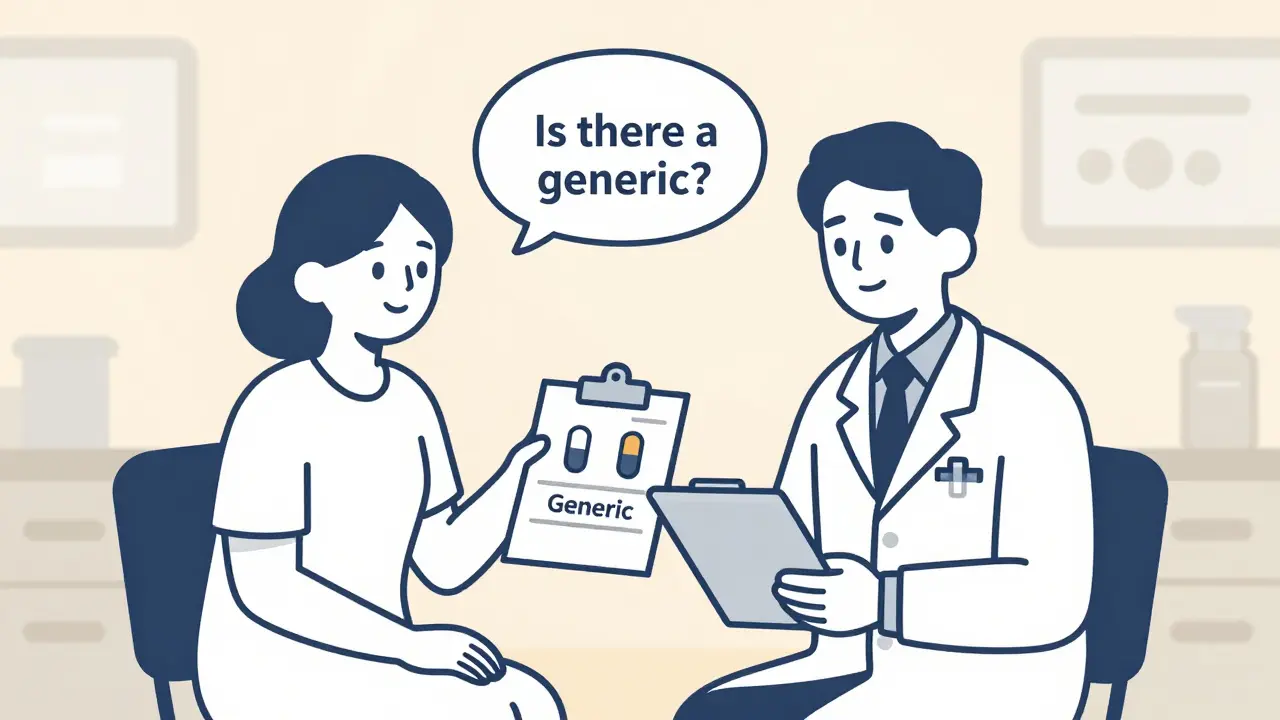
Why You Should Talk to Your Doctor About Generic Medications
Most people don’t realize that the pills they’re taking might be cheaper, just as effective, and already approved by the same agency that checks brand-name drugs. Generic medications contain the exact same active ingredients as their brand-name counterparts. They work the same way in your body. They’re held to the same strict standards. And yet, many patients still hesitate to take them-often because they’re worried they’re not as good.
If you’ve ever looked at your prescription and thought, "Why is this one so much cheaper? Is it really the same?"-you’re not alone. But that question is exactly what you should bring up with your doctor. Starting this conversation isn’t about pushing for a cheaper option. It’s about making sure you understand what you’re taking, why it works, and how it affects your health.
What Exactly Is a Generic Drug?
A generic drug isn’t a copy. It’s not a substitute. It’s the same medicine. The FDA requires that generics have the same active ingredient, strength, dosage form, and route of administration as the brand-name version. That means if you’re taking metformin for diabetes, the generic version has the exact same chemical compound as the brand-name version. No differences in how it treats your condition.
The only differences are in the inactive ingredients-things like dyes, fillers, or coatings. These don’t affect how the drug works. They just change the pill’s color, shape, or taste. That’s why a generic pill might look completely different from the brand-name one. But if you’ve ever switched from one brand of aspirin to another and noticed no change in how it worked, you’ve already experienced this.
The FDA doesn’t approve generics based on trust. They test them. Every batch. Every factory. Every drug. Generics must prove they release the active ingredient into your bloodstream at the same rate and amount as the brand-name drug. That’s called bioequivalence. The FDA requires it to be within 80-125% of the brand-name drug’s performance. That’s not a guess. That’s science.
How Much Money Can You Save?
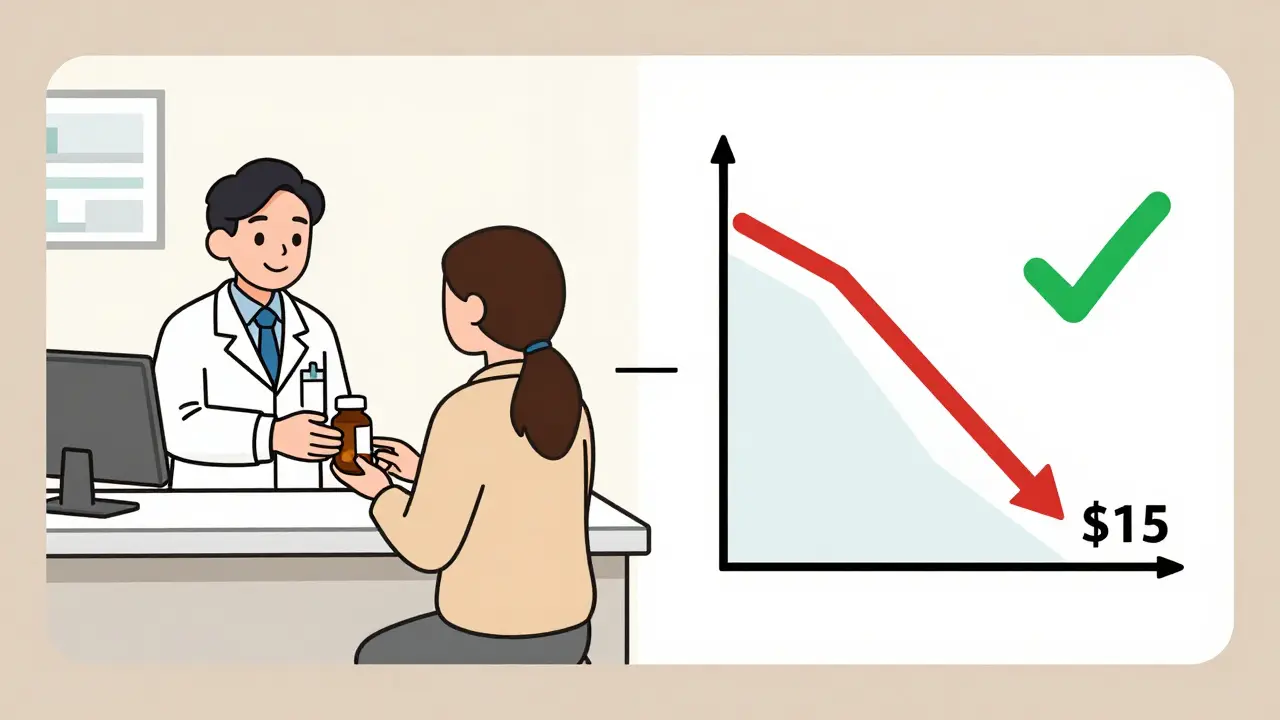
The numbers are hard to ignore. In 2023, the average cost of a generic prescription in the U.S. was $15.78. The average brand-name prescription? $674.89. That’s over 97% less. For people managing chronic conditions like high blood pressure, diabetes, or thyroid disease, that adds up fast.
One study found that patients who switched to generics saved an average of $2,847 per year on their medications. For Medicare beneficiaries, that could mean $5,200 in annual savings-money that could go toward food, rent, or other health needs. And yet, nearly 30% of Medicare patients still refuse generics, even when their doctor recommends them.
It’s not just about cost. It’s about access. When people skip doses because they can’t afford their meds, their conditions get worse. That leads to hospital visits, emergency care, and higher overall costs. Generics help keep people healthy and out of the hospital. That’s why the FDA estimates that avoiding the "nocebo effect"-where people feel worse because they believe a cheaper drug won’t work-could save the U.S. healthcare system $290 billion a year.
Why Do People Doubt Generics?
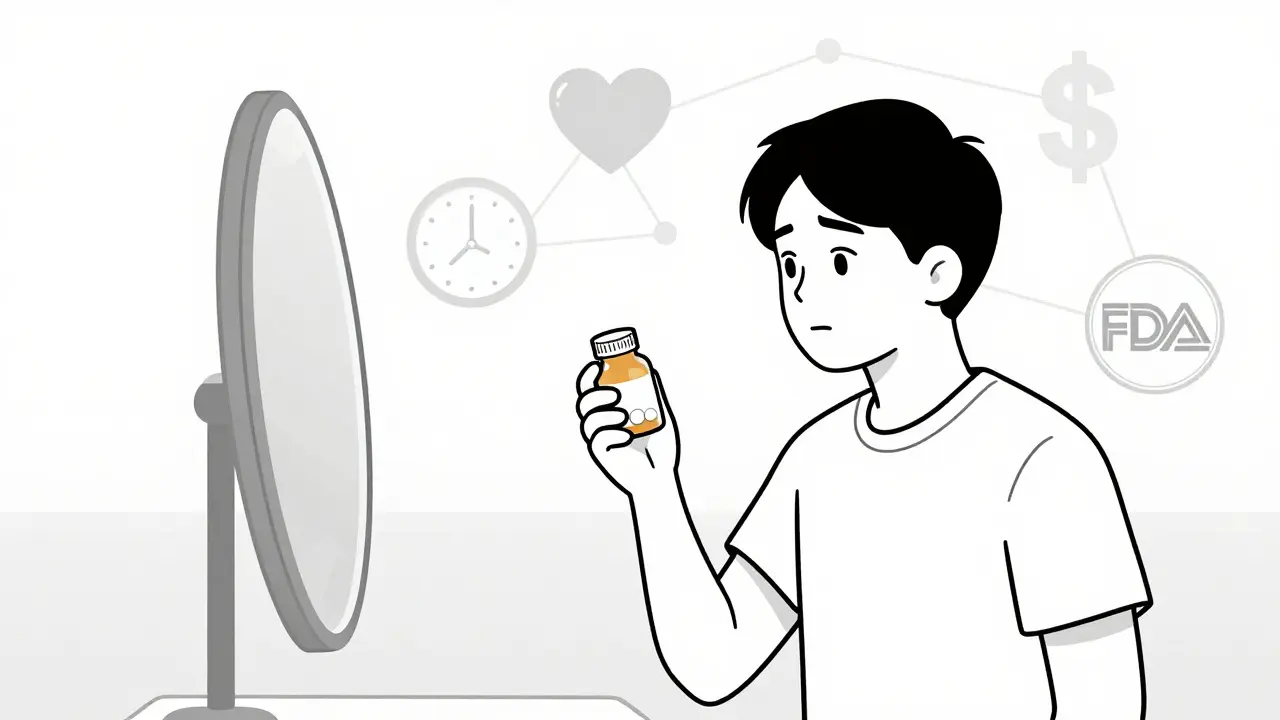
It’s not that people are irrational. They’re reacting to messages they’ve heard for years. Ads for brand-name drugs often make them look more reliable. Packaging looks more professional. Some patients think, "If it’s cheaper, it must be lower quality." That’s called the "cheaper is inferior" heuristic-and it’s strong.
Another concern? Manufacturing. Many people assume generics are made in unsafe overseas factories. But here’s the truth: the FDA inspects every facility-whether it’s in the U.S., India, or Germany-that makes generic drugs. In 2023, 98.7% of generic manufacturing sites passed inspection. The same standards apply to brand-name and generic factories. The only difference? Generic companies don’t spend millions on marketing, so they can pass the savings to you.
Then there’s the fear of side effects from inactive ingredients. A small number of people-about 4.3%-do report differences in how they feel after switching. That’s often because of changes in fillers or coatings, not the active drug. For most drugs, it doesn’t matter. But for a few, like levothyroxine (used for thyroid conditions), the FDA requires tighter controls. If you’re on one of those, your doctor will monitor you closely. But for 99.9% of medications, switching to a generic won’t change how you feel.
How to Start the Conversation With Your Doctor
You don’t need to be an expert. You just need to ask. Here’s how to make it easy:
- Ask what options you have. "Is there a generic version of this medication?" is a simple, direct question. No judgment. No pressure.
- Ask why they recommend it. "Why did you choose this one?" helps you understand if there’s a medical reason to stick with the brand.
- Ask about safety. "Has this generic been tested the same way as the brand-name version?"
- Ask about cost. "How much will this cost me out of pocket?" Sometimes the difference is so small it’s not worth switching. But sometimes, it’s life-changing.
Doctors aren’t pushing generics because they’re cheap. They’re pushing them because they work-and because they help people stay on their meds. Studies show patients who take generics stick with their treatment 8-12% longer than those on brand-name drugs. That’s not luck. That’s better outcomes.
What to Say If Your Doctor Says No
Not every drug has a generic. Some are still under patent. Others are complex-like inhalers or injectables-where switching isn’t straightforward. But if your doctor says no, ask why.
For example: "Is it because the generic hasn’t been proven to work as well?" If the answer is no, then it’s probably just habit or lack of awareness. You can say, "I’ve read that generics are just as safe and effective. Can we look at the data together?"
Some doctors still default to brand names because they’re used to them. But that’s changing. The American Medical Association now recommends doctors use the "Ask-Tell-Ask" method: ask what the patient knows, tell them the facts, then ask them to repeat it back. This simple technique improves understanding and adherence.
What Happens After You Switch?
Most people don’t notice a difference. In a 2023 survey of 12,500 patients, 79% said they saw no change in how their medication worked after switching to a generic. Many said they felt better because they could finally afford to take it every day.
If you do notice something unusual-like new side effects or a change in how you feel-don’t ignore it. Contact your doctor or pharmacist. But don’t assume it’s because the drug is generic. It could be something else: stress, diet, another medication, or even a change in your body’s needs.
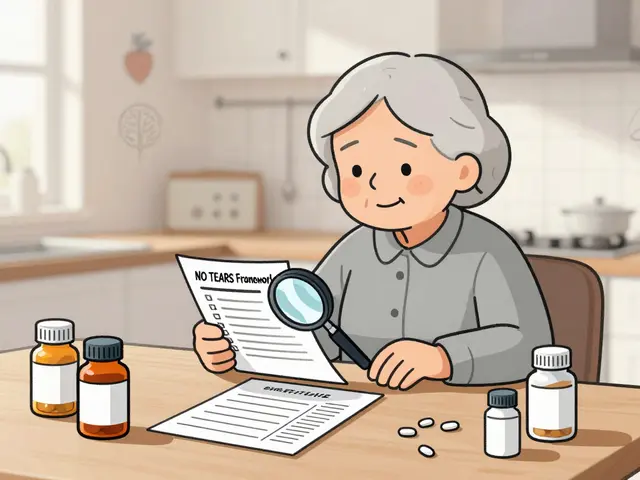
Pharmacists are trained to help with this. If you’re unsure, ask your pharmacist: "Is this the same as the brand-name?" They can explain the differences and reassure you. In fact, 83% of patient concerns are resolved just by talking to a pharmacist.
What’s Changing Right Now?
Things are moving fast. The 2023 Inflation Reduction Act is making generics even more accessible. By 2025, Medicare Part D will cover many generics with $0 cost-sharing. That means if your doctor prescribes a generic, you won’t pay anything out of pocket.
The FDA is also launching new tools. A pilot chatbot called "Generic Drug Navigator" is being tested to answer patient questions in plain language. And more prescriptions will soon include QR codes that link to short videos explaining what the drug does and why the generic is safe.
These changes aren’t about cutting costs. They’re about making sure people get the care they need-without being held back by myths or money.
Final Thought: Your Health Is Worth the Conversation
Generic medications aren’t a compromise. They’re a smart choice. They’ve been tested. They’ve been approved. They’ve been used by millions. And they’ve saved billions.
The next time you get a prescription, ask one simple question: "Is there a generic?" Then listen. You might be surprised by the answer-and by how much better you feel when you finally start taking your meds without worrying about the price tag.
10 Comments
I used to think generics were just 'pharmacy leftovers' until my dad switched to generic metformin and saved $400/month. He didn't feel any different-just less broke. Now he tells everyone at the senior center to ask their doc. Simple question: 'Is there a generic?' Works every time.
bro why u payin 700$ for pills when u can get same thing for 15$? i got generic lisinopril n my bp is perfect. no magic, no hype, just science. stop fallin for ads man.
Let’s be honest-this entire post reads like an FDA pamphlet written by someone who’s never had to pay for insulin out-of-pocket. The bioequivalence standards? Sure, technically true. But let’s not pretend that 80-125% variability doesn’t matter when you’re on a narrow-therapeutic-index drug. And don’t get me started on the fact that 40% of generic manufacturers are based in countries with zero FDA oversight during production. Oh wait-they do have oversight. But it’s scheduled months in advance, and the inspectors are given the tour of the clean room while the real production happens in the basement. It’s not about cost. It’s about control.
I switched to generic levothyroxine and felt like a zombie for 3 weeks. 🤢 Turned out my body needed the brand. Not because it’s better-but because my thyroid is a diva. So yes, generics work for most. But don’t shame people who need the brand. We’re not lazy, we’re just biochemically inconvenient.
They say generics are 'the same'... but have you ever seen the manufacturing logs? The FDA doesn't inspect every batch. They inspect the paperwork. And who writes the paperwork? The same companies that make the brand-name drugs. Same CEOs. Same boardrooms. Same lobbyists. The 'generic' is just the brand-name drug with a different label and a cheaper factory. They don't want you to know that the 'inactive ingredients' are often the same fillers that cause your rash. The real difference? The brand pays for your doctor's lunch. The generic? They pay for your funeral.
The assertion that generics are 'exactly the same' is a gross oversimplification. While the active pharmaceutical ingredient (API) must be bioequivalent, the excipient profile-particularly in extended-release formulations-can significantly alter pharmacokinetics. The FDA’s 80-125% window is not a guarantee of therapeutic equivalence; it’s a statistical tolerance that allows for clinically significant variability in absorption rates. Furthermore, the assumption that patients ‘feel better’ because they can afford generics conflates adherence with efficacy. One can be compliant with a suboptimal regimen and still experience disease progression. This post is dangerously reductive.
I’m from India and we’ve been using generics for decades. My mom takes generic amlodipine for blood pressure and has been stable for 12 years. I know people who are scared of them, but honestly? It’s not the pill-it’s the fear. The real issue is that we’ve been sold the idea that expensive = better. That’s not medicine. That’s marketing. Ask your doctor. Talk to your pharmacist. You’ll be surprised how many of them are just as tired of the brand-name hype as you are.
My pharmacist once told me, 'If your pill looks different but works the same, congrats-you just got scammed by a logo.' I laughed. Then I saved $300. Sometimes the truth is just… cheap.
I used to be on brand-name statins until I switched to generic and started having muscle pain, brain fog, and weird dreams. I went to three doctors and they all said it was 'psychosomatic.' But I know what I felt. And I know that the generic was made in a factory in Hyderabad that got shut down last year for contamination. The FDA says it's fine. But I’ve seen the reports. People don’t talk about this stuff because they’re too scared to admit they were lied to. I’m not anti-generic. I’m pro-survival. And I’m not taking another pill until I see the batch number and the lab report.
I work in a clinic. I see patients every day who skip doses because they can’t afford the brand. One guy with diabetes told me he was using half his insulin because he had to choose between meds and rent. When we switched him to generic metformin and insulin glargine? He started showing up for appointments again. He didn’t say much. Just nodded. But his A1c dropped 3 points. That’s not magic. That’s just… people being able to live. So yeah. Ask for the generic. It’s not about trust. It’s about dignity.