Every year, over a billion people hop on a plane to explore the world. But for many, their biggest travel risk isn’t lost luggage or a missed flight-it’s getting sick. Whether you’re hiking in the Amazon, eating street food in Bangkok, or visiting family in rural India, the biggest threats aren’t the sights you’ll see, but the germs you won’t notice until it’s too late. Travel medicine isn’t about fear-it’s about smart preparation. And the good news? Most travel illnesses are completely preventable.
Get Your Vaccines Right-Before You Go
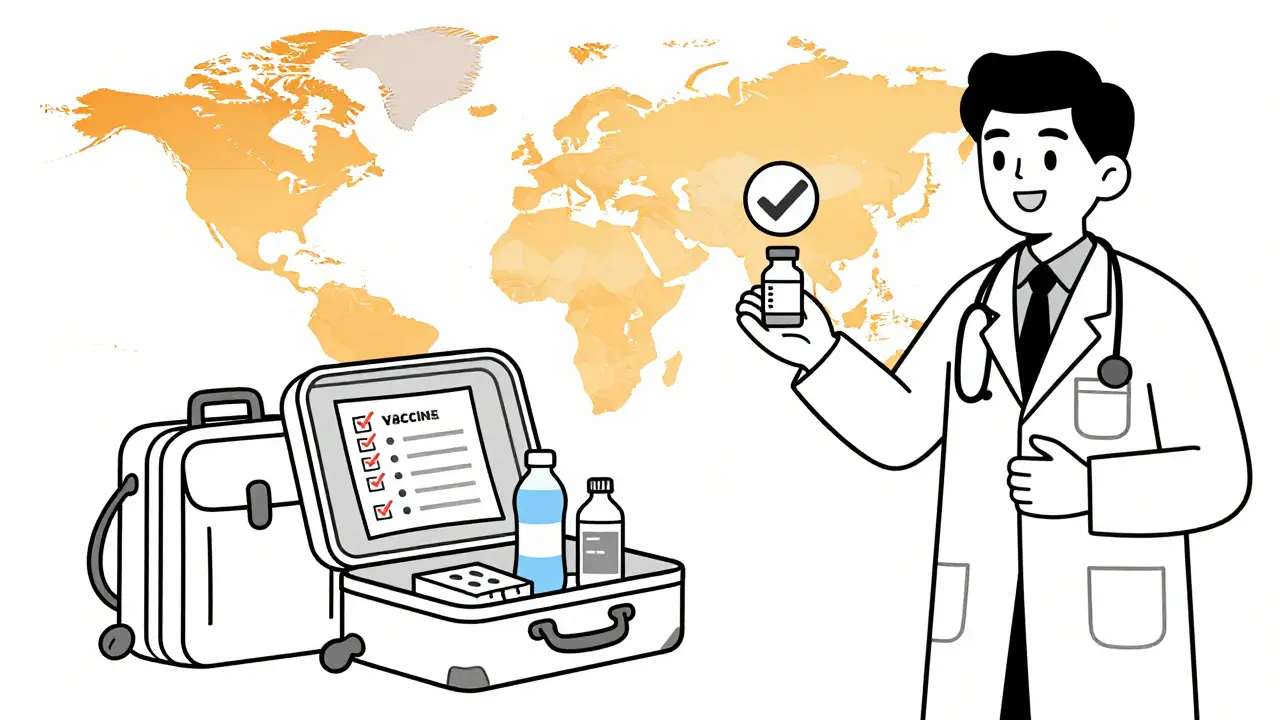
Vaccines are the first line of defense. The CDC says Hepatitis A is the most common vaccine-preventable illness travelers get. It’s not rare. Around 1.4 million cases happen globally every year. You can catch it from contaminated food or water, even from ice cubes in your drink. The vaccine? Two shots, six to twelve months apart. But here’s the catch: most people don’t get the second shot. One dose gives you 95% protection, and it lasts for decades. But two doses? That’s lifelong. Don’t skip it.Typhoid is another big one. If you’re going anywhere with poor sanitation-parts of South Asia, Africa, Latin America-you need it. The newer conjugate vaccine (TCV) works better than the old one. It’s 87% effective for three years. The old version? Only 50-80%, and it wears off faster. Get it at least 10 days before travel. And don’t forget the basics: MMR, Tdap, and chickenpox shots should be up to date. If you’re not sure, check your records. A quick call to your doctor can save you a hospital trip abroad.
Some vaccines aren’t optional. Yellow fever? If you’re going to parts of Africa or South America, you need the certificate. Over 190 countries require it. Show up without it? You could be turned away-or quarantined for six days. That’s not a vacation. That’s a nightmare.
Malaria Prophylaxis: Choose Wisely, Take Consistently
Malaria isn’t just a tropical disease anymore. Climate change is pushing it into new areas. Since 2020, the number of people at risk has grown by 15%. That means even places you thought were safe might not be anymore.You have four main options for prevention, and each has trade-offs:
- Atovaquone-proguanil (Malarone): 95% effective. Take one pill daily, starting 1-2 days before travel. Side effects? Rare. But it costs about $220 for a 3-week trip.
- Doxycycline: 90% effective. Costs $45 for the same period. But 30% of users get sunburned easily. If you’re planning beach days, this might not be your best pick.
- Mefloquine (Lariam): Take one pill weekly, starting 2-3 weeks before. It’s cheap. But some people have nightmares, dizziness, or even panic attacks. Reddit users report ER visits because of it. If you’ve ever had anxiety or depression, skip this one.
- Tafenoquine (Krintafel): Newer, weekly dose, approved for kids over 16 in 2025. But you must get tested for G6PD deficiency first. If you’re deficient (common in malaria zones), it can destroy your red blood cells. Testing adds a step, but it’s worth it if you’re traveling long-term.
Here’s the hard truth: only 62% of travelers stick to their malaria pills. That’s why 3,000 to 5,000 cases of imported malaria happen in the U.S. every year. You can’t just take it when you feel risky. You have to take it every single day-no exceptions. Set a phone alarm. Leave pills next to your toothbrush. Make it a habit.
Safe Food Practices: The Rule That Saves Lives
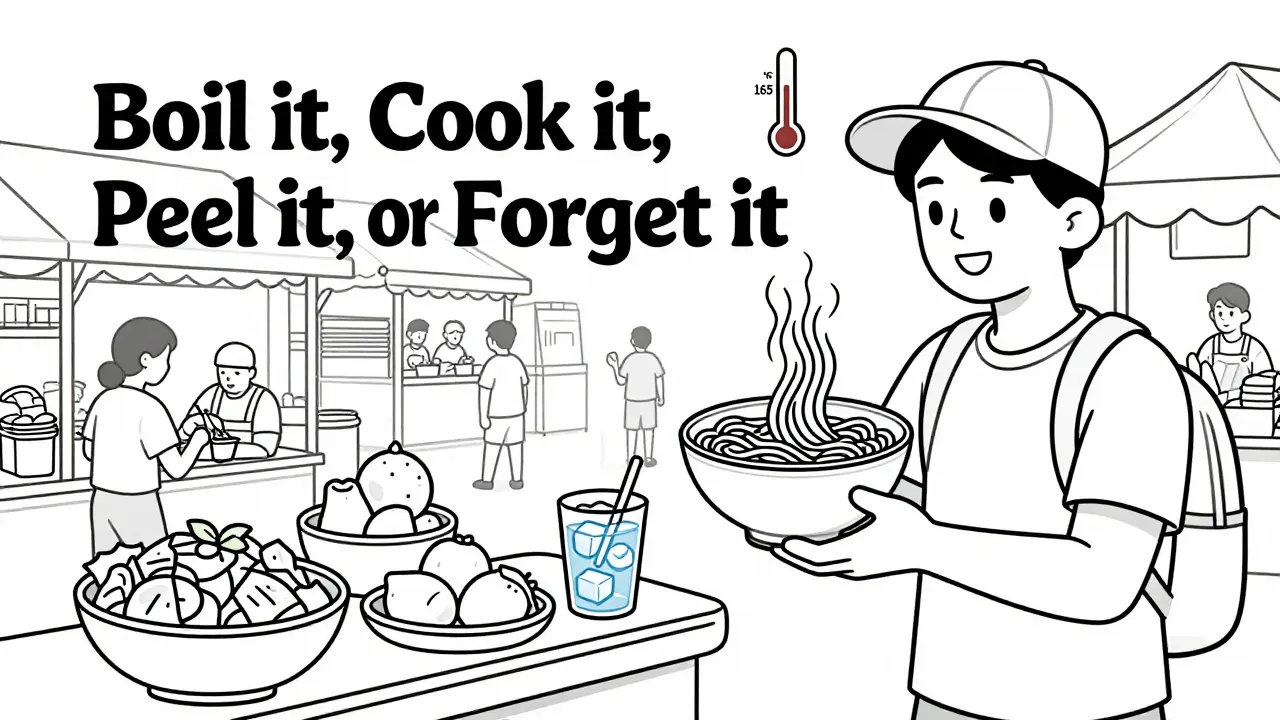
Travelers’ diarrhea affects 30% to 70% of international travelers. In Southeast Asia? It’s closer to 70%. Eighty percent of those cases come from bacteria-mostly E. coli. The good news? You can cut your risk by half just by following one simple rule: boil it, cook it, peel it, or forget it.Here’s what that means in practice:
- Boil it: Only drink bottled water or water you’ve boiled for at least one minute. Ice? If you didn’t make it yourself, skip it.
- Cook it: Food should be steaming hot. Not warm. Not lukewarm. Steaming. Poultry? 165°F (74°C). Ground meat? 160°F (71°C). Fish? 145°F (63°C). Use a pocket thermometer if you’re serious.
- Peel it: Bananas, oranges, mangoes? Fine. But don’t eat sliced fruit from a street cart. Someone peeled it hours ago. Wash your hands before eating. Hand sanitizer works too-just make sure it’s at least 60% alcohol.
- Forget it: Raw salads, unpeeled fruit, tap water, unpasteurized dairy? Avoid them. Even in fancy hotels.
And here’s a secret weapon: bismuth subsalicylate (Pepto-Bismol). Take two tablets four times a day. It cuts your risk of diarrhea by 65%. It’s not a cure. But it’s a shield. Many travelers swear by it. One nurse who spent three months in Southeast Asia said it cut her cases by 70%.
The Hidden Risks You Can’t See
You might think you’re being careful. But here’s what trips people up:- Medication rules vary by country. Opioids, ADHD meds, even some antibiotics are banned in places like Japan, Singapore, and the UAE. Carry your prescription in the original bottle. Bring a letter from your doctor with the generic name. 98% of travel clinics say this is essential.
- Antibiotics for diarrhea? They’re getting less reliable. Azithromycin used to work 90% of the time. Now, in Southeast Asia, resistance is over 30%. That means your go-to pill might not work. Don’t wait to get sick before you plan. Ask your doctor for a standby prescription before you leave.
- Timing matters more than you think. The CDC says 73% of travelers wait until less than two weeks before departure to see a doctor. But Hepatitis A needs two doses. Some vaccines take weeks to build immunity. Start planning 4-6 weeks out. If you’re leaving in a week? Still go. You might get partial protection. And you’ll get advice you didn’t know you needed.
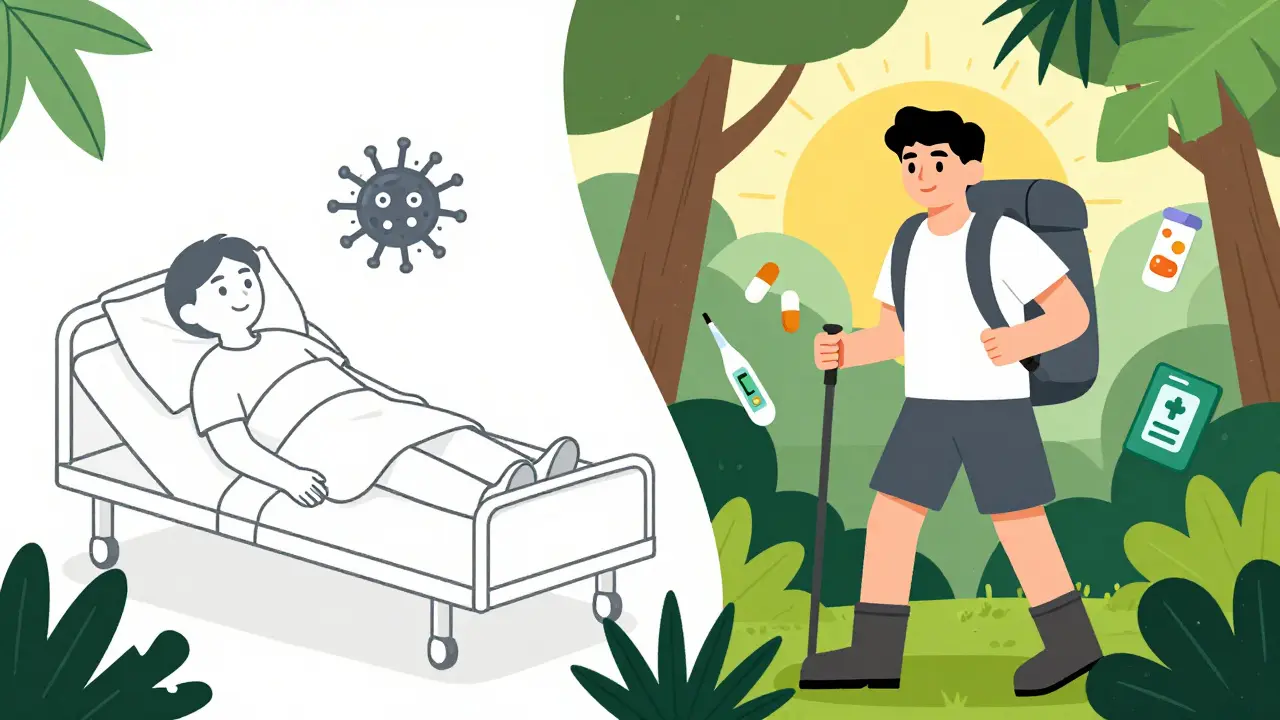
What Happens When You Skip It?
One traveler, ‘GlobeTrotter88’ on Reddit, took mefloquine for a trip to Thailand. She had severe anxiety, hallucinations, and ended up in the ER. She’s fine now-but she won’t travel without a full medical consult again.Another, ‘FoodieAbroad,’ got Hepatitis A in Mexico. She followed all the rules. But the ice in her cocktail? Contaminated. She was hospitalized for two weeks. She’s now a vaccine advocate.
And then there’s the quiet majority-the ones who don’t post online. They get sick. They cancel trips. They lose income. They pay thousands in medical bills abroad. And they never told anyone why.
Travel medicine isn’t about paranoia. It’s about control. You can’t control the food vendor. You can’t control the water source. But you can control your vaccines, your pills, and your choices. That’s power.
What’s Changing in 2026?
The CDC just released its 2026 Yellow Book. It includes new advice for high-altitude malaria zones and updated food safety tips based on climate-driven changes in bacteria growth. Tafenoquine is now approved for teens over 16. Digital health passports? Used in 127 countries. AI tools can now predict your personal risk based on your itinerary, diet, and medical history.But the biggest change? Awareness. More clinics now offer pre-travel visits. More employers offer travel health programs. And more travelers are asking questions. The goal isn’t to stop you from traveling. It’s to make sure you come home.
Do I really need to see a doctor before traveling?
Yes-if you’re going anywhere outside North America, Western Europe, Australia, or New Zealand. Even then, if you’re pregnant, have a chronic illness, or are traveling with kids, a consultation is smart. Travel clinics don’t just give shots. They assess your route, activities, length of stay, and health history. One visit can prevent hospitalization.
Can I get travel vaccines at my regular doctor?
Sometimes. But not always. Many family doctors don’t stock travel vaccines. They may not know the latest guidelines. Travel clinics specialize in this. They have the right stock, the right timing, and the right advice. If your doctor doesn’t offer it, ask for a referral. Or use the CDC’s clinic finder.
Is malaria prophylaxis necessary if I’m only staying in a resort?
Yes. Mosquitoes don’t care if you’re in a five-star hotel. They bite at dusk and dawn. Even if your room has AC and screens, you might go out for dinner or a walk. Malaria risk isn’t about luxury-it’s about location. Check the CDC map for your destination. If it’s shaded, take pills.
What if I get sick while traveling?
If you have travelers’ diarrhea, stay hydrated. Use oral rehydration salts. If you’re not improving in 48 hours, or you have fever, blood in stool, or severe pain, seek care. Don’t wait. If you have a standby antibiotic (like azithromycin), you can start it early-but only if you’ve been prescribed it before you left. Never buy antibiotics abroad without knowing what you’re taking.
Are natural remedies like garlic or probiotics effective?
No. There’s no solid evidence that garlic, probiotics, or herbal supplements prevent travel illnesses. Some might help your gut, but they won’t stop Hepatitis A, typhoid, or malaria. Rely on science, not stories. Vaccines, pills, and food rules are proven. Everything else is a gamble.
Travel isn’t about avoiding risk. It’s about managing it. With the right prep, you can explore the world without becoming a statistic. Don’t wait until you’re sick to learn how to stay safe.