

CNS Depression Risk Calculator
Assess Your Risk
This tool calculates your risk of dangerous CNS depression when combining valerian with other medications. Based on CDC and NIH guidelines, use this to make informed decisions about your health.
Your Risk Assessment
People take valerian root to help them sleep. It’s natural, widely available, and many believe it’s harmless. But what happens when you mix it with your prescription sleep pill, anxiety med, or even a nightcap? The risk isn’t just theoretical-it’s real, and it can be dangerous.
How Valerian Actually Works
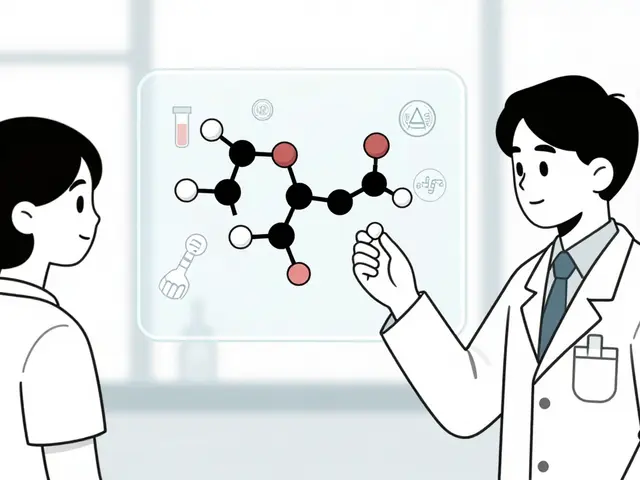
Valerian isn’t just a placebo. Its root contains compounds like valerenic acid and valepotriates that affect your brain’s GABA system. GABA is the main calming neurotransmitter in your nervous system. When it’s active, you feel relaxed. When it’s boosted, you feel sleepy.
Valerian doesn’t create GABA. Instead, it stops your brain from breaking it down. It also helps GABA stay in the space between nerve cells longer. That’s why some people feel calmer after taking it. But here’s the catch: so do benzodiazepines like Xanax, barbiturates, sleep meds like Ambien, and even alcohol. All of them work the same way-by increasing GABA’s effect.
That’s not coincidence. It’s pharmacology. And when you stack valerian on top of any of those, you’re stacking effects. Not adding them. Amplifying them.
What Happens When You Mix Them
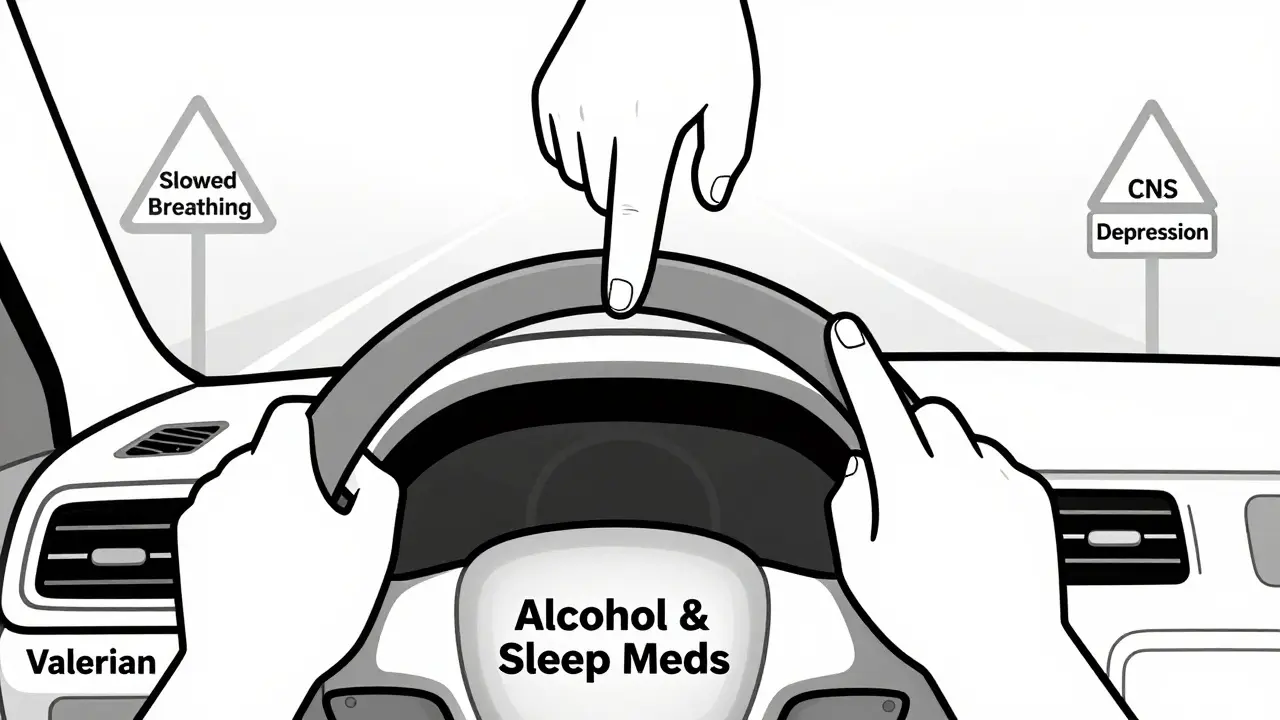
Imagine your nervous system as a car. Valerian is pressing the brake. So is your sleeping pill. So is the beer you had after dinner. Now imagine someone else gets in the driver’s seat and pushes down even harder. That’s what additive CNS depression looks like.
It’s not just feeling drowsy. It’s slowed breathing. Slowed heart rate. Confusion. Loss of coordination. In severe cases, it’s coma or respiratory failure. These aren’t rare theoretical outcomes-they’re documented risks.
WebMD classifies combining valerian with alcohol or alprazolam as a major interaction. That means: don’t do it. The Mayo Clinic says it clearly: valerian increases the sedative effect of depressants like narcotics and benzodiazepines. The NIH Office of Dietary Supplements warns it might cause “additive therapeutic and adverse effects.”
And this isn’t just about pills. It’s about dental visits. People take valerian before appointments because they’re nervous. Then they get local anesthesia, which also depresses the CNS. The result? Over-sedation. Some patients have needed emergency intervention because no one asked if they took herbs.
Why the Confusion?
You might have heard that valerian doesn’t interact with meds. That’s not wrong-it’s incomplete.
A 2005 mouse study from Mexico tested valerian with several CNS depressants and found no increased sedation. That study gets cited often. But here’s what most people leave out: it used Valeriana edulis, not Valeriana officinalis-the kind sold in most U.S. and European stores. And it was done on mice. Mice don’t take valerian every night for months. They don’t have liver disease. They don’t take five other meds. Human biology is more complex.
Plus, valerian supplements vary wildly. One bottle might have 0.5% valerenic acid. Another might have 2.8%. Some don’t even contain valerian at all. The FDA doesn’t regulate herbal products like it does prescription drugs. You can’t know what you’re getting. That makes predicting interactions impossible.
Who’s at Highest Risk?
If you’re taking any of these, you’re in a higher-risk group:
- Benzodiazepines (Xanax, Klonopin, Ativan)
- Barbiturates (phenobarbital)
- Sleep medications (zolpidem, eszopiclone)
- Opioids (oxycodone, hydrocodone, tramadol)
- Antidepressants with sedating effects (trazodone, mirtazapine)
- Antihistamines (diphenhydramine, doxylamine)
- Alcohol
Older adults are especially vulnerable. Their bodies clear drugs slower. Their brains are more sensitive to GABA. A dose that’s fine for a 30-year-old can be dangerous for a 70-year-old.
And if you’ve had breathing problems-sleep apnea, COPD, asthma-you’re at even greater risk. Slowed breathing isn’t just uncomfortable. It can be fatal.
What Should You Do?
You don’t have to quit valerian cold turkey. But you need to be smart.
First: talk to your doctor. Not your pharmacist. Not your friend. Your doctor. Tell them exactly what you’re taking-every pill, every capsule, every tea. Even if you think it’s “just herbal.”
Second: if you’re already on a sedating medication, don’t add valerian without approval. There’s no safe dose established for combining them. The risk isn’t worth the marginal sleep benefit.
Third: if you’re using valerian for chronic insomnia, ask why. Is it stress? Poor sleep habits? Sleep apnea? Depression? Valerian treats symptoms, not causes. And if you’ve been using it for more than a few weeks, you might be masking something serious.
Fourth: if you’re scheduled for surgery or a dental procedure, tell your provider. Don’t assume they’ll ask. Many don’t. A 2021 clinical education blog noted that patients often don’t mention supplements unless directly questioned. Don’t be one of them.

Alternatives That Are Safer
If you need help sleeping and you’re on sedating meds, there are better options:
- Cognitive Behavioral Therapy for Insomnia (CBT-I): Proven to work better than sleep meds long-term. No risk of interaction.
- Melatonin: Works differently than GABA. Lower risk of interaction, though not zero. Still check with your doctor.
- Good sleep hygiene: Dark room, cool temperature, no screens before bed, consistent schedule. Often overlooked, but the most effective tool.
- Magnesium glycinate: Some evidence it helps with sleep onset without CNS depression.
None of these are magic. But they’re safer. And they don’t risk your breathing.
The Bottom Line
Valerian isn’t evil. It’s not poison. But it’s not harmless either. When paired with sedating medications, it can push your nervous system into dangerous territory. The science isn’t perfect. The human data isn’t overwhelming. But the mechanism is clear. The warnings are consistent. And the consequences are severe.
Don’t assume natural means safe. Don’t assume your doctor knows you’re taking it. And don’t risk your life because you think a root extract won’t hurt.
If you’re on a sedative, talk to your doctor before taking valerian. If you’re not sure, don’t take it. Better safe than sorry isn’t just a phrase-it’s a medical principle.

10 Comments
Wow, this is the clearest breakdown of valerian risks I’ve ever read. I’ve been taking it with trazodone for years thinking ‘it’s just herbal’ - no more. I’m scheduling a chat with my doctor tomorrow. Thanks for the wake-up call.
Also, CBT-I is life-changing. I was skeptical until I tried it. No pills, no interactions, just better sleep. Highly recommend.
And yes - natural doesn’t mean safe. I wish more people understood that.
brooo 😭 i took valerian before my dentist appointment last month and woke up feeling like i’d been hit by a truck. they had to pause the procedure because i was ‘too out of it.’
turns out i didn’t even know my dentist didn’t ask about supplements. i thought they only cared about ‘real’ meds. now i carry a list. like, on paper. in my wallet. 😅
people dont get it valerian is not a toy its like mixing water with gasoline and calling it fuel
i used to take it with klonopin for anxiety and one night i couldnt get up for 6 hours just staring at the ceiling
no joke i thought i was having a stroke
now i only take it if im not on anything else and even then i wait 8 hours
your body dont care if its natural or not
Don’t mix. Simple as that.
my grandma takes valerian every night and her meds for blood pressure and heart
she says she feels better
but she also says she forgets where she put her keys every 5 minutes
maybe its the valerian maybe its age maybe its both
still i told her to stop
she said im trying to control her life
but i just dont want her to fall asleep on the toilet
so you're telling me the whole ‘natural healing’ movement is just a scam to get people to overdose on herbs while pretending they’re ‘holistic’?
oh wow i never thought about that
maybe my yoga instructor who sells ‘pure valerian tincture’ is actually a murderer in disguise
also i hate how everyone acts like they’re the first person to figure this out like its some big secret
it’s 2024 we have google and still people are dying from tea
There’s a reason the FDA doesn’t regulate herbs like drugs. Because they’re not drugs. But that doesn’t mean they’re harmless. The burden of proof is on the user. Not the manufacturer. Not the doctor. You.
Know your stack. Know your risks. No one else will.
I’ve spent years helping people navigate the gray zones of mental health and supplements - and I’ve seen too many stories like this. One woman took valerian with her nightly mirtazapine and ended up in the ER with bradycardia. She didn’t even realize it was connected.
It’s not about fear. It’s about awareness. The body doesn’t distinguish between ‘prescription’ and ‘herbal’ - it just responds to chemistry. And when two things amplify the same signal, the volume doesn’t just go up - it explodes.
That’s why I always tell my clients: if you’re using something to calm your nervous system, ask yourself - are you calming it… or drowning it?
And if you’re unsure? Pause. Breathe. Talk to someone who knows pharmacology - not just someone who sells tea bags on Etsy.
You deserve to sleep well. But you deserve to wake up too.
so you’re saying the only safe herbal sleep aid is the one that doesn’t work
cool
so now i’m supposed to suffer through insomnia because some lab rat in a white coat said ‘maybe’
my grandpa smoked weed with his heart meds and lived to 92
so yeah i’ll take my chances
Okay but let’s go deeper. Why are we even using valerian in the first place? Because modern life is a sleep-deprived hellscape and we’re all just trying to survive the 9-to-5 with a 3 a.m. panic spiral and a 10 a.m. Zoom call.
Valerian isn’t the problem - it’s the symptom.
We’ve outsourced our sleep hygiene to pills and powders because we’re too exhausted to fix the root causes - blue light, stress, irregular schedules, caffeine after noon, emotional burnout.
And yes, mixing it with benzos is dangerous - but what’s more dangerous? The interaction… or the fact that we’ve normalized living in a state of chronic sedation just to function?
CBT-I works because it doesn’t mask - it rebuilds. It’s not a quick fix. It’s a lifestyle overhaul. And honestly? That’s terrifying. So we reach for the root instead.
But here’s the truth: no supplement can heal a life that’s broken. Only courage, consistency, and a damn good therapist can do that.
So yes - stop mixing valerian with your meds.
And then ask yourself - why did you need it in the first place?