
You take your medicine every day like clockwork. But what if the pill in your hand isn’t what it claims to be? Counterfeit medications are more common than most people realize-and they can kill you without warning. The World Health Organization says up to 30% of drugs in some countries are fake. Even in places like New Zealand, the U.S., or the UK, you’re not immune. These aren’t just weak or expired pills-they’re dangerous imitations made to look real, often containing toxic chemicals, deadly doses of fentanyl, or nothing at all.
It didn’t work. At all.
The most common sign you’ve taken a fake medication? Nothing happens. You take your blood pressure pill, but your reading stays high. You take your diabetes medicine, and your sugar spikes. You take your antidepressant, and the fog doesn’t lift. This isn’t tolerance. It’s not your body adapting. It’s because the pill has no active ingredient. Eli Lilly reports that 89% of counterfeit medication complaints involve complete treatment failure. If your medicine suddenly stops working, especially after switching pharmacies or buying online, that’s not normal. It’s a red flag.New side effects you’ve never felt before
Your body knows your medicine. You’ve taken it for months or years. You know how it makes you feel-maybe a little dizzy, maybe a dry mouth. But now you’re sweating like you ran a marathon, your heart is racing, or you feel like you’re going to throw up for no reason. These aren’t side effects listed on the label. They’re signs your pill contains something dangerous. The FDA says 74% of verified counterfeit cases involve new or unusual symptoms. That could mean your antidepressant was swapped with a stimulant. Your painkiller might have fentanyl in it. Your allergy pill could be laced with meth. Fake pills don’t just lack medicine-they add poison.Physical changes to the pill or packaging
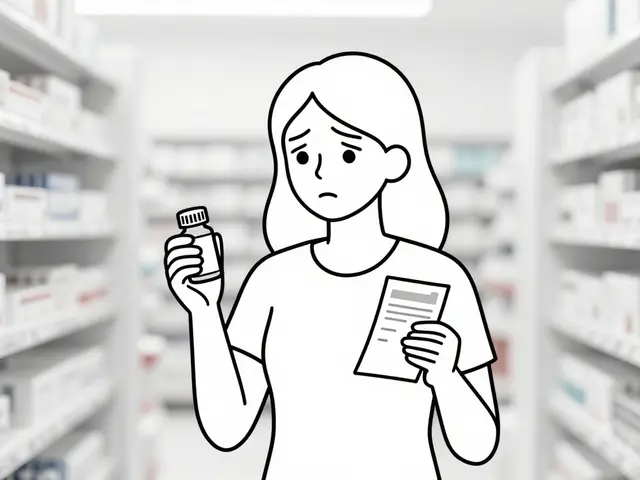
Look closely. Really closely. Compare your current pill to the last bottle you had. Is the color slightly off? Is the logo blurry? Are the letters on the tablet uneven or faded? Fake pills often have cracks, bubbles, or crumbly surfaces. Real pills are made with precision. They’re smooth, uniform, and hard. If your pills feel soft or break apart easily, that’s not normal. Check the packaging too. Misspellings are the #1 giveaway. Pfizer found that 78% of counterfeit drugs have at least one spelling error on the label. Check the expiry date. Is it smudged? Is it stuck on over the original? Is the bottle a different size? Authentic packaging has security features: holograms, color-shifting ink, tamper-proof seals. If those are missing, it’s fake.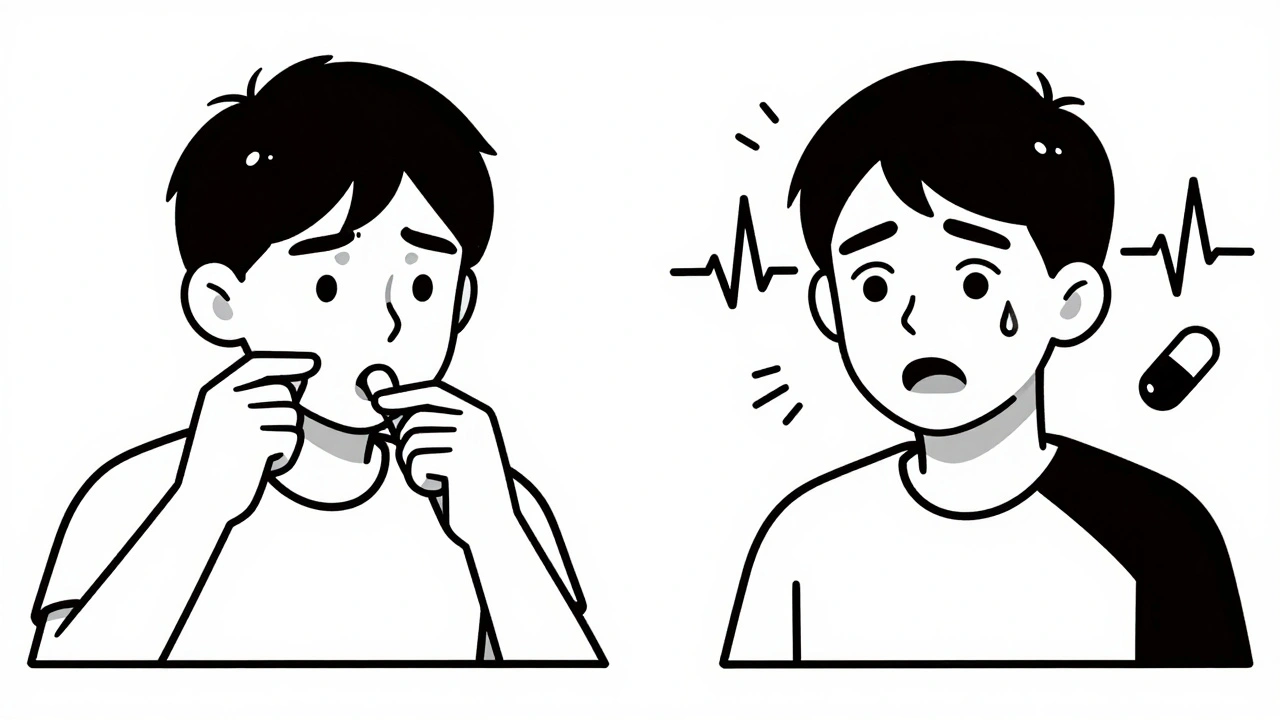
Sudden overdose symptoms-especially with painkillers or ADHD meds
If you took what you thought was oxycodone, Adderall, or Xanax and within 15 to 30 minutes you feel extremely drowsy, your pupils shrink to pinpoints, or you can’t breathe-call emergency services immediately. These are signs of fentanyl overdose. The DEA found that 26% of counterfeit pills seized in 2021 contained a lethal dose of fentanyl. That’s enough to kill someone who’s never used opioids before. Teens are especially at risk. In 2021, 977 teenagers in the U.S. died from fake pills they thought were prescription meds. Same goes for fake Adderall. If you suddenly feel wired, your heart rate jumps past 120 beats per minute, your body overheats, or you can’t sleep for days-you may have taken meth instead. These aren’t side effects. They’re poison.Where you bought it matters more than you think
Buying pills online is the #1 way people get counterfeit meds. The DEA says 96% of websites selling prescription drugs are illegal. And 89% of those sell fake pills. Even if the site looks professional, has fake reviews, or offers discounts, it’s a trap. You can’t tell a fake from a real pill just by looking. That’s why pharmacies that follow regulations are your safest bet. If your doctor prescribes a medication, get it filled at a licensed pharmacy-not a random website, not a social media seller, not a friend with a “good deal.” The same goes for buying meds while traveling. Unregulated markets in other countries are hotspots for counterfeits.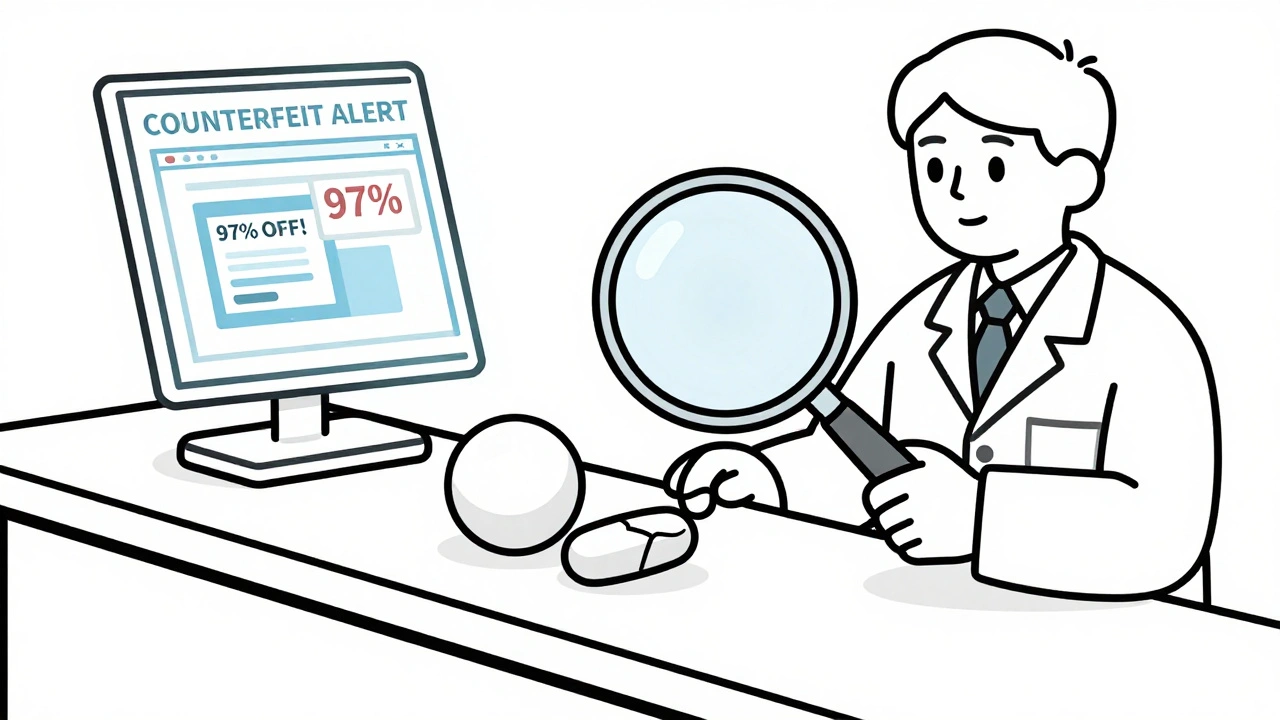
What to do if you suspect a fake
Don’t take another pill. Don’t flush it. Don’t throw it in the trash. Keep it. Call your pharmacist right away. Show them the pill and the packaging. Pharmacists have access to manufacturer databases and can check the lot number against known counterfeit lists. Eli Lilly, Pfizer, and Merck all track fake lots and provide free verification tools on their websites. If your pharmacy doesn’t know what to do, call the drug manufacturer directly. The number is on the box. Report it to your national health authority-like MedSafe in New Zealand or the FDA in the U.S. They need this data to track fake drug rings. If you’ve already taken the pill and feel sick, go to the hospital. Bring the pill with you. That’s the only way doctors can test for toxins.How to protect yourself
- Always get prescriptions filled at licensed pharmacies. Ask if they’re part of a trusted network. - Never buy medicine online unless it’s from a verified pharmacy with a physical address and a licensed pharmacist on staff. - Compare every new refill to the last one. Take a photo of your pill if you’re unsure. - If something feels off-trust your gut. It’s better to be safe than sorry. - Talk to your doctor if your meds stop working or cause new side effects. Don’t assume it’s your body changing. - Teach teens and older relatives about fake pills. They’re being sold as party drugs, study aids, or anxiety relief-but they’re deadly.It’s not just about money-it’s about survival
Counterfeit drugs aren’t a victimless crime. They’re a silent killer. In the U.S. alone, 12,000 people died in 2023 from fake opioids. In places with weak regulation, the numbers are worse. The criminals behind this don’t care who dies. They just want your money. But you can fight back. By knowing the signs-missing effectiveness, strange side effects, weird packaging-you can spot danger before it’s too late. And by reporting it, you help protect others.How can I tell if my medicine is fake just by looking at it?
Look for inconsistencies: mismatched colors, blurry logos, misspelled words, uneven tablet shapes, or a different smell. Real pills are made with strict precision-so if your pill feels softer, crumblier, or looks slightly off compared to your last refill, it could be fake. Check the packaging for missing holograms, tampered seals, or altered expiry dates. Even small differences, like a 2mm difference in bottle size, can signal a counterfeit.
Can fake pills contain real medicine?
Sometimes, but rarely enough to help. Some counterfeit pills contain a tiny amount of the real drug-just enough to trick you into thinking it’s working. But most contain no active ingredient at all. Others replace the real drug with something dangerous, like fentanyl, meth, or rat poison. Even if it has a little real medicine, the dose is unreliable. That’s why you might feel okay one day and overdose the next.
I bought medicine online and feel sick. What do I do?
Stop taking it immediately. Call emergency services if you have trouble breathing, chest pain, extreme drowsiness, or a rapid heartbeat. Then contact your pharmacist or doctor. Save the pill and packaging. Report the website to your country’s health agency-like MedSafe in New Zealand or the FDA in the U.S. Online pharmacies that sell prescription drugs without a valid license are illegal and almost always sell fake or dangerous products.
Are counterfeit drugs only a problem in developing countries?
No. While up to 30% of drugs are fake in some low-income countries, counterfeit meds are a global issue. In the U.S., Canada, Australia, and New Zealand, the percentage is lower-around 1%-but the danger is just as real. Criminals target wealthier countries because people pay more for brand-name drugs. Online sales make it easy to ship fake pills across borders. A fake heart pill bought from a website in China can end up in your medicine cabinet in Auckland.
Can pharmacists detect fake pills?
Yes, but not always by sight. Pharmacists are trained to spot packaging errors, check lot numbers against manufacturer databases, and verify security features. Many pharmacies use systems that flag suspicious prescriptions. But the only way to be 100% sure is lab testing. If you report a suspicious pill, your pharmacist can send it to a lab for analysis. They’re your first line of defense.
Why don’t governments shut down these fake drug websites?
They try-but it’s like playing whack-a-mole. Fake websites pop up faster than they can be shut down. Many operate from countries with weak enforcement. Even when one site is closed, another takes its place with a new domain, logo, and fake reviews. The real solution is public awareness. If fewer people buy from unverified sources, the market shrinks. Reporting suspicious sites helps authorities track patterns and take down networks.
14 Comments
So now we’re supposed to trust Big Pharma even more? Lol. These ‘fake pill’ stories are just fearmongering to keep us buying expensive brand-name crap. I bought my Adderall off a guy on Instagram for $5 a pill-worked better than my prescription anyway. They’re just trying to scare us so we don’t cut corners. Wake up.
What if the real medicine is the fake one? I mean, think about it-we’ve been told for decades that these pills fix us, but what if the entire system is the illusion? Maybe the body doesn’t need chemicals at all. Maybe the placebo effect is the only real medicine. And now they’re selling us poison to keep us dependent? It’s poetic, really. The cure is the disease.
India has been fighting this for years. You think it’s new? We’ve seen pills with chalk, rat poison, even paint. My cousin took ‘Vicodin’ from a roadside vendor-ended up in ICU. No one cared. Here, they make a whole documentary. In Mumbai? They call it ‘business.’
Yall are so weak. You buy meds from some sketchy site and then act shocked when you get sick? Dumbass. If you can’t afford real meds, go to a clinic. Don’t be some broke-ass kid buying ‘Xanax’ off a TikTok ad like it’s a Fortnite skin. This isn’t a Netflix doc-it’s your life. You get what you pay for. And you paid for death.
Fake pills kill. End of story. Report them. Don't wait.
Let me tell you something, folks-these counterfeiters are not just criminals, they’re traitors! They’re selling death in pill form to our children while our government naps! I’ve seen the reports-fentanyl-laced ‘Adderall’ in school bathrooms! This is biological warfare against American families! We need drones over dark web marketplaces! We need martial law for pharmacy fraud! This isn’t a public health issue-it’s an invasion!
It is, without question, an egregious dereliction of regulatory oversight that such a perilous phenomenon persists in a nation that purports to value public health. One cannot help but observe the alarming correlation between the erosion of pharmaceutical oversight and the proliferation of digital marketplaces that operate outside the purview of licensed practitioners. The moral failure here is not merely logistical-it is existential.
I used to think my anxiety meds were working. Then one day I felt like my chest was on fire. Didn't say anything. Just stopped taking them. Turned out the bottle was fake. I didn't need pills. I needed silence.
OMG I had the SAME THING happen to me!! 😭 I bought my insulin from a ‘discount pharmacy’ online and my sugar went CRAZY!! I cried for 3 hours!! I sent the bottle to Pfizer and they said it was fake!! 😱 I’m so traumatized!! I now take my meds from my grandma’s pharmacy in Kerala-she’s 78 and still remembers my name!! ❤️🙏
Why are we even talking about this? It’s obvious. The government lets this happen so we stay dependent. They profit off the fear. The FDA, the DEA, the WHO-they’re all in on it. You think they want you healthy? No. They want you buying pills forever. Fake meds? It’s a controlled rollout. Wake up. The real poison is the system.
Hey everyone, I just wanted to say thank you for sharing this. I’m from Mexico and we’ve had fake meds here for years. But I never realized how big it is in the US too. We need to talk about this more. Not with fear-just with care. Tell your friends. Check your pills. We’re all in this together 💛
It’s fascinating, really, how the structural vulnerabilities in global pharmaceutical supply chains have been exacerbated by the commodification of health through digital platforms. The convergence of e-commerce logistics, regulatory arbitrage across jurisdictions, and the psychological appeal of cost-efficiency has created a perfect storm where counterfeit medications thrive. What’s more troubling is that the cognitive dissonance among consumers-believing they’re making a rational economic choice while ignoring the existential risk-mirrors broader patterns of late-stage capitalist self-deception. We optimize for price, not safety, and then act surprised when the system collapses. The real tragedy isn’t the fentanyl in the pill-it’s that we’ve normalized the idea that our health is a transaction.
Okay but have you checked the lot number? I saw this one guy on Reddit who said his ‘Cialis’ had the wrong imprint code. He called the manufacturer and they said it was fake. Then he found out his pharmacist had been switching his meds for years. Like… why would you do that? Who even does that? I’m not even mad. I’m just… confused. And scared. Like, who’s watching the pharmacy? Who’s watching the watchers?
Back home in Nigeria, we call this ‘Aje Omo’-the magic pill. People buy it for diabetes, for high blood, even for HIV. Some work. Some kill. The government says ‘buy from licensed pharmacies.’ But what if you can’t afford it? What if the only pharmacy is 50km away? You don’t choose poison. You choose survival. This isn’t about negligence. It’s about poverty. And you in America with your ‘report it’ memes? You don’t know what real danger looks like.