
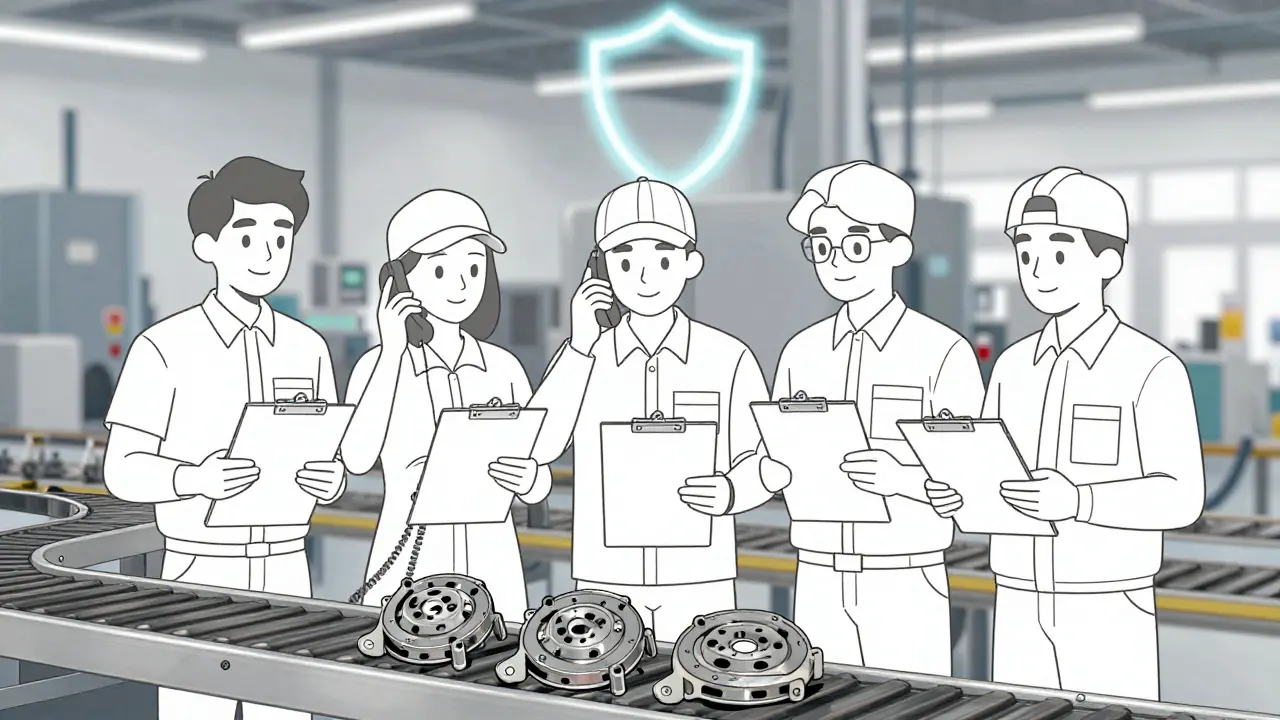
When you work in a factory and notice something wrong-like a batch of children’s toys with unsafe lead levels, or brake parts that don’t meet specs-it’s not just a mistake. It’s a whistleblower moment. And the law is on your side. But knowing that isn’t enough. You need to know how to protect yourself while doing the right thing.
What Exactly Is Protected?
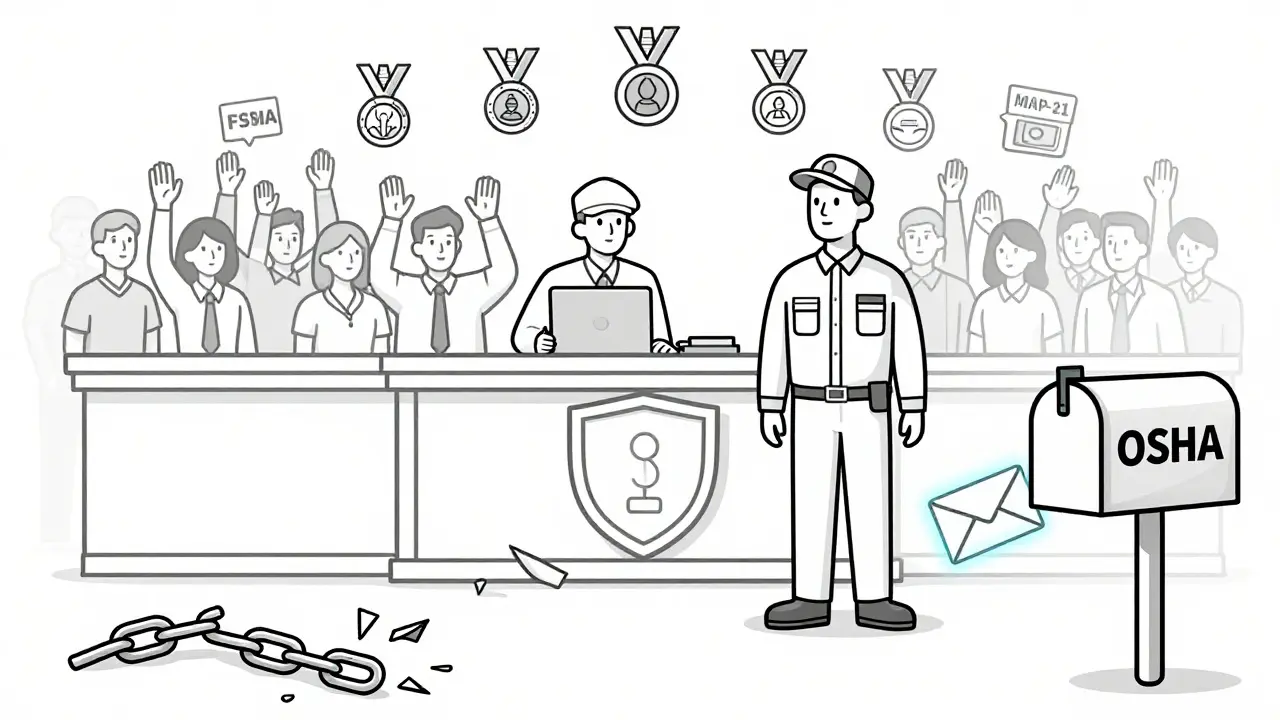
You don’t have to be an engineer or a manager to qualify for whistleblower protection. If you work in manufacturing-whether you’re on the line, in QA, or even as a temp contractor-you’re covered if you report safety or quality violations. The key is that the issue must fall under one of the federal laws enforced by OSHA. That includes:- CPSIA (Consumer Product Safety Improvement Act): Covers toys, furniture, electronics, and anything sold to consumers. Reports about lead, choking hazards, or flammable materials are protected.
- FSMA (Food Safety Modernization Act): Applies to food processing plants. If you see unsanitary conditions, contaminated ingredients, or falsified lab results, you’re protected.
- MAP-21 (Moving Ahead for Progress in the 21st Century Act): Covers auto parts, vehicles, and related suppliers. Reporting faulty airbags, brake systems, or defective sensors qualifies.
- SOX (Sarbanes-Oxley Act): If your company is publicly traded, even contractors are protected when reporting financial fraud tied to quality failures-like hiding defective parts to meet production targets.
These laws protect you whether you report internally to your boss, to a safety officer, or directly to OSHA, the CPSC, or the FDA. You don’t need proof-just a reasonable belief that something’s wrong. And you’re protected even if you’re wrong, as long as your belief was honest.
What Counts as Retaliation?
Retaliation isn’t just getting fired. It’s anything that makes your job worse because you spoke up:- Demotion or being moved to a worse shift
- Being cut from hours or denied overtime
- Being passed over for promotion
- Being given impossible tasks or constant criticism
- Being isolated or excluded from meetings
- Being pressured to sign a non-disclosure agreement after reporting
Even if you’re not fired, if you feel forced out-like your workspace is sabotaged or your performance reviews suddenly turn negative-that’s called constructive discharge. It’s still illegal.
According to OSHA data, 68% of manufacturing whistleblowers still face some form of retaliation-even though it’s against the law. The most common? Being blacklisted (27%), denied promotions (24%), and being pushed out quietly (32%).
How to Report Without Getting Screwed
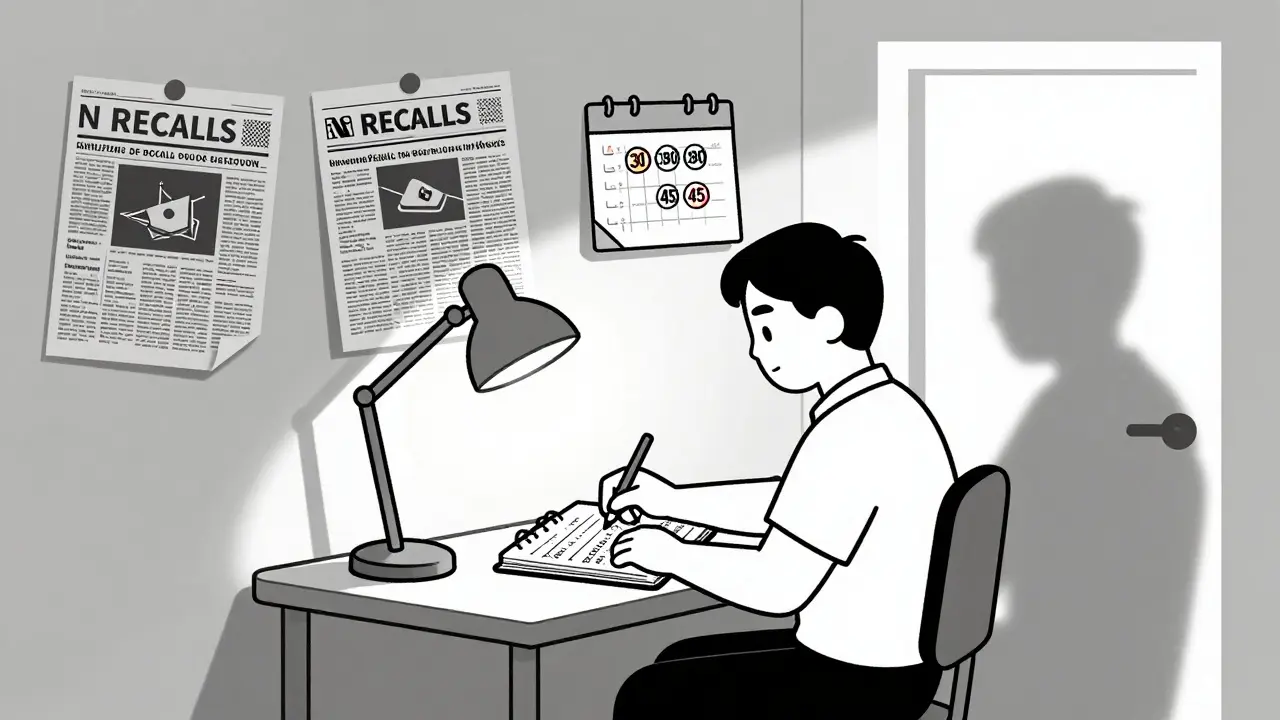
The best way to protect yourself starts before you even say anything:- Document everything. Write down dates, times, product IDs, batch numbers, and who was involved. Take photos if safe. Keep copies of emails, quality logs, or inspection reports. Don’t rely on memory.
- Use internal channels first. 62% of CPSIA protections apply to internal reports. Talk to your supervisor, safety officer, or HR. Get it in writing. If they ignore you or shut you down, that’s evidence of retaliation later.
- Know the deadlines. This is where most people lose protection. You have:
- 30 days for MAP-21 (vehicle parts)
- 180 days for CPSIA (consumer products) and FSMA (food)
- 45 days for environmental violations
Miss the deadline, and OSHA won’t take your case-even if you’re 100% right.
If you’re scared to report internally, go straight to OSHA. Call 1-800-321-OSHA (6742). They’ll take your complaint confidentially. You don’t need a lawyer to file. They’ll investigate within 60-90 days. If they find retaliation, they can force your employer to:
- Reinstate you
- Pay you back wages with interest
- Compensate you for emotional distress
- Pay your legal fees
In 2022, the average payout for a substantiated case was $287,500.
What Doesn’t Count as Protection?
Not everything you say is protected. Here’s where people get tripped up:- Social media posts. If you post about a defective product on Facebook without linking it to workplace safety, you’re not protected. The NLRB ruled in 2022 that public rants about quality don’t count unless tied to employee safety or working conditions.
- Personal grievances. If you report because you’re mad at your boss-not because of a safety risk-you’re out of luck.
- Confidentiality agreements. Since January 2023, the Department of Energy clarified that even if you signed an NDA, you can still report defects on government contracts. But this doesn’t apply to all industries. Stick to public sector contracts for now.
And after the 2022 Supreme Court ruling in Murray v. UBS Securities, you now need to show your report was definitive and detailed, not just a hunch. That means vague statements like “I think something’s off” won’t cut it. You need specifics: “The brake calipers on Batch #48923 failed stress tests on March 12, and the QA supervisor told me to ignore it.”
Why Most Whistleblowers Don’t Report
The truth? 41% of complaints are dismissed because they’re filed too late. 29% are thrown out because the issue didn’t meet legal definitions. And 47% of workers didn’t even know they could get free legal help from OSHA.Manufacturing quality issues are hard to prove. Medical device and automotive parts often require technical expertise. One case study from the National Whistleblower Center showed workers needed 14.2 weeks to gather enough evidence for a medical device defect. That’s longer than most people wait before giving up.
And here’s the kicker: only 34% of manufacturing companies have formal whistleblower policies. The Society of Manufacturing Engineers found that 79% of workers believe they should-but most don’t. That leaves you alone.
What You Can Do Now
You don’t have to wait until something goes wrong. Here’s how to prepare:- Check your employee handbook. Does it mention reporting quality issues? If not, ask HR to create a policy.
- Save this info: OSHA’s whistleblower hotline (1-800-321-OSHA) and website (www.osha.gov/whistleblower).
- Keep a personal log of any quality concerns you notice-even if you don’t report them yet.
- Know your industry’s deadline. Write it on your calendar.
- Connect with coworkers. You’re not alone. Many others have seen the same issues.
Whistleblowers aren’t traitors. They’re the reason 72% of product recalls happen before anyone gets hurt. Every time someone speaks up, they prevent injuries, lawsuits, and deaths. The system isn’t perfect-but it’s there. And if you’re ready to use it, the law has your back.
Can I report a quality issue anonymously?
Yes. When you file a complaint with OSHA, you can request anonymity. OSHA will not disclose your name to your employer during the investigation. However, if your case goes to a hearing, your identity may become known. Still, retaliation after an anonymous report is still illegal and can be proven through timing, patterns, and witness statements.
What if my company has a policy against reporting outside the company?
Company policies can’t override federal law. Even if your handbook says “report only internally,” you’re still protected by CPSIA, FSMA, MAP-21, and other federal statutes. If you’re threatened or punished for going to OSHA, that’s a clear case of retaliation-and OSHA will act on it.
Do whistleblower protections apply to contractors and temps?
Yes. The law covers anyone working for the manufacturer, including subcontractors, temporary workers, and consultants. Title 41 U.S.C. § 4712 specifically protects contractors working on government contracts. If you’re hired through a staffing agency but work on the factory floor, you’re still covered.
Can I be fired for reporting a defect I didn’t cause?
Absolutely not. Whistleblower laws protect you regardless of whether you caused the problem. The law is designed to encourage reporting, not assign blame. If you report a defect-even if it happened under someone else’s watch-you’re shielded from retaliation.
What if I report and nothing happens? Should I give up?
No. Many cases take months to investigate. OSHA’s average investigation time dropped from 192 to 147 days in 2023 thanks to new standardized procedures. If you’ve filed within the deadline and haven’t heard back in 90 days, call OSHA and ask for an update. Don’t assume silence means your report was ignored. It often means they’re still gathering evidence.

12 Comments
Dude. I work in a toy plant. Saw lead in batch #48923. Told my supervisor. Got moved to the night shift with no overtime. OSHA? Yeah right. They don't care. But I ain't shutting up. They think we're dumb? We're the ones holding this country together while CEOs cash checks.
PS: If you're scared, you're already losing.
I reported a faulty brake part and got called a traitor by my crew 😔😭 But OSHA called me back 🤝 They said I did the right thing. You're not alone. Stay strong. 🙌
Wow. A whole essay on how to not get fired for doing your job. Guess we’ve officially become a nation of lawyers and not makers.
The core principle here is procedural integrity. When systemic risk is identified, the duty to report supersedes organizational hierarchy. Documentation creates evidentiary chains. Chain of custody matters more than loyalty. You’re not snitching-you’re engineering safety into the system.
Yo, if you're a temp and you see something sketchy, don't overthink it. I was a temp at a brake plant in Michigan. Saw 3 batches with wrong torque specs. Took pics. Sent to OSHA. They came in 3 days. Boss got canned. I got offered a full-time job. Don't wait. Just do it. And save your receipts.
I’ve been in this game 22 years. The best thing you can do is build relationships with QA and safety officers. Not just for reporting-but because they’re your allies. If you’re quiet, they won’t know you’re watching. If you speak up, quietly and consistently, they’ll have your back. Trust isn’t earned in one moment. It’s built in daily actions.
You know what’s really protected? Corporate PR. OSHA doesn’t give a damn about your ‘reasonable belief’-they care about lawsuits. If you’re not a union rep with a lawyer, you’re just noise. The system isn’t designed to protect workers. It’s designed to make companies look good while quietly burying problems.
I think what’s missing here is community. You don’t have to be brave alone. Find one coworker you trust. Share your log. Even if you never report, having someone else see what you see changes everything. It’s not about the law-it’s about solidarity. We’ve been taught to compete. But safety? That’s collective.
I reported a contaminated food batch. They told me to 'wait for corporate.' I waited 4 months. Then I posted on Reddit. The FDA showed up 2 days later. Your company’s policy? Irrelevant. The truth is louder than HR. I didn’t break the rules-I exposed them.
I just want to say thank you for writing this. I’ve been scared to say anything for years. Now I know I’m not crazy. I’m saving this link. And I’m starting my log tonight.
This is so American. Like, you need a 10-page guide to do the morally obvious? In Nigeria, if you see a defective product, you tell someone. If they don’t listen, you tell everyone. No forms. No deadlines. Just truth. Maybe we don’t need laws. Maybe we just need courage.
I come from a small village in Nigeria where community safety is built into daily life. No one needs a law to say 'don’t let a child get hurt.' But here? We’ve turned ethics into a legal contract. That’s sad. The real solution isn’t OSHA-it’s culture. If your workplace doesn’t value integrity over output, no law will fix that. But if you start speaking up? You become the culture. One voice. One shift. One batch at a time. You’re not just reporting-you’re rebuilding.