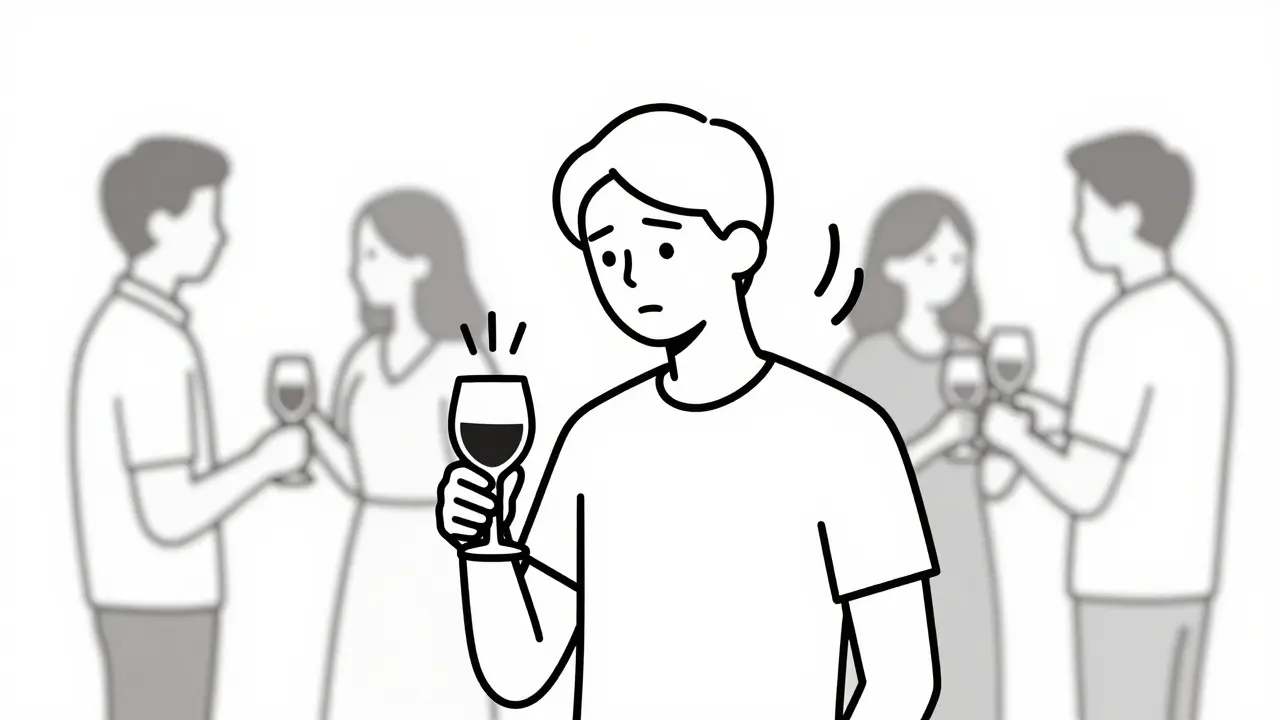
You’re out with friends, the drinks are flowing, and you glance at your phone. Your blood sugar is sitting pretty at 120 mg/dL. You take a sip of wine. An hour later, it’s 95. Another hour, and it’s plummeting to 60. You feel dizzy, confused, and shaky-but everyone around you just thinks you’ve had one too many. This isn’t just a bad night; it’s a dangerous medical emergency that happens far too often for people managing diabetes, a chronic condition affecting millions worldwide where the body struggles to regulate glucose levels effectively.
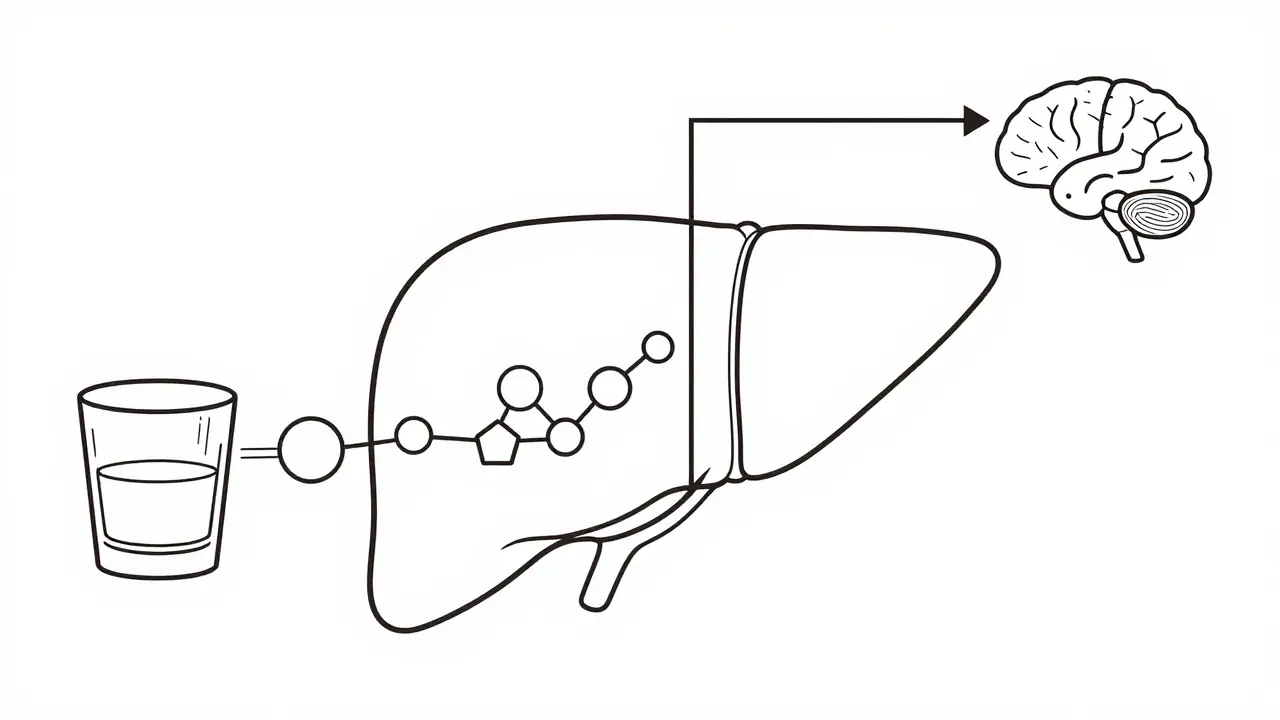
The relationship between alcohol and blood sugar is tricky. Alcohol doesn’t just sit in your stomach waiting to be absorbed like food does. It goes straight to your liver, which has two main jobs when it comes to energy: process toxins (like alcohol) and release stored glucose into your bloodstream to keep your levels stable. When alcohol enters the picture, your liver prioritizes detoxification over glucose production. The result? Your blood sugar can drop dangerously low, a condition known as hypoglycemia, defined as abnormally low blood glucose levels typically below 70 mg/dL that require immediate intervention. And here’s the kicker: the symptoms of low blood sugar-slurred speech, dizziness, confusion-look exactly like being drunk. That makes it incredibly hard for others to recognize you need help, not another nap.
Understanding the Hidden Dangers of Alcohol-Induced Hypoglycemia
Why does this happen? Let’s break down the biology without the jargon. Your liver acts like a reservoir for glucose. When you haven’t eaten for a while, or during sleep, your liver releases glucose to keep your brain fueled. Alcohol blocks this release. According to research from Mount Sinai, this inhibition of gluconeogenesis (the creation of new glucose) can last for 8 to 12 hours after you stop drinking. That means the danger doesn’t end when you put down the glass. It lingers well into the next morning.
This risk is particularly acute for those using insulin or sulfonylureas, medications that lower blood sugar. A study published in the *Journal of Diabetes Science and Technology* notes that combining these meds with alcohol increases hypoglycemia risk by up to 50%. For people with type 1 diabetes, Breakthrough T1D reports that about 30% experience severe hypoglycemic events related to alcohol consumption. Even if you don’t take medication, the masking effect remains. If you pass out because your blood sugar crashed, but your friends think you’re just passed out from drinking, no one will check your levels. No one will give you juice. That delay can be fatal.
It’s not just about the crash, though. Some alcoholic drinks are loaded with carbohydrates. Sweet cocktails, regular beer, and dessert wines can cause a rapid spike in blood sugar first. Dr. Osama Hamdy from the Joslin Diabetes Center explains this "dual-phase" impact: an initial spike followed by a dangerous drop as the liver gets busy processing the alcohol. This rollercoaster makes management nearly impossible if you aren’t prepared.
Safe Drinking Limits: What the Experts Say
Does having diabetes mean you have to quit alcohol completely? Not necessarily. Major health organizations like the American Diabetes Association (ADA) and Diabetes UK state that moderate consumption is generally safe for many people with diabetes, provided there are no other contraindications. But "moderate" has a very specific definition in the medical world.
One standard drink equals:
- 12 ounces (360 mL) of regular beer (5% alcohol)
- 5 ounces (150 mL) of wine (12% alcohol)
- 1.5 ounces (45 mL) of distilled spirits (40% alcohol, 80-proof)
The general guideline is no more than one drink per day for women and two drinks per day for men. Diabetes UK suggests spreading no more than 14 units across the week, with several alcohol-free days. However, these are maximums, not targets. Your personal limit might be lower depending on your medication, activity level, and how your body responds.
Crucially, you should never drink on an empty stomach. Food slows the absorption of alcohol and provides a buffer of carbohydrates. Aim for a meal containing 15-30 grams of carbs before you start drinking. Also, avoid alcohol within two hours of exercise. Exercise lowers blood sugar naturally; adding alcohol on top of that compounds the effect, increasing hypoglycemia risk by 40%, according to MedlinePlus.
Choosing the Right Beverage: A Practical Guide
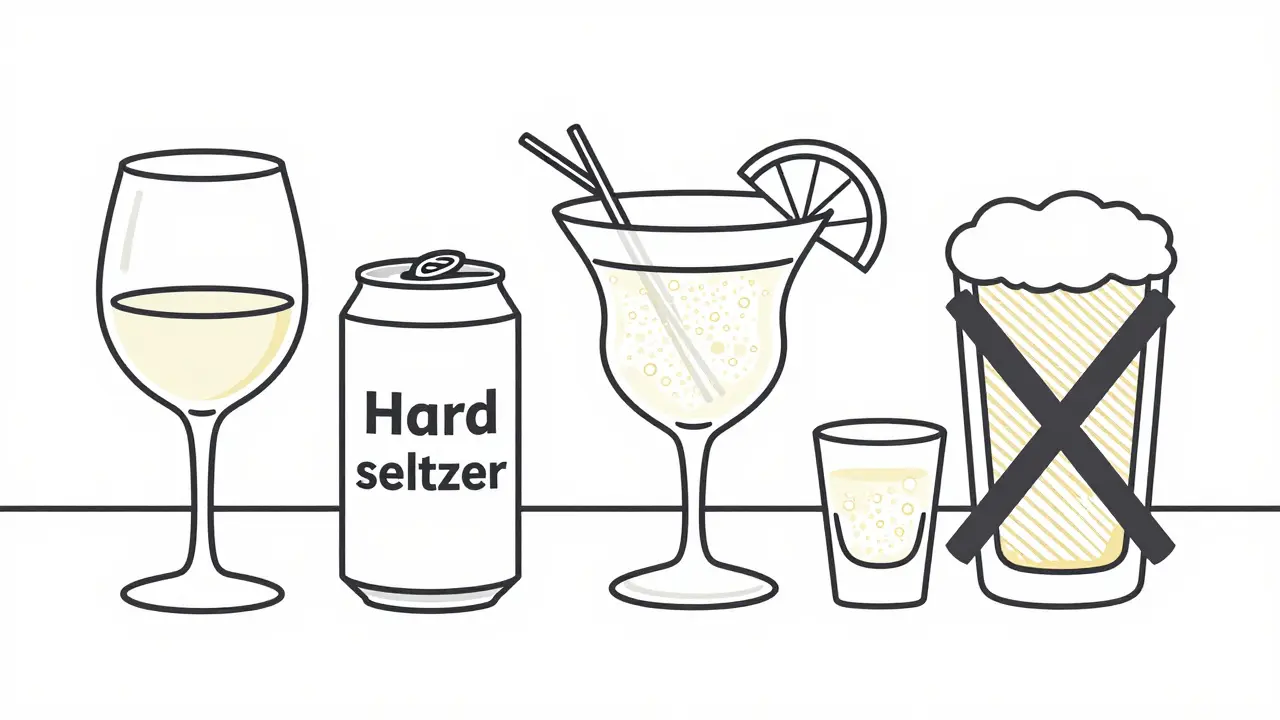
Not all drinks are created equal when you’re managing diabetes. Your choice of beverage significantly impacts your blood glucose trajectory. Here is a breakdown of what to reach for and what to leave behind.
| Beverage Type | Carbohydrate Content | Risk Profile | Recommendation |
|---|---|---|---|
| Dry Wine (Red/White) | Low (4g per 5oz) | Moderate (Hypoglycemia risk) | Good choice; monitor closely |
| Light Beer | Low (3-5g per 12oz) | Moderate (Hypoglycemia risk) | Good choice; easier to manage than regular beer |
| Hard Seltzer | Very Low (0-2g per can) | Moderate (Hypoglycemia risk) | Excellent choice; predictable impact |
| Spirits (Vodka, Gin, Tequila) | Zero (straight) | High (if mixed with sugary drinks) | Good choice ONLY with zero-calorie mixers |
| Regular Beer | High (10-15g per 12oz) | High (Spike then crash) | Avoid or limit strictly |
| Sweet Cocktails/Margaritas | Very High (20-25g+) | Very High (Unpredictable spikes) | Avoid completely |
| "Diabetic" Beer/Cider | Low Sugar, Higher Alcohol | High (Increased alcohol % raises hypo risk) | Contraindicated; stick to light regular options |
Notice the warning about "diabetic" beers. These are marketed as healthier, but they often achieve low sugar by increasing alcohol content. Since alcohol itself inhibits glucose production, higher alcohol concentration means a higher risk of hypoglycemia. Stick to dry wines, light beers, or hard seltzers. If you prefer spirits, mix them with club soda, water, or diet tonic. Avoid regular sodas, juices, or syrups, which can add 15-25 grams of hidden carbs per serving.
The Monitoring Protocol: Timing Is Everything
Knowing what to drink is only half the battle. How you monitor matters just as much. The ADA recommends a strict checking schedule when alcohol is involved:
- Before you drink: Check your blood sugar. If it’s below 100 mg/dL, eat a small snack with carbs first. If it’s above 300 mg/dL, do not drink until it comes down, as alcohol can worsen dehydration and metabolic stress.
- While drinking: Check every two hours. Don’t wait for symptoms. Symptoms are late indicators.
- Before bed: This is critical. Check again. If you’re under the influence, your judgment may be impaired, so ask a trusted friend to help you interpret the number.
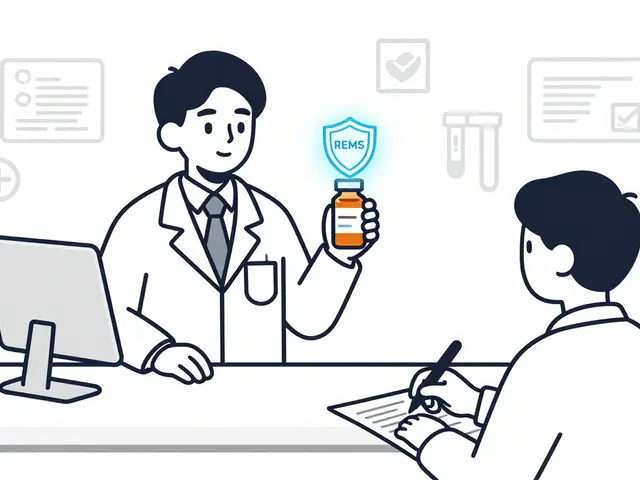
If your reading is trending downward, consume 15 grams of fast-acting carbohydrates (like glucose tablets or fruit juice) immediately. Keep these supplies visible, not buried in a bag. Many experts recommend wearing medical alert jewelry. In a survey of endocrinologists, 92% strongly advised this for people with diabetes who drink, ensuring that emergency responders know your condition if you become unconscious.
Technology is also changing the game. Continuous Glucose Monitors (CGMs) like the Dexcom G7 now feature algorithms that assess hypoglycemia risk in real-time. Clinical trials show these tools reduce severe events by 37% during alcohol consumption. If you use a CGM, pay close attention to trend arrows. A flat arrow might look fine, but if you’ve been drinking, your liver is paused. Anticipate the drop.
Who Should Avoid Alcohol Completely?
While moderate drinking is safe for many, it is absolutely contraindicated for some individuals. You should avoid alcohol entirely if you have:
- Diabetic Neuropathy: Nerve damage affects 50% of long-term diabetes patients. Alcohol worsens nerve damage and impairs balance, increasing fall risk.
- Pancreatitis: People with diabetes already have a 3x higher risk of pancreatitis. Alcohol further inflames the pancreas.
- Advanced Liver Disease: Since the liver processes both glucose and alcohol, compromised liver function makes safe metabolism impossible.
- History of Severe Hypoglycemia: If you frequently go low without warning, the added variable of alcohol is too risky.
- Pregnancy: Regardless of diabetes status, no amount of alcohol is considered safe during pregnancy.
Additionally, if you take metformin, heavy drinking (more than 4 drinks in 2 hours) increases the risk of lactic acidosis, a rare but serious buildup of lactic acid in the blood. Always discuss your alcohol habits with your healthcare provider, especially if your medication regimen changes.
Navigating Social Situations Without Stress
Social pressure can make sticking to these guidelines difficult. You might feel singled out ordering a sparkling water with lime while everyone else orders margaritas. Remember, your health is non-negotiable. Prepare scripts in advance. "I’m driving," "I’m on antibiotics," or simply "I’m taking it easy tonight" are effective ways to decline without explanation.
Community data from Reddit’s r/diabetes forum highlights that users who plan ahead report significantly fewer negative experiences. Popular strategies include bringing your own non-alcoholic mocktails, choosing venues with good hard seltzer selections, or meeting friends for dinner rather than drinks. The goal isn’t to abstain forever, but to integrate safe practices so you can enjoy social moments without fear.
Real-world anecdotes from Breakthrough T1D forums show that 68% of type 1 diabetics who drink have experienced a severe low requiring help. However, those who strictly follow the "eat-carbs-drink-slowly-monitor" protocol report 82% fewer incidents. The difference lies in preparation. Treat alcohol like a medication: respect its potency, measure your dose, and track its effects.
Can I drink alcohol if I have type 2 diabetes and don't take insulin?
Yes, moderate drinking is generally safe for people with type 2 diabetes who do not take insulin or sulfonylureas. However, you must still monitor your blood sugar, as alcohol can interfere with your liver's ability to regulate glucose. Always drink with food and stay hydrated. Be aware that even without medication, excessive drinking can lead to unstable blood sugar levels and increased cardiovascular risk.
How long does alcohol affect blood sugar after I stop drinking?
Alcohol can suppress your liver's glucose production for 8 to 12 hours after your last drink. This means the risk of hypoglycemia persists well into the next day, particularly overnight. It is crucial to check your blood sugar before bed and consider setting an alarm to check again in the middle of the night if you consumed multiple drinks.
What are the best mixers for alcohol if you have diabetes?
The best mixers are zero-calorie and sugar-free options such as club soda, plain water, diet tonic water, or sparkling water with a splash of fresh lemon or lime juice. Avoid regular soda, fruit juices, sweetened teas, and pre-made cocktail mixes, as these contain high amounts of carbohydrates that can cause rapid blood sugar spikes followed by crashes.
Is red wine better for people with diabetes?
Some studies suggest moderate red wine consumption may offer slight cardiovascular benefits due to antioxidants like resveratrol. However, the American Diabetes Association states that no alcohol provides enough benefit to recommend starting drinking if you don't already. Dry red wine has similar carbohydrate content to dry white wine (about 4g per serving). Choose based on preference, but always count it as a standard drink and monitor your levels.
What should I do if my blood sugar drops while I'm drinking?
If your blood sugar drops below 70 mg/dL, consume 15 grams of fast-acting carbohydrates immediately, such as glucose tablets, fruit juice, or regular soda. Recheck your blood sugar in 15 minutes. If it remains low, repeat the process. Inform someone nearby about your condition so they can assist if you become confused or dizzy. Do not rely on alcohol-containing remedies.