Have you ever looked at a prescription label and wondered why one pill is listed as an 'analgesic' while another is called a 'beta-blocker'? It’s not just medical jargon to confuse you. These terms belong to specific classification systems that dictate how doctors prescribe, how pharmacies stock shelves, and how insurance companies decide what you pay. Understanding these generic drug classifications isn’t just for pharmacists; it helps you navigate your own health care with more confidence.
Drug classification is the framework we use to organize thousands of medications. Without it, healthcare would be chaotic. Imagine trying to find a book in a library where books are sorted by color instead of genre or author. That’s what medicine would look like without standardized categories. Today, multiple systems work together-therapeutic, pharmacologic, legal, and economic-to ensure safety, efficacy, and affordability.
Therapeutic Classification: Treating the Condition
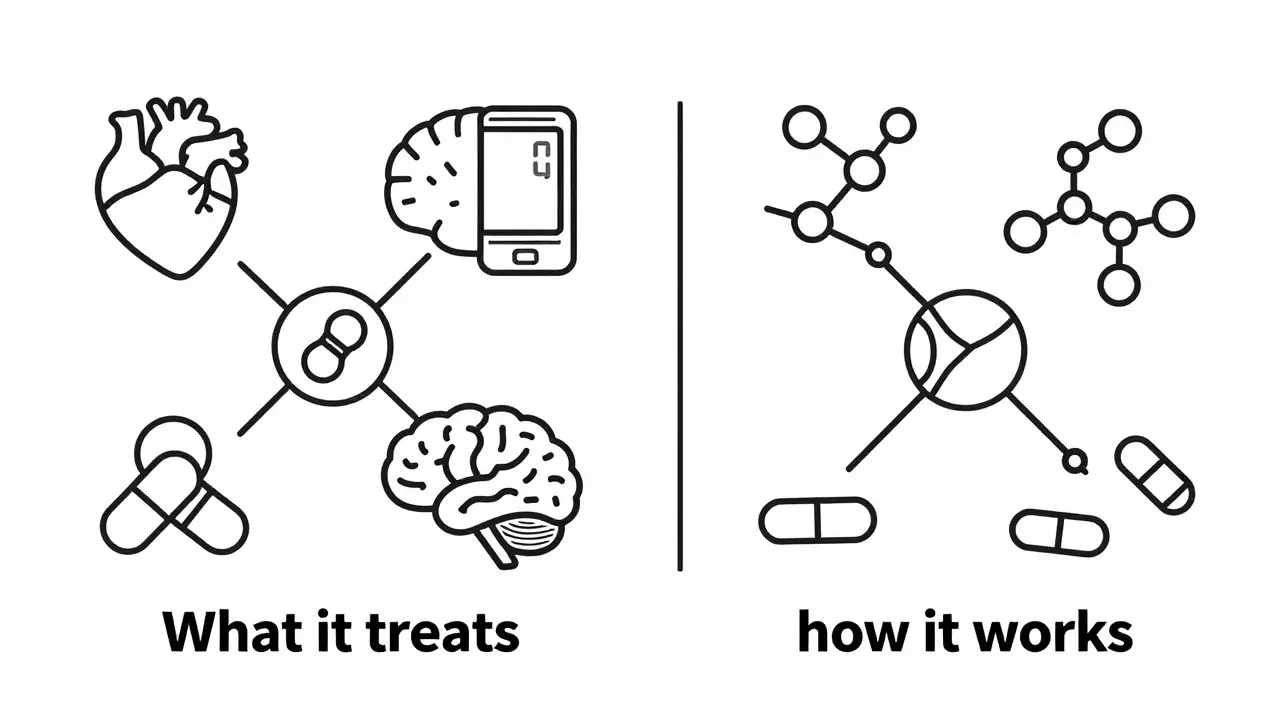
The most common way drugs are grouped is by therapeutic classification. This system categorizes medications based on the medical condition they treat or the physiological effect they produce. If you have high blood pressure, you need an antihypertensive. If you have pain, you need an analgesic. Simple, right?
This approach is dominant in clinical settings because it aligns directly with patient symptoms. According to data from the American Society of Health-System Pharmacists (ASHP), 92% of U.S. hospitals rely on therapeutic classification for their formulary management. The FDA’s USP Therapeutic Categories Model is the gold standard here, organizing drugs into major groups like Cardiovascular Agents, Endocrine Agents, and Antineoplastics.
| Class Name | Primary Use | Example Generic Drugs |
|---|---|---|
| Analgesics | Pain relief | Ibuprofen, Acetaminophen, Morphine |
| Beta-Blockers | High blood pressure, heart rhythm | Metoprolol, Atenolol |
| Proton Pump Inhibitors (PPIs) | Acid reflux, ulcers | Omeprazole, Pantoprazole |
| SSRIs | Depression, anxiety | Sertraline, Fluoxetine |
The benefit of this system is clarity for both patients and providers. However, it has a flaw: many drugs treat multiple conditions. Aspirin, for instance, is an analgesic (pain reliever) but also an antiplatelet agent (blood thinner). Placing it in only one category can lead to confusion if a doctor doesn’t know its secondary uses.
Pharmacologic Classification: How the Drug Works
While therapeutic classification asks "what does it cure?", pharmacologic classification asks "how does it work inside the body?" This system groups drugs by their mechanism of action-the specific biological process they interfere with or enhance.
For example, within the broad category of cancer treatments (antineoplastics), pharmacologic classification breaks them down further into subgroups like "Epidermal Growth Factor Receptor Kinase Inhibitors" or "Antimetabolites." This level of detail is crucial for researchers and specialists who need to understand drug interactions at a molecular level.
The National Center for Biotechnology Information (NCBI) identifies over 1,200 distinct pharmacologic classes. This precision is powerful but comes with a steep learning curve. A primary care physician might not need to know the exact kinase pathway a new oncology drug targets, but an oncologist certainly does. This creates a gap in bedside utility; general practitioners often find this system too complex for daily prescribing decisions.
Legal Classification: The DEA Schedules
Not all drug classifications are about health benefits. Some are about control. The Drug Enforcement Administration (DEA) uses the Controlled Substances Act to classify drugs based on their potential for abuse and whether they have accepted medical use. This five-tier schedule system determines how strictly a drug is regulated.
- Schedule I: High abuse potential, no accepted medical use (e.g., heroin, LSD).
- Schedule II: High abuse potential, but with accepted medical use (e.g., oxycodone, fentanyl, Adderall).
- Schedule III: Moderate to low abuse potential (e.g., buprenorphine, testosterone).
- Schedule IV: Low abuse potential (e.g., Xanax, Ambien).
- Schedule V: Lowest abuse potential, often containing limited amounts of narcotics (e.g., cough syrups with codeine).
This system is essential for legal compliance and preventing diversion, but it often clashes with clinical reality. For instance, marijuana remains Schedule I federally, despite being legal for medical use in dozens of states and having FDA-approved cannabinoid derivatives in Schedule II. Experts like Dr. Nora Volkow have criticized this inconsistency, noting it hinders research and creates barriers for patients seeking legitimate treatment.
Economic Classification: Insurance Tiers
If you’ve ever received a surprise bill at the pharmacy counter, you’ve encountered economic classification. Insurance companies group drugs into tiers based on cost and negotiation contracts with manufacturers. This system prioritizes cost containment over clinical nuance.
A typical five-tier structure looks like this:
- Tier 1: Preferred generics (lowest cost, ~75% of generic drugs).
- Tier 2: Non-preferred generics.
- Tier 3: Preferred brand-name drugs.
- Tier 4: Non-preferred brand-name drugs.
- Tier 5: Specialty medications (highest cost, rare or complex drugs).
The problem? Two generic drugs with identical active ingredients might sit in different tiers simply due to which manufacturer has a better contract with your insurer. Pharmacists report that insurance tier disputes account for nearly half of all prior authorization requests. This forces doctors to spend valuable time navigating bureaucratic hurdles rather than focusing on patient care.
The Power of Naming Stems
There’s a hidden code in generic drug names that helps prevent errors. Known as stem naming conventions, these standardized suffixes and prefixes indicate a drug’s class. Adopted by the United States Pharmacopeia (USP) in 1964, this system allows healthcare professionals to identify a drug’s type just by looking at its name.
For example:
- -lol: Indicates a beta-blocker (e.g., propranolol, metoprolol).
- -prazole: Indicates a proton pump inhibitor (e.g., omeprazole, lansoprazole).
- -statin: Indicates a cholesterol-lowering drug (e.g., atorvastatin, simvastatin).
- -cillin: Indicates a penicillin antibiotic (e.g., amoxicillin, ampicillin).
Studies show this convention has reduced medication errors by 18%. However, it struggles with newer biologic agents and gene therapies, which don’t fit neatly into traditional chemical naming patterns. As medicine advances, the naming system must evolve to keep pace.
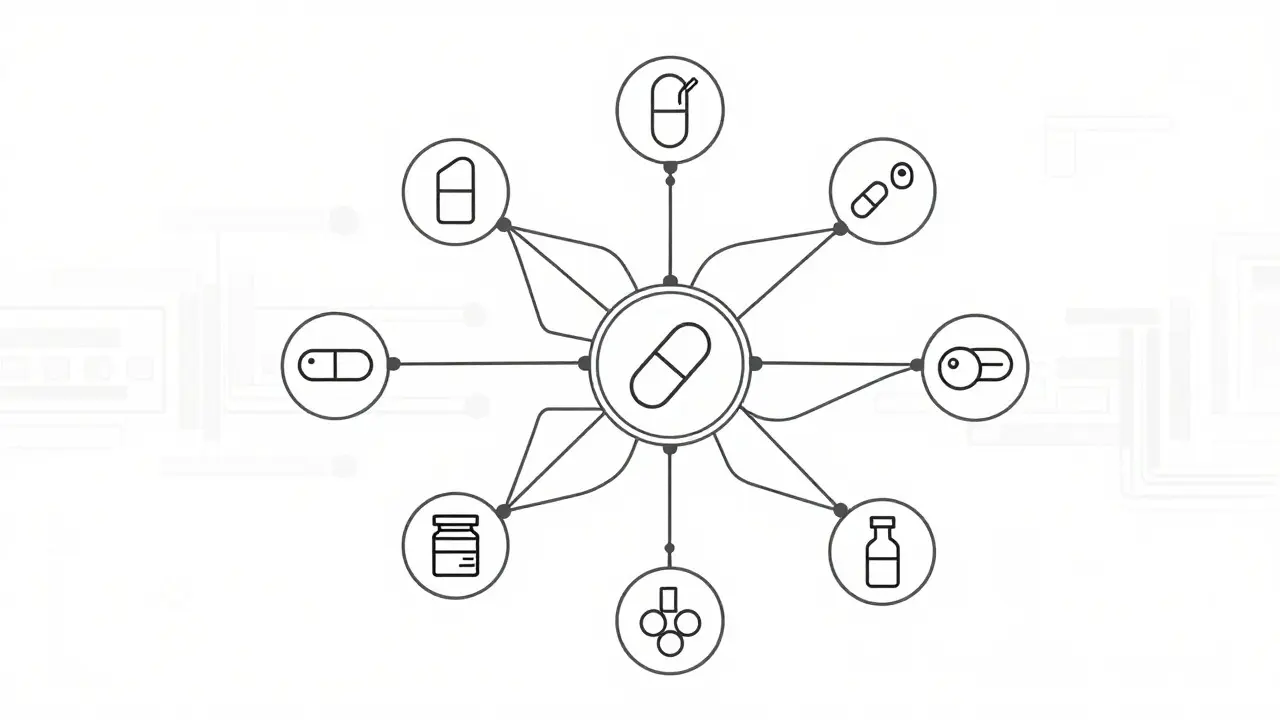
Why Classification Confusion Matters to You
You might think these systems are internal affairs for doctors and insurers, but they directly impact your safety and wallet. Confusion between therapeutic and pharmacologic classifications is cited by 68% of physicians as a barrier to optimal prescribing. When a drug like duloxetine is classified as both an antidepressant and a neuropathic pain agent, it can lead to duplicate therapy or missed interactions if the provider isn’t careful.
Furthermore, the fragmentation of these systems means you might hear conflicting information. Your doctor talks about therapeutic benefits, your pharmacist warns about pharmacologic interactions, and your insurance bill reflects economic tiers. Bridging this gap requires awareness. Always ask your provider: "What class is this drug in, and are there cheaper alternatives in the same class?"
Future Trends: AI and Personalized Medicine
The landscape of drug classification is shifting. With the rise of personalized medicine, one-size-fits-all categories are becoming less effective. New drugs often have multimodal mechanisms of action, meaning they target several pathways simultaneously. By 2028, analysts predict 65% of new molecular entities will require novel classification approaches.
Artificial Intelligence is stepping in to help. Platforms like IBM Watson Health are using machine learning to predict optimal therapeutic placement with high accuracy. The FDA is also rolling out Therapeutic Categories Model 2.0, which introduces a primary-secondary indication hierarchy to handle multi-purpose drugs better. Additionally, the WHO continues to update its Anatomical Therapeutic Chemical (ATC) system, adding hundreds of new codes annually to track global medication use patterns.
As regulations evolve, such as potential reclassification of cannabis under the MORE Act, expect ripple effects across all classification systems. Staying informed means understanding that these categories aren’t static rules-they’re living frameworks adapting to science, law, and economics.
What is the difference between therapeutic and pharmacologic classification?
Therapeutic classification groups drugs by the condition they treat (e.g., antihypertensives for high blood pressure). Pharmacologic classification groups them by how they work in the body (e.g., ACE inhibitors block a specific enzyme). Therapeutic is easier for general use, while pharmacologic is more precise for specialists.
How do DEA schedules affect my prescription?
DEA schedules determine how strictly a drug is controlled. Schedule II drugs like oxycodone cannot have refills and require a new prescription each time. Higher schedules mean more paperwork for your doctor and stricter storage rules for pharmacies, which can sometimes delay access.
Why are two generic versions of the same drug priced differently?
Insurance companies place drugs in tiers based on contracts with manufacturers, not just clinical differences. One generic might be Tier 1 (preferred) while another is Tier 2 (non-preferred) due to business negotiations, even if the active ingredient is identical. Always ask your pharmacist for the lowest-cost option in the same therapeutic class.
Can I tell what class a drug is by its name?
Yes, often. Generic drug names use standardized stems. For example, drugs ending in '-statin' are cholesterol meds, and those ending in '-olol' are beta-blockers. This naming convention helps prevent errors, though it doesn't apply to all newer biologic drugs.
Which classification system is most important for patient safety?
Therapeutic classification is generally considered most critical for immediate patient safety because it guides appropriate treatment selection. However, pharmacologic classification is vital for avoiding dangerous drug-drug interactions. Both are used together in modern electronic health records to maximize safety.