
Every year, over 250,000 medication errors happen in U.S. nursing homes-most of them preventable. For older adults taking five or more medications, the risk of a dangerous mistake jumps to nearly 60%. These aren’t just slips of the hand. They’re system failures that can lead to falls, kidney damage, internal bleeding, or even death. And too often, families don’t know how to spot them-or what to do when they do.
What Counts as a Medication Mistake in Seniors?
A medication error isn’t just giving the wrong pill. It’s any time the right drug gets given the wrong way. Common mistakes include:- Giving too much or too little of a drug-like doubling a blood pressure pill or cutting a pill in half without checking if it’s safe to do so.
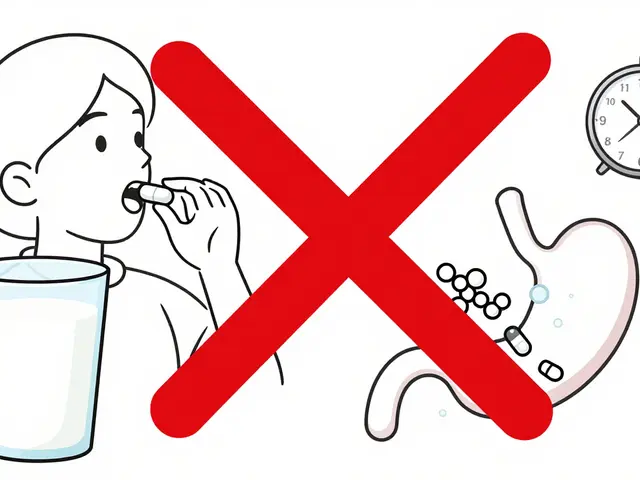
- Administering medication at the wrong time, such as giving a sleep aid in the morning or an insulin shot after a skipped meal.
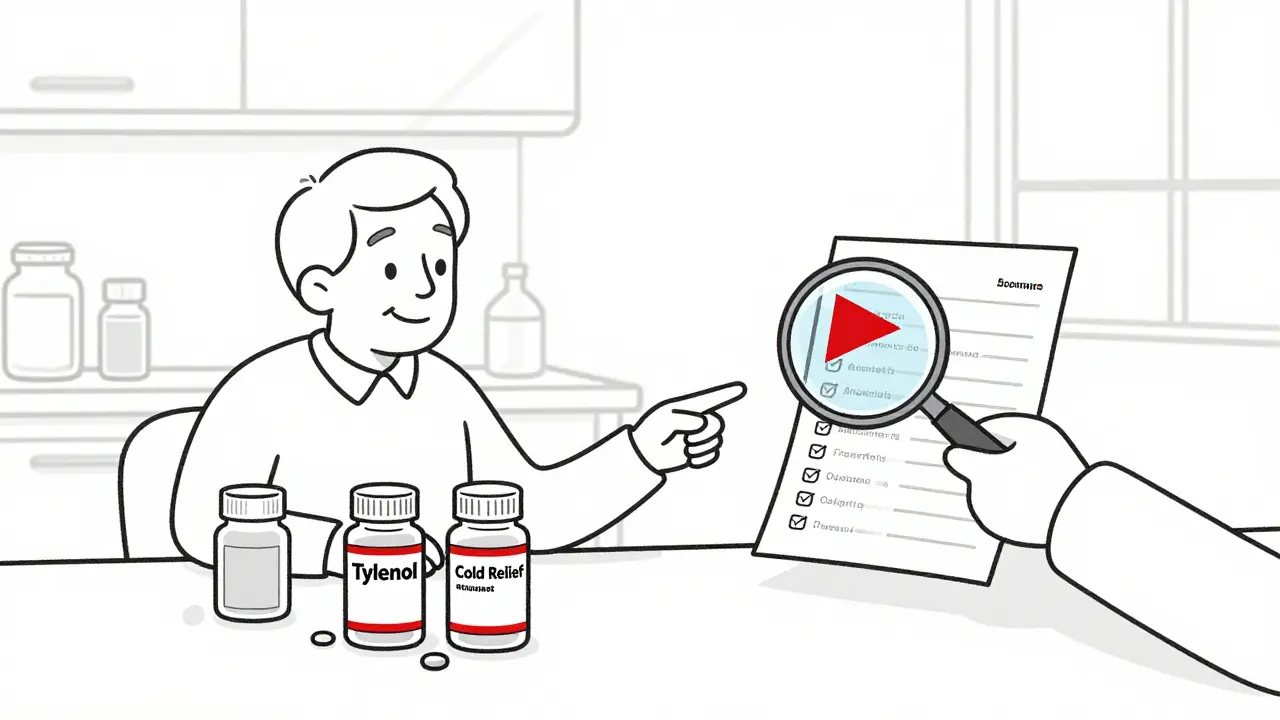
- Prescribing duplicate drugs under different names-like giving both Tylenol and a cold medicine that also contains acetaminophen.
- Using expired medications or giving pills that were never picked up from the pharmacy.
- Failing to monitor side effects after a new drug is added-like not checking for dizziness after starting an anticholinergic.
- Documenting a dose as given when it wasn’t-what’s called a "phantom dose."
The most dangerous errors happen when seniors are on five or more medications-a condition called polypharmacy. At that point, the chance of a harmful interaction climbs sharply. According to the World Health Organization, seniors on eight or more drugs have a 58% chance of experiencing a medication error.
How to Spot a Medication Mistake
You don’t need to be a nurse to catch an error. Start with the Five Rights every time a pill is given:- Right patient-Is this the correct person? Double-check their name and ID band.
- Right drug-Does the label match the prescription? Look up the drug’s purpose if you’re unsure.
- Right dose-Is it the exact amount prescribed? Don’t assume a half-pill is safe.
- Right route-Is it meant to be swallowed, applied to the skin, or injected?
- Right time-Is this being given at the scheduled hour? Some meds need to be taken with food, others on an empty stomach.
Use the Beers Criteria (updated in 2023) as a quick reference. It lists 34 medications that are risky for seniors-like benzodiazepines, anticholinergics, and certain NSAIDs. If your loved one is on any of these, ask their doctor why.
Watch for signs of trouble: confusion, unsteady walking, nausea, unusual drowsiness, or sudden changes in appetite. These aren’t just "getting older." They could be drug reactions.
What to Do When You Find a Mistake
Don’t wait. Don’t assume someone else will handle it. Here’s what to do immediately:- Stop the error-If you’re watching the medication being given, say, "Wait, I think that’s wrong."
- Call the prescribing doctor-If it’s life-threatening (like an overdose of blood thinner or insulin), call 911 or the National Response Center at 1-800-332-1088.
- Document everything-Write down: what happened, when, who was involved, and what was given. Take a photo of the pill bottle if possible.
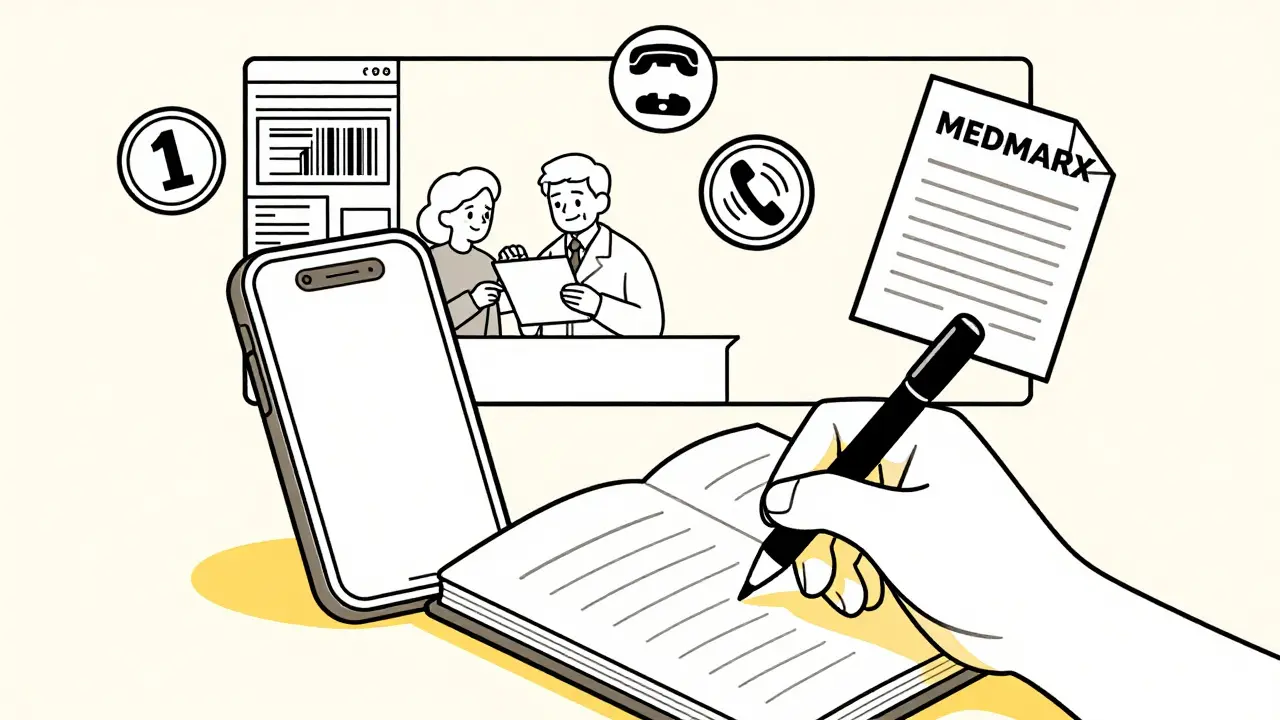
- File a formal report-Use the facility’s Medication Error Reporting Form. If they don’t have one, ask for the CHCF Ten Tools template.
Many families report being told, "It was just a mistake," or "Your mom was confused." That’s not acceptable. Errors are never just human error-they’re system failures. The best reporting systems, like MEDMARX, focus on fixing processes, not blaming staff.
Where to Report Medication Errors
There are three main paths to report an error, depending on severity and setting:- Facility internal report-All nursing homes must have a process. If they refuse, ask for the safety officer’s name.
- State Long-Term Care Ombudsman-Call 1-800-677-1116. This is the most effective route for families. In 68% of cases where families reported to ombudsmen, the issue was resolved within 72 hours.
- FDA MedWatch-Use this for serious adverse events or dangerous drugs not yet recalled. Submit online at www.fda.gov/medwatch.
Some states have legal deadlines: California requires reporting within 24 hours for serious errors, New York gives 48 hours, Texas allows 72. Even if your state doesn’t enforce deadlines, report it quickly. Delaying reduces the chance of catching patterns.
Why Most Errors Go Unreported
Only about 14% of medication errors are ever formally reported. Why? Fear. Staff worry about being fired. Families fear retaliation. Facilities fear fines.But here’s the truth: voluntary, confidential systems like MEDMARX capture 84% of errors. Why? Because they don’t name names. They ask: What broke in the system? Was the label unclear? Was the nurse rushed? Was the electronic system glitching?
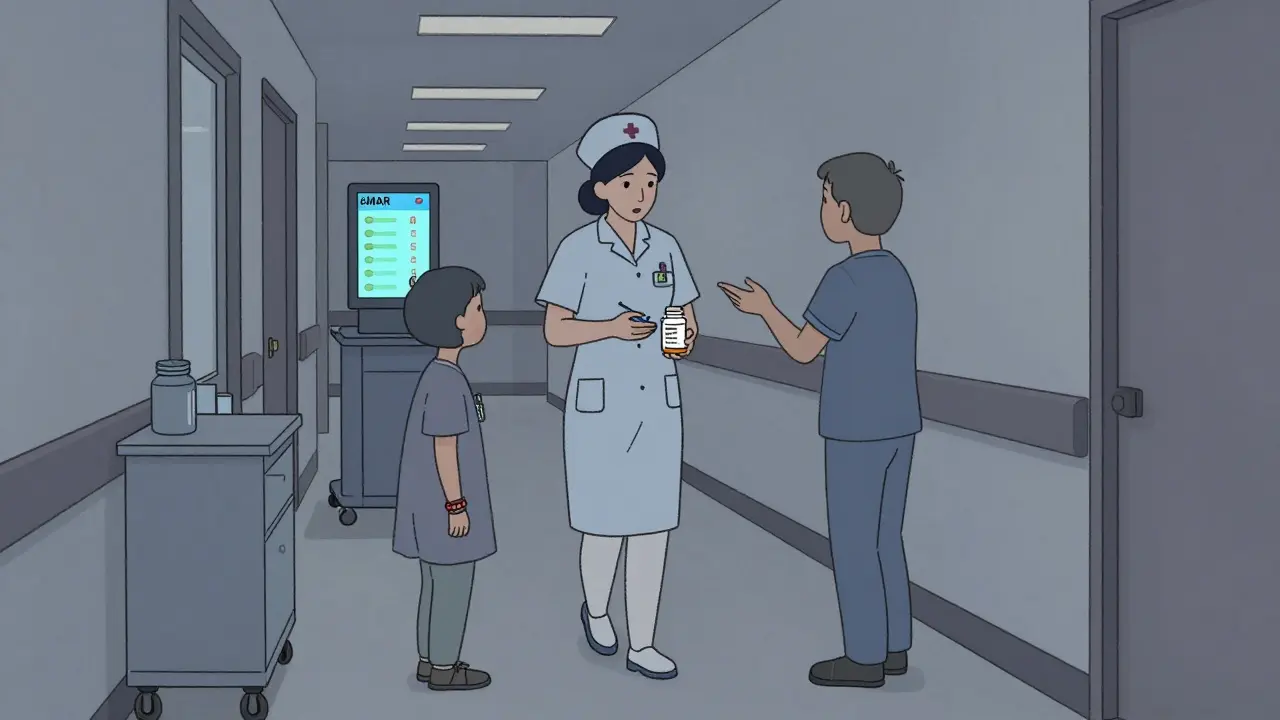
Unfortunately, only 48% of nursing homes use the updated AHRQ Common Formats for reporting. Rural homes are even worse-63% fewer errors are reported than in urban ones, even though the risk is the same.
What’s Being Done to Fix This
The good news: change is coming. The 2021 CMS mandate required all nursing homes to switch to electronic medication administration records (eMAR) by the end of 2025. These systems flag duplicate prescriptions, wrong doses, and drug interactions in real time.Barcode scanning for meds cuts administration errors by 86%. Clinical decision support tools reduce prescribing errors by 55%. AI systems like MedAware can predict dangerous drug combinations with 94% accuracy.
But adoption is slow. Only 55% of nursing homes use barcode systems. Many still rely on paper charts and handwritten orders. That’s why family involvement is still the most powerful safety net.
What Families Can Do Right Now
You don’t need to wait for perfect systems. Here’s what you can do today:- Keep a current med list-Include name, dose, time, reason, and prescribing doctor. Update it every time a change is made.
- Ask for a medication reconciliation-At every hospital discharge or doctor visit, ask: "What meds are we stopping or starting?" This alone can prevent 67% of errors, according to Harvard’s Dr. Lucian Leape.
- Use the teach-back method-After the nurse explains a new drug, ask your loved one to explain it back. If they can’t, the info wasn’t clear.
- Visit at different times-Don’t just show up at 8 a.m. Drop in at lunchtime or bedtime. Watch how meds are given.
- Know your rights-You have the right to see medication records. You have the right to report without fear. You have the right to demand answers.
One family in Wisconsin caught a nurse giving their mother expired insulin. The facility denied it. The family called the state ombudsman. Within three days, the nurse was suspended, the facility was fined, and all staff got retrained. That’s what happens when families speak up.
Final Thought: Your Vigilance Saves Lives
Medication errors in seniors aren’t inevitable. They’re symptoms of a broken system. But that system can be fixed-with better tech, better training, and better accountability.And right now, the most powerful tool you have is your eyes, your voice, and your willingness to ask, "Why?"
Don’t assume it’s someone else’s job. If you see something, say something. Document it. Report it. Keep asking until you get an answer. Because for your loved one, this isn’t a statistic. It’s their life.
What are the most common types of medication errors in elderly patients?
The most common errors include wrong dosage (42.7%), giving medication at the wrong time (23.1%), administering the wrong drug (15.8%), and incorrect administration techniques (12.3%). Prescribing errors, like duplicate drugs or inappropriate medications for seniors, are also frequent, especially with polypharmacy.
How can I tell if a medication is unsafe for my elderly loved one?
Use the American Geriatrics Society’s Beers Criteria® (2023 update), which lists 34 medications that pose high risks for seniors-like benzodiazepines, anticholinergics, and certain NSAIDs. If your loved one is on any of these, ask their doctor if the benefit outweighs the risk. Also watch for signs like confusion, dizziness, or sudden fatigue after a new prescription.
What should I do immediately if I catch a medication error?
Stop the error if you can. Call the prescribing doctor right away. For life-threatening situations, call 911 or the National Response Center at 1-800-332-1088. Document exactly what happened-date, time, drug, dose, who was involved. Then file a formal report with the facility and contact your state’s Long-Term Care Ombudsman at 1-800-677-1116.
Is it better to report medication errors internally or to a state agency?
Always report internally first-but don’t stop there. Facilities often delay or deny errors. State ombudsmen have legal authority to investigate and enforce changes. Families who report to ombudsmen see resolution in 72 hours 68% of the time, compared to just 23% when relying only on facility reports.
Can technology help prevent elderly medication errors?
Yes. Electronic medication administration records (eMAR) reduce errors by 48%, barcode scanning cuts administration mistakes by 86%, and clinical decision support tools lower prescribing errors by 55%. AI systems like MedAware can predict dangerous drug combinations with 94% accuracy. But these tools aren’t in all nursing homes yet-only 55% use barcode systems. Family vigilance remains essential.
Why do so many medication errors go unreported?
Staff fear punishment, families fear retaliation, and facilities fear fines. Mandatory reporting systems only catch 14% of errors. Voluntary, confidential systems like MEDMARX capture 84% because they focus on fixing systems, not blaming people. But many nursing homes still lack trained safety officers or reporting tools, especially in rural areas.
What’s the biggest risk factor for medication errors in seniors?
Polypharmacy-taking five or more medications-is the strongest predictor. The risk jumps from 13% with two to four drugs to nearly 58% with eight or more. Other major risks include poor health literacy, cognitive decline, and nursing staff shortages-average 2.1 nurses per 100 residents in many facilities.


9 Comments
Okay, I just read this whole thing and I’m shaking my head-this is insane. I had no idea so many errors are preventable. My grandma was on eight meds last year, and we never even checked if two of them had acetaminophen in them. 😳 I’m printing out the Beers Criteria and taking it to her next appointment. No more guessing. No more hoping. Time to get serious.
Also-why do facilities still use paper charts?! We have barcode scanners in grocery stores that scan 100 items in 10 seconds. Why can’t a nursing home do the same?!
Stop the error. Call the doctor. Document everything. Report it. That’s the four-step protocol. Simple. Effective. Non-negotiable.
Family vigilance isn’t optional. It’s the last line of defense.
Let’s be real-this isn’t about ‘medication errors.’ This is about the collapse of the American elder care industrial complex. We’ve turned our grandparents into data points in a broken algorithm. The system doesn’t care if Mrs. Henderson gets her insulin at 3 a.m. instead of 8 a.m.-it cares about staffing ratios and liability waivers.
And don’t get me started on ‘phantom doses.’ That’s not negligence-it’s a metaphysical betrayal. A pill that was never given… but still ‘administered’ in the ledger. The horror. The poetry. The existential dread of a nurse rushing through 27 pills while someone’s life slips through the cracks like sand.
And yes, I cried reading the Wisconsin story. Not because it was sad. Because it was rare. We need more of those stories. Not just to fix systems-but to remind ourselves that people still matter.
Also-why is no one talking about the fact that 63% fewer errors are reported in rural areas? Is that because they’re safer? Or because nobody’s watching? 🤔
You think this is bad? Wait until you see what happens when a Medicare Advantage plan denies a refill because it’s ‘not cost-effective.’ Then the nurse gives a half-dose because the family can’t afford the copay. That’s not a mistake. That’s systemic violence.
And the Beers Criteria? Cute. But it’s just a list. It doesn’t change power dynamics. It doesn’t force hospitals to hire more pharmacists. It doesn’t pay nurses a living wage.
We’re treating symptoms while the whole house burns down.
And yet-you’re still expected to be the hero? The vigilant daughter? The overworked son? No. We need structural change. Not checklists.
But hey-keep documenting. Keep reporting. Maybe one day, someone will listen.
Until then… we’re just rearranging deck chairs on the Titanic.
Big shoutout to the state ombudsman line-1-800-677-1116. Saved my aunt’s life last year. She was getting duped with two different blood thinners. Facility said ‘it’s fine.’ I called the ombudsman. Within 48 hours, they showed up with a clipboard, asked 17 questions, and the whole med list got audited.
Also-teach-back method? GAME CHANGER. My dad couldn’t explain why he was on gabapentin. Turns out, he’d been on it for 7 years for ‘nerve pain’… but he never had nerve pain. 😅 Just a lazy doc who kept renewing it.
And yes-emoji for this: 💊🚨👀
Family, you’re not just observers. You’re the human firewall. Don’t back down.
One thing people miss: medication errors aren’t just about pills. They’re about communication. When a nurse says ‘I gave it,’ but didn’t, that’s not laziness-it’s burnout. When a doctor writes ‘as needed’ for a sedative without defining what ‘as needed’ means-that’s ambiguity, not malice.
Fixing this isn’t about blaming individuals. It’s about designing systems that assume humans will make mistakes-and then building in safety nets.
Electronic records, barcode scans, pharmacist reviews-these aren’t luxuries. They’re basic hygiene.
And if your facility doesn’t have them? Ask why. Keep asking.
Oh, so now we’re blaming families for not being nurses? That’s rich. Where was the oversight when my mother was given 4x her prescribed dose of diazepam? Oh right-no one was watching. The staff were too busy with 30 other residents. And now you want me to ‘document everything’ like I’m a detective? I’m grieving. I’m exhausted. I’m not a compliance officer.
This isn’t about vigilance. This is about society failing to value the elderly. And until we fund nursing homes properly, none of these ‘tips’ matter.
Also-‘phantom doses’? That’s not a mistake. That’s fraud. And the fact that it’s normalized? That’s the real crime.
Wait-so the Beers Criteria says avoid benzodiazepines in seniors… but 40% of nursing homes still prescribe them? Why? Because they’re cheap? Because staff think they’re ‘calming’? Or because no one’s trained to recognize the real signs of anxiety in dementia patients?
And AI predicting drug interactions at 94% accuracy? That’s wild. But if the nurse doesn’t see the alert because the system is glitching? Then what? Tech isn’t magic. It’s a tool. And tools need hands that know how to use them.
Also-why do we call it ‘polypharmacy’ like it’s a fancy term? It’s just ‘too many pills.’ Plain and simple. Let’s stop hiding behind jargon. The problem is simple. The solution? Not so much.
Thank you for this. Really. As someone whose mum is in a care home in the UK, I’ve seen the same issues-just with fewer regulations and less transparency. The ‘phantom dose’ thing? We had that. Staff said she got her pill at 8am. We checked the CCTV. She didn’t. We raised it. Got a form letter back saying ‘staff are under pressure.’
So I printed the Beers Criteria. Took it to the nurse. Said, ‘This is what you’re giving her. This is what she shouldn’t be on.’ She looked at it. Then she said, ‘Oh. I didn’t know that.’
Knowledge is power. But only if someone’s willing to share it.
And yes-I’m now the family ‘medication watchdog.’ Not because I want to. Because no one else will.
Thank you for writing this. It’s a lifeline.
:-)