
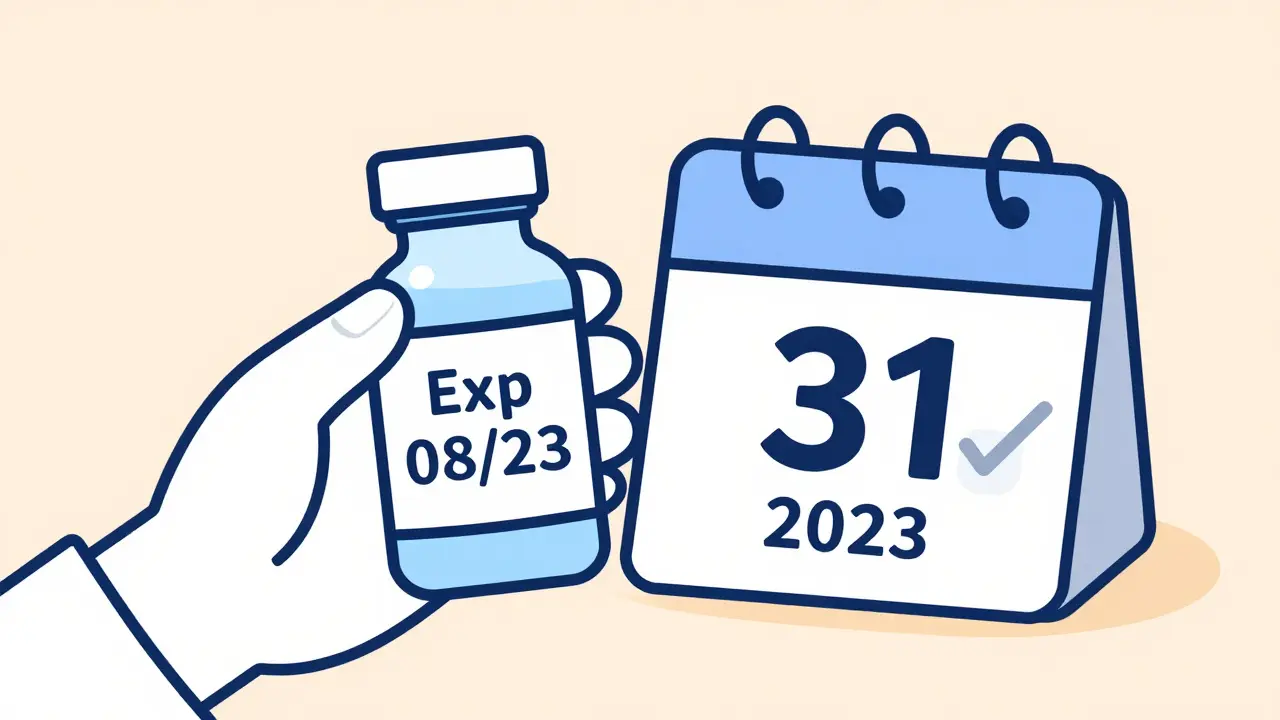
It’s January 2026. You’re cleaning out your medicine cabinet and find an old bottle of ibuprofen. The label says 08/23. Is it safe to take? What if it’s still in the original packaging, but the bottle says discard after 01/25? You’re not alone. Millions of people face this confusion every year-and too many either toss out perfectly good medicine or risk taking something that might not work-or worse, could harm them.
What an Expiration Date Actually Means
The expiration date on your medication isn’t a "use-by" deadline like milk. It’s not a date when the drug suddenly turns toxic. Instead, it’s the last day the manufacturer guarantees the drug will work as intended-meaning it still has full strength, safety, and purity under proper storage conditions. This standard started in 1979 when the U.S. Food and Drug Administration (FDA) required all prescription and over-the-counter medicines to carry expiration dates. Manufacturers test each drug under heat, humidity, and light to see how long it stays stable. Most pills last 1 to 5 years. Injections? Often 2 to 5 years. Eye drops? Usually 6 months to 2 years. Topical creams and patches? About 1 to 3 years. The key phrase here is "under proper storage conditions." If you left your medicine in a hot bathroom or in direct sunlight, it could break down long before the expiration date. That’s why storage matters as much as the date itself.How Expiration Dates Are Shown on Packaging
Expiration dates don’t always look the same. You might see:- Exp 08/23
- Expiry Date: 08/2023
- Use by: 08/23
- Exp date: 2023-08
Pharmacy Labels vs. Manufacturer Dates
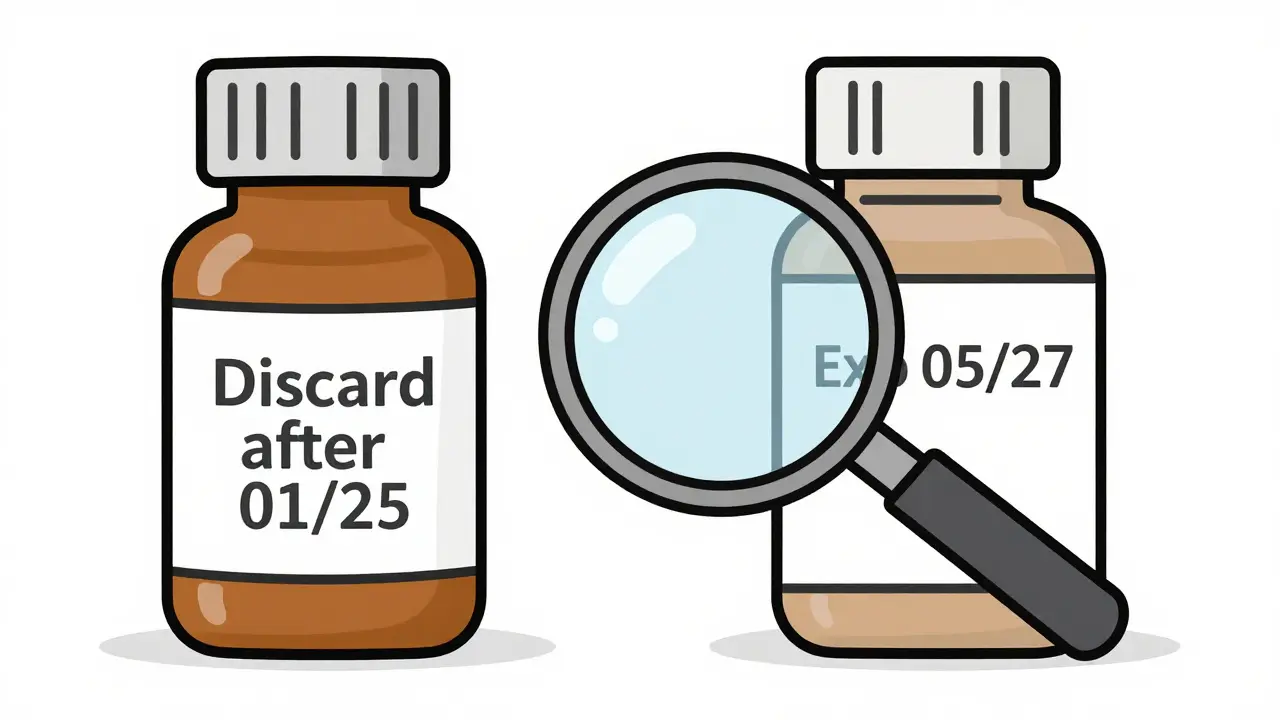
Here’s where things get tricky. When you pick up a prescription, the pharmacy puts on its own label. That label often says "Do not use after 01/25"-but that’s not the same as the manufacturer’s expiration date. Pharmacies use a "beyond-use date"-usually one year from when the prescription was filled. Why? Because once a pill bottle is opened, or a liquid medicine is mixed, it can degrade faster. Antibiotic syrups, for example, might only last 14 days after being mixed. But the original bottle from the manufacturer might say "Exp 05/27." You’re supposed to follow the pharmacy’s date. But here’s the catch: many patients don’t know which date to trust. One Reddit user shared they threw out a $200 medication because they misread the pharmacy label. That’s avoidable. Pro tip: When you get a new prescription, ask the pharmacist to write the manufacturer’s expiration date on the bottle too. Keep the original box-it often has the real expiration date printed on the side.When Expired Medication Is Dangerous
Most medications don’t turn poisonous after their expiration date. The FDA’s Shelf Life Extension Program found that 90% of tested drugs remained effective years past their expiration-when stored properly in sealed containers. But some drugs are exceptions. Taking expired versions can be risky-or even life-threatening:- Insulin: Loses potency quickly. A weakened dose can cause dangerous blood sugar spikes.
- Birth control pills: Even slight loss of hormone strength can lead to unintended pregnancy.
- Thyroid medication: If it’s not working right, your metabolism goes haywire.
- Anti-platelet drugs (like aspirin or clopidogrel): Reduced effectiveness increases stroke or heart attack risk.
How to Spot Degraded Medication
Expiration dates are a guideline. But physical changes are a red flag. Look for:- Discoloration (white pills turning yellow or brown)
- Cracking, crumbling, or sticking together
- Unusual odor (like vinegar or rotten eggs)
- Liquid meds that are cloudy, have particles, or separate
- Eye drops that change color or become cloudy
Storage Is Half the Battle
Your medicine’s shelf life depends heavily on where you keep it. The FDA says most pills are fine at room temperature (68-77°F), but some need refrigeration.- Never store meds in the bathroom. Humidity from showers degrades tablets and capsules.
- Don’t leave them in the car. Summer temps inside a parked car can hit 140°F.
- Keep them away from sunlight. Light can break down chemicals in pills and liquids.
- Use a cool, dry drawer or cabinet. A bedroom drawer is better than a bathroom cabinet.
What to Do With Expired Medication
Don’t flush pills down the toilet or toss them in the trash where kids or pets can get to them. The safest way is to take them to a drug take-back program. Many pharmacies, hospitals, and police stations offer free disposal bins. If that’s not available, mix pills with coffee grounds or cat litter in a sealed bag before throwing them out. This makes them unappealing and harder to misuse.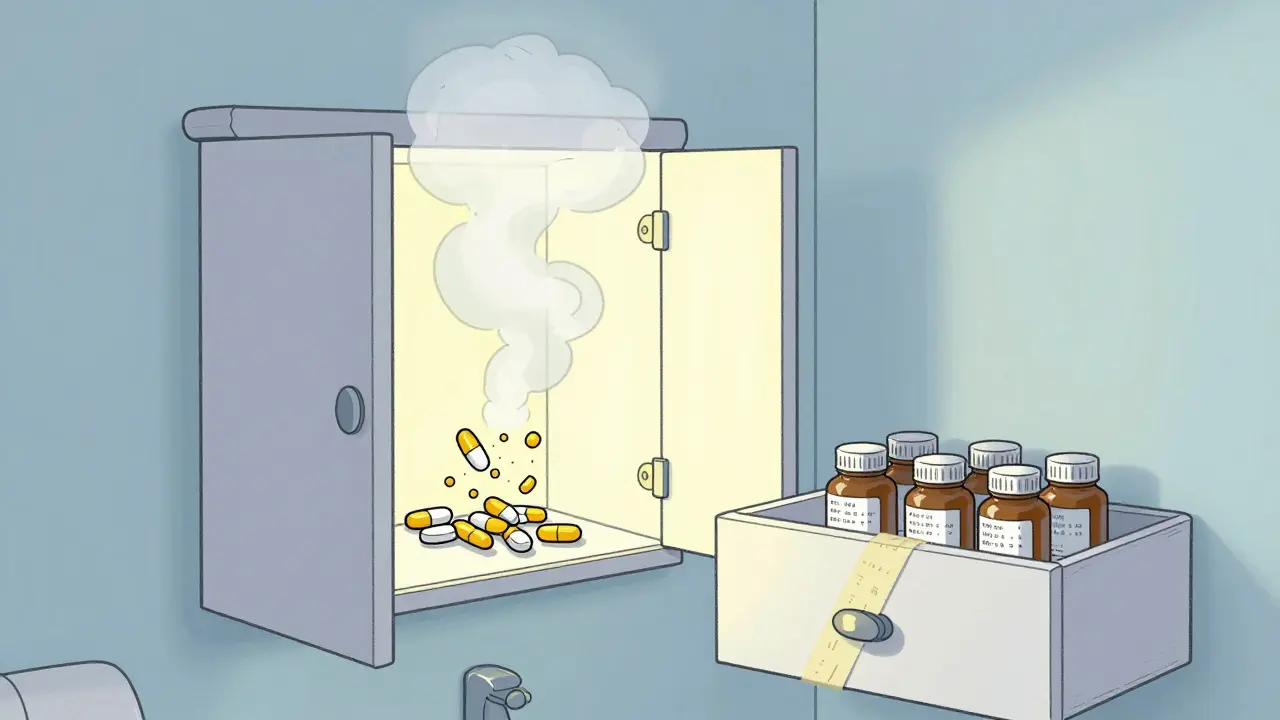
Tools to Help You Stay on Track
Managing expiration dates is easier with a system:- Use apps like MedSafe or MyTherapy to scan barcodes and track expiration dates.
- Write the expiration date on masking tape and stick it to the bottle.
- Set phone reminders 3 months before expiration for critical meds.
- Keep original packaging for at least 6 months after opening.
What’s Changing in the Industry
The FDA is pushing for digital labeling. Newer packages may have QR codes that link to real-time expiration info, storage instructions, and recall alerts. The World Health Organization now recommends using the YYYY-MM-DD format everywhere to reduce confusion. Still, a 2022 report from the Institute for Safe Medication Practices found that 42% of medication errors involved expired drugs. Most of those were due to misreading labels or not knowing which date to follow.Final Checklist: Is Your Medicine Still Good?
Before taking any medication, ask yourself:- Is the date on the bottle the manufacturer’s or the pharmacy’s? If unsure, call the pharmacy.
- Is it one of the high-risk drugs? (Insulin, birth control, thyroid meds, anti-platelets?) If yes, don’t risk it.
- Does it look, smell, or feel different? If yes, throw it out.
- Has it been exposed to extreme heat, cold, or moisture? If yes, toss it.
- Is it past the expiration date? If yes, and it’s not a critical drug, it’s probably safe-but not guaranteed to work.
Can I take medicine after the expiration date?
Most medications are still safe to take after their expiration date, especially if stored properly. The FDA found that 90% of drugs retain effectiveness for years past expiration. But potency can drop over time. Avoid taking expired insulin, birth control, thyroid meds, or antibiotics-these can be dangerous.
What does "Exp 08/23" mean?
"Exp 08/23" means the medication expires on August 31, 2023. When only a month and year are listed, the expiration is the last day of that month.
Should I follow the pharmacy’s "discard after" date or the manufacturer’s expiration date?
Always follow the pharmacy’s "discard after" date for prescriptions. That date accounts for how the medicine was handled after being opened or mixed. The manufacturer’s date is for unopened, sealed products. If you’re unsure, ask your pharmacist to write both dates on the bottle.
Is it safe to keep old medicine in the bathroom?
No. Bathrooms are too humid and warm, which can break down pills and liquids faster. Store medications in a cool, dry place like a bedroom drawer or kitchen cabinet away from the sink and stove.
What should I do with expired medication?
Take expired drugs to a pharmacy take-back program or a local hazardous waste disposal site. If that’s not available, mix pills with coffee grounds or cat litter in a sealed plastic bag before throwing them in the trash. Never flush them unless the label says to.
8 Comments
So let me get this straight-I’ve been tossing out perfectly good ibuprofen because some label said 'Exp 08/23' and I thought it was gonna turn into poison? 😅 My cabinet’s basically a graveyard of expired painkillers. Thanks for the sanity check. Also, who designed these labels? A caffeinated cryptographer?
Why are we even talking about this? If it's expired, just throw it out. America’s got enough problems without people playing chemist with their medicine cabinet. I don’t care if it’s 'probably still good'-if it’s not fresh, it’s not worth the risk. End of story.
Let’s be crystal clear: the FDA’s Shelf Life Extension Program does NOT mean 'take expired meds with impunity.' It means 'we tested them under controlled conditions, and they didn’t degrade catastrophically.'
That’s not an endorsement. That’s a scientific observation.
And let’s not forget: the 'beyond-use date' on your pharmacy label is legally binding, not a suggestion. You are not a pharmacist. You are not a biochemist. You are a consumer who needs to follow instructions.
Also, storing meds in the bathroom? That’s not negligence-it’s a public health hazard. And if you’re using expired insulin because you 'don’t want to waste money'? That’s not frugal. That’s suicidal.
And yes, I’m serious. And yes, I’ve seen the ER reports. And yes, I’m still mad about it.
Wow. Just... wow. I’m stunned this post even exists. People are still confused about expiration dates? In 2026? We have QR codes, AI pharmacies, and apps that tell you if your cereal is expired. But you still can’t read '08/23' without panicking?
And yet-you’re the same people who’ll Google 'can I take Xanax with coffee' at 3 a.m. while holding a half-eaten burrito.
Stop. Just stop. Buy a new bottle. It’s $5. You’re worth more than a 3-year-old pill.
Expired meds don’t kill you. Ineffectiveness does. That’s the real killer.
So basically, my grandma’s 2018 Tums are still good... but my insulin? Nope. 😅
Life’s a weird mix of 'probably fine' and 'please don’t die.'
Also, why does my pharmacy label say 'discard after 01/25' but the bottle says 'Exp 05/27'? Who’s the liar here? The pharmacist? The manufacturer? The universe?
Excellent, insightful breakdown! 🙌
Knowledge is power-and when it comes to your health, ignorance isn’t bliss, it’s dangerous. I’ve been sharing this with my community group, especially our seniors who often keep meds 'just in case.'
Pro tip: A cool, dry drawer is your best friend. And yes-your bathroom is the worst place on Earth for pills. 😅
Let’s normalize asking pharmacists for clarification. They’re not just cashiers-they’re your medication guardians. 🏥💙
I read this whole thing. And I’m still confused. Who even made these rules? Why can’t they just print 'DO NOT USE' in giant red letters? And why is there a 2022 study? Why not just fix it? This is ridiculous. I’m throwing out everything. Again.