
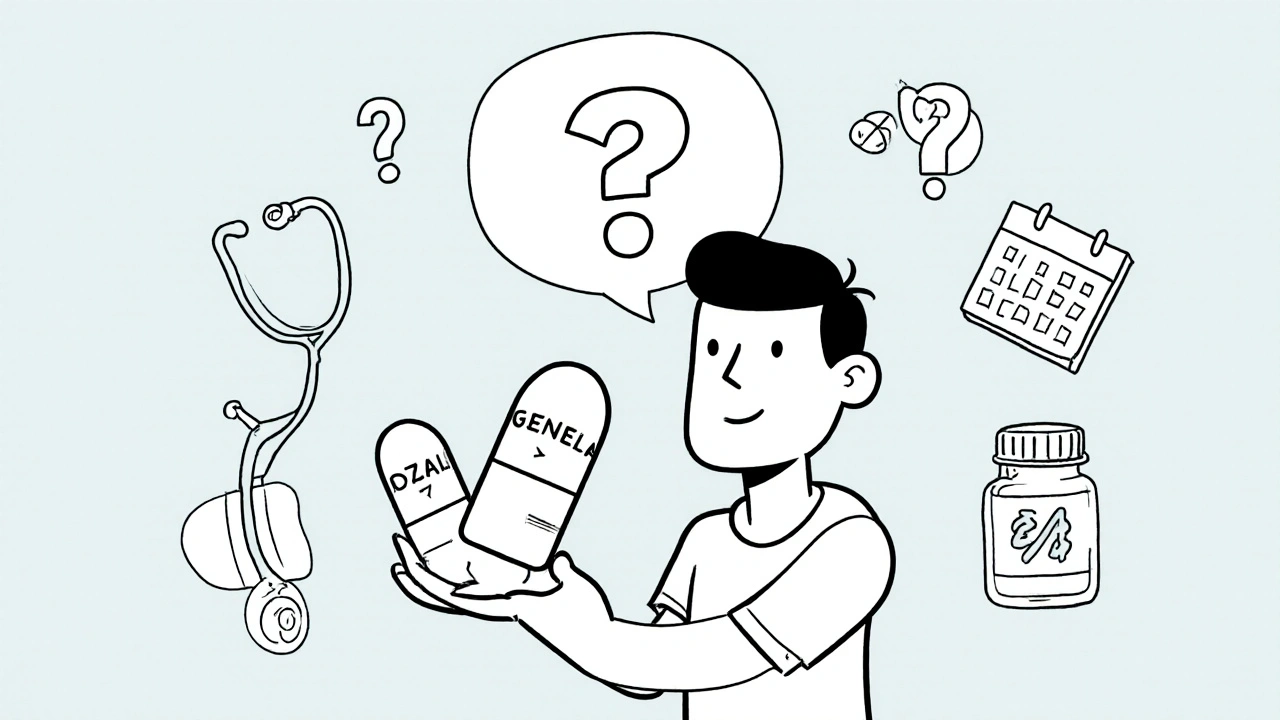
When you pick up a prescription, you might be handed a pill that looks completely different from the one you’ve taken before. The name on the bottle is unfamiliar. The color is wrong. And the price? Much lower. You might wonder: is this the same thing? The answer is yes-most of the time. But that doesn’t mean you shouldn’t ask questions.
Why Generic Medications Exist
Brand-name drugs are the original versions developed by pharmaceutical companies. These companies spend years and millions of dollars on research, testing, and marketing. In return, they get a patent that blocks others from copying the drug for about 20 years. Once that patent expires, other manufacturers can produce the same medicine using the same active ingredient. These are called generic medications.The U.S. Food and Drug Administration (FDA) requires generics to be identical in active ingredient, strength, dosage form, and how they work in the body. They must also meet the same strict standards for safety, purity, and quality. In fact, the FDA says generics are bioequivalent-meaning they get into your bloodstream at nearly the same rate and amount as the brand-name version. The difference? Usually less than 3.5% in absorption, which is well within the FDA’s 20% acceptable range.
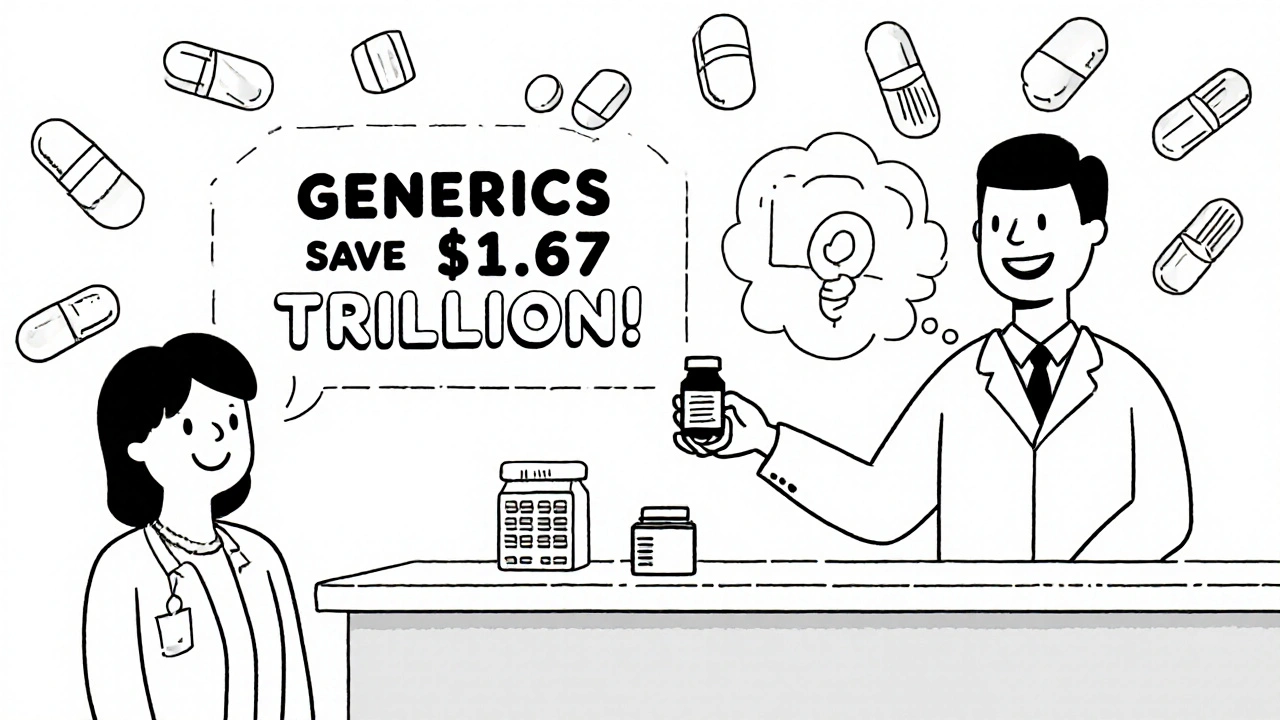
That’s why nine out of every ten prescriptions filled in the U.S. are for generics. They’re not cheaper because they’re worse. They’re cheaper because manufacturers don’t have to repeat expensive clinical trials. That savings gets passed on. On average, generics cost 80-85% less than brand-name drugs. Between 2007 and 2016, generics saved the U.S. healthcare system over $1.67 trillion.
What’s Different About Generics?
If they work the same, why do they look different? U.S. trademark laws say generic drugs can’t look exactly like the brand-name version. So, the shape, color, size, flavor, or packaging might change. The inactive ingredients-like fillers, dyes, or preservatives-can be different too. These don’t affect how the medicine works, but they can cause rare reactions in people with allergies.For example, someone allergic to red dye might react to a red generic version of a pill that was originally white. Or someone with sensitive stomachs might notice a slight difference in how a generic version settles-again, because of inactive ingredients, not the medicine itself.
Some patients report feeling like the generic “doesn’t work as well.” But studies show that 89% of people notice no difference when switching from brand to generic. When people do report issues, it’s often because they expect to feel something different. That’s called the nocebo effect-the opposite of placebo. Your brain expects a change, so your body reacts to the expectation, not the drug.
When Brand-Name Might Still Be Preferred
There are exceptions. For drugs with a narrow therapeutic index-where even a tiny change in dose can cause serious side effects or make the treatment fail-some doctors prefer to stick with the brand-name version. These include medications like warfarin (a blood thinner), levothyroxine (for thyroid issues), and some seizure drugs.Even here, the FDA says approved generics are safe and effective. But in rare cases, patients switching between different generic manufacturers might see small fluctuations in blood levels. One 2016 study in the New England Journal of Medicine found minor variations in warfarin levels when patients switched between generic brands. But these findings weren’t consistent across larger studies, and most patients didn’t have clinical problems.
For biologic drugs-like those used for rheumatoid arthritis or cancer-there are no true generics. Instead, there are biosimilars. These are highly similar but not identical copies. They’re more complex to make and cost more than traditional generics. So if you’re on one of these, you’re likely still on the brand-name version unless your doctor says otherwise.
What to Say to Your Doctor
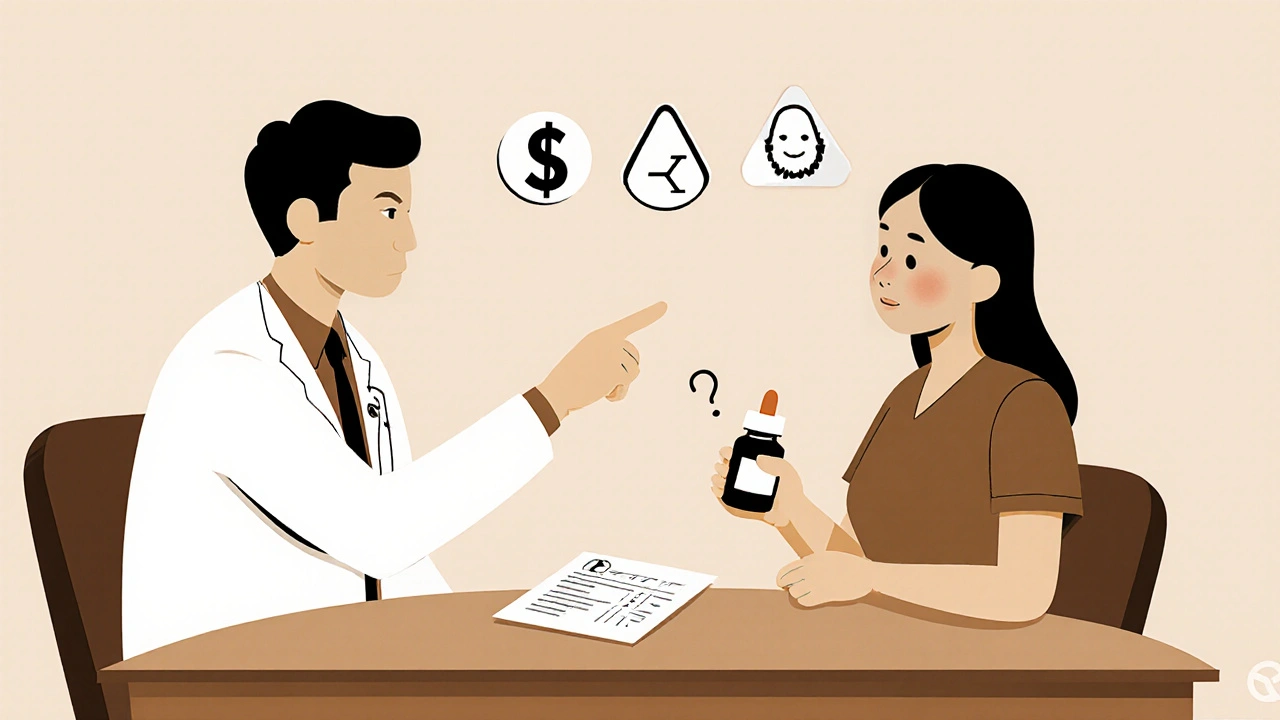
You don’t need to wait for your doctor to bring it up. You can start the conversation. Ask:- “Is there a generic version of this medication?”
- “Will the generic work just as well for my condition?”
- “Are there any reasons I should take the brand-name version instead?”
- “Have other patients had issues switching to the generic?”
Be honest about your budget. If you’re skipping doses because the cost is too high, your doctor needs to know. A $100 pill you can’t afford is worse than a $15 generic you take every day. Many doctors will switch you to a generic-even if they didn’t think of it first-just to help you stay on track.
Also, ask if your prescription can be marked “dispense as written.” In many states, pharmacies are required by law to substitute a generic unless the doctor specifically says not to. If you’ve had bad experiences with a previous generic, or if your condition is sensitive, you can request this.
What to Ask Your Pharmacist
Your pharmacist is your second line of defense. They see every prescription, know what’s in stock, and are trained to explain differences. If you get a new pill and you’re confused, ask:- “Is this the generic version of my usual medication?”
- “What’s different about it?”
- “Could this affect how I feel?”
A 2022 study found that 78% of patient concerns about generics were resolved after a quick chat with a pharmacist. They can also check if your insurance requires a generic, or if there’s a patient assistance program for the brand-name version if you really need it.
What to Watch For
Switching to a generic is usually smooth. But pay attention in the first few weeks:- Do you feel worse? More side effects? Less relief?
- Did your symptoms change suddenly?
- Are you confused because the pill looks different?
If you notice anything unusual, don’t assume it’s “all in your head.” Call your doctor or pharmacist. Write down what changed-when it happened, what you were doing, how you felt. That info helps them decide if it’s the medicine or something else.
Also, try not to switch back and forth between different generic brands. If you’re on a generic made by Company A, and then you get one from Company B, you might notice a difference-not because one is better, but because the inactive ingredients changed. Stick with one generic unless your doctor advises otherwise.
The Big Picture
Generic medications aren’t a compromise. They’re a smart, safe, and widely tested option. For most people, they’re just as effective as the brand-name version-just cheaper. The real risk isn’t in taking a generic. It’s in not taking your medicine at all because you can’t afford it.Every year, billions of dollars are saved because people choose generics. That money helps keep healthcare affordable for everyone. But affordability only matters if you actually take the pills. If you’re worried about switching, talk to your doctor. If you’re confused by the look or cost, ask your pharmacist. You don’t have to guess. You don’t have to suffer in silence.
Medication isn’t about brands. It’s about getting the right treatment, consistently, without financial stress. Generics make that possible-for millions of people, every single day.
Are generic medications less effective than brand-name drugs?
No. Generic medications must meet the same FDA standards as brand-name drugs. They contain the same active ingredient, work the same way, and deliver the same clinical results. The FDA requires them to be bioequivalent-meaning they’re absorbed into your body at nearly the same rate and amount. Studies show 89% of patients report no difference in effectiveness when switching to a generic.
Why do generic pills look different from brand-name ones?
U.S. trademark laws prevent generic drugs from looking identical to brand-name versions. So the shape, color, size, or packaging may differ. These changes are only in the inactive ingredients-like dyes or fillers-which don’t affect how the medicine works. The active ingredient, which does the healing, is exactly the same.
Can I ask my doctor to prescribe only brand-name drugs?
Yes, you can. But your doctor will likely ask why. If it’s because of cost, they may suggest alternatives or patient assistance programs. If you’ve had a bad reaction to a specific generic, or if you’re on a narrow therapeutic index drug like warfarin or levothyroxine, your doctor may agree to write "dispense as written" on the prescription. This tells the pharmacy not to substitute a generic.
Are there any medications where generics aren’t recommended?
For most drugs, generics are perfectly safe. But for medications with a narrow therapeutic index-where small changes in dose can cause serious problems-some doctors prefer brand-name versions. Examples include warfarin, levothyroxine, and certain seizure medications. Even then, the FDA approves generics for these uses. If you’re concerned, talk to your doctor or pharmacist about your specific case.
What should I do if I think the generic isn’t working?
Don’t stop taking it. Instead, track your symptoms: when did you notice the change? What are you feeling? Did you switch to a new generic? Write it down and call your doctor or pharmacist. Sometimes, the issue isn’t the medicine-it’s the inactive ingredients, a change in your routine, or even stress. Your provider can help determine if it’s the drug or something else.
Can I switch between different generic brands?
You can, but it’s not always ideal. Different generic manufacturers use different inactive ingredients. Switching between them can sometimes cause minor changes in how you feel-even though the active ingredient is the same. If you’re stable on one generic, it’s best to stick with it. If your pharmacy switches you without warning, ask them to notify you next time.
Do insurance plans force me to use generics?
Many do. Insurance companies often require you to try the generic first because it’s cheaper. If the generic doesn’t work for you, your doctor can request a prior authorization for the brand-name version. Always check your plan’s formulary or call your insurer to see what’s covered and under what conditions.
Next Steps
If you’re on a medication and unsure about the generic version you’re getting:- Check your prescription bottle. Does it list the generic name? Look it up online to confirm it’s the same as your brand-name drug.
- Compare the active ingredient. It should match exactly.
- Call your pharmacist if you’re confused about the change.
- Write down any new symptoms or concerns.
- Bring those notes to your next doctor’s appointment.
There’s no shame in asking. Medication is personal. Your health matters more than a brand name. And if cost is keeping you from taking your medicine, that’s the real problem-not the label on the bottle.


12 Comments
Generic pills work fine for me unless they make me throw up then i just pay extra and dont complain
I used to think generics were sketchy until my doctor switched me to one for blood pressure. Same results, saved me $90 a month. I wish more people knew this wasn't a scam. The system works if you just ask questions.
It's incredible how much misinformation exists around generics, especially when the science is so clear. The FDA doesn't cut corners, and neither should we. I've seen patients in rural clinics who literally can't afford brand-name meds-generics aren't a compromise, they're a lifeline. And yes, the pill looks different, but your health doesn't care about branding. Talk to your pharmacist. Ask your doctor. Don't let fear cost you your treatment.
USA thinks it's so smart with its FDA but in India we just take what works and don't waste time reading 10-page brochures. Also why is everything so expensive here? Even the generic is more than my monthly chai budget
People who say generics don't work are just lazy. If you're not feeling it, maybe you're not taking it right. Or maybe you're just mad the pill isn't pink anymore. I've seen this exact same argument for 15 years. It's always the same people with the same complaints. The science is settled. Stop making it personal.
I used to be one of those people who swore by brand-name meds until my kid got asthma and we couldn't afford the $300 inhaler-so we switched to the generic. Same exact medicine. Same results. But now we can afford groceries. And that's not just smart-it's moral. If you're against generics because you like paying more, you're not helping anyone. You're just feeding the system that's breaking people.
It's deeply concerning that the public has been conditioned to equate price with quality, and yet, the FDA's own data refutes this entirely. One must question the societal inertia that perpetuates brand loyalty despite overwhelming evidence of equivalence. The psychological burden of perceived inferiority-what you term the nocebo effect-is a symptom of a deeper cultural pathology: the commodification of health. One cannot medicate a society that confuses packaging with potency.
Oh please. The FDA approves everything. Even that one generic that made my uncle hallucinate. You know what they don't test? The placebo effect of feeling like you're getting ripped off. And now you want me to believe the color change doesn't matter? That's the same logic they used before the thalidomide scandal. Trust me, I've read a lot of blogs.
In India, generics are the only option for most. I’ve seen grandparents take the same generic for 20 years. No issues. No drama. Just health. Maybe the problem isn’t the pill-it’s the noise around it.
Regulatory compliance does not equate to clinical equivalence. Bioequivalence thresholds are arbitrary. Real-world outcomes vary. This is not science-it is corporate policy dressed as medicine.
Medicine is not about brands. It's about people. I used to think generics were for poor people. Then I saw my neighbor take her diabetes pill every day because it cost $5 instead of $50. She's alive. That's the real win. Let's stop judging and start helping.
For patients on levothyroxine, consistency matters more than cost. If you’ve been stable on a specific generic brand, don’t switch unless your provider advises it. Some pharmacies change suppliers without notice-ask for the manufacturer name on the label. Small changes in fillers can affect absorption in sensitive cases. Always document any symptoms after a switch.