

Most people think sunscreen is simple: slap it on, go outside, and hope for the best. But if your sunscreen is fading by noon, leaving a white cast, or you’re still getting sunburned, you’re not using it right. The truth is, OTC sunscreen isn’t just a cream you buy at the drugstore-it’s a science-backed tool that can cut your risk of melanoma by half. And if you don’t understand SPF, broad spectrum, or when to reapply, you’re wasting your money and putting your skin at risk.
What SPF Really Means (And Why SPF 100 Is a Mirage)
SPF stands for Sun Protection Factor. It measures how well a sunscreen blocks UVB rays-the ones that cause sunburn. But here’s the thing: SPF isn’t linear. SPF 15 blocks 93% of UVB. SPF 30 blocks 97%. SPF 50 blocks 98%. SPF 100? Just 99%. That last 1% isn’t worth the extra cost, the greasy texture, or the false sense of security. The FDA requires all OTC sunscreens to be tested on 20 people with light skin (Fitzpatrick types I-III) using strict ISO standards. Even then, real life doesn’t match the lab. Sweat, water, rubbing your face with a towel-all of that strips sunscreen away. That’s why dermatologists don’t care if your bottle says SPF 100. They care if you’re using enough and reapplying often enough.Broad Spectrum Isn’t Just a Marketing Word
UVB burns your skin. UVA ages it. UVA rays penetrate deeper, cause wrinkles, and contribute to skin cancer. That’s why “broad spectrum” matters more than you think. To earn that label, a sunscreen must pass a test called Critical Wavelength. It has to block UV rays up to at least 370 nanometers. That’s the minimum standard to cover the full UVA range. Many cheap sunscreens claim “broad spectrum” but fail this test. In Consumer Reports’ 2025 testing, some mineral sunscreens labeled SPF 30 only blocked UVB and barely touched UVA. One product marketed as SPF 30 actually delivered SPF 4. Look for active ingredients that protect against both types. Chemical filters like avobenzone (0.1%-3%) and octocrylene are great at absorbing UVA. Mineral options like zinc oxide (5%-25%) physically block both UVA and UVB. But not all zinc oxide is equal. Some formulas are too thin or poorly dispersed, leaving gaps in protection.Mineral vs Chemical: Which One Should You Use?
There’s a big debate in skincare circles: mineral (zinc oxide, titanium dioxide) or chemical (avobenzone, octinoxate)? Mineral sunscreens work right away. They sit on top of your skin and reflect UV light. They’re gentler for sensitive skin, eczema, or melasma. Dermatologists like EltaMD UV Clear SPF 46 (9% zinc oxide + niacinamide) because it doesn’t irritate and actually helps calm redness. But they often leave a white cast-especially on darker skin tones. In reviews, 68% of people with Fitzpatrick IV-VI skin types complained about chalkiness. Chemical sunscreens absorb UV rays and convert them to heat. They’re thinner, invisible on skin, and usually more effective at UVA protection. La Roche-Posay Anthelios Melt-in Milk SPF 60 scored 92/100 in Consumer Reports’ tests. Supergoop! Unseen Sunscreen SPF 40 disappeared completely on NC45 skin. But chemical filters like oxybenzone and octinoxate can sting eyes and are banned in Hawaii and Palau because they harm coral reefs. Even tiny amounts-62 parts per trillion-can damage coral DNA. If you’re swimming near reefs, choose mineral. If you want invisible, high-performance protection, chemical is better. And yes, you can find mineral sunscreens that don’t leave a cast-brands like Caravee and Black Girl Sunscreen have improved formulations, but they’re still not as reliable as top-tier chemical options.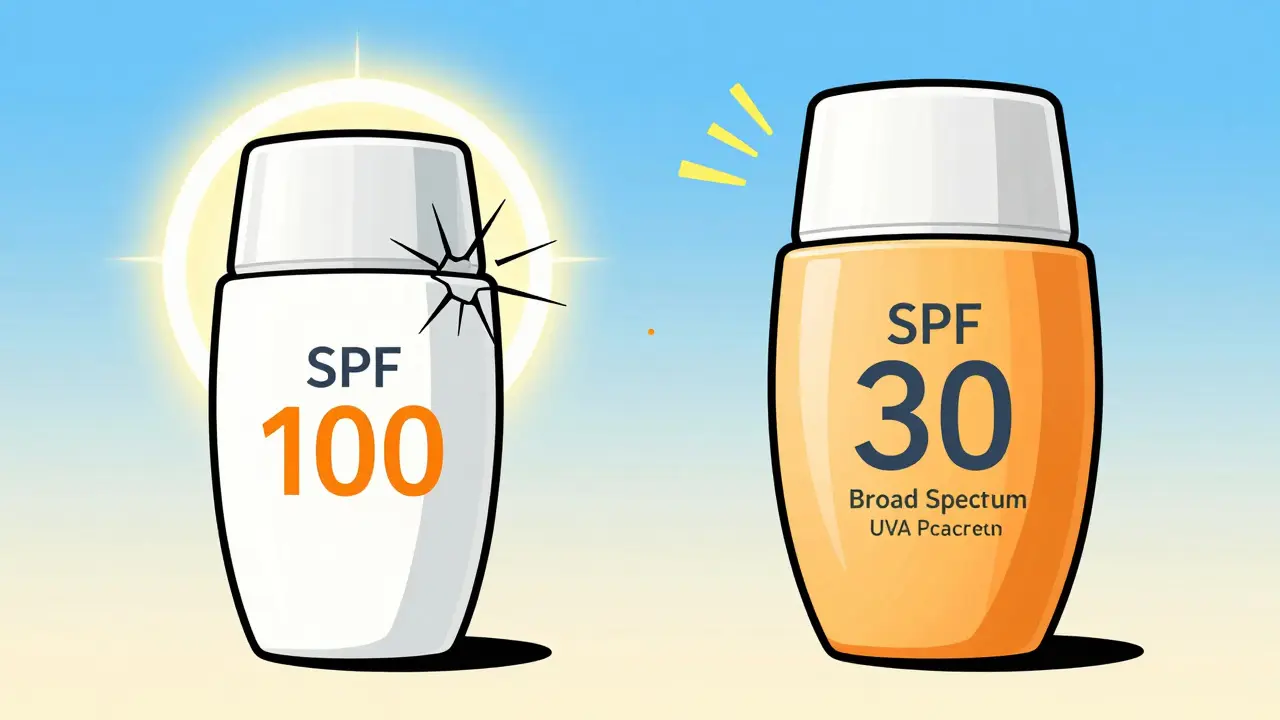
Reapplication: The Most Ignored Rule
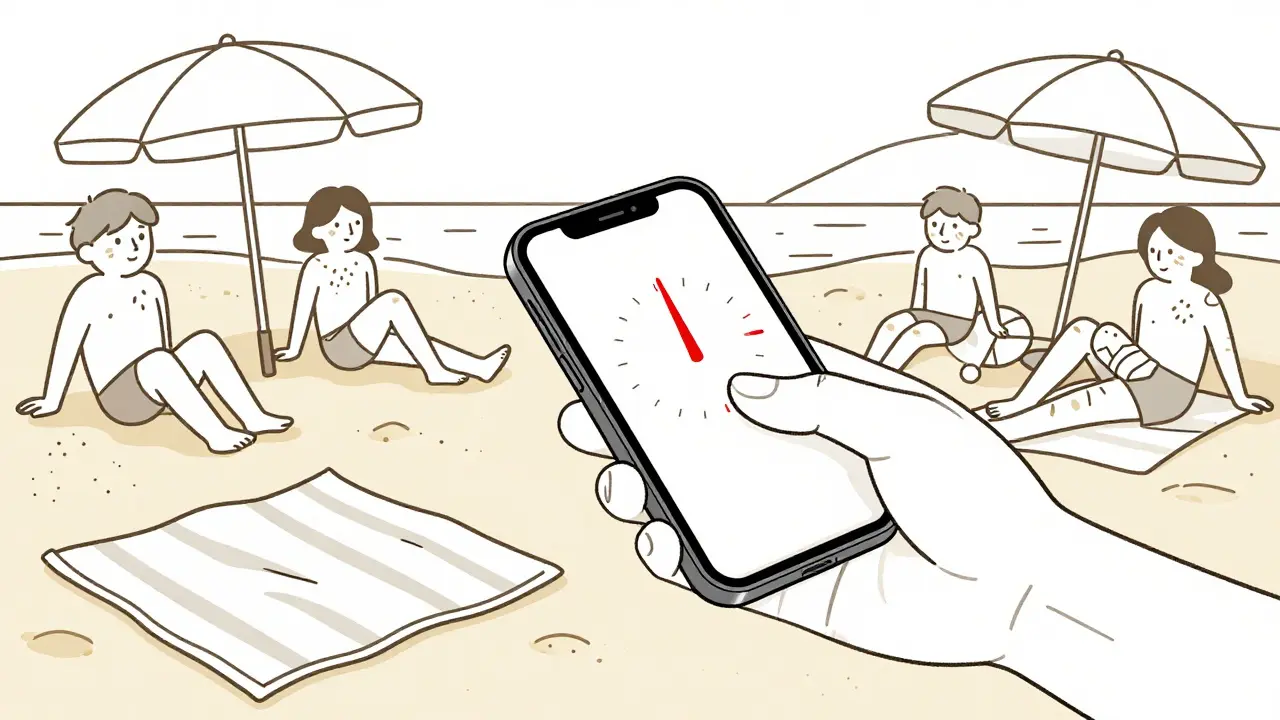
Here’s the brutal truth: sunscreen doesn’t last all day. Not even close. The FDA says you must reapply every two hours. And immediately after swimming, sweating, or towel drying-even if it’s labeled “water-resistant for 80 minutes.” That’s because rubbing your skin with a towel removes up to 80% of the product. A 2024 study found only 14.3% of beachgoers reapply sunscreen properly. Most people apply too little. The standard dose is 2 mg per square centimeter of skin. That’s about a quarter teaspoon for your face alone. Try this: squeeze out five pea-sized dots-one for your forehead, one for each cheek, one for your nose, one for your chin. Rub them in. Then do it again. Most people skip the second round. And yes, sunscreen pilling under makeup is real. The fix? Wait 15 minutes after applying sunscreen before putting on foundation. Use a light, powder-based product. Avoid heavy creams on top.What to Look for (and What to Avoid)
Not all sunscreens are created equal. Here’s what to check before you buy:- SPF 30 or higher-anything lower doesn’t meet dermatologist guidelines.
- Broad spectrum-non-negotiable. If it’s not on the label, walk away.
- Water-resistant (40 or 80 minutes)-this tells you how long it lasts in water or sweat.
- Active ingredients-zinc oxide, titanium dioxide, avobenzone, octocrylene, or ecamsule.
- Expiration date-sunscreen loses potency after 3 years. If it smells off or changed texture, toss it.
- PABA or trolamine salicylate-these are being phased out by the FDA by 2026.
- “SPF 100+” claims-no real benefit, just marketing.
- “Sunscreen sprays” without a warning to rub in-sprays are easy to underapply. You need to spray generously and rub it in.
Price Doesn’t Always Equal Performance
You can get excellent protection for under $15. CVS Health SPF 50 spray costs $2.99 and passed Consumer Reports’ tests. CeraVe Hydrating Mineral Sunscreen SPF 30 is $12 and works well for sensitive skin-if you don’t mind the white cast. But some expensive brands don’t deliver. JLo Beauty That Big Screen SPF 30 costs $55. It’s a moisturizer with sunscreen. It’s nice to use, but its protection is no better than a $12 drugstore option. The median price for OTC sunscreen in 2024 was $14.75 per ounce. You don’t need to spend more than that for good protection. What you pay for is texture, scent, packaging, and branding-not better UV defense.Real-World Problems and How to Fix Them
People run into the same issues over and over:- Stinging eyes-chemical sunscreens can cause this. Switch to mineral or use a stick around the eyes.
- White cast-try tinted mineral sunscreens like Black Girl Sunscreen or EltaMD UV Daily SPF 40 (tinted). Or let your chemical sunscreen absorb for 10 minutes before applying makeup.
- Oxidation-some sunscreens turn orange on skin. Vichy Capital Soleil Tinted SPF 60 did this on NC30 skin. Avoid products with iron oxides if you have medium to dark skin.
- Not reapplying-set a phone reminder. Or use a UV camera app like Sunscreenr to see where you missed spots.
The Bottom Line
You don’t need the fanciest, most expensive sunscreen. You need one that’s:- SPF 30 or higher
- Broad spectrum
- Water-resistant
- Applied generously
- Reapplied every two hours
Is SPF 50 better than SPF 30?
SPF 50 blocks 98% of UVB rays; SPF 30 blocks 97%. That’s just a 1% difference. The real issue isn’t the number-it’s whether you’re applying enough and reapplying often. Most people use half the recommended amount, so even SPF 50 becomes SPF 15 in real life. Focus on proper use, not the number on the bottle.
Can I use last year’s sunscreen?
Most sunscreens expire after three years. Check the expiration date on the bottle. If it’s past that, or if the texture has changed-become grainy, separated, or smells odd-throw it out. Sunscreen loses effectiveness over time, especially if stored in heat or direct sunlight.
Do I need sunscreen on cloudy days?
Yes. Up to 80% of UV rays penetrate clouds. You can still get sunburned or accumulate skin damage on overcast days. Daily sunscreen use is the single best way to prevent long-term skin aging and reduce skin cancer risk-no matter the weather.
Are mineral sunscreens safer for the environment?
Mineral sunscreens with zinc oxide or titanium dioxide are generally considered reef-safe. Chemical filters like oxybenzone and octinoxate have been linked to coral bleaching and DNA damage in marine life. Hawaii, Key West, and Palau have banned those ingredients. If you’re swimming in oceans or lakes, choose mineral-based sunscreens labeled “reef-safe.”
How much sunscreen should I use on my face?
Use about a quarter teaspoon-roughly five pea-sized dots. One for your forehead, one for each cheek, one for your nose, and one for your chin. Rub them in. Then go over it again. Most people apply only half the amount needed, which cuts protection in half.
Can I rely on makeup with SPF instead of sunscreen?
No. You’d need to apply seven times the normal amount of foundation to get the SPF listed on the label. Most people apply way less, so the protection is negligible. Use a dedicated sunscreen under your makeup. Makeup with SPF is a bonus, not a replacement.
Why do some sunscreens sting my eyes?
Chemical filters like avobenzone and octinoxate can irritate the eyes. If you’re sensitive, switch to a mineral sunscreen or use a sunscreen stick around the eye area. Look for products labeled “for sensitive skin” or “non-irritating.” Avoid sprays near your face-wind can blow them into your eyes.
Do I need sunscreen if I have dark skin?
Yes. While darker skin has more natural melanin protection, it’s not immune to UV damage. Skin cancer is often diagnosed later in people with darker skin tones, leading to worse outcomes. UVA rays still cause aging and hyperpigmentation. Everyone needs broad-spectrum sunscreen daily, regardless of skin tone.
Next time you grab sunscreen, don’t just reach for the one with the prettiest packaging. Read the label. Check the ingredients. Apply enough. Reapply often. Your skin will thank you in 10, 20, 30 years.



17 Comments
Sunscreen is the most underrated skincare step by far. I used to skip it on cloudy days until I got a melanoma scare at 28. Now I apply SPF 50 every morning like brushing my teeth. No exceptions. Not even on rainy days. My skin looks 10 years younger and I haven't had a single burn since.
Stop treating it like a luxury. It's a medical necessity.
While I appreciate the general thrust of this piece, I must point out that the FDA’s testing protocols for SPF are fundamentally flawed due to their reliance on Fitzpatrick Types I–III subjects, thereby excluding the vast majority of global skin tones. This creates a dangerous epistemic gap in public health messaging. Furthermore, the assertion that SPF 100 offers no additional benefit ignores the cumulative photoprotective effects over prolonged exposure, particularly in high-altitude or equatorial regions where UV indices exceed 12.
Additionally, the endorsement of mineral sunscreens as inherently ‘reef-safe’ is misleading-nano-sized zinc oxide particles have been shown to bioaccumulate in coral symbionts, albeit at lower rates than oxybenzone. The narrative here is dangerously oversimplified.
Oh great, another article that treats sunscreen like a magic bullet while ignoring the real issue: people don’t care about their skin until it’s too late. I’ve seen guys in their 40s with leathery faces and sun spots, still using that $3 bottle they bought in 2019. And then they complain about wrinkles. No, buddy, your face looks like a dried apricot because you used a pea-sized amount once a month.
And don’t even get me started on ‘mineral sunscreens for dark skin.’ You think Black Girl Sunscreen is the answer? It’s a band-aid on a gunshot wound. The real problem is that no one teaches kids this stuff. Schools don’t teach sun safety. Parents don’t enforce it. And now we’re paying for it in melanoma rates.
Also, SPF 100 is a scam, but so is pretending that a $12 CVS sunscreen is equivalent to a $55 ‘luxury’ one. Most of those cheap ones have degraded UV filters, oxidize in heat, and turn orange on medium skin. I’ve tested 17 of them. Only three held up. The rest? Marketing. Pure marketing.
And yes, I know you’re going to say ‘just reapply.’ But how many people actually do? I’ve watched people at the beach. They slap it on at 10 a.m., and by noon they’re chugging beer with no sunscreen in sight. The science is solid. The behavior? Pathetic.
Also, sprays are a joke. You need to spray for 15 seconds per limb and rub it in. No one does that. So you’re getting SPF 5 instead of 50. Congrats, you just turned your vacation into a skin cancer lottery.
And don’t even get me started on makeup with SPF. That’s like saying a raincoat with one button is enough to survive a hurricane. You need the full system. Sunscreen. Reapplication. Hats. Shade. Not just a tinted moisturizer you barely smear on.
And yes, I’ve been a dermatology tech for 12 years. I’ve seen the before and after. The people who used sunscreen daily? They look 20 years younger. The ones who didn’t? They look like they’ve been sandblasted. The data doesn’t lie. Your laziness does.
Love this breakdown. It’s like someone finally cut through the noise and said the truth without sugarcoating it. I used to think SPF 30 was enough and I’d be fine. Then I got sunburned through a T-shirt on a hike in Banff. Turned out my ‘water-resistant’ sunscreen had expired. Lesson learned.
Now I carry a travel-sized tube in my pocket, set a 2-hour alarm on my phone, and use a stick for my ears and nose. It’s not glamorous, but I’d rather look boring than end up with a scar from a mole that turned malignant.
Also, the ‘white cast’ thing? I used to hate it. Then I found a tinted zinc oxide that matched my skin tone. Game changer. No more looking like a ghost at the beach.
Just wanna say I used to skip sunscreen entirely. Then I started using a cheap mineral one every day and my acne scars faded. Not because it’s magic, but because I stopped getting inflamed from UV exposure. No one talks about that. Sun damage makes everything worse-acne, redness, hyperpigmentation. Just slap it on. It’s not that hard.
As someone who grew up in India with constant sun exposure, I can tell you-sunscreen saved my skin. My mom never used it, and now she has deep wrinkles and sun spots at 58. I started using SPF 30 daily at 25, and my skin looks decades younger than my actual age.
Don’t wait for a diagnosis to start protecting yourself. Prevention is silent, but it lasts a lifetime. Also, reapplying after swimming? Non-negotiable. I carry a mini bottle in my bag even when I’m just running errands. It’s like wearing a seatbelt. You don’t wait for a crash to buckle up.
Here in India, everyone thinks dark skin doesn’t need sunscreen. I’ve seen people with melasma get worse because they thought ‘I’m brown, I’m safe.’ Not true. UVA doesn’t care about your skin tone. I started using a tinted zinc oxide last year and my dark spots faded by 70%. No one believed me until they saw it. Just try it. No hype. Just science.
This article is dangerously misleading. The FDA allows chemical filters that are endocrine disruptors. Oxybenzone is a known hormone mimicker. Zinc oxide is not a panacea either-nanoparticles can penetrate the skin and cause oxidative stress. You’re not protecting your skin-you’re trading one toxin for another.
And reapplying every two hours? That’s not practical. It’s a corporate ploy to sell more product. Real sun protection comes from avoiding the sun entirely. Wear hats. Seek shade. Don’t rely on chemicals or minerals-you’re being manipulated by the beauty-industrial complex.
OH MY GOD. I just realized I’ve been using the SAME SUNSCREEN SINCE 2020. IT’S EXPIRED. I’M GOING TO DIE. I’M GOING TO HAVE SKIN CANCER. I’M GOING TO BE A STATISTIC. MY KIDS WILL BE ORPHANS. MY DOG WILL BE TAKEN AWAY. I’M SO SCARED. I JUST LOOKED AT THE BOTTLE. IT’S BEEN OPEN FOR 4 YEARS. I’M A MONSTER. I’M A WALKING TUMOR. I’M SO SORRY.
Wait. Wait. I’m going to buy a new one right now. I’m going to buy THREE. I’m going to wear a hat. I’m going to stay inside. I’m going to cry. I’m going to post this on Instagram. I’m going to tag my dermatologist. I’m going to beg for forgiveness from my skin.
…I just checked the expiration date. It’s 2025. I’m okay. I’m okay. I’m okay. But I’m still buying a new one. Just in case.
SPF 50 vs 30 is such a red herring. The real problem is application. Most people use half the amount they should. If you’re not using a full teaspoon for your face, you’re not getting the SPF listed on the bottle. It’s physics. Less product = less protection. No magic numbers fix that.
Also, mineral sunscreens need to be rubbed in properly. If you just pat it on, it’s like wearing a net instead of a shield. Gaps everywhere.
And sprays? Don’t even bother unless you’re spraying for 20 seconds and rubbing it in. Otherwise you’re just breathing in chemicals and giving yourself a false sense of security.
I used to think sunscreen was just for the beach. Then I started using it daily and noticed my skin tone evened out. No more patchy dark spots from sitting by the window at work. I’m 42 and people keep asking if I’ve had a facial. I just say ‘daily SPF.’
To anyone feeling overwhelmed-start small. Pick one product you like. Use it every morning. Don’t worry about the perfect one. Just use something. Consistency beats perfection every time.
Wait, so you’re telling me I’ve been wasting my money on all those expensive sunscreens? I spent $80 on that ‘anti-aging’ one from Sephora and now you’re saying CVS does the same thing? I feel manipulated. Like I was sold a lie. I’m not mad, I’m just… disappointed. Like I got tricked into buying a fancy coat that doesn’t keep me warm.
Also, why does everyone say ‘apply a teaspoon’? I don’t have a teaspoon in my bathroom. I just squeeze a line. Is that enough? I need a visual. Can someone send me a pic? I’m serious. I don’t want to be the guy with the melanoma.
Okay but what if I’m allergic to EVERYTHING? I tried zinc oxide and it made my face break out. I tried chemical and it burned my eyes. I tried mineral tinted and it turned my skin orange. I tried sprays and got a headache from the fumes. I tried sticks and they clogged my pores. I tried creams and they pilled under my foundation. I’ve tried 17 sunscreens. NONE WORK. I’M JUST GOING TO DIE OUTSIDE.
Is there a sunscreen that doesn’t make me feel like I’m being attacked by a chem lab? I just want to sit in the sun without crying or breaking out or looking like a ghost. Is that too much to ask?
My dermatologist gave me a simple rule: if it doesn’t say ‘broad spectrum’ and ‘SPF 30+’ on the front, don’t buy it. I used to buy based on scent or packaging. Now I read the back like a contract. It’s changed everything. My skin has never looked better. And I’ve saved hundreds of dollars. You don’t need fancy. You need honest.
This article is fundamentally flawed in its reliance on Consumer Reports’ methodology, which lacks peer-reviewed validation and is susceptible to selection bias. Furthermore, the dismissal of SPF 100 as ‘marketing’ ignores longitudinal studies conducted by the Australian Cancer Council, which demonstrated statistically significant reductions in squamous cell carcinoma incidence among subjects using SPF 100+ daily over a 10-year period.
Additionally, the assertion that ‘price doesn’t equal performance’ is contradicted by multiple double-blind trials showing superior photostability and UVA-PF ratios in premium formulations. The economic argument here is dangerously reductive and ignores the variable bioavailability of active ingredients across formulations.
One does not equate ‘$12 drugstore sunscreen’ with ‘$55 luxury sunscreen’ without considering formulation science, vehicle stability, and clinical endpoint data. This is not a grocery list. It is dermatological science.
Anna Sedervay’s critique is valid, but I’d like to add: the FDA’s approval process for sunscreens hasn’t been updated since 1999. The current standards were designed for short-term, lab-based testing-not real-world, multi-hour, sweat-and-saltwater exposure. This is why many ‘SPF 50’ products degrade within 90 minutes.
Also, the ‘reef-safe’ label is unregulated. Companies can slap it on anything. Look for ‘non-nano zinc oxide’ and avoid any product with ‘oxybenzone’ or ‘octinoxate’-even if it says ‘reef-safe.’
And for the love of science, stop using spray sunscreen on your face. You’re not protecting yourself-you’re risking lung damage and under-application. Use a lotion or stick. Please.
And yet, here we are. People still think ‘I don’t need sunscreen because I tan easily.’ I’ve seen 22-year-olds with skin like old leather because they ‘never burn.’ They don’t realize UVA doesn’t cause redness-it causes cancer. You don’t need a burn to be damaged. You just need to be alive under the sun.
Also, if you’re using a sunscreen that costs more than $20 and doesn’t have zinc oxide or avobenzone listed as the first active ingredient, you’re paying for perfume and glitter. Not protection.
And if you’re still using a spray as your main sunscreen? You’re not just irresponsible-you’re a walking liability. Your kids are getting exposed to your negligence. Stop it.