

When you're fasting for religious reasons, taking your daily pills can feel impossible. You can't eat or drink from dawn to sunset, and that includes swallowing pills with water. But skipping your medication? That could be dangerous. The truth is, you don't have to choose between your faith and your health. With the right planning, most people can safely manage their medications during religious fasts like Ramadan, Yom Kippur, or Lent.
How Fasting Changes Your Body’s Absorption of Medicine
Fasting isn’t just about going without food. It changes how your body absorbs, processes, and gets rid of drugs. When you’re not eating, your stomach is empty, your gut moves slower, and your liver works differently. This can make some medications less effective-or more likely to cause side effects. For example, antibiotics like amoxicillin work best when taken with food to avoid stomach upset. But if you’re fasting, you can’t eat until sunset. Taking it on an empty stomach might make you sick. On the other hand, levothyroxine, used for thyroid problems, must be taken on an empty stomach at least 30 minutes before anything else. If you take it with your pre-dawn meal, it won’t work right. The timing matters more than you think. A 2023 study found that people taking blood pressure meds at night during Ramadan had better control over their morning blood pressure than those who took them at dawn. Why? Because the body’s natural rhythm shifts during fasting. Your cortisol and adrenaline levels change, and your kidneys adjust fluid balance. If you take your meds at the wrong time, you might end up with dizziness, low blood sugar, or even a hospital visit.Once-Daily Medications: When to Take Them
If you take one pill a day, you have two clear options: right after sunset (Iftar) or right before dawn (Suhoor). Which one you pick depends on the drug. - Medications that cause stomach upset (like ibuprofen or some antibiotics) should go after Iftar, with your meal. The food protects your stomach lining. - Medications that need an empty stomach (like levothyroxine or some antibiotics like ciprofloxacin) should go 30 minutes before Suhoor. That means taking it at 4:30 a.m. if your meal is at 5 a.m. - Medications for chronic conditions like high cholesterol (statins) or depression (SSRIs) often work better when taken at night. Your body naturally produces more cholesterol at night, so taking a statin at Iftar makes it more effective. Some antidepressants cause drowsiness-taking them at night helps you sleep through it. A 2024 review from Johns Hopkins Aramco Healthcare found that switching to nighttime dosing for once-daily meds reduced side effects by 40% in fasting patients. That’s not a small win.Twice-Daily Medications: Splitting Your Doses
Most people on two pills a day can easily adjust. The rule is simple: one dose at Suhoor, one at Iftar. This works for: - Blood pressure meds (like amlodipine or lisinopril) - Diabetes drugs (like metformin or glimepiride) - Antibiotics (like amoxicillin-clavulanate) - Thyroid meds (if your doctor says it’s safe) But here’s the catch: not all meds are created equal. Extended-release pills (like those labeled “XR,” “ER,” or “SR”) are designed to release slowly over 12-24 hours. Splitting them can ruin that design. If you’re on extended-release metformin, you can’t just break the pill in half. Your doctor may need to switch you to a regular version for the month. A 2023 study in the Journal of Clinical Pharmacy and Therapeutics tracked 1,200 fasting patients on twice-daily meds. Those who switched to Suhoor/Iftar timing had 78% fewer missed doses than those who tried to take both pills at Iftar. The key? Consistency. Take your first dose at the same time every day-even on weekends.Three or More Doses a Day: The Big Challenge
If you’re on three or four pills a day, this gets tricky. Taking pills every 6-8 hours means you’d have to wake up in the middle of the night to swallow a pill. That’s not realistic-and it defeats the purpose of fasting. The solution? Talk to your doctor before Ramadan starts. They might be able to: - Switch you to a once- or twice-daily version of the same drug - Change to a different medication with a longer half-life - Use non-oral forms like patches, inhalers, or injections For example: - Insulin users can switch from multiple daily injections to a long-acting insulin once a day, with a rapid-acting dose only at Iftar if needed. - People on ADHD meds like Adderall (taken 2-3 times a day) can switch to Vyvanse, which is once-daily. - Those on antibiotics for chronic infections (like acne or UTIs) can switch from three-times-daily to once-daily options like azithromycin. The American Diabetes Association’s 2023 guidelines say that if you’re on more than two daily doses of diabetes meds, you should have a full medication review at least four weeks before Ramadan. Don’t wait until the last minute.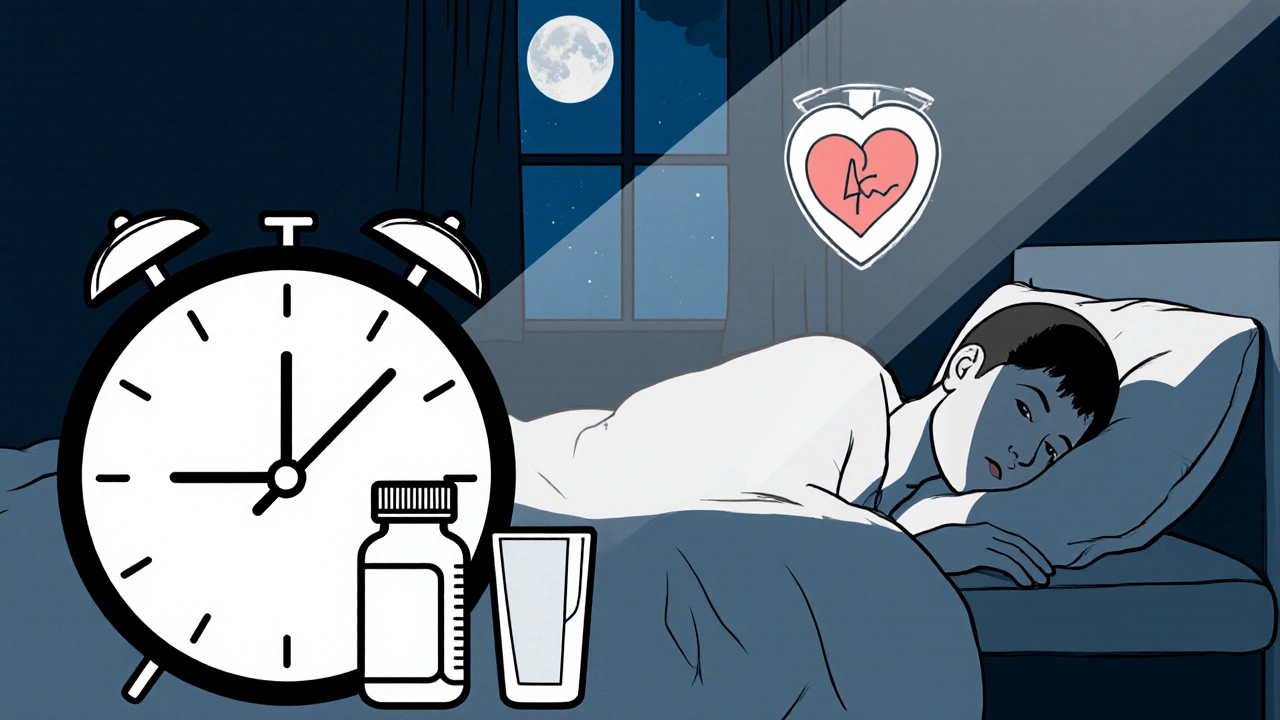
Special Cases: Thyroid, Blood Pressure, and Diabetes
Some conditions need extra care. Thyroid medication (levothyroxine): This one’s sensitive. It must be taken alone, on an empty stomach, at least 30 minutes before food or other meds. Many people take it in the morning-but during Ramadan, that’s not possible. A 2024 study from the University of California found that taking levothyroxine at Iftar (after sunset) worked just as well as morning dosing. TSH levels stayed stable. The trick? Wait 30-60 minutes after eating before taking it. Don’t take it with calcium, iron, or coffee-those block absorption. Blood pressure meds: Don’t change your dose during Ramadan. Studies show that increasing or decreasing your dose during fasting raises the risk of stroke or heart attack. Stick to your normal dose, just shift the timing. Take your diuretics (water pills) at Iftar, not Suhoor. If you take them at dawn, you’ll be running to the bathroom all day. Diabetes: This is the most dangerous combo. Fasting + diabetes = high risk of low blood sugar. One in five people with diabetes on insulin or sulfonylureas experience hypoglycemia during Ramadan. Your doctor may need to: - Reduce your insulin dose by 20-30% - Switch you to a safer drug like metformin or GLP-1 agonists - Teach you how to check your blood sugar every 4-6 hours during fasting If your blood sugar drops below 70 mg/dL, break your fast. No religious obligation is worth your life.What Medications Are Allowed During Fasting?
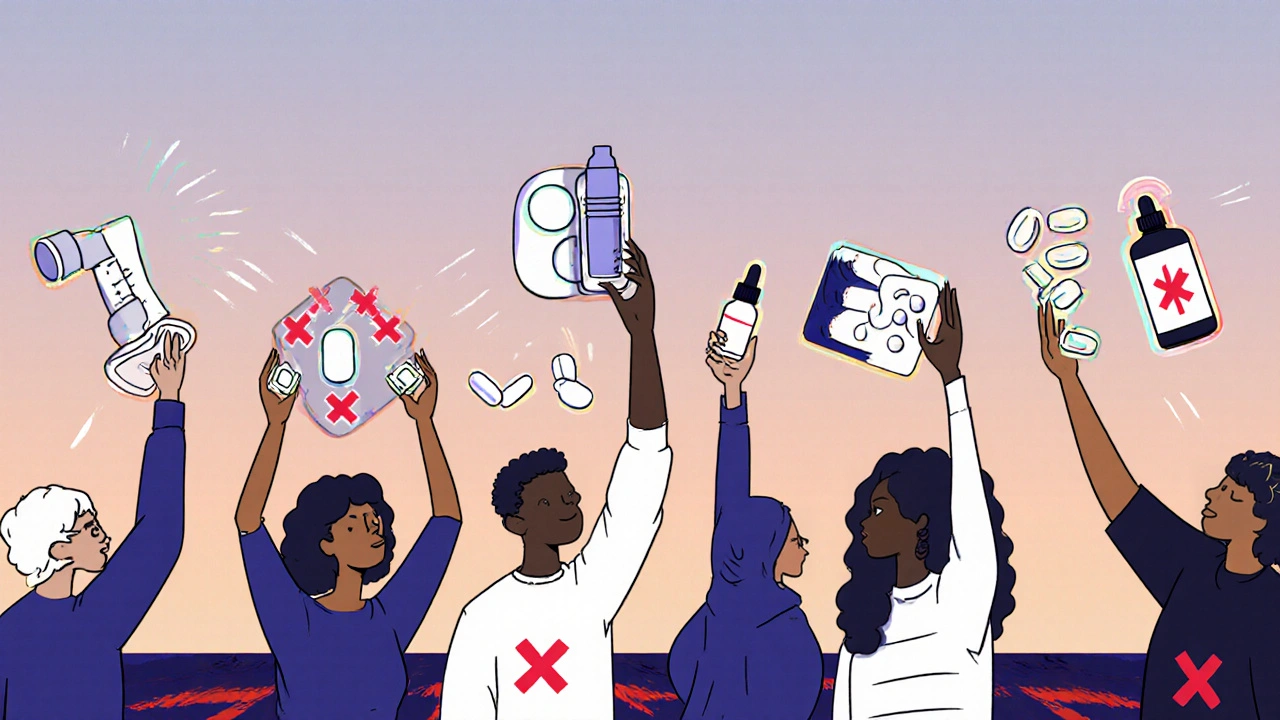
Not all meds are created equal when it comes to fasting rules. Oral pills? Usually not allowed during fasting hours. But what about other forms? According to the Islamic Medical Association of North America and most scholars: - ✅ Allowed: Inhalers, eye drops, ear drops, nasal sprays, skin creams, patches, injections, suppositories, IV fluids (if medically needed) - ❌ Not allowed: Pills, capsules, liquids, chewables, lozenges This is important. If you have asthma, you can still use your inhaler. If you have glaucoma, you can still use eye drops. If you have chronic pain, a fentanyl patch is fine. These don’t break the fast because they don’t enter through the digestive tract. A 2023 survey of 800 Muslim patients found that 62% didn’t know this. Many stopped using their inhalers during Ramadan-leading to asthma attacks. Don’t be one of them.What to Do Before Ramadan Starts
You can’t wing this. Waiting until the first day of fasting to figure out your meds is risky. Here’s your checklist:- Make an appointment with your doctor or pharmacist 4-6 weeks before Ramadan. Bring your full medication list.
- Ask: “Can my meds be taken at Suhoor or Iftar? Do I need a different form or dosage?”
- Ask your religious leader: “Are these non-oral meds allowed during fasting?” Get it in writing if possible.
- Get a printed schedule: Write down what to take, when, and with or without food.
- Set phone alarms for Suhoor and Iftar doses.
- Stock up on water, electrolytes, and snacks for after sunset.
- Know your warning signs: dizziness, confusion, chest pain, extreme fatigue-break your fast if these happen.


14 Comments
So let me get this right-you’re telling me I can just shift my blood pressure meds to sunset and magically avoid dizziness? That’s not medicine, that’s witchcraft. And who the hell decided that taking levothyroxine after food is fine? The FDA didn’t sign off on that. This is dangerous. People die from this kind of reckless advice.
I mean I guess if you're into all that religious stuff and also have a bunch of pills to take it makes sense to plan ahead but honestly I just forget to take mine sometimes anyway so I don't know why this is such a big deal
This is such a thoughtful and needed guide. I know so many people who stop their meds during Ramadan because they’re scared or confused. You’ve made it clear that faith and health can walk hand in hand. Thank you for not making people feel guilty for needing help. You’re right-talk to your doctor early. Don’t wait until you’re dizzy at 3 p.m. on day three.
Medication timing during fasting is just another example of how modern medicine overcomplicates everything. Just take your pills when you can. The body adapts. Stop overthinking it.
It is imperative that individuals engaged in religious observances consult with qualified healthcare professionals prior to modifying their pharmacological regimens. The physiological adaptations induced by prolonged fasting necessitate individualized clinical assessment. The evidence base supporting timed administration of medications during Ramadan is robust and should be leveraged to mitigate adverse outcomes. Further, non-oral modalities are not only permissible under Islamic jurisprudence but are medically preferable in many cases.
Good stuff. I’ve seen friends go through this and they just wing it. Big mistake. Setting alarms for Suhoor and Iftar doses changed everything for me. And yeah-extended release pills? Don’t split them. Your doctor can swap you to regular if needed. Simple fix.
I’m Muslim and I’ve been fasting for 25 years. This is the first time I’ve seen a guide that doesn’t make me feel like I’m betraying my faith by needing meds. Thank you. Also-yes, inhalers are fine. My uncle had a severe asthma attack last year because he stopped his inhaler. Don’t be him.
Interesting breakdown. The pharmacokinetic shifts during fasting are well documented, though the practical application varies significantly across populations. The reliance on observational studies over RCTs in this piece is notable. Still, the recommendations are reasonable for general use.
As a pharmacist in Mumbai, I’ve seen this every year. People come in terrified. I give them a printed schedule, set alarms, and explain that eye drops and inhalers don’t break the fast. Most don’t know. You’re right-this needs to be common knowledge. Also, if someone’s blood sugar is below 70, they break the fast. No debate. Life comes first.
My dad takes six pills a day and fasts every year. He didn’t change anything until he ended up in the ER. Now he’s on once-daily meds. It’s not hard. Just talk to someone. Don’t be proud.
This is incredibly helpful. I’ve been helping my elderly neighbor navigate her meds during Ramadan. She was taking her statin at dawn and wondering why her cholesterol didn’t improve. Switching to Iftar made all the difference. I’m sharing this with my book club.
Wait… so you’re saying taking levothyroxine at night works just as well? That contradicts every single medical textbook I’ve ever read. And who says the body’s cortisol rhythm shifts enough to make nighttime dosing better? This feels like a trend, not science. I’m skeptical.
Let’s be real-this isn’t about medicine. It’s about cultural appeasement. You’re rewriting pharmacology to accommodate religious rituals. The body doesn’t care about your prayer schedule. If your meds need food, eat. If they need fasting, fast. Don’t twist science to fit dogma. This is dangerous softening.
THIS. THIS. THIS. I cried reading this. My mom has diabetes and was terrified to fast. We called her doctor, got her on GLP-1 agonists, switched her insulin timing, and now she fasts safely. She says it’s the most spiritual Ramadan she’s ever had. You didn’t just give advice-you gave hope. Thank you.