
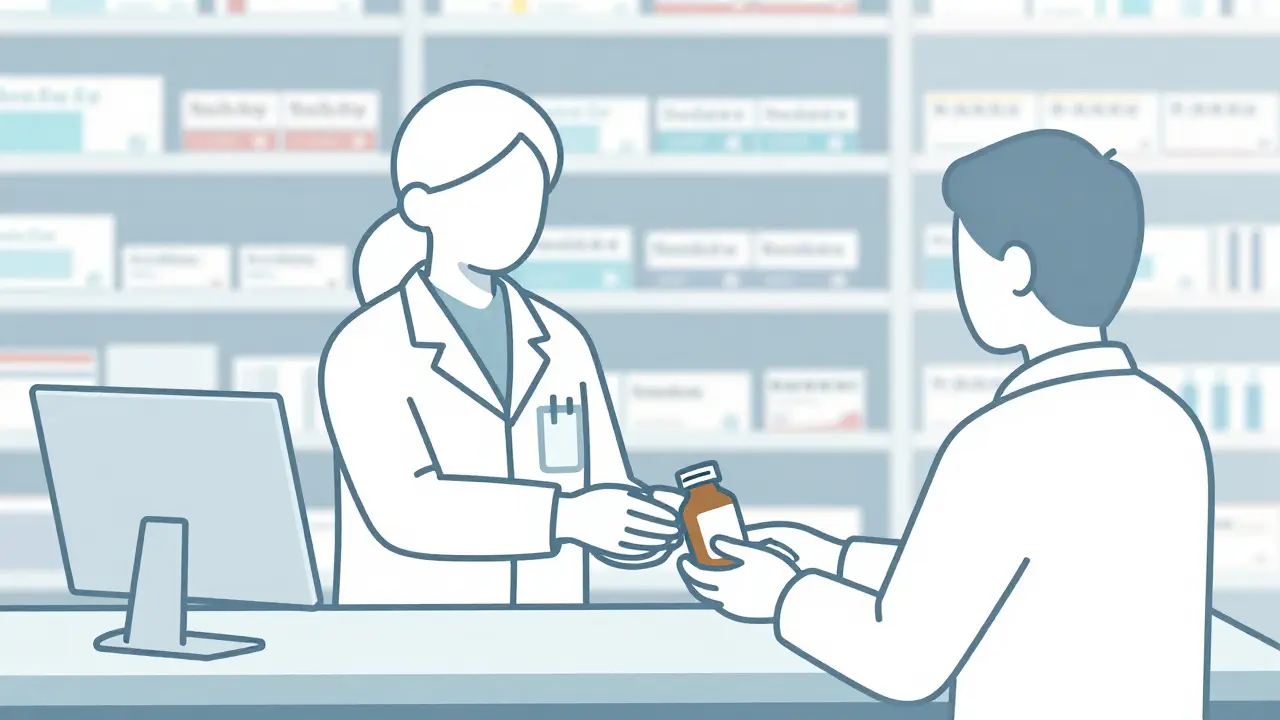
You walk into a retail store and your pharmacist hands you a blue pill instead of the white one you remember. Later, you're admitted to the hospital, and the nurse gives you something else entirely. It can feel confusing when the rules for swapping medications seem to change depending on where you are. The truth is, substitution differences between these two environments aren't random. They stem from distinct legal frameworks, patient safety goals, and operational workflows. Understanding why these changes happen helps clarify who makes the decision and ensures your treatment stays consistent.
The Regulatory Divide Between Settings
At the core of the issue lies the law. Community pharmacies operate under state-specific pharmacy practice acts. In the United States, there are 50 distinct regulatory frameworks, meaning a rule in one state might not apply next door. These laws grant pharmacists the legal authority to substitute therapeutically equivalent generic drugs unless the prescriber writes "Dispense as Written." This process happens right at the point of sale, often in a matter of minutes. It is a transactional event driven largely by third-party payer requirements and state boards of pharmacy.
Hospitals function differently because they are integrated healthcare delivery systems. Their substitution protocols are institution-specific but must comply with national standards like those set by the Joint Commission and the Centers for Medicare & Medicaid Services (CMS). Instead of individual discretion, hospital substitutions usually occur through multidisciplinary clinical decision-making. A 2022 survey of hospital pharmacy directors showed that nearly 90 percent of acute care hospitals maintain formal protocols covering between 15 and 200 medication classes. These protocols are established by Pharmacy and Therapeutics (P&T) committees, making the decision a team effort rather than a single interaction.
| Feature | Retail Pharmacy | Hospital Pharmacy |
|---|---|---|
| Authority Source | State Pharmacy Practice Acts | Institutional P&T Committees |
| Primary Driver | Cost Containment (Insurance) | Clinical Optimization (Patient Care) |
| Common Med Types | Oral Solids (97%) | IVs, Biologics, Complex Formulations |
| Notification Requirement | Patient Consent (Varies by State) | Physician Notification (Within 24 Hours) |
| Documentation Method | Receipt/Substitution Record | Electronic Health Record (EHR) Integration |
Who Makes the Decision?
In a retail setting, the pharmacist holds significant autonomy regarding substitution. With rates averaging over 90 percent for eligible medications, the pharmacist identifies the generic equivalent and notifies the patient. Thirty-two states require verbal notification, while eighteen mandate written consent for the first substitution. This creates a dynamic where communication skills are paramount. If a patient refuses the swap, the pharmacist must call the doctor or process the higher-cost brand name drug. The financial driver here is clear: insurance formularies push for lower costs, and the pharmacist executes that at the counter.
Hospitals take a more collaborative approach. A therapeutic interchange protocol allows the facility to switch medications based on clinical pathways. However, this isn't just the pharmacist deciding alone. According to Joint Commission Standard MM.04.01.01, physician notification is required within 24 hours of such decisions. This ensures the prescribing team knows exactly what the patient is receiving. In fact, 84.6 percent of hospital pharmacists report that patient-specific clinical factors drive their substitution choices, prioritizing safety and efficacy over immediate cost savings. The decision is vetted through the closed-loop system of the hospital's internal review process.
Type of Medications Involved
The scope of what gets swapped changes drastically between the two worlds. Retail substitution applies almost exclusively to oral solid dosage forms. Think pills and capsules. About 97 percent of retail substitutions fall into this category. Specialty drugs in retail settings see much lower substitution rates, with data suggesting only about 12 percent are subject to swapping. This is because specialty medications often involve narrow therapeutic windows where even minor changes could alter outcomes.
Contrast this with the hospital environment. Here, you frequently see complex formulations being substituted. Intravenous medications account for roughly 68 percent of hospital therapeutic interchanges. You also see biologics and specialized compounded preparations shifting between therapies. For example, an antibiotic like vancomycin might be interchanged with linezolid for MRSA treatment based on protocol. These are high-risk swaps requiring deep clinical knowledge. The complexity demands a different level of oversight compared to swapping a common blood pressure pill at a local pharmacy.
Electronic Health Records is a digital version of a patient's medical history managed by health providers. Also known as Medical Records System, it integrates real-time clinical decision support alerts as mandated by CMS Condition of Participation §482.22(c).
Safety and Documentation Standards
How we track these changes matters immensely for patient safety. Retail pharmacies must maintain substitution records for two years per state regulations. This is administrative compliance. While important, it is external to the clinical workflow. Hospital pharmacies integrate substitution documentation directly into the electronic health record. This allows real-time clinical decision support alerts to trigger if a contradiction arises. When a patient leaves the hospital, this record travels with them, ideally.
However, gaps in this communication create risks. The Institute for Safe Medication Practices warns that poorly coordinated practices between hospital and retail settings represent a significant patient safety risk. Approximately 17.4 percent of reported medication discrepancies occur during care transitions. Imagine leaving the hospital on Drug B because Drug A was unavailable, then going to the neighborhood pharmacy which defaults back to Drug A due to formulary rules. Without reconciliation, the patient ends up on both or receives conflicting therapy.
CMS Conditions of Participation refers to federal requirements health care facilities must follow to participate in Medicare programs. Specific clauses govern drug dispensing and pharmacy services.Market Forces and Economic Drivers
Economics plays a starring role in retail substitution. Roughly 92 percent of retail pharmacists cite insurance formulary requirements as the primary driver. The goal is cost containment. Industry estimates suggest retail substitution accounts for hundreds of billions in annual drug cost savings. This efficiency benefits the system financially, but it can lead to friction when patients prefer their original brand or have had bad experiences with previous generics.
Hospitals balance economics with clinical stewardship. While they do use strategies to maximize savings like the 340B Drug Pricing Program, 87 percent of hospital substitution limitations center on investigational drugs and protocol-driven therapies. Clinical trials often prohibit substitution entirely. Furthermore, antimicrobial stewardship drives many hospital swaps. Data shows that implementing beta-lactam substitution pathways reduced infection rates like C. difficile in participating facilities. The hospital model prioritizes long-term health outcomes and population management over the immediate price of the prescription bottle.

Future Trends and Convergence
The lines between these settings are blurring slightly due to new interoperability mandates. The CMS Interoperability and Prior Authorization Rule, effective July 2024, requires standardized substitution documentation across settings. This aims to address the fragmentation where substitution discrepancies cause errors during transitions. Technology companies like Epic and Cerner are developing modules to share substitution history between hospital and retail settings by 2025.
We are moving toward a future where the distinction diminishes. Value-based care models emphasize medication continuity. Integrated substitution protocols are predicted to become standard in most healthcare systems by 2028. Until then, awareness remains key for everyone involved. Patients should ask what medicine they are getting. Providers need to reconcile lists upon discharge. Pharmacists must communicate changes clearly. This shared vigilance bridges the gap created by differing regulatory environments.
Frequently Asked Questions
Can I refuse a generic substitution at a retail pharmacy?
Yes, you generally have the right to refuse a generic substitution. Laws vary by state, but most require the pharmacist to obtain consent or notify the prescriber before dispensing a generic if you object. Some states mandate written consent for the first instance to protect patient choice.
What is therapeutic interchange in hospitals?
Therapeutic interchange involves switching to a clinically different drug rather than just a generic match. Hospitals use P&T committee-approved protocols to swap medications like antibiotics or painkillers based on safety, resistance patterns, or formulary availability.
Why do substitution rules differ between settings?
Retail pharmacies focus on point-of-sale cost containment and state law compliance. Hospitals focus on integrated clinical care and institutional protocols. The former is transactional; the latter is part of a comprehensive medical treatment plan managed by a team.
Does insurance affect what I get?
Absolutely. Insurance formularies dictate which drugs are covered. In retail settings, this drives generic substitution rates up to 90 percent. In hospitals, formulary adherence affects drug selection, though clinical needs often take precedence over pure cost if a better therapeutic option exists.
Are substituted medications considered safe?
When following approved protocols, yes. FDA guidelines emphasize that therapeutic equivalence determinations apply across settings. However, patient monitoring is essential, especially during hospital-to-home transitions where discrepancies are most common.

11 Comments
The regulatory framework is quite intresting considering the varience across states. It seems illogical that neighboring jurisdictions operate under completely diffrent statutes regarding dispense as written rules. One might expect a national standardization but the current patchwork creates confusin for patients traveling between areas. The pharmacist autonomy mentioned here is significant yet it lacks consistency when compared to hospital protocols which appear more rigid. Patients often feel lost during these transitions and deserve better clarety from both sides of the care continuum.
Honestly this situation is absolutely terrifying when you are the one swallowing the pill without knowing what changed. They don't care about our safety they just want to save the insurance company money at every single turn. You get hospitalized and then come home to a different medication entirely without any explanation whatsoever. It feels like we are guinea pigs in their giant medical experiment designed to cut costs aggressively. We deserve better than being passed around like a hot potato while doctors and pharmacists decide behind closed doors!
The therapeutic interchange protocols mentioned align perfectly with Joint Commission Standard MM.04.01.01 requirements regarding physician notification timelines. Utilizing P&T committees allows for standardized clinical decision-making pathways that reduce variance in drug selection outcomes significantly. Formulary adherence is critical for maintaining cost containment strategies while optimizing patient safety metrics simultaneously. Electronic health record integration facilitates real-time alerts for potential contradictions during transition of care phases effectively. This systemic approach ensures that therapeutic equivalence determinations remain consistent across various administrative boundaries.
I think understanding these differences really helps us feel less confused when things change 🤔💊 It's important to know who is making decisions about our meds! 🏥❤️ Communication is key between hospitals and pharmacies to keep everyone safe. Let's make sure we ask questions and read our records properly! 👍😊
Your fear stems from a fundamental misunderstanding of pharmaceutical stewardship principles. Retail pharmacists possess extensive training specifically for managing generic substitutions efficiently. Emotional outbursts do not address the structural necessity of cost management within modern healthcare delivery systems. Perhaps you would understand better if you studied the underlying economic frameworks rather than screaming about pills. The complexity exceeds your apparent grasp of the issue unfortunately.
Hospitals follow strict CMS guidelines unlike retail settings.
Your technical babble ignores the existential crisis of patient identity loss within the system. Every interchange represents a fracture in the sacred trust between healer and healed. The machine grinds on regardless of individual suffering while algorithms dictate life and death choices coldly. We stand at the precipice of dehumanized medicine where efficiency supersedes the human soul entirely. There is no hope left when data points replace people in the equation.
its true that documentation matters alot for safety reasons though communication gaps still happen frequently enough to worry about everyone involved we need better systems in place so nobody gets hurt during transitions between places hopefully technology will help soon enough maybe
You raise a valid point about technological intervention bridging communication gaps effectively. Many nations outside the US already utilize unified databases to track medication histories across different facilities seamlessly. We should learn from global best practices to improve local standards and patient outcomes consistently. Patience is required as new interoperability mandates slowly phase in across the industry landscape. Together we can advocate for safer systems that respect patient dignity universally.
It is truly heartbreaking to consider how many patients fall through the cracks during these critical transitions between care settings. Imagine arriving at a new facility with your history fragmented and potentially missing vital information about prior substitutions. The stress placed on families trying to decipher medical jargon adds unnecessary burden to an already difficult time for everyone involved. Safety protocols are essential yet they often fail to account for the emotional toll experienced by individuals navigating this maze alone. Pharmacists and physicians share the ultimate responsibility to ensure clarity prevails over bureaucratic hurdles and financial incentives constantly. When documentation travels seamlessly the risk of adverse events decreases substantially for the vulnerable population served. Real time alerts within electronic health records provide a necessary safeguard against dangerous omissions or duplications in therapy plans. However technology alone cannot fix the culture of silence that surrounds medication changes in some institutions today. Patients must feel empowered to speak up and demand explanations whenever a substitution occurs unexpectedly. Education plays a pivotal role in helping consumers understand why these switches happen so often nowadays. Without open dialogue trust erodes rapidly leaving communities feeling abandoned by the very systems meant to protect them most. The future of healthcare depends on reconciling these disparate workflows into a cohesive patient centered model finally. Until then vigilance remains our only defense against preventable errors occurring during handoffs. We must prioritize transparency above all else to restore faith in the medical profession moving forward. Continuous improvement requires feedback from every stakeholder including the patients themselves to drive meaningful change.
Great breakdown of the legal distinctions between retail and hospital environments :)